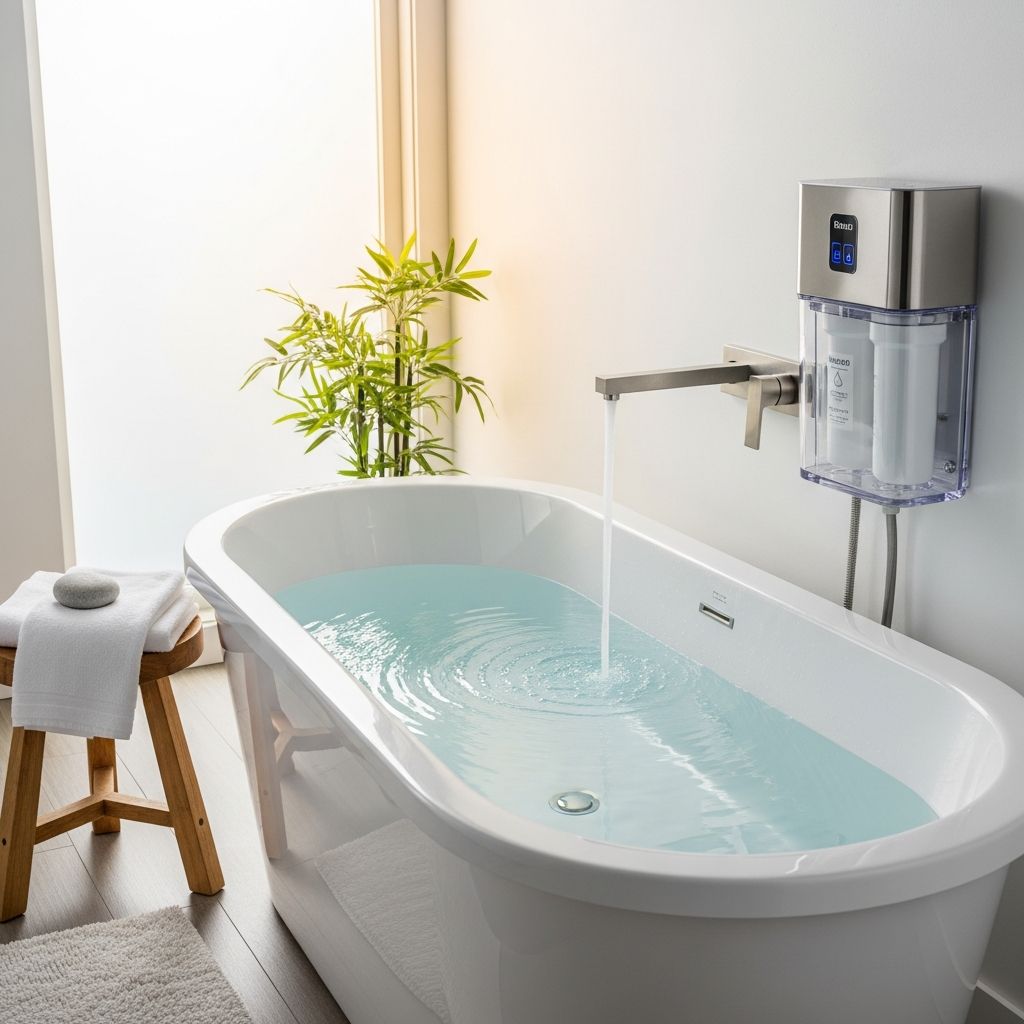
Bath water filters transform ordinary tap water into a gentler medium for soaking, targeting common contaminants like chlorine, heavy metals, and minerals that can irritate skin and hair. These devices offer families a simple upgrade to daily hygiene routines, promoting smoother skin, shinier hair, and reduced exposure to potential irritants.
Hidden Dangers in Tap Water During Baths
Tap water often carries chlorine for disinfection, but this chemical can strip natural oils from skin and hair, leading to dryness and irritation. Heavy metals and pharmaceutical residues may also linger, absorbed through prolonged skin contact in baths. For children and those with sensitive skin, these elements exacerbate conditions like eczema or psoriasis.
- Chlorine effects: Dries skin, fades hair color, and releases vapors that irritate eyes and lungs.
- Hard water minerals: Cause buildup on fixtures and scalp itchiness.
- Pathogens and metals: Pose risks if not addressed, especially in unfiltered municipal supplies.
Filtering addresses these by neutralizing irritants at the source, creating a spa-like experience at home.
Primary Benefits for Skin, Hair, and Family Well-Being
Installing a bath filter yields noticeable improvements. Skin retains moisture better without harsh chemicals disrupting its barrier. Hair becomes more manageable and vibrant, free from mineral deposits. Parents report fewer complaints from children about itchy eyes or dry skin post-bath.
| Benefit | Impact on Skin | Impact on Hair | Family Perk |
|---|---|---|---|
| Chlorine Reduction | Less dryness and redness | Prevents brittleness | Safer for babies |
| Mineral Softening | Smoother texture | Reduced frizz | Longer fixture life |
| Metal Removal | Calms eczema | Shine enhancement | Respiratory relief |
These changes foster healthier routines, particularly in hard water areas where limescale accelerates wear on tubs and pipes.
Exploring Filtration Technologies
Several technologies power bath filters, each suited to specific contaminants. Activated carbon excels at trapping chlorine and organics via its porous structure. KDF media, a copper-zinc alloy, inhibits bacteria and reduces metals through redox reactions.
- Activated Carbon: Absorbs chlorine, VOCs; ideal for basic purification.
- Multi-Stage Systems: Layer carbon, KDF, and ion exchange for broad-spectrum removal.
- Vitamin C Filters: Neutralize chlorine instantly; great for portable use.
- Ion Exchange Resins: Soften water by swapping calcium for sodium.
Ceramic elements add pH balancing, while some incorporate UV for pathogen control. Multi-stage options provide the most thorough cleanse.
Top Filter Categories for Bathtubs
Bath filters come in faucet-attached, inline, and portable forms. Faucet models screw directly onto spouts, filtering all incoming water. Portable balls or powders offer on-demand treatment without permanent setup.
Faucet-Mounted Filters
These connect via standard threads, handling high flow rates. Models like multi-stage units reduce chlorine to near-zero levels even at normal speeds, filling tubs in under 20 minutes while purifying.
Inline and Showerhead Hybrids
For baths doubling as showers, inline filters on supply lines ensure consistent quality. They suit whole-bathroom upgrades alongside shower use.
Portable Solutions
Bath balls with carbon and ceramics drop into filled tubs, neutralizing chlorine post-fill. Dechlorinating powders dissolve quickly, eco-friendly for occasional needs.
Selecting the Right Filter for Your Home
Choose based on water quality—test for chlorine (aim for >99% reduction) and hardness. NSF/ANSI 177 certification verifies chlorine performance. Flow rate matters; slower filters excel at removal but extend fill times.
- Check compatibility with your faucet type.
- Opt for 2-3 month cartridge life or 3,000+ liter capacity.
- Prefer minimal plastic designs for purity.
Hard water homes benefit from ion-softening; chlorinated supplies need carbon or KDF.
Step-by-Step Installation Guide
Most filters install tool-free in minutes. Unscrew the aerator, attach the filter, and hand-tighten. For inline types, shut off water, cut tubing, and insert fittings per instructions.
- Test water flow and leaks post-install.
- Flush new filters to clear initial residue.
- Monitor replacement indicators or timers.
Maintenance involves cartridge swaps every 2-6 months, depending on usage and water quality.
Real-World Performance Insights
Testing shows top filters like Santevia reduce chlorine to 0 PPM at 3+ GPM flows, outperforming others that require slow fills. Canopy models cut chlorine 50% fast, 100% slow, with minor hardness tweaks. Crystal Quest achieves 62-66% at low flows, introducing trace copper from KDF.
Users note softer skin within days, less shampoo needed, and calmer bath times for kids. In hard water zones, limescale diminishes, extending fixture longevity.
Enhancing Filters with Whole-Home Systems
For comprehensive protection, pair bath filters with whole-house units that preprocess water. This dual approach minimizes contaminants before bathroom arrival, ideal for showers and baths alike.
Cost Analysis and Long-Term Savings
Initial costs range $20-$100, with replacements $10-$30 biannually. Savings accrue from less soap, conditioner, and plumbing repairs. Health gains offset expenses through reduced dermatologist visits.
| Filter Type | Upfront Cost | Annual Maintenance | Expected Lifespan |
|---|---|---|---|
| Faucet-Mounted | $30-60 | $40-60 | 2-3 years |
| Portable Ball | $15-25 | $20 | 1 year |
| Multi-Stage | $50-100 | $60-100 | 3+ years |
Frequently Asked Questions
Do bath water filters really work for sensitive skin?
Yes, by removing chlorine and softening minerals, they significantly reduce irritation for eczema, psoriasis, and baby skin.
How often should I replace a bath filter cartridge?
Every 2-6 months or after 3,000 liters, based on usage and water quality indicators.
Can bath filters slow down tub filling?
High-flow models like Santevia maintain speeds while filtering; slower ones may add 10-20 minutes.
Are these filters safe for infants?
Absolutely, they create gentler water free of irritants, enhancing safety during bath time.
What’s the difference between shower and bath filters?
Bath filters handle higher volumes for soaking; some dual-use models work for both.
Final Thoughts on Elevating Your Bath Routine
Bath water filters deliver tangible upgrades in comfort and health, countering tap water’s downsides effectively. With easy setup and proven results, they merit consideration for any household prioritizing wellness.
References
- Best Bath Filters of 2026, According to Our Testing — WaterFilterGuru. 2026. https://waterfilterguru.com/best-bath-filters/
- Why should you filter shower and bath water? — Biovie. Accessed 2026. https://www.biovie.fr/en/blog/why-should-you-filter-shower-and-bath-water-n718
- Why You Should Use a Bathtub Water Filter — PurePlus Filter. Accessed 2026. https://pureplusfilter.com/why-you-should-use-a-bathtub-water-filter/
- Why a Bath Filter Is Your Skin’s Best-Kept Secret — Pure Water Freedom. Accessed 2026. https://purewaterfreedom.com/blog/post/why-a-bath-filter-is-your-skins-best-kept-secret-explained
- A Bathtub Filter – An Important Addition to Your Bathtub — Magnus Home Products. Accessed 2026. https://www.magnushomeproducts.com/blogs/inspired-living/a-bathtub-filter-an-important-addition-to-your-bathtub