From Fashion to Frontiers: Barbie’s Unexpected Journey into Science
When Mattel first introduced Barbie in 1959, the iconic doll was positioned as a fashion designer—reflecting the limited career aspirations society held for women during that era. Just six years later, in 1965, Barbie became an astronaut, marking a remarkable pivot that anticipated the growing recognition of women’s potential in scientific fields. This transformation was not merely a marketing strategy; it represented a cultural shift in how toys could inspire young minds to envision broader possibilities for their futures. Today, decades after that initial astronaut appearance, Barbie continues to evolve as a symbol of female achievement across numerous scientific disciplines, embodying the dreams of countless girls who see themselves reflected in these groundbreaking dolls.
The Expansion of Barbie’s Scientific Roles
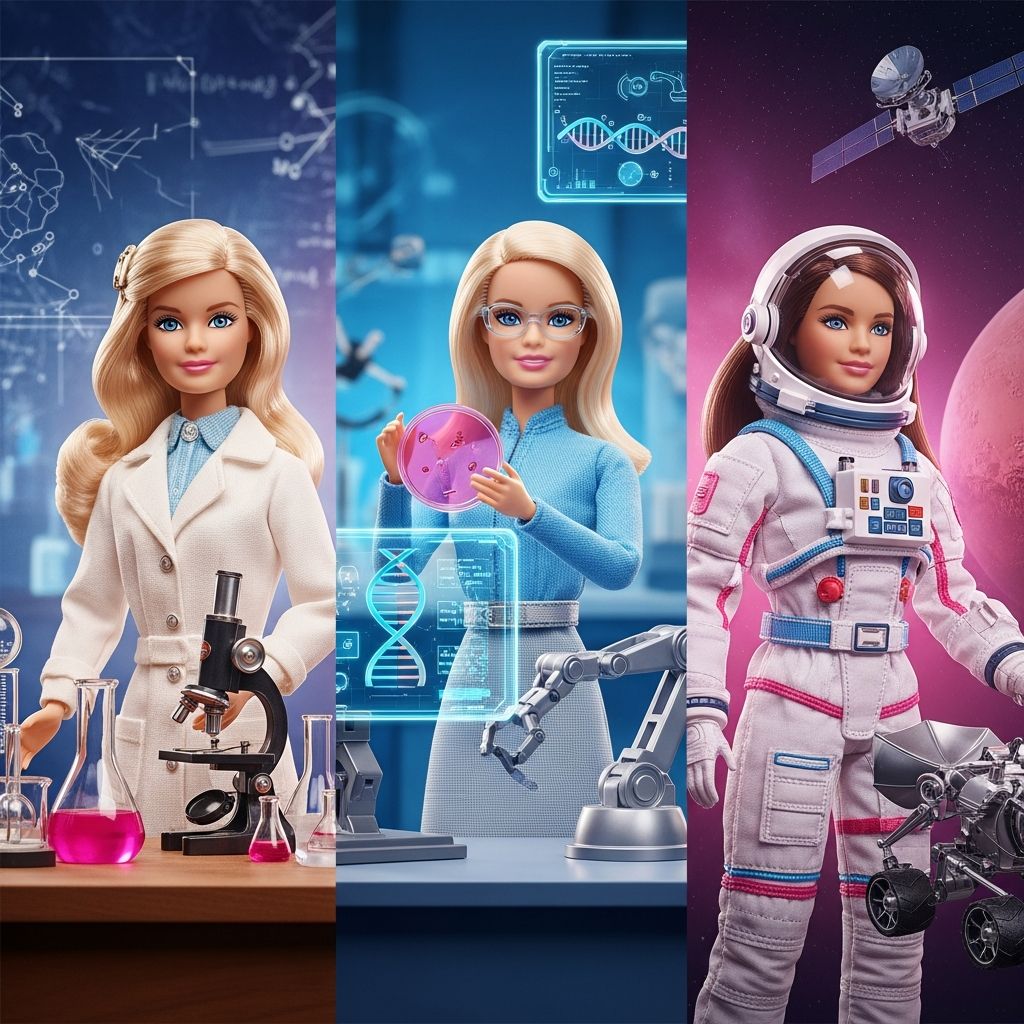
Throughout the past several decades, Mattel has systematically expanded Barbie’s professional wardrobe to include an impressive range of STEM-related careers. The evolution reflects both technological advancement and society’s growing awareness of the need for diverse representation in scientific fields. Today’s Barbie collection encompasses roles that span multiple scientific disciplines, each carefully designed to inspire young girls to explore different pathways in science and technology.
A Comprehensive Overview of Barbie’s STEM Careers
The breadth of Barbie’s scientific roles demonstrates Mattel’s commitment to representing the full spectrum of modern scientific careers:
- Vaccine Scientist
- Microbiologist
- Renewable Energy Engineer
- Marine Biologist
- Chemist
- Computer Engineer
- Robotics Engineer
- Conservation Scientist
- Entomologist
- Astronaut
- Astrophysicist
- Paleontologist
- Game Developer
- Aircraft Engineer
- Pilot
This diverse portfolio ensures that girls encounter representations of women working across different scientific domains, from traditional fields like biology and chemistry to emerging areas such as game development and renewable energy engineering. The proliferation of these roles, particularly within the last decade, signals Mattel’s recognition that STEM education and career awareness are critical components of empowering the next generation.
Honoring Real-World Scientists: The Barbie Role Model Initiative
Beyond creating generic STEM-career Barbies, Mattel has launched an inspiring program that honors real women who are actively making breakthrough contributions to science. This initiative transcends toy manufacturing by creating meaningful connections between fictional characters and actual scientific pioneers. By immortalizing accomplished female scientists as one-of-a-kind Barbie dolls, Mattel amplifies these women’s achievements and introduces their stories to millions of children worldwide.
Dr. Maggie Aderin-Pocock: Bringing Space to Life
British scientist Dr. Maggie Aderin-Pocock received the honor of becoming a Barbie Role Model in 2023, recognizing her extraordinary contributions to making space and astronomy accessible to the general public. Best known for co-presenting BBC One’s long-running series The Sky At Night and CBeebies Stargazing, Dr. Aderin-Pocock has dedicated her career to demystifying the cosmos for audiences of all ages. Her custom Barbie doll features a starry dress and includes a miniature telescope accessory, paying homage to her professional work with advanced space observation technology. When discussing the significance of this honor, Dr. Aderin-Pocock expressed her hope that the doll would inspire young children, particularly girls, to pursue careers in science and space exploration.
Dr. Sarah Gilbert: COVID-19 Vaccine Pioneer
Professor Sarah Gilbert of Oxford University became one of the most prominent faces of pandemic response when she helped lead the development of the Oxford/AstraZeneca COVID-19 vaccine. Her Barbie representation captures her distinctive appearance, featuring long auburn hair and oversized black glasses, along with a professional pantsuit that reflects her academic standing. By receiving this honor alongside other celebrity figures such as Beyoncé, Eleanor Roosevelt, and Marilyn Monroe, Dr. Gilbert’s doll underscores the significance of scientific achievement in contemporary culture. Her recognition demonstrates how Mattel uses the platform to celebrate not just historical achievements but also recent contributions to global health and scientific innovation.
Celebrating Global Women in Science
Mattel’s commitment to honoring women scientists extends beyond individual achievements to encompass an international perspective. The company has recognized multiple women from different countries and scientific backgrounds, creating a truly global representation of female scientific excellence.
Dr. Chika Stacy Oriuwa, a Canadian physician and public health advocate, represents the medical field’s growing emphasis on diversity and inclusion. Dr. Jaqueline Goes de Jesus, a Brazilian biomedical engineer, brings representation from South America and highlights the critical work in biotechnology and engineering innovation. Dr. Kirby White, an Australian medical professional, designed innovative reusable gowns for frontline healthcare workers, demonstrating how scientific thinking can produce practical solutions during crises. Amy O’Sullivan and Dr. Audrey Cruz, both based in the United States, expand the representation to include various scientific specializations. These women collectively represent the diverse pathways women take within scientific fields and the global nature of scientific collaboration and achievement.
The Marketing Impact and Educational Value
While Mattel’s creation of STEM-themed Barbie dolls serves as a marketing strategy designed to increase sales, the secondary effects of this approach carry substantial educational and cultural significance. The introduction of these dolls brings visibility to scientific careers among millions of young girls who might not otherwise encounter such role models. Research and educational experts have recognized that representation matters significantly in shaping career aspirations among children, particularly in fields where women have historically been underrepresented.
The strategic timing of many STEM Barbie releases coincides with important observances such as International Women’s Day and British Science Week, further embedding these dolls within broader conversations about women’s achievements and representation. This marketing integration ensures that the dolls reach audiences during moments of heightened awareness about gender equity in professional fields.
Why Representation in Toys Matters
The psychological and sociological research on toy selection and career aspiration formation demonstrates that children’s play materials significantly influence their perception of possible career paths. When girls routinely see themselves represented in professional roles through dolls and action figures, they develop stronger self-efficacy beliefs about their ability to pursue those careers. Conversely, the historical absence of women in STEM-themed toys contributed to the underrepresentation of girls in these fields. By intentionally diversifying Barbie’s career portfolio to include substantial representation of scientific roles, Mattel addresses this historical imbalance.
The dolls also serve an important function in normalizing women’s presence in spaces where they have been traditionally rare. Young boys who play with Barbie dolls dressed as scientists, engineers, and astronauts develop more egalitarian perspectives on women’s capabilities and professional potential. This gender-neutral approach to aspiration-building has broader implications for workplace diversity and gender equity in STEM fields.
Notable Women Scientists Still Awaiting Barbie Recognition
While Mattel has made significant strides in honoring accomplished female scientists, numerous other women deserve similar recognition for their transformative contributions to scientific knowledge and innovation.
Trailblazers in Medical and Genetic Science
Katalin “Kati” Karikó revolutionized vaccine development through her pioneering research on mRNA technology. Her work laid the foundation for multiple COVID-19 vaccines and represents a breakthrough in immunological understanding. Jennifer Doudna and Emmanuelle Charpentier developed CRISPR gene-editing technology, a methodology that has transformed genetic research and opened new possibilities for treating genetic diseases. The approval of the first CRISPR-based treatment validates the practical significance of their innovation.
Historical Pioneers in Genetics
Barbara McClintock’s groundbreaking research conducted in a cornfield on Long Island, New York, led to her discovery of mobile genetic elements, commonly known as jumping genes. This discovery earned her a Nobel Prize and fundamentally altered scientific understanding of genetic mechanisms. Rosalind Franklin and Marie Curie, though historically recognized, remain exceptional examples of female scientific achievement whose legacies continue to inspire contemporary researchers.
Expanding Representation in Space Exploration
While Barbie has held the astronaut position since 1965, the actual statistics of women in space exploration reveal a significant gap between toy representation and reality. Currently, women comprise only approximately eleven percent of the world’s space travelers, with 73 women among 656 total astronauts and cosmonauts. This disparity underscores the ongoing need for enhanced representation and inspiration.
The historical precedent for women in space dates to 1963 when Soviet cosmonaut Valentina Tereshkova became the first woman to achieve orbit. Her historic accomplishment may well have inspired Barbie’s transformation into an astronaut two years later. Yet seven decades later, the proportional representation of women in space programs remains disappointingly low, suggesting that symbolic gestures through toys must be coupled with substantive efforts to recruit, support, and retain women in aerospace careers.
The Future Potential of Toy-Based Role Modeling
As scientific fields continue to evolve and new disciplines emerge, opportunities exist for Mattel to expand Barbie’s repertoire even further. Emerging fields such as artificial intelligence, biotechnology, nanotechnology, and environmental science represent areas where women are making significant but often underrecognized contributions. By continuing to update and diversify Barbie’s career collection, Mattel can maintain relevance as a cultural tool for inspiring scientific curiosity and career aspiration.
The success of the Barbie STEM initiative has implications beyond Mattel’s product line. Other toy manufacturers and entertainment companies are increasingly recognizing the market value and social benefit of creating role model representations across various professional fields. This trend suggests a broader cultural shift toward recognizing that toys are not merely entertainment products but powerful educational tools capable of shaping children’s worldviews and aspirations.
Challenges and Opportunities in Diversity Representation
While Mattel’s efforts deserve recognition, ongoing opportunities exist to enhance representation across multiple dimensions. Geographic diversity, though improving, could be strengthened through increased representation of women scientists from Africa, Asia, and Latin America. Intersectional representation—honoring scientists from various racial, ethnic, and socioeconomic backgrounds—remains an area for expansion. Additionally, representation of women in applied sciences, engineering disciplines, and computational fields could be amplified to better reflect the full spectrum of women’s contributions to contemporary scientific and technological innovation.
The Broader Cultural Conversation
The Barbie STEM initiative functions within a larger cultural conversation about gender equity, representation, and the importance of early intervention in shaping career aspirations. Educational systems, media platforms, and corporate entities increasingly recognize that combating underrepresentation in STEM begins in childhood. By aligning commercial interests with educational and social goals, companies like Mattel can contribute meaningfully to broader efforts to achieve gender parity in scientific and technical fields.
The dolls themselves become conversation starters—opportunities for parents, educators, and mentors to discuss women’s achievements in science, the historical barriers women have overcome, and the ongoing challenges that persist in achieving true equity in STEM professions. Through these conversations, the dolls transcend their status as commercial products and become tools for consciousness-raising and aspiration-building.
Frequently Asked Questions
Q: When did Barbie first become a scientist?
A: Barbie became an astronaut in 1965, just six years after her initial debut as a fashion designer in 1959, marking one of her earliest professional career transitions into a scientific field.
Q: How many different STEM careers does Barbie have?
A: Barbie has held at least fifteen distinct STEM-related career positions, including roles as a vaccine scientist, microbiologist, renewable energy engineer, marine biologist, chemist, computer engineer, robotics engineer, conservation scientist, entomologist, astronaut, astrophysicist, paleontologist, game developer, aircraft engineer, and pilot.
Q: Which real scientists have been honored with custom Barbie dolls?
A: Several accomplished women scientists have received this honor, including Dr. Maggie Aderin-Pocock (astronomer), Dr. Sarah Gilbert (vaccine developer), Dr. Chika Stacy Oriuwa (Canadian physician), Dr. Jaqueline Goes de Jesus (Brazilian biomedical engineer), Dr. Kirby White (Australian medical professional), Amy O’Sullivan, and Dr. Audrey Cruz.
Q: What percentage of astronauts and cosmonauts are women?
A: Women comprise approximately eleven percent of the world’s space travelers, with 73 women among a total of 656 astronauts and cosmonauts globally.
Q: How does the Barbie STEM initiative impact girls’ career aspirations?
A: Research indicates that representation in toys and media significantly influences children’s perception of possible career paths. By seeing themselves represented in professional scientific roles, girls develop stronger confidence in their ability to pursue careers in STEM fields.
References
- Scientist Dr Maggie Aderin-Pocock honored for cosmic achievements by Barbie — International Women’s Day. 2023-03-08. https://www.internationalwomensday.com/Missions/19461/Scientist-Dr-Maggie-Aderin-Pocock-honored-for-cosmic-achievements-by-Barbie
- Barbie in STEM — UK-CPI. 2023. https://www.uk-cpi.com/blog/barbie-stem
- Mattel Introduces 6 Women in Science Barbie Dolls to Inspire Next Generation Girls — Xtalks. 2021. https://xtalks.com/mattel-introduces-6-women-in-science-barbie-dolls-to-inspire-next-generation-girls-2815/