Chew beads and teething jewelry have exploded in popularity over the past decade, showing up on the necks and wrists of caregivers everywhere. Marketed as pretty accessories that double as teething toys or sensory tools, they seem like an elegant answer to drooly, grabby babies and anxious chewers. But behind the sleek designs and pastel colors is a more complicated story, especially when it comes to safety and realistic expectations.
This guide offers an original, in-depth look at chew beads: what they are, why families use them, what risks they may pose, and how to decide whether they belong in your home. It also covers safer alternatives and practical tips for parents who want both convenience and peace of mind.
What Exactly Are Chew Beads?
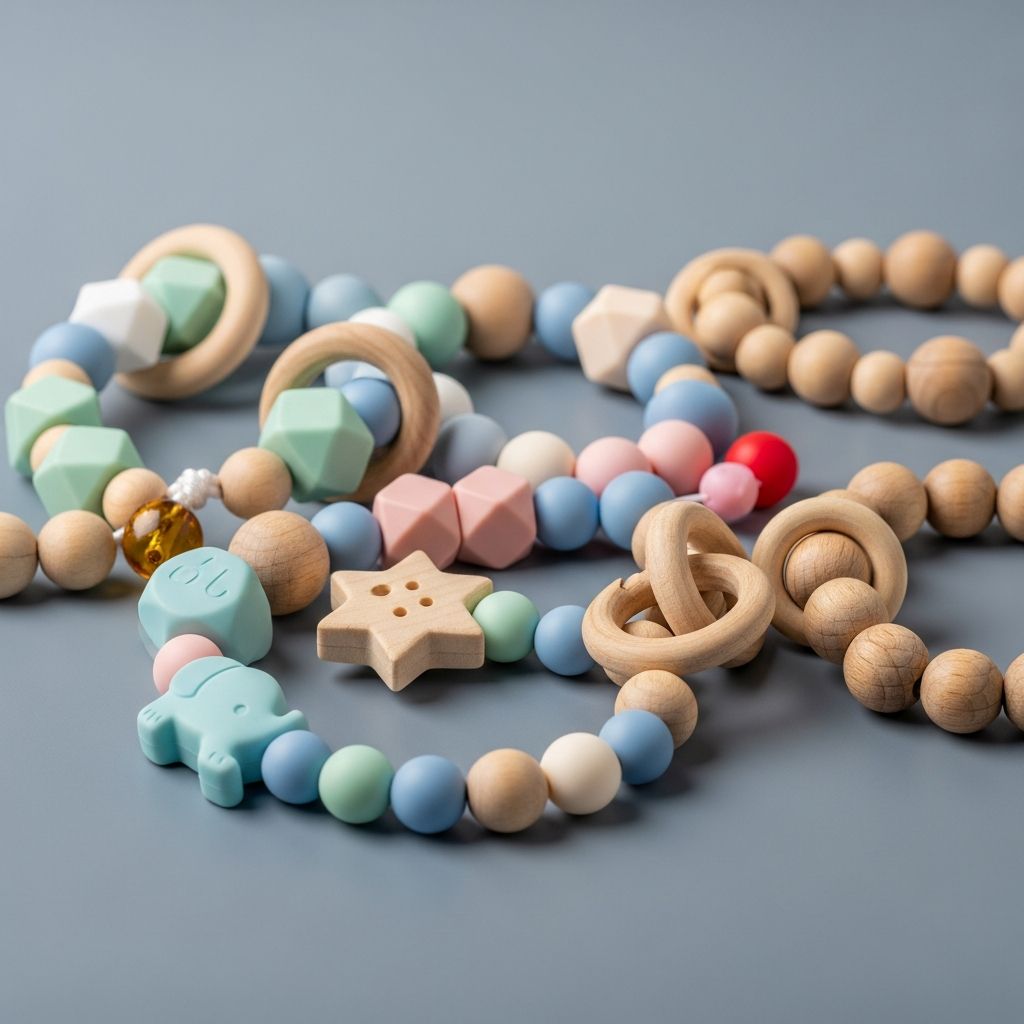
“Chew beads” typically refers to jewelry made with large, chewable beads that are worn by adults or older children but intended to be mouthed by babies, toddlers, or individuals with sensory needs. Most mainstream products use silicone beads on a cord, sometimes mixed with wood or other materials, and are marketed as BPA-free, phthalate-free, and food-grade.
Chew beads show up in a few main forms:
- Necklaces worn by caregivers so babies can chew or fiddle while being held.
- Bracelets that serve as both fashion accessories and grab-and-chew toys.
- Individual teethers that look like jewelry but are intended to be held rather than worn.
- “Chewelry” for older kids such as pendants or bangles designed for sensory seeking or anxiety relief.
Because these items blur the line between jewelry and toy, parents often treat them more casually than they would a traditional teething ring or pacifier, even though they carry many of the same risks and need the same level of scrutiny.
Why Parents and Kids Love Chew Beads
It’s easy to understand why chew beads became a parenting trend. They offer a combination of practicality and aesthetics that more traditional teething toys sometimes lack. Many caregivers also find them useful far beyond the teething stage.
Common reasons families reach for chew beads include:
- Built-in distraction: Babies love to grab and mouth anything within reach, especially when in a parent’s arms or in a carrier.
- Sensory input: Chewing can be soothing and regulating for some toddlers, preschoolers, and older kids, particularly those with sensory processing differences.
- Convenience: Jewelry-style teethers are harder to drop on the floor or lose at the park.
- Style: Many brands design necklaces and bracelets to look like regular accessories, letting caregivers feel more put-together.
When used thoughtfully and under close supervision, chew beads can serve as one tool among many to comfort a fussy teether or offer oral input to a sensory seeker. However, the same features that make them appealing—small beads, cords, and wearable designs—also introduce specific hazards.
Potential Benefits: Function Beyond Fashion
Chew beads are not medical devices and should never replace professional guidance, but parents and therapists sometimes use them deliberately to meet certain needs. Understanding the potential benefits can help you evaluate whether they are necessary in your situation or if a simpler tool would work as well or better.
- Oral sensory support: Some children chew when stressed, bored, or overwhelmed. A designated chewing item can provide an outlet that is more acceptable than chewing clothing, pencils, or fingers.
- Fine motor practice: Grasping and manipulating beads can help babies refine hand strength and coordination, especially when supervised during playtime.
- Focus and self-regulation: For certain kids, rhythmic chewing can help sustain attention during schoolwork or transitions, similar to how some people tap a foot or play with a stress ball.
- Bonding and interaction: A caregiver-worn necklace can prompt eye contact, smiling, and play while feeding or babywearing, turning a simple accessory into a social tool.
These benefits, however, only matter if the item is safe enough for the child using it. That’s where parents must slow down and look beyond marketing claims.
Major Safety Concerns You Cannot Ignore
Any object intended for chewing must be evaluated as rigorously as a toy, not as a decorative accessory. The two biggest threats associated with chew beads—especially those worn as necklaces or bracelets—are choking and strangulation, along with lesser but real risks like mouth injuries and infection.
| Risk | How It Happens | Who Is Most Vulnerable |
|---|---|---|
| Choking | A bead breaks free and is swallowed or inhaled, or a large cluster blocks the mouth. | Infants and toddlers who explore primarily with their mouths. |
| Strangulation | A necklace catches on furniture, crib rails, or car seat straps, tightening around the neck. | Children wearing chew-bead jewelry, especially when unsupervised or asleep. |
| Mouth injury | Sharp edges or broken beads scrape or cut the gums, tongue, or inner cheeks. | Strong chewers and kids with sensitive mouths or existing sores. |
| Hygiene concerns | Saliva, food, and dirt collect in crevices, allowing bacteria to thrive. | Any child using chew beads frequently, especially if not cleaned well. |
Small parts are an obvious hazard for babies and toddlers, but even products that claim to have “individually knotted” beads or “breakaway” clasps can fail under daily wear and enthusiastic chewing. No cord or clasp is completely foolproof. Parents should treat every piece of chew jewelry as something that can break, not as something that will never break.
Strangulation risk is more subtle but equally serious. Anything worn around a young child’s neck, particularly during sleep, naps, or car rides, can tighten unexpectedly or get caught, reducing airflow in seconds. That is why many pediatric professionals and safety organizations advise that babies and toddlers avoid wearing any kind of necklace, including chew-bead styles, when unsupervised.
How Age and Development Change the Risk
Age and developmental stage make an enormous difference in how chew beads should (or should not) be used. A strategy that might be acceptable for an older, verbal child under supervision may be entirely inappropriate for a curious crawler who puts everything in their mouth.
- Under 1 year: This is the highest-risk group for suffocation and choking. Necklaces, bracelets, and any chewable jewelry worn by the baby should be avoided. Teethers that are too small or have detachable parts are also problematic.
- 1 to 3 years: Toddlers still explore with their mouths and have limited judgment. Wearable chew jewelry is generally discouraged for this age, especially around the neck. If chew beads are used at all, they should be hand-held items used only under direct adult supervision.
- Preschool to early elementary: Some kids in this range benefit from chewable pendants or bracelets as sensory tools. Even then, parents should review product design carefully, teach safe use, and monitor for damage or misuse.
- Older kids and teens: At these ages, “chewelry” can be part of a broader sensory toolkit. Children should be able to understand instructions like “do not wrap the cord around your neck or wrists” and “tell an adult if the item breaks.”
The bottom line: the younger the child, the more conservative you should be. Many families find that for babies and young toddlers, classic one-piece teethers and chilled washcloths meet their needs without introducing cords or beads.
Checklist: How to Evaluate a Chew-Bead Product
If you are considering purchasing chew beads or already have some at home, it helps to run through a structured checklist. This process does not guarantee safety, but it does highlight red flags and may nudge you toward safer choices—or toward deciding that you do not need chew beads at all.
1. Design and Construction
- Look for large, solid beads that cannot fit through a toilet-paper roll opening; anything smaller is more likely to pose a choking hazard.
- Inspect the cord and knots. Are they thick? Is there visible fraying? Are beads firmly secured without gaps?
- Check for a breakaway clasp. While not perfect, a clasp that pops open under tension is safer than one that holds tight at all costs.
- Avoid designs with metal or glass parts that can crack or chip under chewing.
2. Materials and Testing
- Confirm that the beads are made from food-grade, BPA-free, phthalate-free silicone or another child-safe material.
- Look for products that state they meet recognized toy safety standards in your region rather than just generic claims like “non-toxic.”
- Be skeptical of bold health promises (for example, claims that a material “releases healing substances” or “boosts immunity”). These are often not supported by solid evidence.
3. Use and Supervision
- Decide who will actually wear the item. Many parents choose necklaces for themselves rather than for children to reduce the chance of a child being alone with the cord.
- Set clear rules: no chew-bead jewelry during sleep, naps, or car rides. These are higher-risk times for strangulation and unnoticed choking.
- Inspect the beads before every use for cracks, stretching, or loose parts, and discard at the first sign of damage.
Safer Alternatives to Wearable Chew Beads
Parents do not need chew beads to support teething or sensory needs. Many simpler products offer similar benefits with fewer variables to worry about. The right choice for your family will depend on your child’s age, developmental profile, and specific challenges.
- One-piece silicone or rubber teethers: These have no cords or beads to break off and can be chilled for added relief.
- Cold washcloths: A clean, damp cloth placed in the refrigerator (not the freezer) can be folded and held by an adult for supervised chewing.
- High-contrast teething toys: For younger babies, sturdy toys with interesting textures and shapes can engage both mouth and hands.
- Handheld sensory chew tools: For older kids, short, sturdy chew sticks or pencil toppers may offer oral input without requiring a cord around the neck.
- Non-oral sensory strategies: Fidgets, weighted lap pads, movement breaks, and deep-pressure activities can sometimes reduce the need to chew.
In cases where chewing is intense or persistent, families often work with occupational therapists or speech-language pathologists to design a broader sensory plan. These professionals can recommend specific tools and teach safe, appropriate use.
Practical Tips for Parents Who Still Want Chew Beads
Some parents will ultimately decide that chew beads, used rarely and under strict supervision, fit their comfort level. If that describes you, it helps to adopt clear rules and routines from the beginning to minimize risk and maximize usefulness.
- Treat chew beads as gear, not jewelry: Store them with baby items instead of your regular accessories to create a different mental category.
- Use them in specific situations only: For example, during babywearing walks or while nursing a distractible infant—not as an all-day accessory.
- Remove before sleep, naps, and car rides: Make a habit of doing a quick “check” whenever you buckle a child or lay them down.
- Clean them frequently: Follow maker instructions, typically washing with mild soap and warm water and allowing them to dry completely.
- Retire them early: If your child becomes a very strong chewer or the beads show even minimal wear, it’s safer to switch to sturdier options.
Frequently Asked Questions About Chew Beads
Are chew beads safe for newborns?
Chew beads, especially necklaces and bracelets, are not appropriate for newborns. Very young infants have limited head and neck control and are at higher risk of suffocation and choking. If you want something for a newborn to mouth, look for simple, one-piece teethers designed specifically for that age range and use them only with direct supervision.
Can my baby sleep wearing chew-bead jewelry?
No. Any cord, necklace, or bracelet around a baby or toddler during sleep introduces a strangulation risk. The safest practice is to remove all jewelry, including chew beads, before naps and nighttime sleep, and to keep the sleep space free of loose objects.
What about using chew beads in the car seat?
Car seats are another situation where cords around the neck are not advisable. A necklace can catch on straps or twist as the child shifts position. If you want a teething toy in the car, choose a one-piece item that an adult can hand to the child and retrieve easily, and avoid attaching cords near the neck.
Do chew beads really help with teething pain?
Chewing on something firm but flexible can be soothing for many teething babies, and chew beads can offer that sensation. However, they are no more inherently effective than other safe teething toys. Claims that specific materials in beads have special medicinal properties should be viewed skeptically, especially in the absence of clear, independent evidence.
Are chew beads okay for older kids with sensory needs?
Older children who understand rules and can report discomfort may use chewable pendants or bracelets as part of a supervised sensory plan. In these cases, parents should still choose products carefully, avoid very small parts, inspect items regularly, and collaborate with therapists or healthcare providers to ensure the tool is appropriate and used safely.
What should I do if a chew bead breaks?
If any part of a chew-bead item breaks—cord, clasp, or bead—take it away immediately and check your child’s mouth and surroundings for loose pieces. Discard the product rather than attempting a home repair, since recreated knots or glues may not withstand chewing and could introduce new risks.
Finding Your Own Comfort Zone
Chew beads sit at the crossroads of style, convenience, and safety. Some families feel comfortable using them sparingly with older children; others prefer to avoid them entirely and stick with more traditional teething and sensory tools. There is no single right answer for every household, but there is value in pausing to make a deliberate choice instead of simply following a trend.
By weighing the potential benefits against the very real risks, understanding your child’s age and developmental profile, and knowing what safer alternatives exist, you can choose options that fit both your lifestyle and your safety standards. The goal is not the trendiest accessory—it’s a child who is comforted, supported, and, above all, safe.