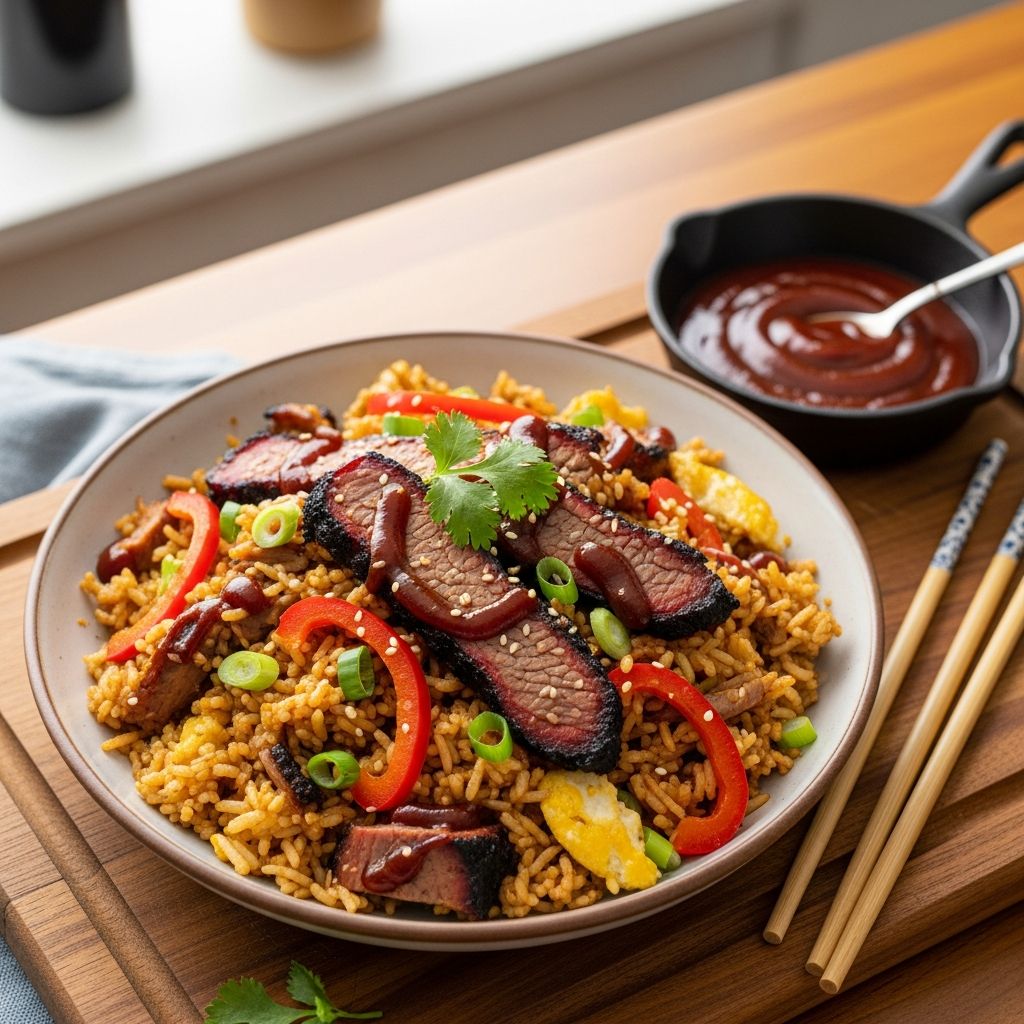
Barbecue fried rice is a clever, weeknight-friendly way to stretch leftovers, cut down on food waste, and get big flavor on the table in minutes. Inspired by Japanese-style barbecue sauces and backyard grilling culture, this dish brings together charred meat, cold rice, and a savory-sweet glaze into one skillet meal that kids and adults can enjoy together.
Instead of treating fried rice as a side dish, this version turns it into a full dinner: protein from the barbecue, carbs from the rice, and optional vegetables all in one pan. The result is familiar enough for picky eaters yet interesting and bold for grown-ups.
Why Barbecue Fried Rice Belongs in Your Weekly Rotation
Fried rice is already a classic way to use leftovers, and adding barbecue flavors makes it even more satisfying. There are several reasons this style of fried rice works especially well for busy families.
- Eliminates waste: Leftover ribs, brisket, chicken, or grilled veggies get a second life instead of drying out in the fridge.
- Speeds up dinner: With cooked rice and meat ready to go, the actual stir-frying usually takes under 20 minutes.
- Picky-eater friendly: The familiar flavors of barbecue and rice are comforting and recognizable for kids.
- Flexible ingredients: You can swap in almost any cooked protein, vegetables, or sauce you have on hand.
- Budget-minded: Stretching a small amount of leftover meat with plenty of rice makes this an economical meal.
Food waste is an increasingly recognized issue in households; U.S. data indicate that a large share of discarded food happens at the consumer level, making smart leftover strategies a practical step for families looking to save money and resources.
The Flavor Blueprint: What Makes It “Barbecue” Fried Rice?
Barbecue fried rice doesn’t just mean adding any bottled BBQ sauce to rice. The flavor profile usually draws on Japanese-style barbecue sauces as a base: soy sauce, mirin, sugar, and aromatic ingredients like garlic and ginger, often blended into a glossy, pourable sauce that works as both marinade and finishing glaze.
At a high level, you are combining three main components:
- Day-old rice for the ideal chewy texture and ability to fry without turning gummy.
- Cooked barbecue protein (like leftover grilled chicken, pork, or brisket) for smoky depth and charred edges.
- Savory-sweet sauce that ties everything together and lightly caramelizes in the pan.
Optional aromatics—such as onions, scallions, garlic, and ginger—along with eggs and vegetables help the dish eat like a complete meal.
Core Ingredients and Smart Substitutions
Here is a simple ingredient framework you can adapt based on what your family likes and what is in your refrigerator.
| Component | Best Choice | Easy Substitutions | Notes for Families |
|---|---|---|---|
| Rice | Cold, day-old jasmine or medium-grain rice | Brown rice, leftover mixed rice, or short-grain rice | Refrigerating rice overnight helps keep the grains separate when frying. |
| Protein | Leftover barbecued pork, beef, or chicken | Grilled tofu, seitan, rotisserie chicken, or smoked sausage | Chop into small pieces for quick reheating and even bites. |
| Eggs | 2–3 large eggs, lightly beaten | Omit for egg-free, or use soft tofu cubes | Scrambled eggs add protein and a familiar fried rice texture. |
| Vegetables | Onions, scallions, peas, carrots, or frozen vegetable mix | Bell peppers, corn, shredded cabbage, or broccoli | Frozen mixed vegetables are a time-saving option and count toward daily veg intake. |
| Sauce | Japanese-style barbecue sauce | BBQ sauce + soy sauce + splash of rice vinegar | Adjust sweetness and saltiness to taste, especially for kids. |
| Oil | Neutral oil (canola, sunflower, or vegetable) | Light olive oil or avocado oil | High-heat oils are ideal for stir-frying without burning. |
Step-by-Step: How to Make Barbecue Fried Rice
The method follows classic fried rice technique with a barbecue twist. Using high heat at the end helps achieve that slight crispness and smoky aroma associated with good stir-fried rice.
1. Prepare the Rice Properly
- Use cold, cooked rice that has been refrigerated for at least several hours, ideally overnight.
- Break up any large clumps with your hands or a fork before cooking.
- If the rice feels very dry, sprinkle 1–2 tablespoons of water over it and gently toss to loosen.
Cold rice fries more cleanly because the grains are firmer and have less surface moisture, which helps prevent clumping and mushiness.
2. Chop the Leftover Barbecue
- Cut leftover barbecue meat into small, bite-sized pieces so it reheats quickly.
- Remove large pieces of fat or bones, but keep a little of the flavorful bark or charred edges for smokiness.
- Have about 1–2 cups of chopped meat ready for every 3–4 cups of cooked rice.
Smoked or grilled meats—even if slightly dry on their own—become tender again when reheated in sauce and oil.
3. Mix a Simple Barbecue Rice Sauce
If you don’t have a bottled Japanese-style barbecue sauce, you can quickly stir together a homemade version:
- 2–3 tablespoons soy sauce
- 1–2 tablespoons of your favorite BBQ sauce
- 1 teaspoon sugar or honey (optional, if your BBQ sauce is not very sweet)
- 1 teaspoon rice vinegar or mild vinegar
- 1/2 teaspoon grated garlic
- 1/2 teaspoon grated ginger
Whisk all ingredients in a bowl and adjust to taste. Add more BBQ sauce for sweetness and smokiness or more soy sauce for saltiness.
4. Cook the Eggs First
- Heat a large nonstick skillet or wok over medium-high heat and add a bit of oil.
- Pour in the beaten eggs and scramble gently until just set but still moist.
- Transfer the eggs to a plate and set aside; they will go back into the pan later.
Cooking the eggs before the rice prevents them from overcooking and sticking and allows you to control their texture.
5. Sauté Aromatics and Barbecue
- Add a little more oil to the hot pan.
- Stir-fry diced onions or scallions until fragrant and slightly softened.
- Add the chopped leftover barbecue, tossing until warmed through and slightly crisp on the edges.
Reheating the meat at this stage lets some of the fat render and infuse the oil with smoky flavor.
6. Fry the Rice Low, Then High
- Reduce heat to medium and add the prepared rice.
- Use a spatula to press and flip, breaking up any remaining clumps.
- Cook for several minutes, stirring occasionally, until the rice is hot and the grains feel separate.
- Increase heat to high, drizzle in your barbecue sauce mixture, and toss quickly to coat every grain.
Starting at moderate heat helps keep the rice tender, while finishing on high heat encourages light browning and a hint of smokiness without burning.
7. Finish with Eggs, Veggies, and Garnishes
- Return the scrambled eggs to the pan.
- Add any quick-cooking or pre-cooked vegetables, such as frozen peas, shredded carrots, or corn.
- Toss everything together for 1–2 minutes, just until the vegetables are heated and the sauce slightly caramelizes.
- Taste and adjust with extra sauce, soy sauce, or a squeeze of citrus if needed.
Top with sliced scallions, sesame seeds, or a drizzle of chili oil for adults who like a bit of heat.
Family-Friendly Variations to Try
Because this recipe is so adaptable, you can customize it for dietary needs, spice tolerance, and what your kids like.
Veggie-Loaded Barbecue Fried Rice
- Double the amount of vegetables to increase fiber and micronutrients.
- Use a base of onion, carrot, peas, and corn, or toss in small broccoli florets and diced bell peppers.
- Keep the barbecue meat amount the same so the dish still tastes indulgent.
Giving children frequent exposure to vegetables in familiar dishes is associated with better long-term acceptance of those foods.
Quick Weeknight “Fridge-Cleanout” Version
- Combine small amounts of leftover grilled meats, roasted vegetables, and rice from different nights.
- Use frozen mixed vegetables to bulk up the volume.
- Finish with whatever sauces you have: soy sauce, a spoonful of BBQ sauce, and a drizzle of sesame oil.
This approach turns random leftovers into a cohesive meal, which is both economical and time-efficient.
Lighter, Brown Rice or Cauliflower Adaptation
- Swap some or all of the white rice for brown rice for more fiber and a nuttier flavor.
- Or replace up to half the rice with cauliflower rice to lower calories while keeping volume.
- Cook cauliflower rice briefly so it stays slightly firm rather than soft.
Whole grains like brown rice provide more fiber and nutrients than refined grains, which can support better long-term health when included regularly in family meals.
Safety Tips for Leftover Rice and Barbecue
Because this dish relies heavily on leftovers, it is important to handle cooked rice and meat safely.
- Cool rice quickly: After cooking, spread rice in a thin layer on a tray before refrigerating to cool it rapidly.
- Refrigerate promptly: Store rice and leftover barbecue in the refrigerator within two hours of cooking.
- Use within a few days: Aim to use leftover cooked rice and meats within 3–4 days.
- Reheat thoroughly: Fried rice should be steaming hot all the way through before serving.
Food safety agencies emphasize that Bacillus cereus and other bacteria can grow in improperly stored rice, so rapid cooling and cold storage are essential.
Serving Ideas and Make-Ahead Tips
Barbecue fried rice is versatile enough for a casual family dinner or a backyard gathering.
- Serve it as a one-bowl meal with extra vegetables on the side, such as sliced cucumbers or a simple salad.
- Pair it with grilled skewers or a small plate of dumplings for a more festive spread.
- Pack leftovers in lunch containers; fried rice often reheats well in a microwave with a splash of water.
- Pre-chop leftovers and mix the sauce in the morning so all you need to do at dinnertime is fire up the pan.
Frequently Asked Questions (FAQs)
Q: Can I make barbecue fried rice without a wok?
A: Yes. A large nonstick or well-seasoned cast-iron skillet works very well. The key is giving the rice enough surface area and using high heat at the end to develop light browning.
Q: Do I have to use day-old rice?
A: Fresh rice tends to be too moist and can become sticky. If you must use freshly cooked rice, spread it on a tray and chill it uncovered in the refrigerator for at least 30–60 minutes to let some moisture evaporate before frying.
Q: What if my kids don’t like spicy food?
A: Choose a mild barbecue sauce and skip any chili flakes or hot sauces in the main pan. You can always add spicy elements—such as chili oil or hot sauce—to individual portions at the table.
Q: How can I make this gluten-free?
A: Use gluten-free soy sauce or tamari and verify that your barbecue sauce is labeled gluten-free. Most plain rice and unseasoned meats are naturally gluten-free, but sauces and marinades need to be checked.
Q: Can I freeze barbecue fried rice?
A: Yes. Cool the fried rice completely, portion into airtight containers, and freeze for up to a couple of months. Reheat directly from frozen in a covered pan with a splash of water or in the microwave, stirring occasionally.
References
- Food Waste FAQs — U.S. Environmental Protection Agency. 2023-08-30. https://www.epa.gov/recycle/reducing-wasted-food-home
- Japanese-Style Barbecue Sauce (Product Description) — Bachan’s Japanese Barbecue Sauce. 2024-01-10. https://bachans.com/pages/our-sauce
- Leftover Rice Safety Advice — U.S. Department of Agriculture, Food Safety and Inspection Service. 2020-08-20. https://www.fsis.usda.gov/food-safety/safe-food-handling-and-preparation/leftovers-and-food-safety
- Rice and Food Safety — Food Standards Agency (UK). 2022-03-24. https://www.food.gov.uk/safety-hygiene/rice-and-food-safety
- Improving Children’s Vegetable Intake — Harvard T.H. Chan School of Public Health, The Nutrition Source. 2021-11-15. https://www.hsph.harvard.edu/nutritionsource/kids-healthy-eating/
- Whole Grains: Hearty Options for a Healthy Diet — Mayo Clinic. 2023-06-27. https://www.mayoclinic.org/healthy-lifestyle/nutrition-and-healthy-eating/in-depth/whole-grains/art-20047826
- Home-Style Fried Rice (Technique Overview) — The Culinary Institute of America. 2018-04-01. https://www.ciachef.edu/fried-rice-technique/