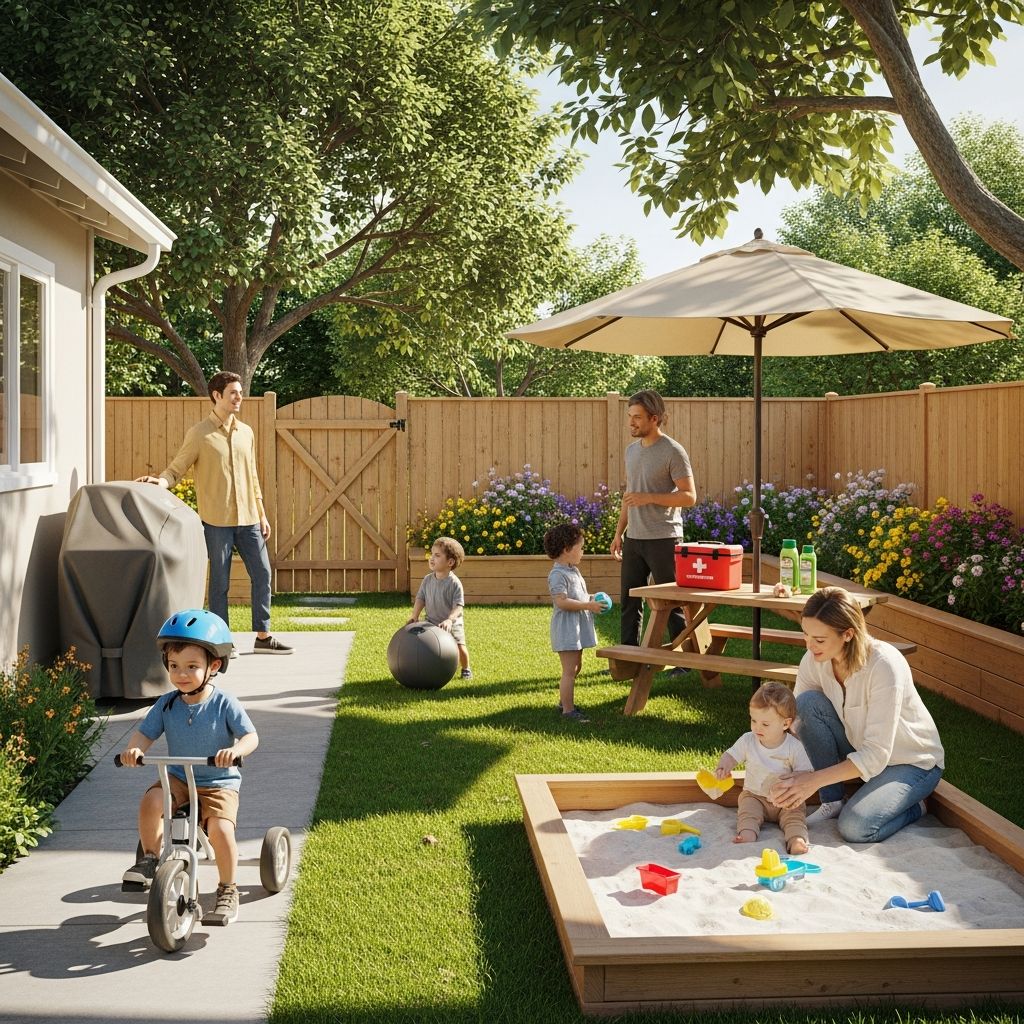
Your backyard should be a haven for play, exploration, and family bonding. However, without proper precautions, it can turn into a source of accidents. This guide provides actionable steps to inspect and fortify your outdoor space, drawing from established safety practices to minimize risks for children. By focusing on key areas like play structures, water features, and general hazards, parents can foster a secure environment that promotes active lifestyles.
Establishing a Safe Foundation for Outdoor Play
Begin with the basics: ensure your yard’s layout supports safe movement. Well-lit paths prevent trips during evening play, while clear walkways free of clutter reduce stumbling hazards. Inspect patios and stairs for cracks or uneven surfaces that could cause falls. Install motion-sensor lights around entry points and play zones to enhance visibility after dusk.
- Clear debris like sticks, toys, and tools from high-traffic areas daily.
- Repair loose railings or steps immediately to avoid structural failures.
- Use non-slip mats on wet surfaces near doors or splash pads.
Garbage receptacles must be lidded tightly to deter animals and prevent children from accessing sharp or toxic waste. Position them away from play zones to maintain hygiene and safety.
Optimizing Play Equipment for Injury Prevention
Play structures like swing sets and climbers are backyard staples but demand rigorous checks. Rust, splinters, and sharp protrusions on metal or wood components pose cutting risks. Regularly sand wooden elements and apply protective sealants to prevent wood rot and slivers.
| Equipment Type | Key Checks | Recommended Fixes |
|---|---|---|
| Swing Sets | Secure bolts, soft seats (rubber/plastic), no rust | Tighten hardware monthly; replace chains annually |
| Slides | Smooth edges, proper height for age | Polish surfaces; ensure 6ft clearance at bottom |
| Climbers | No small gaps, firm anchoring | Embed in concrete; check welds quarterly |
Anchoring is critical—unstable gear can topple during vigorous use. Drive stakes deep into the ground or pour concrete footings for larger installs. Soft surfacing underneath is non-negotiable: aim for 12 inches of wood chips, rubber mulch, or engineered mats to cushion falls up to 10 feet. Rake materials weekly to maintain depth and remove debris.
Water Safety: Guarding Against Drowning Risks
Any standing water presents a drowning threat, even shallow buckets or ponds. Infants can drown in mere inches, so vigilance is paramount. Enclose pools with at least 5-foot climb-resistant fencing featuring self-closing, childproof gates. For above-ground pools, dismantle ladders post-use.
- Install door alarms on home entries to pools.
- Empty kiddie pools and buckets after use; store upside down.
- Cover hot tubs securely and test covers for weight-bearing strength.
Supervise swimming rigorously—never leave children unattended near water, and teach basic flotation skills early. Drain covers must be inspected to prevent entrapment.
Managing Tools, Chemicals, and Garden Hazards
Gardening tools mimic toys to young eyes but carry tetanus risks from rusty blades. Lock sheds and store implements out of reach. Chemicals like fertilizers or pesticides demand secure containment; apply them when kids are indoors and rinse residues thoroughly.
Fences should be gap-free to contain children and pets, standing at least 6 feet for determined escape artists. Trim low branches and thorny plants near play areas to avoid scratches or pokes. During lawn maintenance, keep children inside until blades and trimmers are stowed.
Trampolines and High-Activity Gear: Extra Precautions
Trampolines account for numerous injuries, often from falls or collisions. Enclose with padded nets, cover springs fully, and ban multiple jumpers. Skip ladders to deter toddler access unsupervised. Position away from structures with 24-foot overhead clearance.
- Inspect mats and springs seasonally for tears.
- Limit use to ages 6+ under supervision.
- Anchoring prevents wind displacement.
Grills and fire pits require cool-down zones; store fuel canisters locked and away from play.
Age-Specific Safety Adaptations
Tailor your yard to developmental stages. Toddlers thrive on low platforms (under 4 feet) with enclosed designs; school-age kids handle taller challenges but need grip-friendly steps. Avoid entrapment gaps (3.5-9 inches) where limbs snag.
Promote rules like ‘one per swing’ and ‘feet first on slides’ through signage or family huddles. Active supervision bridges equipment safety, catching misuse instantly.
Seasonal Maintenance Routines
Year-round care extends equipment life and safety. Monthly: tighten fittings, lubricate chains. Spring: clear winter debris, reseal wood. Fall: winterize by draining water lines. Document inspections in a log for patterns.
Cleaning prevents slips—mild soap for plastics, mildew removers for shaded wood. Sanitize grips to curb germ spread.
Frequently Asked Questions
What depth of surfacing protects under swings?
Maintain 12 inches of loose-fill like mulch or chips, extending twice the swing height in front/back.
How often to check play equipment?
Monthly for daily-use items; weekly post-storms.
Is grass safe under climbers?
No—it’s too hard post-compression. Use certified fall materials.
Pool fence height minimum?
5 feet, non-climbable, with self-latching gates.
Trampoline safety enclosures necessary?
Yes, to contain bounces; pad all hard parts.
Building a Culture of Outdoor Safety
Integrate safety into play routines: model correct usage, reward rule-following. Community standards from bodies like the CPSC reinforce these practices. A proactive yard checklist evolves with your family’s needs, turning potential pitfalls into joyful memories.
References
- Essential Backyard Playground Safety Checklist for Kids — Wood Kingdom West. 2023. https://woodkingdomwest.com/blogs/playground-safety-checklist/
- Yard Safety Checklist: 7 Backyard Hazards for Kids and Pets — Farm Bureau Financial Services. 2024-05-15. https://www.fbfs.com/learning-center/yard-safety-checklist-7-backyard-hazards-for-kids-and-pets
- Backyard Safety Checklist — FMT Insurance. 2023-07-20. https://fmtinsurance.com/backyard-safety-checklist/
- Backyard and Pool: Household Safety Checklist — Nemours KidsHealth. 2025-01-10. https://kidshealth.org/en/parents/household-checklist-backyard.html
- Home Safety Checklist — Pediatric Partners. 2024. https://www.ppadocs.com/safety/Home-Safety-Checklist
- Backyard Safety Checklist — Boys Town Pediatrics. 2023-06-01. https://www.boystownpediatrics.org/knowledge-center/backyard-safety-tips
- Public Playground Safety Checklist — U.S. Consumer Product Safety Commission (CPSC). 2022-04-12. https://www.cpsc.gov/s3fs-public/pdfs/blk_media_HomePlaygroundSafetyChecklist.pdf