Returning to school routines brings a whirlwind of activities, homework, and extracurriculars that can overwhelm family mealtimes. Effective meal preparation turns potential chaos into structured, nourishing opportunities. By dedicating weekend time to planning and prepping, parents can ensure kids receive balanced nutrition while reclaiming evenings for quality family bonding. This guide offers fresh approaches to streamline your kitchen workflow, featuring versatile recipes and organizational tactics tailored for the first week and beyond.
Building a Solid Weekly Meal Foundation
The cornerstone of stress-free school nights starts with thoughtful planning. Begin by assessing your family’s calendar: note practice times, late meetings, and homework peaks to align meals accordingly. Create a simple grid mapping breakfasts, lunches, and dinners across seven days, prioritizing quick-assembly options for busiest evenings.
- Inventory Check: Scan pantry, fridge, and freezer to use existing items, minimizing waste and costs.
- Theme Nights: Assign themes like Meatless Monday or Taco Tuesday to spark excitement and simplify choices.
- Family Input: Involve children in selecting one meal per week to boost buy-in and reduce picky eating.
Once planned, compile a precise shopping list categorized by store aisles. This method, endorsed by family nutrition experts, cuts grocery trips in half and prevents impulse buys. Aim to shop once weekly, ideally Sunday mornings when stores are less crowded.
Batch Cooking Essentials for Effortless Dinners
Batch cooking multiplies ingredients to yield multiple meals, leveraging tools like slow cookers and sheet pans for hands-off preparation. Dedicate 2-3 hours on weekends to produce staples that reheat beautifully throughout the week.
| Recipe | Prep Time | Serves | Storage Tips |
|---|---|---|---|
| Shredded BBQ Chicken | 10 min (slow cooker) | 8 | Freeze in portions; thaw overnight |
| Vegetable Quinoa Pilaf | 20 min (stovetop) | 6 | Refrigerate up to 5 days |
| Beef Stir-Fry Base | 15 min (skillet) | 10 | Portion with rice for variety |
These bases transform easily: BBQ chicken becomes tacos, salads, or wraps; quinoa pairs with proteins for bowls; beef mixes into fried rice or lettuce cups. Cooking in bulk preserves flavors and nutrients, as confirmed by USDA guidelines on safe reheating practices.
Quick Breakfast Assemblies for Rushed Mornings
Mornings demand speed without skimping on nutrition. Prep grab-and-go options that fuel focus and growth, emphasizing proteins and whole grains to sustain energy until lunch.
- Oven-Baked Egg Muffins: Whisk eggs with spinach, cheese, and turkey; bake in muffin tins for portable bites ready in 20 minutes. Store in fridge for 4 days.
- Smoothie Freezer Packs: Portion fruits, greens, yogurt, and oats into bags; blend with milk each morning in under 2 minutes.
- Overnight Oats Jars: Layer oats, milk, chia seeds, and toppings in jars; refrigerate overnight for individualized flavors like berry-almond or peanut butter-banana.
These preps ensure even sleepy teens start strong. Studies from the American Academy of Pediatrics highlight how consistent breakfasts improve academic performance and mood stability.
Packed Lunches That Kids Actually Eat
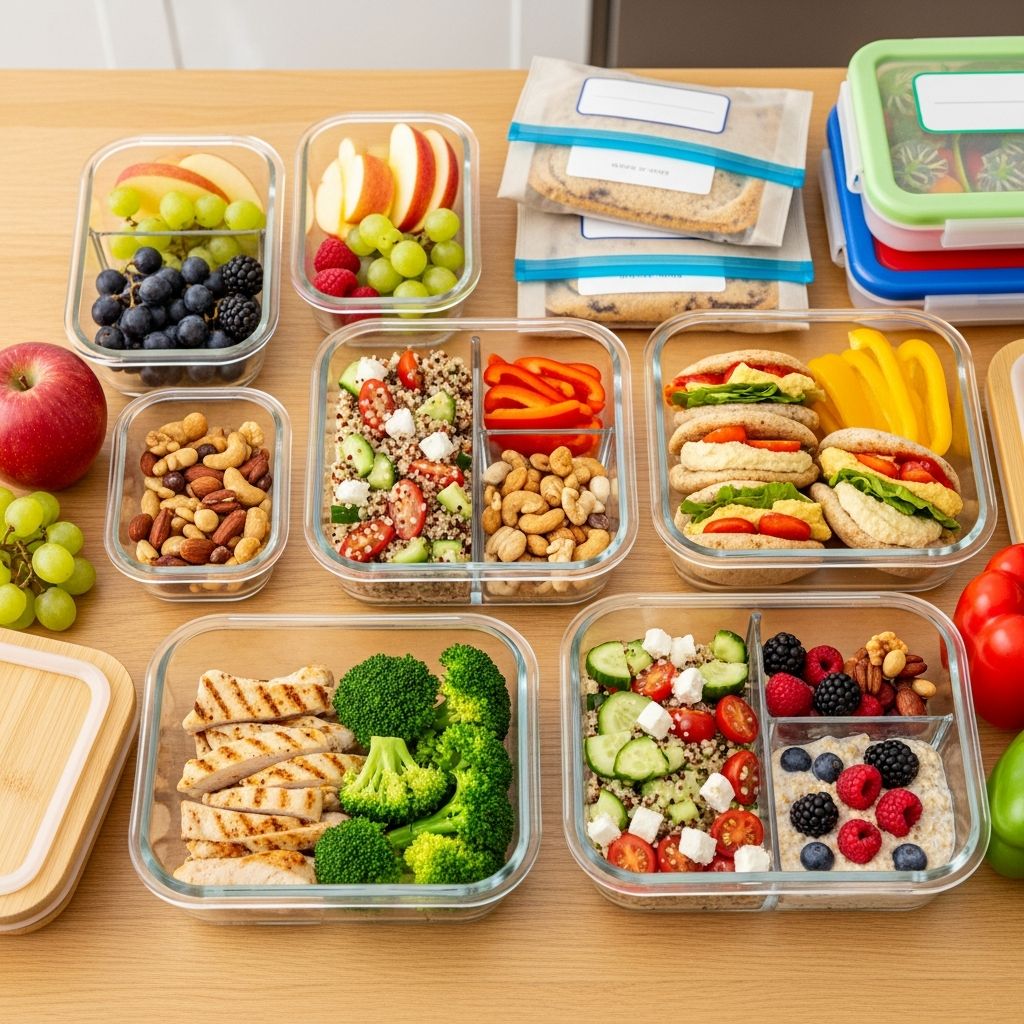
School lunches should be nutritious, appealing, and simple to assemble. Shift from daily packing to weekly sessions, using bento-style boxes for visual allure and portion control.
- Protein Power: Pre-cook grilled chicken strips, hard-boiled eggs, or tuna salad.
- Grain Boost: Cook brown rice or pasta salads with veggies and light dressings.
- Crunchy Veggies: Slice carrots, cucumbers, and bell peppers; store in water to stay crisp.
- Sweet Finish: Add yogurt cups or fruit slices for satisfaction.
Rotate options to combat boredom: Monday wraps, Wednesday skewers, Friday pasta. This variety encourages consumption, aligning with CDC recommendations for school-aged children’s daily nutrient needs.
One-Pan Wonders for Weeknight Wins
When evenings tighten, one-pan meals minimize dishes and maximize flavor. These recipes cook entirely on a single surface, blending proteins, veggies, and starches seamlessly.
- Lemon Herb Sheet Pan Chicken: Toss thighs, potatoes, and broccoli with oil, garlic, and zest; roast at 425°F for 35 minutes.
- One-Pot Pasta Primavera: Sauté onions, add pasta, broth, tomatoes, and zucchini; simmer 12 minutes until al dente.
- Skillet Sausage and Peppers: Brown kielbasa with onions, peppers, and rice; cover and steam for 20 minutes.
Such methods reduce cleanup by 70%, per kitchen efficiency research, freeing time for homework help or relaxation.
Smart Storage and Freezer Hacks
Proper storage extends meal life and maintains quality. Invest in airtight glass containers and freezer bags to portion family-sized servings.
- Label with contents and dates using a marker.
- Freeze flat for space-saving stacking.
- Thaw in fridge 24 hours ahead; reheat to 165°F internal temperature.
Doubling recipes like chilis or casseroles creates a freezer arsenal for unexpected delays. Rotate stock every month to keep meals fresh-tasting.
Nutrition Balance in Every Prep
Amid convenience, prioritize half plates veggies, quarter proteins, quarter grains. Incorporate colorful produce for vitamins; choose lean meats and whole grains for sustained energy. Hydration stations with infused waters encourage better habits over sugary drinks.
For picky eaters, hide veggies in sauces or muffins. The MyPlate model from USDA guides balanced preps effortlessly.
Frequently Asked Questions
How much time should I dedicate to weekly meal prep?
Two to four hours on weekends suffices for a family of four, yielding 5-7 dinners plus lunches. Scale based on household size.
Can I prep meals with dietary restrictions?
Absolutely—substitute gluten-free grains, plant proteins for vegetarian, or low-sodium seasonings. Always check labels.
What if my kids refuse prepped foods?
Involve them in prep; offer choices within categories. Start small, praising efforts to build acceptance.
Are slow cookers worth it for busy parents?
Yes, set-it-and-forget-it meals like pulled pork or stews cook unattended, ready post-school rush.
How do I avoid meal prep burnout?
Vary recipes seasonally; enlist family rotation. Treat prep day as self-care with music and snacks.
References
- ChooseMyPlate.gov: MyPlate Plan — United States Department of Agriculture. 2023-10-01. https://www.choosemyplate.gov/
- School Breakfast Scorecard — Food Research & Action Center. 2024-09-15. https://frac.org/school-breakfast-scorecard
- Food Safety for School Lunches — Centers for Disease Control and Prevention. 2025-01-10. https://www.cdc.gov/foodsafety/foods/school-meals.html
- Dietary Guidelines for Americans, 2020-2025 — U.S. Department of Health and Human Services. 2020-12-01. https://www.dietaryguidelines.gov/
- Meal Planning for Busy Families — Academy of Nutrition and Dietetics. 2024-08-20. https://www.eatright.org/