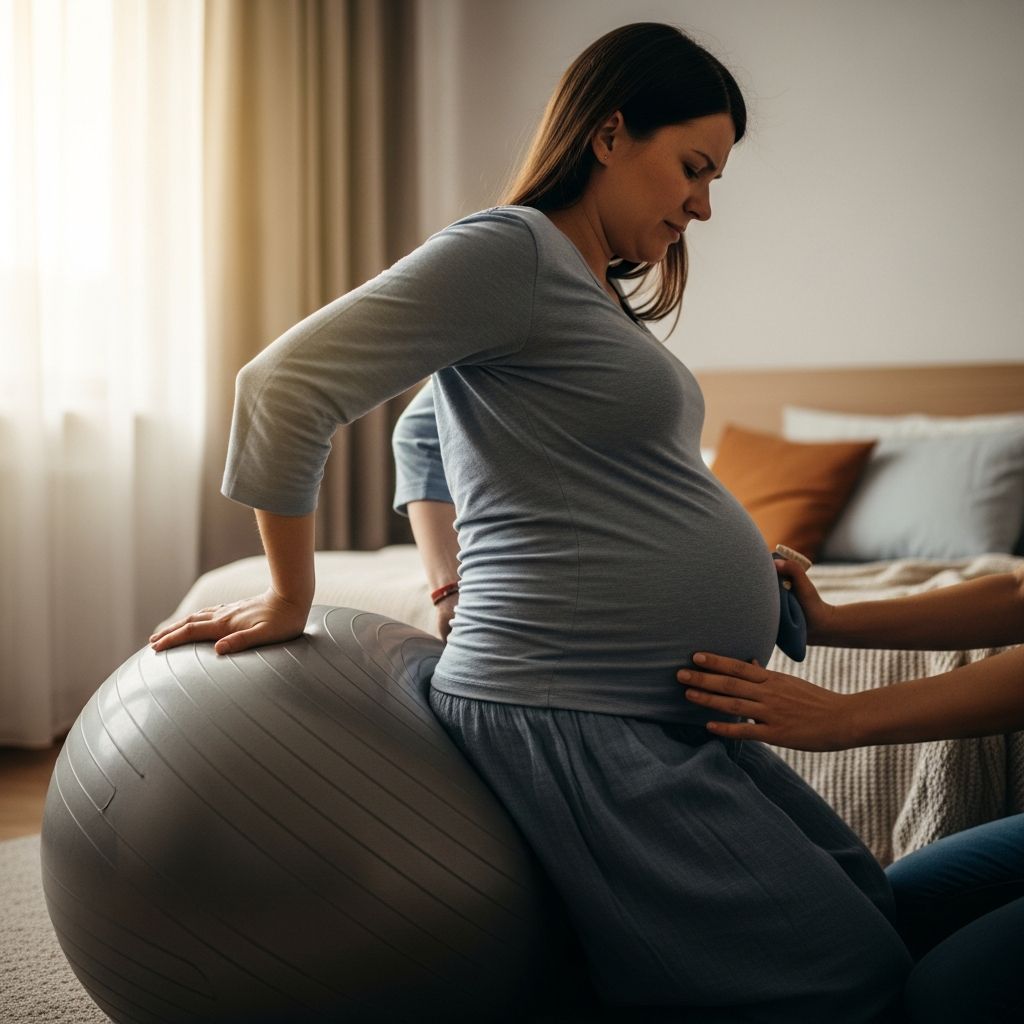
Back labor refers to the severe, persistent pain concentrated in the lower back during childbirth, affecting roughly 25% to 33% of women in active labor. This discomfort often stems from the baby’s position pressing directly on the mother’s spine and tailbone, distinguishing it from typical abdominal contractions.
Recognizing the Signs of Back Labor
Unlike standard labor pains that radiate from the front of the abdomen, back labor delivers unrelenting agony in the lumbar region that intensifies with each contraction. Women commonly report a deep, throbbing sensation that feels like the spine is under constant assault, sometimes accompanied by muscle spasms or a bruised tailbone feeling even when not contracting.
- Constant lower back pressure: Pain lingers between contractions, unlike frontal labor where relief comes during intervals.
- Peak intensity during surges: Discomfort escalates sharply as the uterus tightens, wrapping pain around to the back.
- Physical indicators from baby: Intense fetal movements, limited sensation of the baby’s back across the belly, or kicks felt strongly from side to center.
- Positional woes: Sitting or lying down worsens the tailbone ache, signaling possible posterior positioning.
These symptoms typically emerge in active labor, around 6 cm cervical dilation, and persist until delivery unless the baby’s position shifts. Distinguishing back labor from routine pregnancy backaches is key: the former ties directly to labor contractions and demands attention.
Primary Causes Behind the Discomfort
The leading culprit is the fetus adopting an occiput posterior (OP) position, where the baby’s face points toward the mother’s abdomen instead of her spine. In this “sunny-side-up” alignment, the head’s posterior fontanelle presses firmly against the sacrum, transmitting forceful pressure wave after wave.
Not every OP baby triggers back labor, as some rotate naturally or cause minimal issues. Other factors include:
- Prior back pain history, such as during menstruation, which may predispose women regardless of fetal stance.
- Hormonal shifts loosening pelvic joints, amplifying strain late in pregnancy.
- Irregular contractions or slow labor progression, prolonging exposure to pressure.
| Fetal Position | Description | Impact on Labor |
|---|---|---|
| Occiput Anterior (OA) | Baby faces mother’s back | Smooth descent, frontal contractions |
| Occiput Posterior (OP) | Baby faces mother’s abdomen | Back pressure, prolonged labor possible |
| Left/Right Occiput Anterior (LOA/ROA) | Optimal side-facing | Balanced movements, less back pain |
Understanding these dynamics empowers expectant mothers to monitor belly mapping—feeling for the baby’s back and limbs—to anticipate potential challenges.
Potential Risks and Complications
While back labor poses no direct threat to mother or baby, its intensity can lead to secondary issues. Prolonged discomfort often results in exhaustion, irregular contraction patterns, and extended pushing phases, increasing intervention needs.
- Fatigue risk: Constant pain hinders rest between contractions, depleting energy reserves.
- Delivery aids: Higher likelihood of forceps, vacuum extraction, or episiotomy due to stalled descent.
- Surgical birth: About 10-15% of OP cases may necessitate cesarean if rotation fails.
- Pain management escalation: More women opt for epidurals or other medications mid-labor.
Preterm labors (before 37 weeks) rarely feature back labor, while post-term (after 40 weeks) pregnancies see elevated incidence. Proactive monitoring by healthcare providers mitigates these risks effectively.
Effective Strategies for Pain Relief
Relief begins with movement: frequent position changes encourage fetal rotation and alleviate spinal pressure. Hands-and-knees posture, supported squats, or lunges target OP repositioning.
- Counterpressure: Firm massage or pressing a fist into the lower back during peaks provides immediate counterforce.
- Heat therapy: Warm compresses or showers relax tense muscles around the sacrum.
- Hydrotherapy: Laboring in a tub reduces overall pain perception by 30-50% in some studies.
- Sterile water injections: Tiny saltwater shots into back points offer short-term relief lasting up to 90 minutes.
For medical options, epidurals effectively numb back labor but may slow progress further in OP cases. Combining non-pharmacological techniques maximizes comfort without full reliance on drugs.
Preparation Tips Before Labor Begins
Prenatal strategies build resilience: Strengthen core and pelvic floor with exercises like pelvic tilts and cat-cow yoga poses to support optimal positioning. Daily walks and swimming maintain flexibility, potentially preventing OP settling.
Work with a doula or midwife for belly mapping sessions from 36 weeks, tracking fetal movements to predict risks. Discuss birth plans emphasizing mobility and pain tools with your obstetrician, ensuring hospital policies align with active labor preferences.
Real Experiences: Navigating Back Labor
Many mothers describe back labor as a “ring of fire” encircling the lower spine, far eclipsing frontal waves in ferocity. One common thread: relief surges when the baby rotates anteriorly, often after targeted positions or pushing efforts. Post-delivery, residual soreness fades within days, affirming the ordeal’s temporary nature.
Success stories highlight empowerment: Women using peanut balls between knees or double-hip squeezes report breakthroughs, birthing vaginally despite predictions of intervention.
Frequently Asked Questions (FAQs)
Can back labor start before active labor?
No, it typically begins in active labor around 6 cm dilation, differing from general pregnancy backaches.
Does every occiput posterior baby cause back labor?
Not necessarily; some deliver without extra pain, but it heightens the risk significantly.
Is back labor harmful to the baby?
Directly, no—but it may prolong labor, indirectly raising intervention chances.
How long does back labor last?
Until delivery or rotation occurs; it can span hours but often eases with position shifts.
Can I prevent back labor?
Not fully, but prenatal exercises, optimal positioning, and awareness improve odds.
Empowering Your Birth Journey
Armed with knowledge, women facing back labor transform challenge into triumph through informed choices and support. Collaborate closely with your care team, trust your body’s cues, and prioritize techniques that foster rotation and comfort for a positive outcome.
References
- What Is Back Labor? Symptoms, Treatment, and More — WebMD. 2023-10-15. https://www.webmd.com/baby/what-is-back-labor
- Back Labor Signs and Symptoms: Why Does it Occur? — My Baby’s Heartbeat Bear. 2024-05-20. https://www.mybabysheartbeatbear.com/blogs/pregnancy/back-labor-signs-and-symptoms-why-does-it-occur
- Back Labor — American Pregnancy Association. 2023-08-12. https://americanpregnancy.org/healthy-pregnancy/labor-and-birth/back-labor/
- Back Labor: Signs, How It Feels, Causes & Relief — Cleveland Clinic. 2024-02-28. https://my.clevelandclinic.org/health/symptoms/21767-back-labor
- What Is Back Labor? — Baptist Health. 2023-11-05. https://www.baptisthealth.com/blog/mother-and-baby-care/what-is-back-labor
- Is it Time? Signs You Might Be in Labor — West Tennessee Healthcare. 2024-01-10. http://www.wth.org/blog/is-it-time-signs-you-might-be-in-labor/