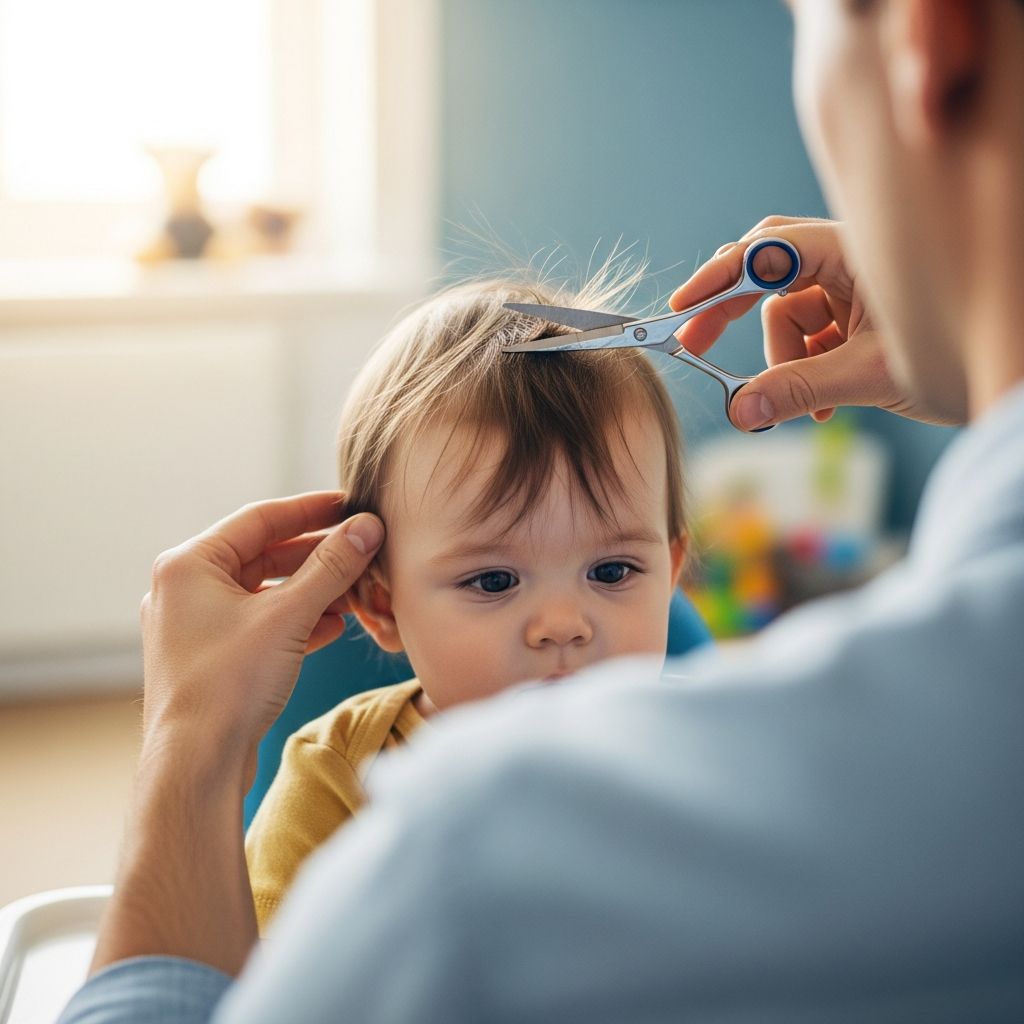
That first little trim can feel like a bigger milestone than a birthday. Your baby suddenly looks less like a newborn and more like a full-fledged kid, and it all seems to happen in a single snip. This guide walks you through when to schedule that first haircut, how to prepare, and what to expect so the day feels special instead of stressful.
How to Know Your Baby Is Ready for a Haircut
There is no universal age when every child must have a first haircut. What matters more is how your baby’s hair is growing and whether it’s starting to interfere with their comfort or care. Some babies need a tiny trim before their first birthday, while others cruise into toddlerhood with barely any hair at all.
- Hair constantly in the eyes, causing rubbing or tearing.
- Strands getting stuck in food, bottles, or pacifiers.
- Thick tangles forming at the back where the head rubs against the mattress or car seat.
- Uneven patches that make basic brushing difficult or uncomfortable.
If one or more of these apply, or you simply want a neater look for family photos or a special event, it may be time to plan that first haircut.
Myths and Facts About Baby Haircuts
First haircuts attract a lot of well-meaning advice, much of it conflicting. Before you pick up the scissors, it helps to separate myth from reality so you can make decisions confidently.
- Myth: Cutting baby hair makes it grow back thicker.
Fact: Hair thickness is determined by genetics and the hair follicle under the scalp. Trimming the ends can make hair look fuller and healthier, but it does not change how many hairs grow or their natural thickness. - Myth: You should never cut hair before a certain age.
Fact: There is no medical rule about timing. As long as the baby can be held safely and you use appropriate tools, a gentle trim can be done whenever hair is bothering them. - Myth: All babies hate haircuts.
Fact: Some babies fuss, but many are simply curious. With good timing, distractions, and a calm adult, the experience often goes more smoothly than expected.
Choosing Between Home Haircut and Salon Visit
The first big decision is whether to attempt the haircut yourself or have a professional do it. Both choices can work beautifully; the best option depends on your comfort level, your baby’s temperament, and your access to child-friendly salons.
| Option | Pros | Potential Drawbacks |
|---|---|---|
| Home haircut |
|
|
| Children’s salon or barber |
|
|
If you’re very nervous about using scissors around a moving baby, starting with a children’s salon can take that pressure off and let you observe how the professionals do it.
Preparing Your Baby (and Yourself)
A smooth haircut begins long before that first snip. Gentle preparation helps your baby feel safe with the sensations and sounds of the process, and it also helps you feel more in control.
Get Your Baby Used to Hair Care
- Brush or comb your baby’s hair daily using a soft, baby-friendly brush.
- Pretend to “cut” hair with your fingers or a soft comb while you say words like “snip” or “trim” in a cheerful tone.
- Let your baby touch a clean comb or a closed pair of child-safe scissors (with your hand on them) so the objects feel familiar.
Use Stories and Play
- Read picture books or show short videos about characters getting a haircut.
- Give stuffed animals or dolls “haircuts” with a toy comb, narrating what’s happening in simple, positive language.
- Play pretend salon: sit your baby in your lap, drape a small cloth over their shoulders, and gently brush their hair while chatting.
Pick the Right Time of Day
- Avoid cutting hair right before naps or meals when your baby is likely to be cranky.
- Choose a time when your baby is typically content: after a nap and feeding is ideal.
- Allow extra time so you don’t feel rushed if you need breaks, cuddles, or a diaper change mid-haircut.
Essential Tools for a Safe First Haircut
Whether you’re trimming at home or bringing items along to the salon, having the right tools makes the process easier and safer. You don’t need professional equipment, but you do want tools that are sharp enough to cut cleanly and gentle enough for delicate skin.
- Haircutting scissors: Small, sharp scissors designed for hair, ideally with rounded tips.
- Fine-tooth comb: For lifting and sectioning small portions of hair.
- Spray bottle with water: To lightly dampen hair for more precise cutting, if your baby tolerates it.
- Soft towel or cape: To cover clothes and catch loose hair.
- High chair, booster, or your lap: A secure seat with a strap or your arms wrapped around your baby.
- Distractions: Snacks, a favorite toy, a board book, or a short video within easy view.
- Envelope or small container: For saving a curl or lock of hair as a keepsake.
If you plan to use clippers, choose a quiet model and attach a higher guard than you think you need; you can always trim more, but you cannot add length back.
Step-by-Step: Giving a Simple Home Haircut
A first haircut does not need to be complicated or trendy. A simple tidy-up focused on safety is the perfect starting point. Move slowly, keep your expectations realistic, and remember that small, conservative cuts are easier to correct later.
1. Set Up the Space
- Choose a well-lit room with minimal distractions for you.
- Place a towel or sheet on the floor or over the high chair to catch hair.
- Lay out scissors, comb, spray bottle, tissue, and a small envelope for keepsake hair within arm’s reach.
2. Secure and Comfort Your Baby
- Seat your baby in a high chair, on the other parent’s lap, or on your lap facing a mirror or screen.
- Buckle straps if available, and keep one arm gently around your baby’s torso when using scissors.
- Start a soothing activity: play soft music, offer a snack, or begin a favorite show.
3. Dampen and Detangle
- If your baby tolerates it, lightly mist the hair with water. The hair should be damp, not dripping.
- Comb through gently, starting at the ends and working toward the scalp to remove tangles.
- Skip the water if your baby is sensitive to sprays; dry cuts are fine as long as you work slowly.
4. Trim the Bangs (If Needed)
- Stand or sit directly in front of your baby so you can see their forehead clearly.
- Comb down a very small section of hair above the eyebrows and twist it slightly between your fingers.
- Hold the hair away from the face and snip just the very tips with the scissors angled slightly upward so the line is soft, not blunt.
- Release the hair, check the length, and repeat with tiny adjustments rather than one big cut.
5. Tidy the Sides and Back
- Work on one area at a time so you never lose track of what you’ve already cut.
- Comb a narrow section of hair out from the head, hold it between two fingers, and trim a small amount from the ends.
- Keep your fingers between the scissors and your baby’s skin as a safety buffer.
- When trimming near ears, gently fold the ear down and away with your free hand.
6. Check for Symmetry (But Don’t Chase Perfection)
- Step back, look at both sides in a mirror, and make minor touch-ups only if needed.
- Move your baby’s head gently from side to side to make sure lengths look reasonably even.
- Stop once the overall shape looks neat; you can always refine at the next haircut.
7. Clean Up and Celebrate
- Use a soft cloth or baby wipe to remove stray hairs from the neck and face.
- Save a small curl or a first lock of hair in your envelope, labeled with your baby’s name and age.
- Take a “before and after” photo, offer extra cuddles, and make it a happy memory.
If You Choose a Salon: What to Look For
When you decide to leave the haircut to a professional, selecting the right place makes all the difference. Not every salon is set up for wiggly babies, so it’s worth doing a bit of research.
- Look for salons or barbers that specifically mention children or first haircuts in their services.
- Ask whether they have special seating, toys, or screens, and how they handle anxious or crying children.
- Check whether you can sit with your baby, hold them on your lap, or stand nearby for comfort.
- Confirm pricing, approximate duration, and whether they offer a certificate or hair keepsake if that matters to you.
Before the appointment, explain to your baby where you’re going, even if they are very young. Your calm voice and familiar words help the new environment feel less surprising.
Simple, Practical First Haircut Styles
The first haircut is usually more about comfort than fashion, but you can still choose a style that suits your baby’s personality and hair type. Keep maintenance and ease of brushing in mind when deciding.
- Soft trim: A gentle shortening of the ends all around to remove wispy or uneven sections while keeping the original look.
- Eye-clearing fringe: A light, feathered bang that keeps hair out of the eyes without creating a heavy line.
- Curly clean-up: Shaping curls around the face and neckline so they spring up naturally without knots.
- Simple bob for straight hair: A chin-length cut that is easy to brush and looks neat even as it grows.
- Short back and sides: For babies with very thick hair, gently shortening the sides and back while leaving a bit more length on top.
Whatever style you choose, focus on how quickly it will grow out and how much daily styling it will need. For most families, low-maintenance, natural-looking cuts are best at this stage.
Keeping Your Baby Calm During the Haircut
Even with careful planning, some babies will fuss, squirm, or cry. The goal is not total stillness but a safe, kind experience. Small adjustments in your approach can make a big difference.
- Stay relaxed yourself: Babies pick up on adult tension. Speak softly and move slowly.
- Use comfort items: Offer a favorite stuffed animal, blanket, or pacifier.
- Offer a snack: Dry, easy-to-eat snacks can distract older babies and toddlers.
- Try distraction: Sing songs, make funny faces, or use a short video as a visual focus.
- Take breaks: If your baby becomes very upset, pause, cuddle, and try again later or on another day.
Remember that even a partially finished haircut can be tidied up later when everyone is calmer. Safety and emotional comfort matter more than a perfect style.
Safety Tips You Should Never Skip
Because you are working with sharp tools around a tiny, moving head, safety needs to come before speed or style. A few non-negotiable rules help keep everyone safe.
- Only cut hair when another adult is present if your baby is very young or very active.
- Never leave scissors or clippers within your baby’s reach, even for a moment.
- Keep your fingers between the blades and your baby’s skin at all times.
- Do not attempt complex layering or very short clipper styles at home for the first haircut.
- Stop immediately if your baby suddenly jerks or you lose your grip; reset and check for any signs of nicks.
If you accidentally nick the skin, apply gentle pressure with a clean cloth. Seek medical advice if a cut looks deep, keeps bleeding, or is near the eyes.
Aftercare: Washing, Styling, and Next Steps
Once the hair is cut, a bit of aftercare keeps your baby comfortable and helps you decide when it is time for the next trim. Hair continues to change quickly in early childhood, so flexibility is key.
- Give your baby a bath or gentle rinse to wash away itchy clippings.
- Use a mild, tear-free shampoo and avoid heavy conditioners unless your baby’s hair is very thick or curly.
- Comb or brush hair daily to prevent tangles and help your baby stay used to hair handling.
- Note when the cut starts to look uneven or hair returns to the eyes; that interval becomes your rough schedule for future trims.
Many families find that scheduling trims every few months keeps hair comfortable while avoiding constant battles with combs and clips.
Making It a Memory: Keepsakes and Traditions
Beyond the practical side, the first haircut is an emotional moment for many parents. Turning it into a small celebration can help you enjoy it instead of rushing through. You may even start a family tradition your child cherishes later.
- Save a tiny curl or small lock of hair in an envelope, baby book, or shadow box.
- Take before, during, and after photos to look back on how much your child has grown.
- Write down a few notes: age, where the haircut happened, who was there, and any funny details.
- Mark the day with a little treat, such as a special walk, a favorite snack, or a new hair accessory.
Someday, your child may enjoy hearing the story of how nervous you were about that first tiny trim and how proud they looked afterward.
FAQs About Baby’s First Haircut
- What is the best age for a first haircut?
- There is no single “right” age. Many babies have their first trim sometime between 6 and 24 months, but the timing depends on how quickly hair grows and whether it is bothering your child. If hair is falling into the eyes, matting frequently, or causing discomfort, it is reasonable to consider a gentle cut.
- Will cutting my baby’s hair change the color or texture?
- Trimming the ends does not change the color or structure of the hair growing from the follicle. It is normal, however, for baby hair to look and feel different over time as the very soft newborn hairs shed and are replaced by thicker, more pigmented strands.
- Is it okay to shave my baby’s head?
- Some families carry cultural or religious traditions involving shaving a baby’s head. If you are considering this, use an experienced professional and make sure your child’s scalp is healthy. Shaving does not make new hair grow in thicker or darker, though the short regrowth can feel stubbly at first.
- What if my baby cries the entire time?
- Some crying or fussing is common, especially during a first haircut. If your baby becomes very distressed, pause the process, offer comfort, and decide whether to continue or try again another day. A half-finished trim can be evened out later by a professional if needed.
- How often will my child need haircuts after the first one?
- It varies from child to child. Some need only a couple of trims a year, while others with very fast-growing hair may benefit from a gentle tidy-up every 6 to 8 weeks. Use your child’s comfort and ease of daily care as your guide.
- Do I need special baby hair products?
- Most young children do well with a mild, fragrance-light shampoo and no styling products at all. For very curly or coarse hair, a small amount of leave-in conditioner recommended by your pediatrician or stylist may help with detangling. Avoid strong gels, sprays, and products with harsh fragrances on baby scalps.
Handled with patience, clear expectations, and a sense of humor, your baby’s first haircut can be a sweet milestone instead of a stressful one. Focus on safety, comfort, and connection, and you will walk away with more than just a new hairstyle—you will gain another shared memory on your family’s journey.