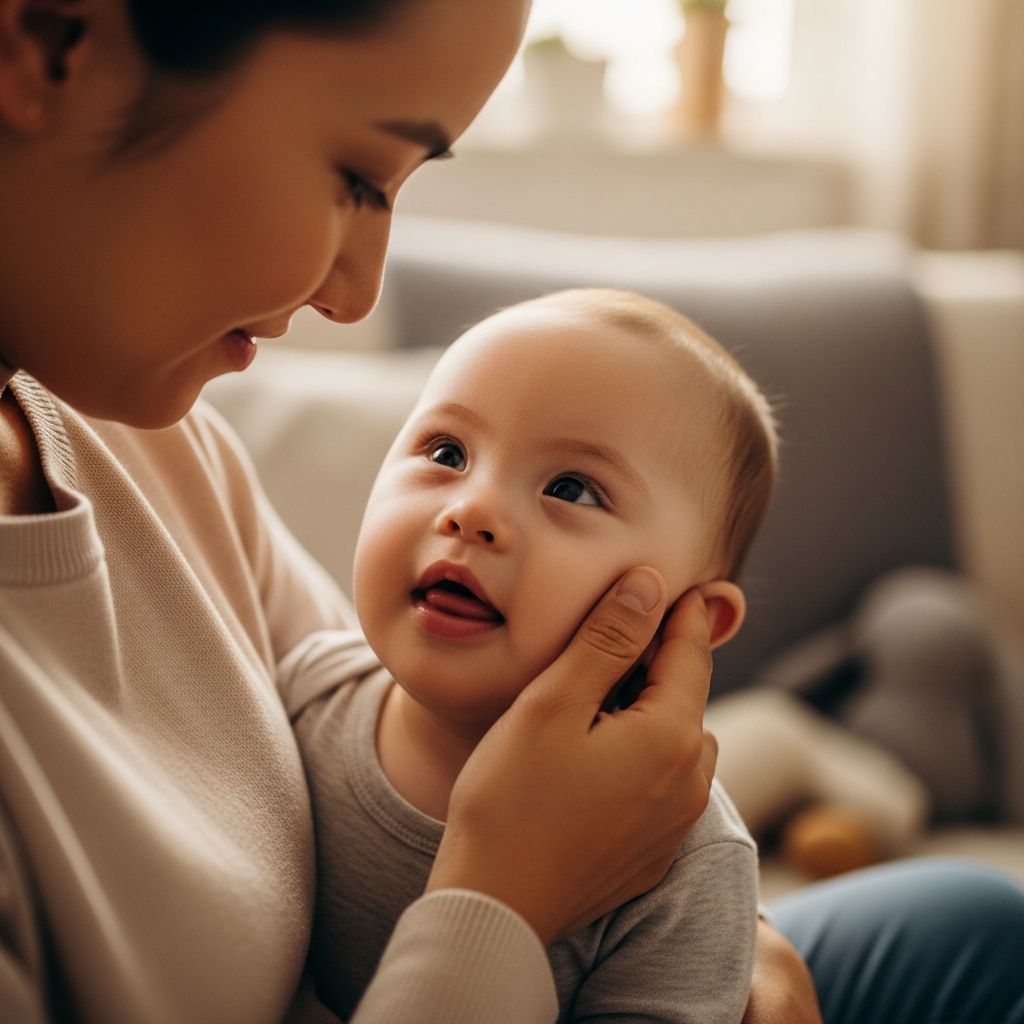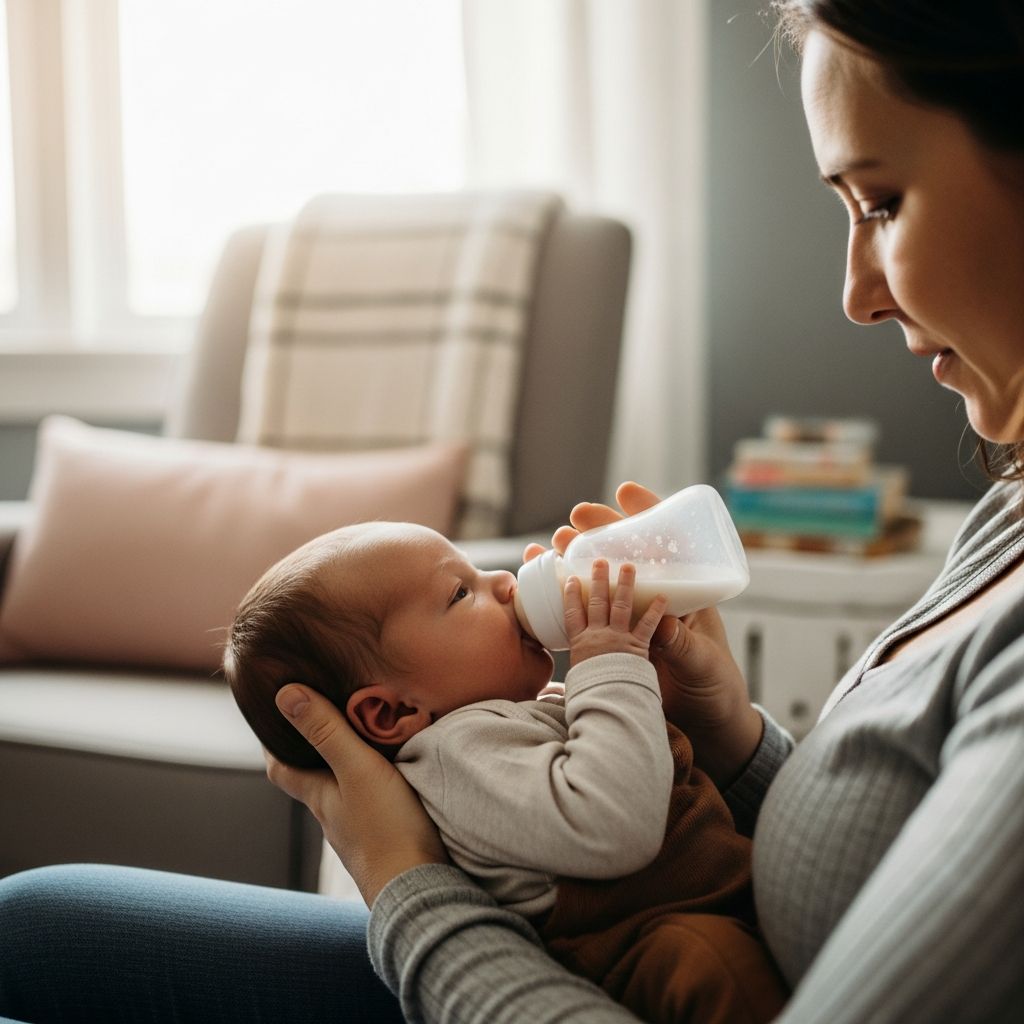
Many new parents wonder whether cooing in a sing-song voice is helpful or just plain embarrassing. The truth is that so-called “baby talk” is one of the simplest, most powerful tools you have to support your child’s brain, language, and emotional development.
What Is Baby Talk, Really?
When people talk about “baby talk,” they often mean infant-directed speech—a way of speaking that naturally emerges when adults talk to babies. It usually includes a higher pitch, slower pace, clear pronunciation, and exaggerated emotion. Think of it as your normal voice with the volume turned down on complexity and turned up on warmth.
Infant-directed speech is not about using nonsense words all day. It is about adjusting your tone, rhythm, and clarity so your baby can pay attention more easily and begin to notice patterns in the sounds of your language. This creates a kind of spotlight on speech, making it easier for your baby’s brain to sort, organize, and eventually reproduce what they hear.
- Higher pitch and musical tone help hold your baby’s attention.
- Slower, clearer speech gives your baby time to process sounds.
- Exaggerated emotion makes conversation more engaging and social.
The Science Behind Baby Talk
Over the past several decades, researchers have studied how parents and caregivers talk to babies and how those conversations shape language growth. While every child develops at a unique pace, patterns consistently show that babies exposed to frequent, warm, and responsive speech tend to build stronger language and social skills.
Studies looking at brain activity suggest that babies are especially tuned in to the pitch and rhythm of infant-directed speech. This special kind of speech appears to help them focus, connect with the speaker, and start building the building blocks of understanding words, sounds, and conversational turn-taking.
Key Benefits Backed by Research
- Increased attention: Babies usually look longer and listen more closely when adults use a sing-song style.
- Stronger vocabulary: Children who hear more frequent, high-quality speech often use more words and phrases as toddlers.
- Better social skills: Responsive conversations, even with a preverbal infant, support social understanding and emotional bonding.
Baby Talk vs. “Parentese” vs. Real Words
Not all baby talk is created equal. It helps to distinguish between playful nonsense and what many experts call parentese—a style that combines real words with child-friendly delivery. Parentese keeps grammar and vocabulary intact while making speech easier for a baby’s brain and ears to process.
Using fun nicknames or silly sounds once in a while will not ruin your child’s language development, but leaning on made-up words for key objects can slow down how quickly your baby maps sounds to meanings. A comfortable balance keeps speech engaging but still clear and accurate.
| Style | Main Features | Pros | What to Watch For |
|---|---|---|---|
| Parentese (infant-directed speech) | Higher pitch, slower tempo, clear pronunciation, real words, simple sentences | Supports attention, bonding, and early language learning | May feel silly at first, especially around other adults |
| Everyday adult speech | Regular pitch, normal speed, complex vocabulary and grammar | Models natural conversation and advanced language structures | Can be too fast and dense for very young infants to follow |
| Nonsense “baby babble” only | Invented words, random sounds, little connection to real language | Entertaining and playful in small doses | If overused, gives fewer chances to learn real words and meanings |
How Baby Talk Shapes the Brain
Early speech exposure is like nutrition for the developing brain. When babies hear speech directed at them, multiple regions of the brain light up—those involved in sound processing, social engagement, and eventually planning their own speech. Repeated exposure builds and strengthens these pathways, much like exercise builds muscle.
The magic does not come only from the number of words a baby hears, but also from the quality of those interactions. Short, back-and-forth exchanges—where a caregiver responds to a baby’s sounds or gestures—seem especially powerful. This kind of conversational turn-taking teaches babies that their sounds matter and that communication is a shared activity.
- Every coo you answer is a mini language lesson.
- Every shared smile turns speech into a social game.
- Every repeated word helps cement sound-meaning connections.
Practical Ways to Use Baby Talk
You do not need a script or special training to talk to your baby effectively. The goal is not perfection but consistent, warm, and responsive interaction. Below are simple routines that turn ordinary moments into rich language experiences.
During Daily Care
- Diaper changes: Describe what you are doing in simple, cheerful phrases. Name body parts, textures, and sensations.
- Feeding time: Talk about the food, its colors, smells, and tastes. Pause to let your baby look at you or vocalize back.
- Bath time: Narrate the sequence—water on, soap, rinse, towel—while labeling familiar objects.
On the Go
- Walks and errands: Point out what you see—cars, trees, people, animals—and react to your baby’s gaze and gestures.
- Waiting in line: Turn boring moments into “I spy” style chats, adapted for infants: colors, lights, sounds.
- Car rides: Even when facing away from you, your baby can still benefit from hearing a calm, steady voice describing the ride.
Play and Story Time
- Face-to-face play: Sit close, use exaggerated expressions, and repeat simple words that match your baby’s interests.
- Books: Even with newborns, point to pictures and name them slowly and clearly, with warmth and expression.
- Songs and rhymes: Simple melodies and predictable patterns help your baby anticipate sounds and rhythms.
Finding Your Own Natural Style
Not every adult feels comfortable slipping into a high-pitched, cartoonish voice, and that is okay. Babies benefit most when adults sound engaged and emotionally present, not like they are performing. You can adjust your voice in smaller, more natural ways while still using the core features of infant-directed speech.
Many caregivers discover that a gentle softening of tone, a slight rise in pitch, and clearer enunciation feel authentic. Others find that adding more pauses and eye contact makes their speech feel connected, even without a dramatic change in pitch. The best style is the one you can maintain consistently without feeling false.
Tips for Staying Authentic
- Lean into warmth more than extreme pitch.
- Use real words and short sentences that match your personality.
- Watch your baby’s cues; if they look interested, you are on the right track.
Common Myths About Baby Talk
Because baby talk is often portrayed in exaggerated or comedic ways in media, myths and misunderstandings are common. Sorting fact from fiction can help you relax and focus on what actually supports your child.
Myth 1: Baby Talk Makes Children Talk Later
Some adults worry that using a playful, simplified style will delay speech. In reality, using real words in a clear, engaging way tends to support earlier and richer language, not slower development. Problems arise only when children rarely hear accurate language or when adults speak for children so much that they have few chances to practice their own sounds.
Myth 2: You Must Talk Nonstop
Another misconception is that a “good” parent fills every silence with speech. Babies also need quiet moments to rest and process. Quality matters more than constant noise. Short, tuned-in exchanges—where you notice your baby’s focus and respond to it—do more good than a wall of words they cannot possibly follow.
Myth 3: Only Extroverted Parents Can Do It Well
Introverted or soft-spoken caregivers sometimes feel at a disadvantage, but that is not the case. A calm, gentle voice that responds reliably to your baby’s signals can be just as powerful as a bubbly, talkative style. The key is responsiveness, not volume or showmanship.
Supporting Language in Multilingual Homes
Many families use more than one language at home, and baby talk can comfortably coexist with a multilingual environment. Babies are capable of tracking sounds and patterns from multiple languages at once, especially when exposure is consistent and emotionally rich.
Rather than worrying about confusion, focus on offering clear, warm speech in each language. Babies quickly learn that different people may use different sounds for the same concepts, and this flexibility can even support cognitive skills later in childhood.
- Choose who will speak which language most of the time (if possible).
- Use infant-directed speech features—warmth, clarity, slower pace—in every language you use.
- Read simple books and sing songs in each language to provide steady exposure.
When Baby Talk Feels Awkward
It is common to feel self-conscious, especially in public or around people who do not spend a lot of time with babies. You might worry others are judging you, or that you sound foolish. Remember that your primary audience is your baby, not the adults nearby.
If you feel uncomfortable, you do not need to perform. Try these low-pressure strategies that maintain the benefits of baby talk without drawing extra attention.
- Lower your volume, not your warmth: You can maintain a gentle, expressive tone while speaking quietly.
- Use narration: Simply describe what you and your baby are doing in clear, calm sentences.
- Focus on eye contact: Even subtle changes in your expression and rhythm signal to your baby that you are engaged.
Signals Your Baby Is Engaged
Babies cannot say “this is helpful, keep going,” but their bodies provide rich feedback. Paying attention to these signals helps you adjust your style and timing, making conversations more enjoyable for both of you.
Signs to Keep Going
- Leaning toward you or turning their head to your voice.
- Widened eyes, smiles, or attentive, relaxed facial expressions.
- Cooing, babbling, or kicking their legs while you talk.
Signs to Pause or Soften
- Looking away and not coming back to your face after a few moments.
- Fussing or stiffening their body.
- Yawning, rubbing eyes, or other signs of tiredness.
Age-by-Age Ideas for Talking with Your Baby
Every baby develops on a unique timeline, but having age-appropriate ideas can make it easier to know how to talk and what to expect. Use these suggestions as gentle guidelines rather than strict rules.
| Age Range | What Babies Often Do | How You Can Respond |
|---|---|---|
| 0–3 months | Focus briefly on faces and voices, startle at loud sounds, make soft coos | Use gentle, sing-song speech, hold them close, pause after coos as if in conversation |
| 3–6 months | Smile socially, laugh, explore sounds with squeals and early babbles | Echo their sounds back, introduce simple words for favorite people and objects |
| 6–9 months | Babble with repeated syllables, respond to their name, look where you point | Name what they look at, turn babble into back-and-forth “conversations” |
| 9–12 months | Use gestures like pointing or waving, try to imitate sounds, understand simple phrases | Use clear, consistent words for everyday things, respond enthusiastically to gestures and attempts to talk |
When to Ask a Professional
Variation in early language milestones is normal, and many late talkers eventually catch up. Still, it is wise to seek guidance if you feel uneasy about your child’s communication. Trusting your instincts and asking questions early can bring peace of mind and, when needed, timely support.
Consider discussing your concerns with a pediatrician or speech-language professional if, for example, your baby rarely reacts to sounds, does not turn toward voices, or shows little interest in social interaction. These signs do not automatically mean a serious problem, but they do merit a closer look.
Frequently Asked Questions About Baby Talk
Is it okay to use nicknames like “wawa” for water?
Occasional playful nicknames are fine, but try to pair them with the real word or gradually phase them out. The more often your baby hears the correct term, the easier it is to link that sound with meaning. If you do use a nickname, be consistent and keep the real word in regular rotation.
How many words should my baby hear each day?
There is no perfect number. What matters more is that your baby hears frequent, warm, and responsive speech. Instead of counting words, focus on noticing what catches your baby’s attention and talking about that in a relaxed, engaging way.
Can watching videos with baby talk replace real interaction?
Screens, even when they use infant-directed speech, cannot match the impact of real human interaction. Babies learn best when an actual person responds to their sounds, movements, and facial expressions. Occasional screen time may be part of modern life, but it works best as a supplement to—not a substitute for—live conversation.
What if my partner and I use different styles?
Babies can adapt to multiple speaking styles, just as they can adapt to multiple languages. Variety can be enriching, as long as each caregiver offers consistent warmth, clarity, and responsiveness. Rather than forcing one “correct” style, aim for a shared commitment to tuning in to your baby.
Do I need to correct my toddler’s cute mispronunciations?
There is no need to criticize or pressure a child who is experimenting with language. Simply repeat the word back correctly in your own sentence. This provides a gentle model while preserving their confidence and joy in talking.
Making Peace with Feeling Silly
At some point, almost every caregiver has a moment of self-awareness mid-coo and wonders, “What am I doing?” The answer is simple: you are giving your child an enriched environment for learning language, building a secure bond, and discovering the pleasure of shared conversation. Your baby is not judging your vocal performance; they are soaking up your attention.
Baby talk is less about hitting the right notes and more about showing up, day after day, as a responsive partner in communication. Even when you are tired, even when you feel awkward, every small effort to connect with words becomes part of the story your child’s brain is quietly writing about language, relationships, and the world.