Those adorable photos of babies in tiny swimsuits can make infant swim classes look irresistible, but many parents quietly wonder whether baby swim lessons are essential, optional, or just clever marketing. This guide walks you through what baby swim programs really offer, what they cannot promise, and how to make a decision that matches your family’s budget, schedule, and comfort level.
Baby Swim Lessons in Plain Language
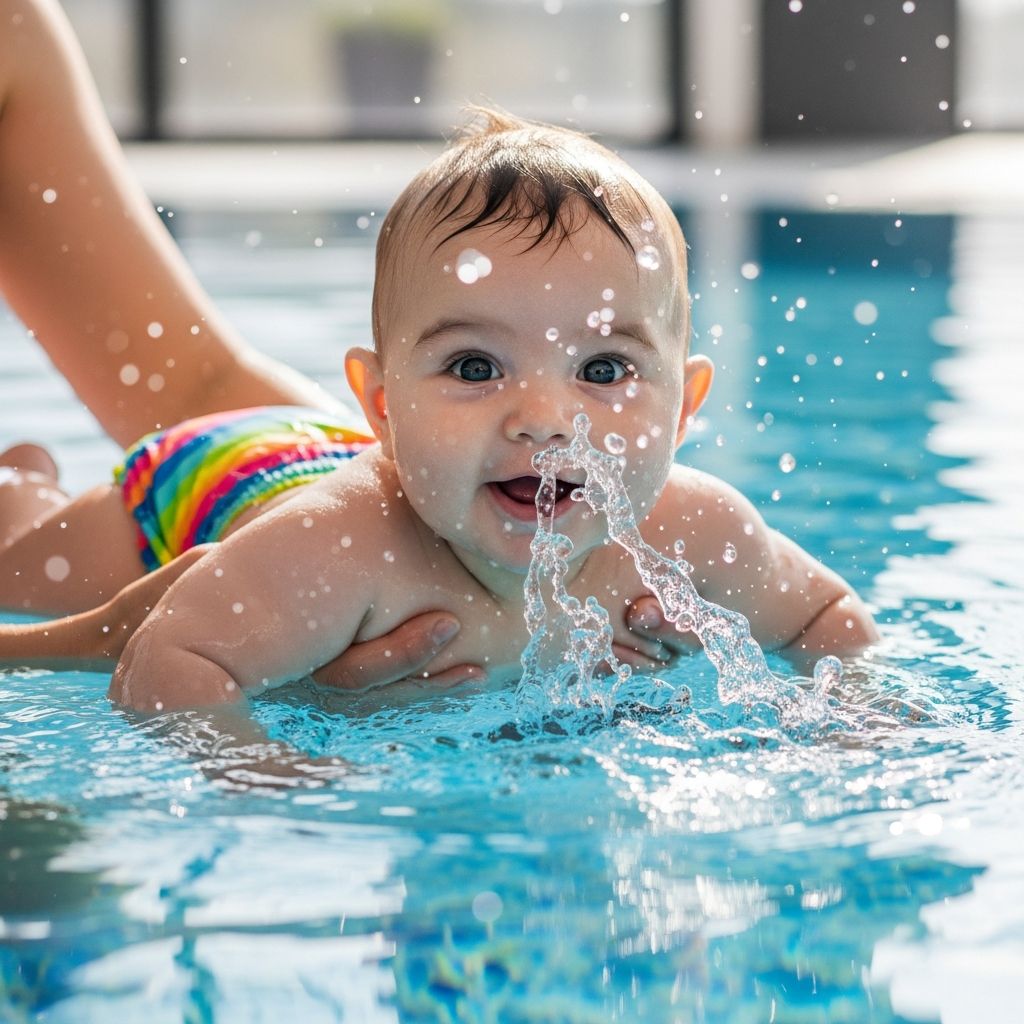
When people talk about baby swim lessons, they usually mean parent-and-baby group classes in a warm pool where an instructor leads simple activities like gentle splashing, floating, kicking, and songs. Your child is not learning polished strokes; the focus is early comfort in the water, playful movement, and basic water awareness.
These sessions are social and sensory as much as they are educational. You are in the water with your baby the entire time, acting as the primary support and source of security while the instructor guides you both through simple routines.
What Baby Swim Lessons Can and Cannot Do
Understanding realistic expectations makes it much easier to decide if early swim classes are worth the investment. Think of these lessons as one tool in your water-safety and bonding toolkit, not a magic shield against drowning.
Realistic outcomes you can expect
- Increased comfort around water through repeated, positive exposure.
- Early practice with floating, splashing, kicking, and being gently dipped or poured on with water.
- Stronger parent–baby bonding from skin-to-skin contact, eye contact, and focused playtime.
- Routine building: learning to follow simple cues (“hold on”, “kick”, “reach”) in a different environment.
- More confidence for you as a caregiver handling your baby in the pool.
Limitations to keep in mind
- Lessons do not make a baby “drown-proof,” no matter how advanced the program claims to be.
- Young babies lack the strength, coordination, and judgment to swim independently or rescue themselves reliably.
- Classes are an addition to — not a substitute for — close, hands-on supervision and physical barriers like pool fences.
- Many gains from early classes are about comfort and familiarity rather than long-term technique; future lessons will still be needed.
Is Your Baby Ready? Age, Health, and Temperament
There is no single perfect age when every baby should start formal swim lessons. Instead, parents can consider a mix of age guidelines, health factors, and temperament. This helps prevent disappointment and makes the experience more enjoyable for everyone.
Age guidelines (flexible, not rigid)
- 0–3 months: Focus on bath time confidence and gentle water play at home. Most babies are not yet ready for pool chemicals, crowds, or cooler temperatures.
- 3–6 months: Some families begin low-key parent–baby sessions if the pool is warm and the baby is healthy, but many still prefer to wait.
- 6–12 months: This is a common window for trying baby classes because many babies have better head control, stronger immune systems, and predictable nap/feeding patterns.
- 12–24 months: Toddlers are mobile and curious, making water exposure and safety messages increasingly important.
Health questions to ask yourself (and your pediatrician)
- Does your baby have chronic ear infections, skin conditions, or respiratory issues that might be aggravated by pool chemicals?
- Has your doctor raised any concerns about immune function, heart or lung health, or growth that would make group classes risky right now?
- Is your baby up to date on recommended vaccinations for group environments in your area?
Temperament and timing
Some babies love new sensations and noise; others need slower introductions. A baby who startles easily or struggles with transitions might do better with very short, quiet exposures at first, such as sitting by the pool and dipping toes before committing to a full program.
If your baby is always miserable during the class time you are considering — for example, they reliably nap or cluster-feed then — another schedule or season might be more realistic.
Benefits Beyond the Pool
Baby swim lessons are often marketed in terms of water skills, but the benefits can reach far into everyday life. Many of these gains come from the structure, repetition, and shared routine as much as from the water itself.
Physical and sensory development
- Whole-body movement: The water supports your baby’s weight, making it easier to practice kicking, reaching, and twisting before they can do those movements on land.
- Balance and coordination: Small shifts in the water challenge your baby’s balance system in a gentle way, helping them learn how to adjust their body position.
- Sensory variety: New sensations — water on the face, different temperatures, echoes in the room — help broaden your baby’s sensory world when presented gradually and calmly.
Emotional and social benefits
- Bonding: Dedicated, phone-free time in the pool gives you an excuse to focus entirely on your baby’s cues and responses.
- Confidence building: Tiny accomplishments, like tolerating a gentle pour of water over the back of the head, can build a sense of mastery over new experiences.
- Social exposure: Group classes introduce your child to other babies, noises, and routines in a controlled environment, which can ease later transitions to playgroups or daycare.
Water Safety: Lessons Are Only One Layer
It can be tempting to believe that early lessons create a safety net, but the most powerful tools for preventing accidents are still supervision and environment. Think of safety as layers stacked on top of one another, with swim lessons being just one layer among several.
| Safety Layer | What It Involves | What It Does Not Replace |
|---|---|---|
| Active supervision | Staying within arm’s reach, eyes on your child, no multitasking when water is present. | Does not replace barriers, life jackets, or safe pool design. |
| Physical barriers | Four-sided fences, locked gates, closed bathroom doors, emptying baby tubs and containers after use. | Does not mean a child cannot ever access water; supervision is still mandatory. |
| Safety gear | Approved life jackets near natural water, properly fitted flotation when recommended. | Floaties and inflatable toys are not life-saving devices. |
| Swim lessons | Familiarity with water, basic floating and kicking skills, learning simple safety cues. | Does not guarantee self-rescue or eliminate the risk of drowning. |
| Adult skills | Knowing basic CPR and having an emergency plan for water-related incidents. | Does not substitute for preventing access to water in the first place. |
Keeping these layers in mind helps balance the excitement of seeing your baby in the pool with the serious responsibility of preventing accidents at home, at friends’ houses, and on trips.
How to Choose a Baby Swim Program
Once you decide to explore lessons, the variety of options can be overwhelming. A structured approach to evaluating programs can prevent wasted money and unpleasant surprises.
Questions to ask the swim school
- Water temperature: Is the pool warmed to a baby-friendly range, typically warmer than a standard lap pool?
- Class size: How many babies and parents are in each class, and how many instructors are in the water?
- Instructor training: Are baby instructors specifically trained in infant development and water safety, not just competitive swimming?
- Health and hygiene: How is the water treated? What are the policies for sick children and adults?
- Parental role: Are parents in the water? What is expected from you during class?
Red flags to watch for
- Programs that claim to make babies completely safe around water or “drown-proof.”
- High-pressure methods that ignore a baby’s distress signals or rely heavily on forced dunking.
- Packed classes where instructors struggle to see and respond to individual babies.
- Vague or dismissive answers to questions about supervision, emergency procedures, or qualifications.
Matching the program to your personality
Some parents want a very structured curriculum with clear skill progressions; others prefer a relaxed, play-centered style. Consider your own comfort: if the environment or approach makes you anxious, your baby will likely pick up on that, and a different setting might work better.
Budget, Schedule, and Practical Logistics
Even the most promising class will feel unsustainable if it strains your finances or keeps colliding with nap time. Looking at the logistics upfront helps you decide whether lessons are a priority now or something to revisit later.
Cost considerations
- Compare total session cost, not just per-class price, including any registration or equipment fees.
- Ask whether missed classes can be rescheduled or credited; babies get sick often.
- Decide whether you value a fancy facility, or if a simpler environment with good instructors is enough.
Time and energy realities
- Map the class time against your baby’s usual naps and feeding windows.
- Factor in travel time, changing, showering, and post-class feeding or snacking.
- Consider the season: in colder months, add extra time for layering, drying hair, and avoiding long walks in wet clothes.
Who will go in the water?
Some families rotate caregivers; others designate one parent as the primary pool partner. Think through work schedules, comfort in the water, and who enjoys this kind of activity. If neither caregiver likes being in the pool, private or semi-private lessons with a trusted instructor later in toddlerhood might be a better fit.
Simple At-Home Water Play (With or Without Formal Lessons)
Even if you skip formal baby swim classes, you can still help your child become more comfortable around water. The goal at this age is positive association and gentle exploration, not technique.
Ideas for the bathtub
- Let your baby play with cups, ladles, and small containers to pour water on their hands, arms, and eventually gently onto their shoulders and back of the head.
- Sing simple songs while you slowly pour water so they can predict the sensation.
- Encourage gentle kicking while your hands support their upper back or under their knees.
Ideas for small backyard or balcony spaces
- Use a shallow basin or baby pool with just a couple of inches of water and sit right next to your child.
- Offer floating toys and soft balls to reach for and splash.
- Practice getting in and out of the water area with your help, reinforcing phrases like “Wait for me” or “Hold my hand.”
Always remember: any amount of water — even a small tub or large bucket — requires close, uninterrupted supervision. Step out of the room only after your baby is completely out of the water and the container is emptied.
Making Peace With Whatever You Decide
Modern parenting culture often turns every decision into a referendum on whether you are doing “enough.” Baby swim lessons can easily fall into that trap, especially when social media is full of happy pool photos. It can help to step back and remember that your baby’s long-term relationship with water will not be decided by a single session or season.
Your child can still become a confident, capable swimmer whether you enroll in infant classes, wait until toddlerhood, or start later in early childhood. What matters most is a combination of consistent exposure, thoughtful safety habits, and a calm, attentive adult presence — all things you can provide in many different ways.
FAQs About Baby Swim Lessons
Do babies actually learn to swim in infant classes?
Babies do not learn stroke technique the way older children do, and they cannot be relied on to rescue themselves. Most infant programs emphasize comfort in the water, basic body positions, and simple safety habits like holding onto the pool edge while a caregiver supports them.
Is it unsafe to skip lessons until my child is older?
Skipping baby swim classes is not inherently unsafe. What matters is that you practice strong water-safety habits, use barriers around pools, supervise closely near any water, and introduce age-appropriate lessons once your child is physically and emotionally ready.
My baby cries in class. Should we keep going?
Some fussing during new experiences is normal, but ongoing distress is a reason to pause and reassess. You might try a different instructor, a quieter class time, more gradual exposure, or waiting a few months until your baby is developmentally more ready.
What should we bring to our first lesson?
- A well-fitting swim diaper (often required by the facility).
- A swimsuit or rash guard for your baby and for you.
- Two towels, one for immediate warmth and one spare.
- A hat or hooded towel for the trip to and from the car if it is sunny or cold.
- A snack or bottle for after class, when your baby may be hungry and tired.
Can I just teach my baby myself without a class?
Yes, many families do exactly that. If you feel confident handling your baby in the water and follow strong safety practices, informal pool time combined with future structured lessons can be a perfectly reasonable plan.
In the end, baby swim lessons are an option, not an obligation. Whether you sign up now, later, or not at all, you can still raise a child who respects water, enjoys swimming, and learns strong safety habits over time.