Warm, sunny days can be wonderful opportunities to explore the outdoors with your baby, but your child’s skin and eyes are far more sensitive to ultraviolet (UV) rays than your own. Thoughtful planning and a few smart products can help you enjoy fresh air and sunshine while keeping your little one protected and comfortable.
Why Babies Need Extra Sun Protection
Babies have thinner, more delicate skin that burns more quickly than adult skin, so even a short period of direct sun can cause discomfort and long-term damage. Because infants cannot explain how they feel, parents need to be proactive about preventing overheating and sunburn instead of reacting once a problem appears.
Early sunburns are linked to a higher risk of skin issues later in life, which makes daily sun-safe habits just as important as car seat safety and proper sleep routines. With a consistent plan, sun protection quickly becomes an easy part of everyday caregiving rather than an occasional worry.
Foundations of Infant Sun Safety
Before focusing on individual products, it helps to understand the basic principles that guide safe outdoor time with a baby. These building blocks apply whether you are on your own balcony, walking around the neighborhood, or spending a day at the beach.
- Avoid peak UV hours: Plan outdoor play for early mornings or late afternoons when the sun is less intense.
- Prioritize shade: Natural or portable shade should be your first line of defense for an infant.
- Cover up: Lightweight, long-sleeved clothing and wide-brimmed hats help shield delicate skin.
- Use sunscreen appropriately: For older babies, sunscreen is an extra layer of protection for exposed areas, not a substitute for shade and clothing.
- Watch for overheating: Hot, flushed skin, fussiness, or lethargy are cues that your baby needs a break from the heat.
Understanding Shade Options for Babies
Shade is one of the simplest and most effective ways to reduce UV exposure, especially for infants who are too young for regular sunscreen use. A mix of natural and portable shade solutions can help you adapt to different locations, from backyards to busy beaches.
| Shade Type | Best For | Pros | Considerations |
|---|---|---|---|
| Tree or building shade | Parks, backyards, urban walks | Free, usually cooler, blends naturally into surroundings | Moves with the sun; coverage may be patchy over time |
| Pop-up cabana or tent | Beach days, picnics, long outdoor stays | Creates a defined, protected space with consistent shade | Needs setup and anchoring; ventilation and size vary by model |
| Large umbrella or canopy | Patios, decks, outdoor dining | Quick to open and adjust; useful for adults and children | Can shift in wind; may not block low-angle sun |
| Stroller canopy and add-on shade | Daily walks, errands, travel | Always with you; many styles offer extended coverage | Must balance shade with airflow; avoid covering stroller completely |
When choosing a shade structure for your baby, think about ventilation, floor space, and how simple it is to pack and carry. A well-designed cabana or tent can double as a nap area, diaper-changing spot, and play zone, making it a versatile investment for frequent outdoor time.
How to Choose a Baby-Friendly Sun Shelter
A dedicated infant sun shelter can be extremely helpful at the beach, pool, park, or even in your own yard. Rather than focusing on looks alone, evaluate features that affect safety, comfort, and ease of use.
- UPF-rated fabric: Look for canopies and tent materials labeled with an Ultraviolet Protection Factor (UPF), ideally 30 or higher, to ensure genuine UV blocking performance.
- Ventilation panels: Mesh windows or vents near the top and sides help hot air escape and allow fresh air in.
- Stable structure: Flexible poles, sand pockets, and stakes reduce the risk of the shelter tipping or blowing away in the wind.
- Spacious floor: Extra room allows a caregiver to sit inside or provides space for a blanket, toys, and diaper bag.
- Simple setup and pack-down: Pop-up designs or intuitive pole systems are more likely to be used regularly.
Before bringing a new shelter to a busy beach or park, assemble it at home first so you know how it works and can check for any defects. Practicing in a calm environment makes it much easier to set up quickly when you have a tired baby on your hip.
Dressing Your Baby for the Sun
Clothing is a powerful, passive form of protection because once it is on, you do not have to reapply or remember it the way you do with sunscreen. The goal is to maximize coverage while keeping your baby cool enough to be comfortable.
- Choose lightweight, tightly woven fabrics: Materials like cotton or performance blends that feel light but are not see-through when held up to light offer good coverage without trapping too much heat.
- Opt for long sleeves and long pants or rompers: Longer garments reduce the number of exposed areas that require sunscreen.
- Pick light or bright colors: Pale shades reflect more sunlight and can feel cooler than dark colors.
- Look for UPF clothing: Some baby clothing is specifically tested and labeled for UV protection, providing an extra layer of reassurance.
Keep a dedicated “sun outfit” in your diaper bag or car—such as a long-sleeved bodysuit and wide-brimmed hat—so you are prepared for unexpected time outdoors. This small habit can make impromptu playground stops or outdoor visits far less stressful.
Hats, Sunglasses, and Other Helpful Accessories
A few small accessories can dramatically improve sun protection coverage, particularly for the face and eyes. While some babies resist new items at first, patience and consistency often help them adjust.
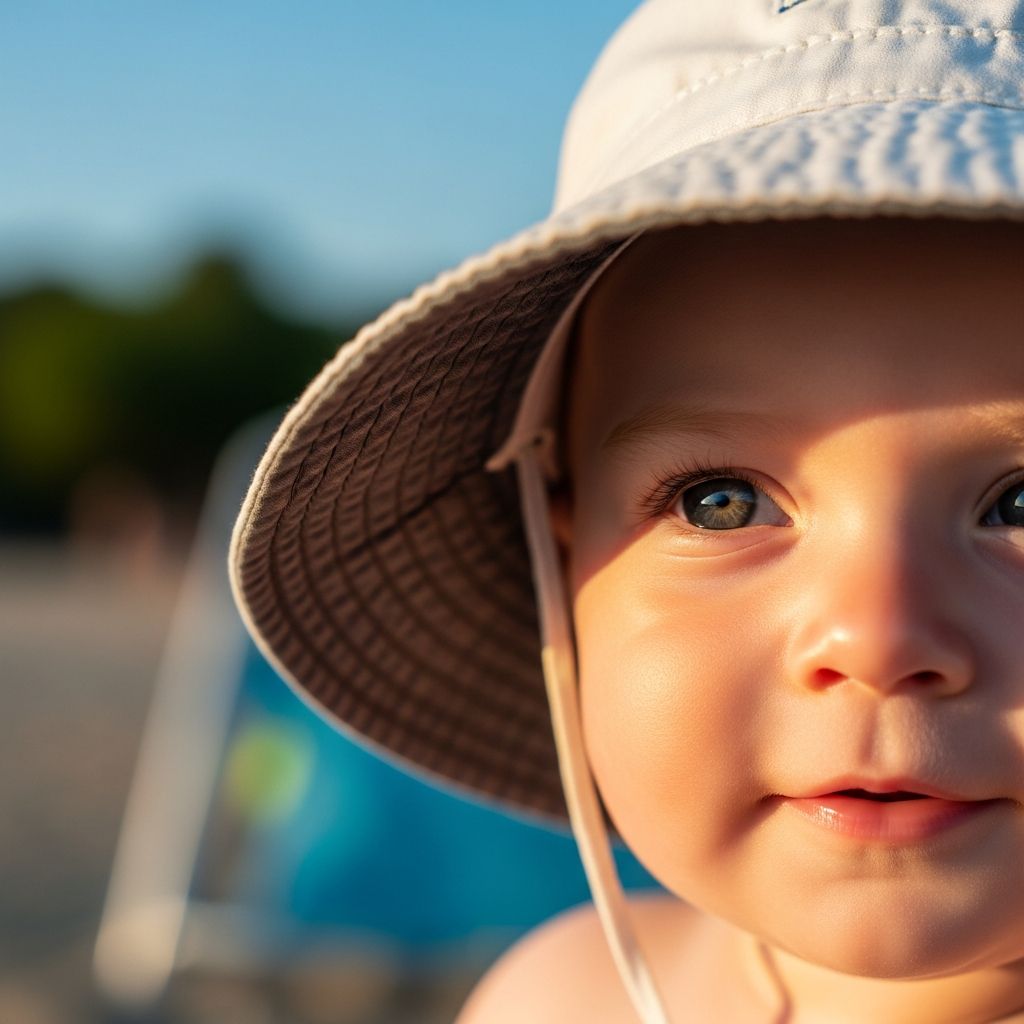
- Wide-brimmed hats: Look for soft, crushable hats with an all-around brim that shields the forehead, ears, and neck. Chin straps or under-chin toggles can help keep the hat in place during breezy conditions.
- Baby sunglasses: Flexible frames and lenses that block UVA and UVB rays help protect developing eyes, especially in very bright environments like beaches or snow.
- Stroller sun shades: Clip-on extensions or side panels help block low-angle sun without limiting airflow.
Introduce hats and sunglasses for short periods indoors or in gentle light so your baby can get used to the sensation without being overwhelmed. Offering a toy to hold or mirroring the behavior by wearing your own hat and glasses can sometimes encourage cooperation.
Smart Sunscreen Use for Babies
Sunscreen is a valuable tool, but it works best as part of a larger protection plan rather than the only defense. For very young infants, many pediatric recommendations prioritize shade and clothing, using small amounts of sunscreen only when other options are limited; caregivers should always follow guidance from their own healthcare providers.
For older babies who are ready for regular sunscreen use, the following guidelines can make application safer and more effective:
- Choose a broad-spectrum product: Broad-spectrum formulas protect against both UVA and UVB rays, which together contribute to burning and long-term skin damage.
- Use SPF 30 or higher: This level typically offers strong protection when used correctly and reapplied as directed.
- Consider mineral formulas: Products that use zinc oxide or titanium dioxide sit on the surface of the skin and are often well tolerated by sensitive skin types.
- Patch test new products: Apply a small amount on your baby’s inner wrist or behind the ear and observe for any irritation before full use.
- Apply generously and evenly: Cover all exposed areas, including often-missed spots such as the ears, back of the neck, backs of hands, and tops of feet.
Remember that sunscreen must be reapplied as directed on the label, especially after swimming, sweating, or toweling off. No sunscreen can completely block UV rays, so it should always be paired with shade and appropriate clothing.
Recognizing and Responding to Sun Exposure Problems
Even with careful planning, a baby may occasionally receive more sun or heat than intended. Knowing the early signs of trouble can help you act quickly and prevent a minor issue from becoming more serious.
- Early signs of sunburn: Pink or red skin that feels warm to the touch, fussiness when the area is touched, or unusual sensitivity after a day outdoors.
- Signs of overheating: Hot skin, damp hair or clothing from sweat, irritability, or unusual sleepiness.
- Concerning symptoms: Vomiting, rapid breathing, difficulty waking, or a baby who will not feed normally should be treated as urgent and evaluated by a health professional.
If you suspect mild sunburn, move your baby into a cool, shaded environment immediately and remove any tight or scratchy clothing from the affected area. Offer frequent feeds to maintain hydration and contact your pediatrician for advice, especially if your infant is very young or the redness appears widespread.
Planning Sun-Safe Outings with Your Baby
A bit of advance preparation can turn potentially stressful outings into enjoyable experiences for the whole family. Think through the timing, location, and supplies you will need before stepping out the door.
- Check the UV index: Many weather apps include a UV rating that helps you decide whether to adjust your plans or take additional precautions.
- Pack a dedicated sun kit: Keep a small bag ready with a hat, extra clothing layer, travel-size sunscreen (if appropriate), a thin blanket, and a compact shade solution if possible.
- Protect during travel: Sun can stream through car windows, so consider using removable shades or films on side windows near your baby’s seat.
- Align with your baby’s routine: Aim for outdoor time during your child’s most alert and content periods to minimize fussiness and allow for easier monitoring.
Over time, you will learn which locations and times of day suit your baby best. Trust your observations and adjust your approach as your child grows more active and mobile.
Sample Sun-Safe Packing Checklist
Use this simple checklist as a starting point when planning a day outdoors with your baby. Tailor the items to your climate, destination, and your child’s age and specific needs.
- Lightweight long-sleeved outfit and long pants or romper
- Wide-brimmed hat with chin strap
- Baby-safe sunglasses (if tolerated)
- Pop-up cabana, tent, or compact umbrella for shade
- Stroller with sun canopy and optional clip-on shade
- Age-appropriate sunscreen, if recommended by your healthcare provider
- Thin cotton blanket for extra coverage or comfort
- Plenty of feeds (breast milk, formula, or water as advised by your pediatrician)
- Light toys or books to encourage calm play in the shade
Frequently Asked Questions about Baby Sun Safety
How long can my baby be outside on a sunny day?
There is no single time limit that fits every baby, climate, and situation. The key is to combine brief periods outside with consistent protection—shade, clothing, and, when recommended, sunscreen—and to return indoors or to a cooler, shaded place if your child becomes warm, fussy, or unusually quiet.
Is it safe to cover my stroller completely with a blanket for shade?
While covering a stroller with a heavy blanket might seem like an easy shading solution, it can trap heat and reduce airflow around your baby. A better approach is to use a breathable, purpose-made stroller shade or canopy that blocks direct sun while still allowing plenty of fresh air to circulate.
Does my baby need sunscreen on cloudy days?
UV rays can penetrate clouds, so protection is still important even when the sky looks overcast. The same principles apply: dress your baby in protective clothing, use shade whenever possible, and follow your pediatrician’s guidance on sunscreen use for your child’s age and skin type.
What should I look for in a beach tent or cabana for my baby?
When shopping for a beach tent or cabana, prioritize UPF-rated fabric, strong anchors or sand pockets, generous ventilation, and a spacious floor area. A design that is quick to set up and take down is particularly helpful when your hands are full and your baby’s patience is limited.
Can my baby get enough vitamin D if I keep them in the shade?
Parents often worry that strong sun protection will interfere with vitamin D, but healthcare providers can recommend safe approaches such as dietary sources or supplements if needed. Sun safety and adequate vitamin D are both important goals, and your pediatrician can help you balance them appropriately for your child.
Creating a Sun-Safe Family Routine
Consistent habits make sun safety feel natural rather than overwhelming. Just as you buckle your baby into a car seat without thinking twice, you can build routines that automatically include shade, appropriate clothing, and careful timing for outdoor activities.
Over months and years, these small choices add up to a powerful form of protection for your child’s skin and overall well-being. By modeling good sun habits yourself and making protection a standard part of every outing, you set the foundation for a lifetime of healthy, sun-smart behavior.