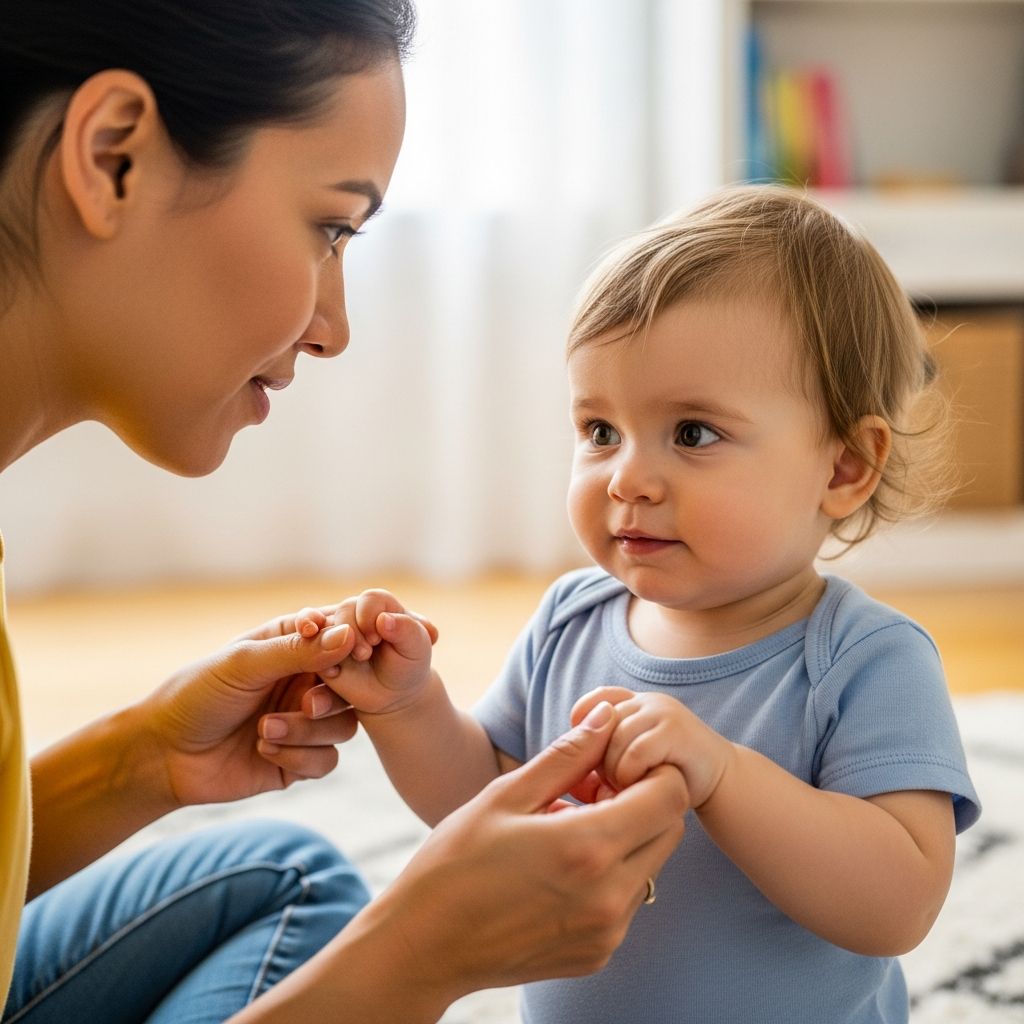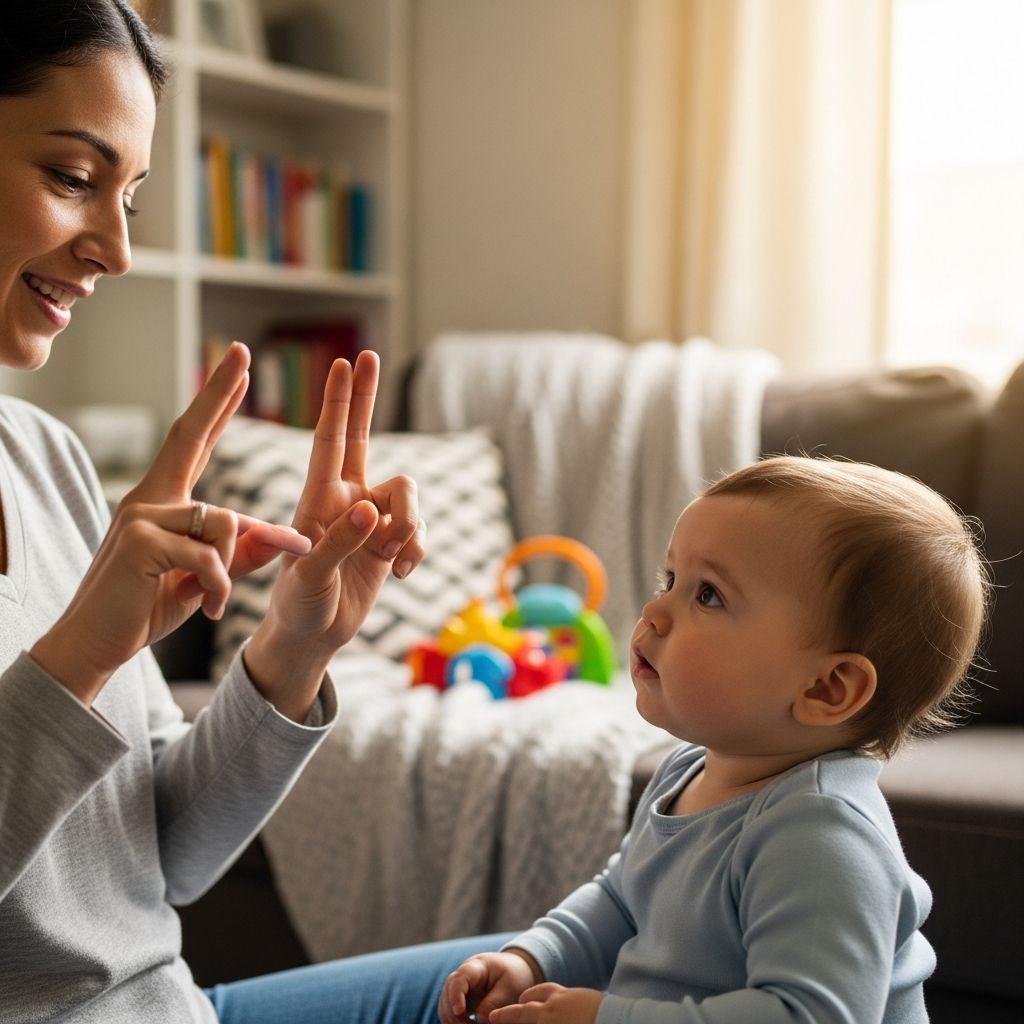
Baby sign language empowers infants to convey needs through hand gestures before they master spoken words, typically starting around 6-8 months of age. This approach draws from simplified American Sign Language (ASL) signs adapted for little hands, enabling clearer expression and mutual understanding between babies and caregivers.
Why Introduce Signs to Infants?
Infants possess cognitive abilities to understand concepts far earlier than they can articulate them verbally. By introducing signs, parents provide a bridge for communication during the pre-verbal phase, which spans from birth to about 12-18 months. Research indicates this practice aligns with natural developmental milestones, allowing babies to signal hunger, tiredness, or play desires effectively.
Key motivations include addressing the frustration gap: babies cry an average of 2-3 hours daily in early months due to unmet needs, but signs can cut this significantly by facilitating precise requests. Studies show signed infants exhibit fewer tantrums and display calmer demeanors as they gain autonomy in expression.
Proven Advantages for Development
Extensive studies highlight multifaceted benefits. Signing reduces emotional distress by replacing vague cries with specific gestures, leading to quicker resolutions and happier interactions.
- Emotional Regulation: Infants using signs experience less crying and whining, as demonstrated in controlled experiments where sign training paired with response adjustments curbed fussiness.
- Family Dynamics: Parents report heightened attunement to nonverbal cues, fostering deeper bonds and mutual responsiveness.
- Cognitive Growth: Signing stimulates brain areas linked to language processing, promoting advanced symbolic thinking.
Tables below summarize research findings:
| Benefit | Evidence | Source Insight |
|---|---|---|
| Decreased Frustration | Fewer tantrums and cries | Infants trained in signs showed reduced distress episodes |
| Stronger Parent Bond | Improved interactions | Caregivers felt more ‘tuned in’ to baby cues |
| Language Acceleration | Larger vocabularies | Signers outperformed verbal-only peers at 2-3 years |
Scientific Backing: What Studies Reveal
Peer-reviewed research consistently supports baby signing. An NIH-funded longitudinal study tracked 11-month-olds: one group learned signs, the other received verbal prompts. Sign-trained babies surged ahead in verbal milestones, maintaining a lead through age three, with enriched vocabularies and expressive skills.
Another investigation at Baylor College of Medicine emphasized relational gains: families using signs tuned into subtle infant signals, enhancing nonverbal dialogue while awaiting speech emergence. For children with developmental delays like Down syndrome, signs provided critical early boosts in communication and cognition.
Debates exist on long-term speech impacts. Some data suggest initial advantages fade as oral skills catch up in typical developers, yet no evidence indicates delays—rather, signs often ‘jump-start’ verbal progress. A UNC study via parent surveys confirmed perceived ease of implementation and bonding improvements, with expressive language scores rising post-signing.
Indiana University research links signing to literacy foundations: larger early vocabularies predict reading success, with signs bolstering phonemic awareness and word comprehension. UC Davis findings echo this, noting advanced cognitive profiles in signing babies.
Optimal Timing and Age Guidelines
Begin exposure at 6 months, when motor skills allow reliable gesturing, though comprehension starts earlier. Babies typically produce first signs by 8-10 months, refining by 12-15 months alongside babbling.
| Age Range | Milestones | Recommended Signs |
|---|---|---|
| 6-8 Months | Observes and imitates | Milk, more, eat |
| 9-12 Months | Uses 5-10 signs | Sleep, play, help |
| 13+ Months | Combines signs with words | All + complex like ‘more milk’ |
Consistency across caregivers accelerates adoption. No upper limit exists; toddlers benefit too, especially if speech lags.
Essential Signs for Everyday Use
Focus on high-frequency needs first. Below are 12 core signs, described for easy replication:
- Milk: Close fist, squeeze rhythmically near mouth.
- More: Pinch fingers together, bring toward center chest.
- Eat: Pretend to bring food to mouth with fingers.
- Sleep: Rock head side-to-side with tilted palm.
- Help: Palm up, raise hand emphatically.
- Play: Shake hands loosely at sides.
- All Done: Wave hands outward from chest.
- Water: Tap chin with flat ‘W’ handshape.
- Book: Hold palms together, open like pages.
- Love You: Cross arms over chest hug-style.
- Pain: Two fingers tap near affected area.
- Thank You: Touch fingertips to chin, lower hand.
Visual aids like flashcards or apps reinforce learning. Pair each sign with spoken words and eye contact for reinforcement.
Practical Strategies for Teaching
Success hinges on repetition and positivity. Sign during routines: gesture ‘milk’ while nursing, ‘eat’ at mealtimes. Respond immediately to approximations—praise efforts lavishly.
- Model 1-2 new signs daily, keeping total under 20 initially.
- Use mirrors for self-viewing to build confidence.
- Incorporate songs and rhymes with signs for fun retention.
- Track progress in a journal to celebrate milestones.
- Extend to daycare or relatives for ubiquity.
Avoid overload; patience yields results in weeks. If no response by 12 months, consult pediatricians to rule out motor issues.
Navigating Challenges and Myths
Common hurdles: inconsistent signing or unrealistic timelines. Myth: Signs delay speech—research refutes this, showing acceleration instead. Another: Only for hearing-impaired—false; hearing babies gain equally.
For special needs, signs serve as scaffolds. Speech therapists endorse them to prompt verbalization. Cultural sensitivity matters: adapt ASL variants or local signs as needed.
Frequently Asked Questions (FAQs)
At what age should I start baby signing?
Introduce signs around 6 months, with reliable use by 8-10 months. Early modeling builds familiarity without pressure.
Will signing confuse my baby or slow speech?
No—studies show it enhances verbal development by providing a communication foundation, not replacement.
How many signs to teach first?
Start with 5-10 essentials tied to daily routines for quick wins and motivation.
Do both parents need to learn signs?
Consistency helps, but one primary signer suffices; share videos for family alignment.
Can signing help babies with delays?
Yes, particularly for Down syndrome or speech lags, boosting cognition and expression per research.
Long-Term Impacts on Learning
Beyond infancy, signing lays groundwork for literacy. Enhanced vocabularies correlate with superior reading comprehension, as signs teach syntax and semantics early. Parents note tuned-in interactions evolve into richer dialogues, sustaining advantages into preschool.
Integrate with reading: sign storybook actions to deepen engagement. This multimodal approach—gestures plus words—mirrors how brains wire language circuits.
In group settings like daycare, signed babies navigate social exchanges adeptly, reducing conflicts over toys or turns. Scalability to classrooms underscores its educational value.
Tools and Resources for Success
Leverage free online videos, printable charts, or classes from certified instructors. Books with pictorial guides aid home practice. Apps offer interactive quizzes for families.
Community groups connect signing parents, sharing tips. Track via milestones: first sign (8 months average), 20 signs (15 months), speech integration (18 months).
Measure success not just by sign count, but by interaction quality—fewer frustrations signal wins.
References
- Teaching babies sign language — Baylor College of Medicine Blogs. 2022-07-19. https://blogs.bcm.edu/2022/07/19/teaching-babies-sign-language/
- BENEFITS AND EFFECTS OF BABY SIGN LANGUAGE — UNC Digital Repository. N/A. https://cdr.lib.unc.edu/downloads/qj72pc58z
- Research on Baby Sign Language — Baby Sign Language.com. N/A. https://babysignlanguage.com/basics/research/
- How Baby Sign Language Boosts Early Literacy Skills — IU Blogs. 2025-02-21. https://blogs.iu.edu/earlyliteracy/2025/02/21/signs-of-success-how-baby-sign-language-boosts-early-literacy-skills/
- Baby Sign Language: Benefits & Tips — Bright Horizons. N/A. https://www.brighthorizons.com/article/toddler/baby-sign-language-benefits-and-tips
- Enhancing Early Communication through Infant Sign Training — PMC (NIH). 2007-05-01. https://pmc.ncbi.nlm.nih.gov/articles/PMC1868823/