The position your baby assumes in the final weeks of pregnancy plays a pivotal role in determining the ease and safety of labor. Ideally, the baby settles into a head-down, or cephalic, presentation with the back facing the mother’s front, known as occiput anterior. This allows the smallest part of the baby’s head to lead the way through the birth canal, facilitating smoother progression. However, around 3-4% of babies remain in non-optimal positions like breech (bottom or feet first) or transverse (sideways) near term, potentially leading to prolonged labor, increased pain, or the need for cesarean delivery.
Understanding these positions empowers expectant parents to take proactive steps. While not all malpositions can be corrected, many respond to targeted techniques monitored by healthcare providers. This guide delves into common suboptimal fetal positions, associated risks, and evidence-based strategies to encourage rotation, drawing from medical insights to support informed decision-making.
Common Fetal Positions and Their Impact on Delivery
Fetal lie, presentation, and position describe how the baby orients in the uterus. Lie refers to the long axis (longitudinal, transverse, or oblique); presentation is the part entering the pelvis (e.g., vertex/head, breech); and position notes the orientation relative to the mother’s body (e.g., anterior or posterior).
- Vertex (Occiput Anterior): Optimal—head down, chin tucked, facing mother’s back. Promotes efficient descent and dilation.
- Occiput Posterior (Sunny-Side Up): Head down but facing mother’s front. Occurs in 5-10% of labors; causes intense back labor, slower progression, and higher forceps or cesarean rates.
- Breech Presentations: Complete (flexed hips/knees), frank (extended hips, flexed knees), or footling (one/both feet first). Risks include head entrapment, cord prolapse, and birth trauma; vaginal breech delivery is rare in many settings.
- Transverse Lie: Baby sideways, shoulder or back over cervix. Prevents vaginal birth; requires cesarean due to risks like cord compression and uterine rupture.
- Face or Brow: Rare; extended head presents larger diameter, often necessitating cesarean.
These variations arise from factors like prematurity, multiple gestation, uterine abnormalities (e.g., bicornuate shape), placenta previa, polyhydramnios, or pelvic structure issues. Most babies turn spontaneously by 36 weeks, but persistent malpositions warrant intervention.
Risks Associated with Suboptimal Baby Positions
Non-cephalic positions elevate maternal and fetal complications. For mothers, transverse or breech increases cesarean likelihood (up to 90% for transverse), prolonged labor, severe pain from inefficient contractions, postpartum hemorrhage, and surgical risks like infection or bladder injury.
Fetuses face umbilical cord prolapse (emergency where cord precedes baby, compressing oxygen supply), head entrapment in breech, birth asphyxia, fractures, or neurological injury. Occiput posterior prolongs second-stage labor by 1-2 hours on average, heightening exhaustion and intervention needs.
| Position | Maternal Risks | Fetal Risks |
|---|---|---|
| Occiput Posterior | Back pain, prolonged labor, episiotomy | Variable heart rate, bruising |
| Breech | Cesarean, perineal tears | Cord prolapse, head trauma |
| Transverse | Uterine rupture, heavy bleeding | Fetal distress, injury |
Maternal posture influences fetal oxygenation; supine positioning reduces placental oxygen transfer by 6.2% versus lateral, potentially stressing hypotensive fetuses.
Natural Techniques to Encourage Head-Down Position
From 32-36 weeks, daily practices can promote rotation, especially for breech or posterior. Always consult your provider before starting, as some carry risks like membrane rupture.
Positional Therapies
- Forward-Leaning Inversions: Kneel on couch edge, lower torso to floor (head down), hold 30 seconds, 3-5 times daily. Gravity draws buttocks up, creating space for head descent. Effective in 60-70% of cases per anecdotal reports; safe if no contraindications like high blood pressure.
- Hands-and-Knees Posture: 10-15 minutes multiple times daily. Frees pelvic inlet; studies show reduced posterior position incidence.
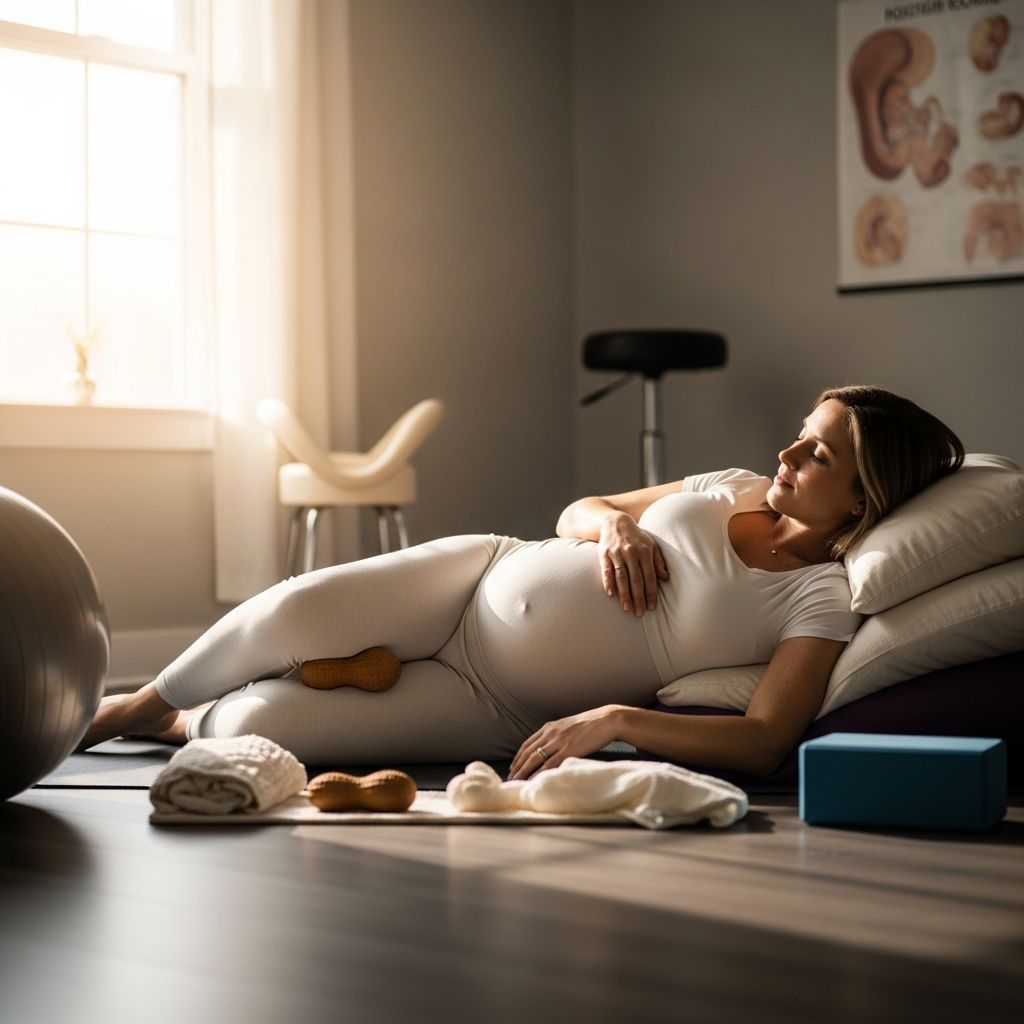
- Side-Lying with Peanut Ball: Left side-lying with peanut ball between knees mimics lateral posture, improving placental flow and encouraging anterior rotation.
Exercise and Movement Routines
Low-impact activities strengthen ligaments and balance pelvis:
- Daily Walks: 30 minutes brisk walking promotes engagement.
- Pelvic Tilts and Cat-Cow Yoga: 10 reps, 3 sets; tilts realign spine, cat-cow opens pelvis.
- Swimming or Water Aerobics: Buoyancy reduces gravity’s pull, allowing free movement.
Moxibustion and Acupuncture
Traditional Chinese medicine uses moxa (burning mugwort) near acupuncture point BL67 (outer pinky toe edge), 20 minutes twice daily for 10 days. Meta-analyses indicate 70-80% breech version success versus 50% sham; mechanism may involve uterine stimulation. Licensed practitioners recommended.
Music and Sound Vibration
Playing music via subwoofer on lower abdomen or speaking/singing directs baby toward sound source at pelvis, leveraging preference for maternal voice. Low-risk, enjoyable adjunct.
Advanced Medical Interventions
If natural methods fail by 36-37 weeks, professionals may intervene.
- External Cephalic Version (ECV): At 37 weeks, provider applies external pressure to rotate baby. Success 50-60%; ultrasound-guided, tocolytics relax uterus. Contraindicated in multiples, previa, or oligohydramnios.
- Spinning Babies Techniques: Chiropractic Webster method balances pelvis/ligaments; 80% success in some studies for breech.
- Amniotomy or Membrane Sweep: Rare for position; stimulates contractions to encourage turning.
Post-39 weeks, persistent malposition often leads to planned cesarean, safest for transverse/breech in many guidelines.
Monitoring and When to Seek Help
Regular ultrasounds from 36 weeks confirm position. Warning signs: reduced fetal movement, abnormal heart rate, or preterm labor. Prompt evaluation prevents distress.
Prenatal yoga classes tailored for third trimester emphasize safe postures; avoid supine after 20 weeks due to vena cava compression.
Frequently Asked Questions (FAQs)
Can all breech babies be turned naturally?
No, success varies; techniques like inversions aid 50-70%, but ECV or cesarean may be needed. Consult your OB-GYN.
Is occiput posterior dangerous?
Not usually, but it intensifies pain and may prolong labor. Positions like hands-knees during labor help rotate.
When should I start position exercises?
Begin at 32-34 weeks if breech suspected; earlier for comfort. Get clearance first.
Does sleeping position affect baby orientation?
Left lateral is best for placental flow; avoid prolonged supine to minimize fetal stress.
What if baby turns during labor?
Possible, especially transverse; continuous monitoring ensures safety. Vaginal birth may proceed if cephalic.
Preparing Holistically for Labor Success
Combine techniques with doula support, birth planning, and stress reduction (e.g., meditation). Optimal positioning reduces interventions, empowering natural birth. Track progress with weekly checks; celebrate small wins like increased kicks downward.
For multiples or high-risk pregnancies, multidisciplinary care is key. Postpartum, positions influence recovery; discuss with providers.
Empowerment comes from knowledge—partner with your care team for personalized strategies. Most babies cooperate, but readiness for alternatives ensures positive outcomes.
References
- Effects of Fetal Position During Pregnancy — Valley Perinatal Services. 2023. https://valleyperinatal.com/fetal-malpresentation/
- Transverse Baby Position–Causes and Safe Delivery — Cloudninecare. 2024. https://www.cloudninecare.com/blog/transverse-baby-position-causes-and-safe-delivery
- Mismanaged Fetal Malposition & Medical Negligence — Brown Trial Firm. 2023. https://browntrialfirm.com/birth-injury-lawyer/fetal-malposition-birth-injuries/
- Impact of maternal posture on fetal physiology in human pregnancy — PMC (NCBI). 2024-05-14. https://pmc.ncbi.nlm.nih.gov/articles/PMC11140392/
- Fetal Presentation, Position, and Lie (Including Breech Presentation) — Merck Manuals. 2025. https://www.merckmanuals.com/home/women-s-health-issues/complications-of-labor-and-delivery/fetal-presentation-position-and-lie-including-breech-presentation
- Abnormal Birth Presentation, Position & Complications — Pediatric Malpractice Guide. 2023. https://pediatricmalpracticeguide.com/abnormal-birth-presentation-position/
- Breech Baby: Causes, Complications, Turning & Delivery — Cleveland Clinic. 2024. https://my.clevelandclinic.org/health/diseases/21848-breech-baby