Baby play gyms and activity mats have become essential pieces of gear in many homes with infants. Beyond being adorable photo backdrops, a well-designed play gym can support motor skills, sensory processing, and early cognitive development while giving caregivers a few much-needed hands-free moments. To use this tool wisely, it helps to understand what it does, when to introduce it, and how to choose one that fits your baby and your space.
What Is a Baby Play Gym?
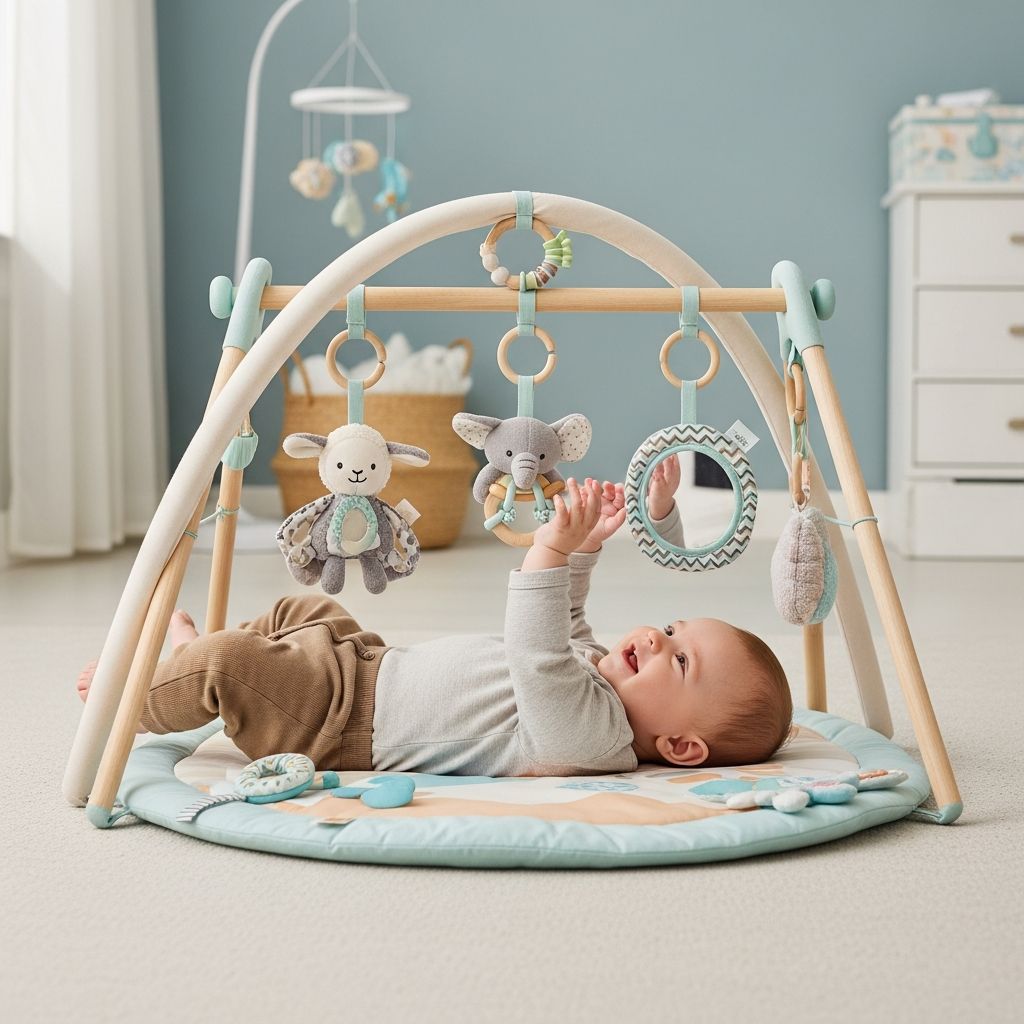
A baby play gym (also called an activity gym or play mat) is typically a padded mat with one or more arches that hold lightweight toys above your baby. Your child can lie on their back, side, or tummy while reaching, kicking, swatting, and visually tracking the toys. Many models add textures, crinkle panels, sounds, mirrors, and removable toys to invite exploration.
While the details vary, nearly all baby gyms are designed to encourage:
- Reaching and grasping with the hands
- Kicking and leg movement against hanging toys or soft elements
- Tummy time with interesting things to look at
- Sensory play with textures, colors, and sometimes gentle sounds
Key Developmental Benefits
Decades of developmental research show that early movement and sensory experiences are the foundation of infant learning. A thoughtful baby gym offers structured opportunities for those experiences in a safe, predictable environment.
1. Motor Skills and Strength
When babies reach, bat, and kick at toys, they are strengthening muscles in the shoulders, core, and legs that will later support rolling, sitting, and crawling.
- Gross motor development: Larger body movements like rolling, pivoting, and eventually crawling are supported by frequent opportunities to move freely on a firm, padded surface.
- Fine motor skills: Grabbing rings, crinkling fabric, or pulling soft toys helps practice hand opening, closing, and early finger control, laying foundations for later skills like self-feeding.
- Hand–eye coordination: Visually tracking a toy and then reaching for it helps link what babies see with how they move.
- Tummy time support: Pediatric organizations recommend daily tummy time while baby is awake to help prevent positional head flattening and build neck strength. Placing interesting toys in front of baby on the mat makes this more tolerable and even enjoyable.
2. Sensory and Cognitive Development
Early learning is rooted in sensory and motor exploration. Swiss psychologist Jean Piaget described the first stage of cognitive development (birth to about 2 years) as the sensorimotor period, during which infants learn primarily through acting on and sensing their environment.
- Sensory stimulation: Soft fabrics, gentle contrasting colors, and varied textures give babies chances to feel, hear, and see new things in a manageable way.
- Cause and effect: When baby kicks and a toy moves, or bats a rattle and hears a sound, they begin to understand that their actions have consequences—a building block of problem-solving.
- Visual development: Looking up at toys supports visual tracking and depth perception, especially when objects move slowly across their field of vision.
- Early attention and focus: Short periods of sustained interest in one toy gradually lengthen as babies mature, helping build attention span.
3. Emotional and Social Benefits
- Confidence and independence: When babies can safely explore the same predictable space each day, they gradually become more confident moving their own bodies.
- Self-soothing opportunities: Repetitive, simple actions like kicking at a soft toy or crinkling fabric can be calming for some babies and may help them regulate during awake time.
- Bonding moments: Caregivers can lie or sit nearby, talk about the toys, sing, and mirror baby’s sounds and expressions. Sensitive interactions like these support secure attachment and social–emotional development.
When Can a Baby Start Using a Play Gym?
Most healthy newborns can begin using a play gym within the first weeks of life, with appropriate supervision and positioning. The way baby uses the gym will change significantly over the first year.
| Age range (approx.) | How baby may use the gym | Tips for caregivers |
|---|---|---|
| 0–3 months | Short, supervised sessions mostly lying on back; watches high-contrast toys; brief tummy time on the mat. | Keep toys close and simple; limit sessions to a few minutes at a time; prioritize comfort and gentle stimulation. |
| 3–6 months | More purposeful reaching, batting, and grabbing; longer tummy time; rolling may begin. | Hang toys within easy reach; add a baby-safe mirror; shift toys to encourage turning head both ways. |
| 6–9 months | Rolls easily, may sit and lean to reach toys; explores textures on the mat; may start pivoting on tummy. | Remove toys that dangle too low near face; offer toys on the floor around the mat for incentive to reach and roll. |
| 9–12+ months | May crawl onto and off the mat; pulls toys down; uses the mat as a familiar play space. | Check weight limits for any arches; remove overhead structures once baby starts pulling to stand; continue using mat for floor play. |
Always follow your pediatrician’s guidance if your baby was premature or has specific medical needs.
Safety Essentials Every Parent Should Know
Most commercially produced play gyms are designed with safety in mind, but daily use and curious fingers can introduce new risks. Basic precautions are non-negotiable.
- Always supervise: A baby gym is for supervised awake play only. Both the American Academy of Pediatrics and public health agencies warn against using soft bedding or toys in sleep environments for infants because of suffocation risks.
- Firm, flat surface: Place the gym on the floor, never on beds, couches, or elevated furniture to reduce fall and smothering hazards.
- Check for loose parts: Inspect toys, stitching, and attachment points regularly and remove anything that is torn, broken, or could become a choking hazard.
- Watch strap length: Hanging toys should be short enough that baby cannot twist them around their neck.
- Weight and age limits: Many play gyms have recommended age or mobility cutoffs. Once baby is pulling up or trying to use the arches to stand, remove the overhead frame and keep the mat only.
- Non-toxic materials: Choose products that are free of small detachable pieces and meet established toy safety standards in your country.
How to Choose the Right Baby Play Gym
Parents today can choose from minimalist wooden arches, plush mats with bright themes, and more educational designs inspired by approaches like Montessori. Before you shop, clarify what matters most for your family.
1. Developmental Design
- Age-appropriate contrast: Newborns see high-contrast patterns best, while older babies can enjoy more detailed images and colors.
- Variety without overload: Several different textures and a few thoughtfully chosen toys are usually more effective than a cluttered, noisy set-up.
- Open-ended toys: Simple rings, soft rattles, and mirrors can be used in many ways and often hold attention longer than overly specialized gadgets.
2. Materials and Comfort
- Padded but supportive mat: A too-soft mat can make tummy time harder; a lightly cushioned, firm surface supports movement and stability.
- Natural vs synthetic fabrics: Cotton, bamboo, or wool blends can feel breathable against baby’s skin. Some parents prefer untreated fabrics; others value stain-resistant materials. Choose what fits your priorities.
- Washability: Removable, machine-washable covers or mats make life much easier. Babies drool, spit up, and explore with their mouths generously.
3. Size, Storage, and Longevity
- Floor footprint: Measure your available space so the gym has room around it for rolling and crawling.
- Foldability: If you live in a small home or share spaces, look for a gym that folds or disassembles easily for storage.
- Grow-with-baby features: Some models offer removable arches, convertible play tents, or repositionable toys that adjust to your child’s stage.
4. Noise Level and Electronics
- Battery-operated vs. simple: Musical and light-up features can be entertaining but are not necessary for healthy development. Simple toys that respond directly to baby’s actions often support learning more clearly.
- Volume control: If you choose electronic features, ensure there is a low volume setting to protect baby’s hearing and your sanity.
5. Budget Considerations
Play gyms range from basic mats to premium systems with extensive accessories. Higher price does not automatically mean better development; many affordable gyms offer excellent play value if they are safe, comfortable, and used consistently.
- Decide whether you prefer to invest in a long-lasting, multi-stage gym or a simpler mat plus a few separate toys.
- Consider secondhand options but always inspect for damage, missing parts, and up-to-date safety labeling.
Using a Play Gym in Daily Routines
Even the best-designed gym only helps if baby gets regular, positive time on it. Think of it as a tool you can weave into your everyday rhythm.
- Short and frequent sessions: A few minutes several times a day usually works better than one long session, especially for younger infants.
- Timing around feeds: Try play when baby is alert—not immediately after a full feeding to reduce spit-up and discomfort.
- Rotate toys: Changing out a toy or two every few days can renew interest without buying new equipment.
- Get on the floor: Lie beside your baby, talk, sing, and mimic their sounds. Your face is still their favorite toy.
Common Types of Baby Play Gyms
While specific brands vary, most baby gyms fall into a few broad styles. Each offers different strengths depending on your priorities.
| Type | Typical features | Best for families who… |
|---|---|---|
| Soft fabric activity gym | Padded mat, plush arches, multiple dangling toys, sometimes music or lights. | Want an all-in-one, cozy option with lots of immediate stimulation. |
| Wooden minimalist gym | Simple wooden frame with a few hanging toys; often used with a separate mat or rug. | Prefer a clean aesthetic, natural materials, and quieter play. |
| Montessori-inspired gym | Emphasis on simple, realistic objects; high-contrast cards; mirrors; removable toys placed at baby’s level. | Value purposeful, stage-based activities and a less cluttered environment. |
| Convertible play system | Activity mat that later becomes a play tent or larger play space with walls. | Want one item to last into toddlerhood and beyond. |
Frequently Asked Questions (FAQs)
Are baby play gyms really necessary?
No piece of gear is strictly necessary, but play gyms offer a convenient, safe, and engaging space for supervised floor play. They can make tummy time more enjoyable and encourage motor and sensory development when used regularly.
How much time should my baby spend on the play gym each day?
There is no single ideal amount. Many families aim for several short sessions—anywhere from a few minutes to 20 minutes—spread across the day, adjusting based on baby’s cues and tolerance. Increase gradually as your baby grows and seems to enjoy the experience.
Can my baby sleep on the play gym mat?
A play gym is intended for supervised, awake play only. For sleep, public health guidance recommends a separate firm, flat sleep surface free of toys, pillows, bumpers, or loose bedding to reduce the risk of suffocation and sudden unexpected infant death.
When should we stop using the overhead arches?
Once your baby begins pulling to stand, trying to climb the frame, or putting significant weight on the arches, remove the overhead structure and continue using the mat alone. This reduces the risk of tipping or falls.
Is it better to choose wooden toys or plastic ones?
Both can be safe if they meet toy safety standards, have no small detachable parts, and use non-toxic finishes. Wooden toys often appeal for their durability and aesthetics, while plastic toys can be lightweight and easier to clean. Prioritize safety, texture variety, and how your baby responds to them.
References
- 6 Things Moms Must Know about Baby Gym — Tumama Kids Blog. 2023-07-10. https://tumama-kids.com/blogs/infant-growth-and-development/6-things-moms-must-know-about-baby-gym
- Are Baby Gyms Worth It? 10 Benefits You Should Know — Poppyseed Play Blog. 2023-09-20. https://poppyseedplay.com/blogs/calm/are-baby-gyms-worth-it-10-benefits-you-should-know
- The Montessori Play Gym: Nurturing Development from Day One — Montessori Academy Blog. 2022-11-04. https://montessori-academy.com/blog/montessori-play-gym/
- 6 reasons why you should use a baby gym — Done by Deer Blog. 2022-05-16. https://donebydeer.com/en-se/blogs/news/6-reasons-why-you-should-use-baby-gym
- Everything You Need to Know About Baby Play Gyms — Wunderkids Blog. 2023-03-01. https://wunderkids.com/blogs/the-wunderkids-blog/baby-play-gyms-everything-you-need-to-know
- The Play Gym — Lovevery Product Page. 2024-01-15 (last updated). https://lovevery.com/products/the-play-gym
- The Ultimate Guide to Choosing a Developmental Play Gym for Your Baby — Kidodido Blog. 2023-08-22. https://kidodido.com/blogs/news/the-ultimate-guide-to-choosing-a-developmental-play-gym-for-your-baby