Understanding Your Baby’s Journey Into Language
One of the most exciting aspects of parenthood is witnessing your baby’s progression from wordless cries to meaningful communication. The development of speech and language skills is a gradual process that begins at birth and unfolds through a series of predictable yet individually variable stages. Every baby develops at their own pace, but understanding the typical progression can help parents recognize important milestones and provide appropriate support during these formative months.
Speech development is not simply about a baby uttering their first word—it encompasses a complex process of learning to understand language, recognizing patterns in sound, and gradually building the motor skills needed to produce words. From the earliest days of life, babies are actively absorbing information about the language they hear around them.
The Foundation: Birth to Three Months
Even before your baby can speak, significant communication development is taking place. During these first crucial months, babies are learning to recognize and respond to the voices and sounds in their environment. This stage is often overlooked by parents who may not realize how much their newborn is already processing.
In the initial weeks of life, babies demonstrate awareness of familiar voices, particularly their mother’s voice. They respond to loud sounds with startle reflexes and show signs of being awakened by voices and other environmental noises. These early responses indicate that the auditory system is functioning and that babies are beginning to distinguish between different sound patterns.
Around two to four months, babies begin to respond to the different tones of voice used by their caregivers. If you speak in a raised voice, your baby might cry, while gentle, playful sounds may elicit laughter or excited gurgling. This differential response shows that babies are not just hearing sound—they are interpreting emotional content and meaning associated with different vocal patterns.
The Emergence of Sound Production: Three to Six Months
As your baby enters the three to six-month period, you will begin to notice the emergence of intentional sound production beyond crying. This stage marks the beginning of what experts call “cooing,” a delightful phase where babies produce vowel-like sounds. These sounds typically resemble “ooh” and “aah” and represent your baby’s first deliberate experiments with their vocal apparatus.
During this period, crying remains a primary communication tool, but it gradually becomes less dominant as your baby discovers other ways to express themselves. Parents often notice that their baby begins to play with their lips, creating different mouth shapes and positions while making sounds. Around four months, babies start to repeat simple sounds such as “ba-ba,” “ooh,” and “aah”.
By the end of this stage, babies exhibit increased vocal play. They produce “bubbly” sounds where the tongue makes contact with the lips and experiment with “raspberry” sounds created by vibrating their lips together. These playful vocalizations are crucial for developing the motor control needed for speech. Additionally, babies begin to imitate the sounds and intonation patterns (the musical quality of speech with its ups and downs) that they hear from their caregivers.
An important milestone during this phase is that babies start to recognize and respond to their own name when it is called out. This recognition demonstrates that they are linking specific sound patterns to individual identity.
Babbling and Increased Vocalization: Six to Nine Months
The six to nine-month period represents a significant leap in language development. Babies now enter the “babbling” stage, where they produce repetitive, rhythmic sequences of sounds that increasingly resemble actual speech. These vocalizations have distinct melody and intonation, making them sound remarkably like the melodious quality of adult speech even though they contain no recognizable words.
During this time, babies become noticeably more responsive to language in their environment. Between six and nine months, babies start to recognize the meaning of certain phrases when used in context. For example, when you say “bye-bye” while waving, your baby may begin to wave in response, demonstrating an understanding of the association between the phrase and the gesture. Around this same period, babies also turn toward familiar voices across a room and begin to respond to their own name.
The vocalizations during this stage are more varied than earlier cooing. Babies may repeat sounds multiple times in a row, experimenting with different vowel and consonant combinations such as “ga-ga-ga,” “ba-ba-ba,” “ma-ma,” and “da-da”. While these repetitions of “mama” and “dada” sounds delight parents, it is important to note that at this stage, babies often do not yet understand that these sounds refer to specific people.
Babies also become more interactive during this phase. They are more vocal when playing with adults or other children and may produce many sounds while playing independently, looking around their environment, or attempting to get attention.
Understanding Develops: Nine to Twelve Months
As babies approach their first birthday, the ninth to twelfth month period brings remarkable development in comprehension. This is when babies begin to truly understand language beyond simply recognizing sounds or responding to tones. By this stage, babies may understand words for common objects such as “cup” or “shoe” and recognize common phrases like “bye-bye”.
Around the nine to eleven-month mark, babies understand the word “no,” although they may not consistently obey it. By eleven to twelve months, babies can understand very simple instructions that combine verbal cues with visual gestures. For instance, if you hold out your hand and say “For daddy?”, your baby might hand you the toy they are holding.
During this phase, babies build up a small vocabulary of words they understand, often before they speak their first recognizable word. This receptive language—the ability to understand words and phrases—actually develops ahead of expressive language (the ability to produce words).
First Words and Beyond: Ten to Fourteen Months
The milestone most parents eagerly anticipate is their baby’s first word. This typically occurs between ten and fourteen months, though the timing varies considerably among typically developing children. First words are usually labels for familiar people or objects, such as “mama,” “dada,” or simple labels for favorite toys or pets.
It is worth noting that first words may not be entirely clear in pronunciation. A baby’s version of “dog” might sound like “daw,” and “more” might be “mo.” Parents and regular caregivers typically understand these approximations, but strangers may find them difficult to decipher. This is entirely normal and does not indicate a speech problem.
By twelve to seventeen months, many babies have developed a vocabulary of four to six words or more. They actively try to imitate simple words they hear and add new words to their vocabulary each month. Additionally, babies begin to copy body movements such as clapping hands and waving.
Key Factors Supporting Language Development
While babies have an innate drive to develop language, the quality of their environment and interactions with caregivers significantly influences their speech development. Several factors play important roles in fostering healthy language growth:
- Talking and narrating: Regularly speaking to your baby throughout daily activities helps them hear language patterns and learn vocabulary. Describing what you are doing during diaper changes, feeding, and play creates a rich language environment.
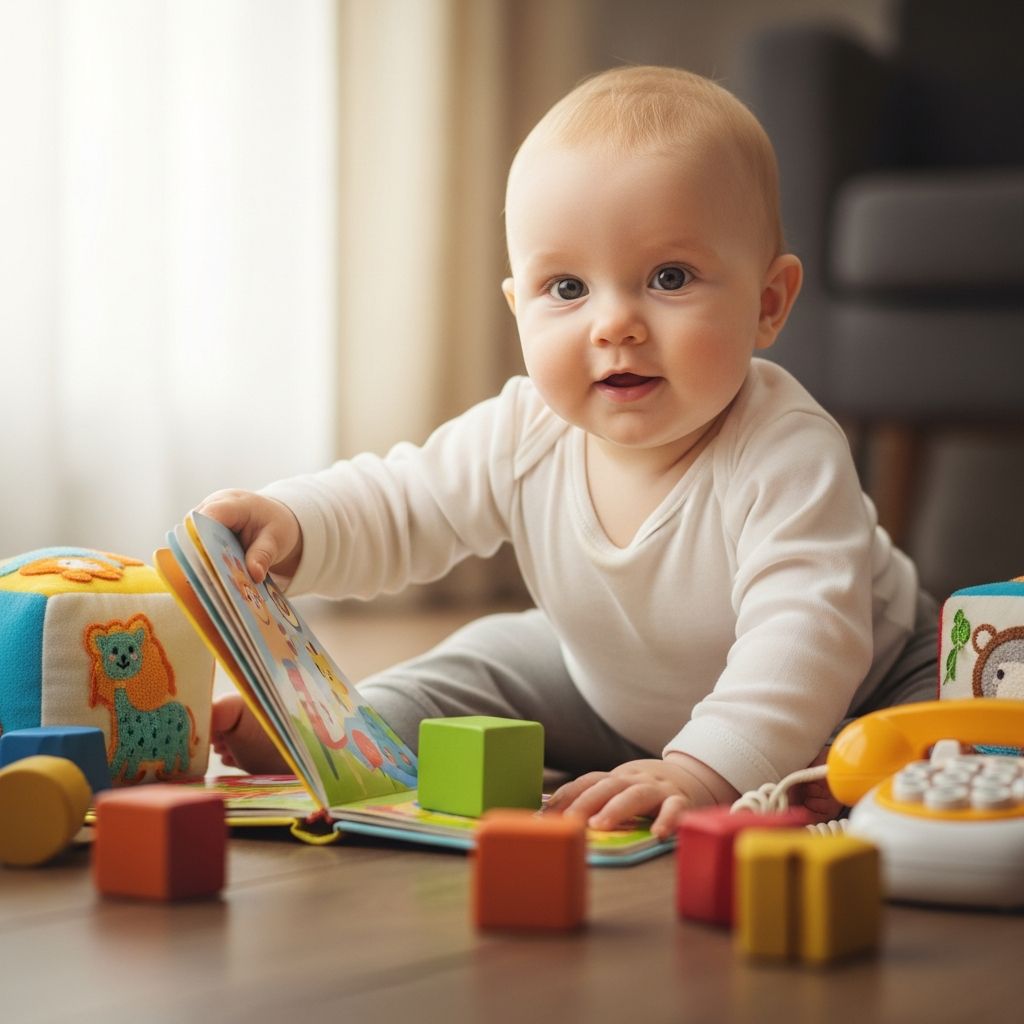
- Reading aloud: Babies enjoy being read to, and this exposure to language supports both vocabulary development and bonding. Books with pictures give babies opportunities to see words paired with visual representations of objects.
- Singing and rhymes: Nursery rhymes and songs provide rhythm and repetition that help babies learn what different words sound like and identify where one word ends and another begins. The rhythmic patterns are particularly valuable for language learning.
- Responsive interaction: When you respond to your baby’s vocalizations by talking back and engaging in turn-taking, you teach them that communication is a reciprocal process.
- Limiting screen time: Interactive human interaction is far more beneficial for language development than passive exposure to audio or video content.
Individual Variation in Speech Development
It is essential to remember that the timelines and milestones discussed represent typical patterns, not rigid rules. Babies develop at different rates, and many variations fall within the normal range of development. Some babies may say their first word at nine months, while others may not do so until eighteen months, yet both may be developing typically.
Gender, personality, birth order, and family communication patterns can all influence the timing of speech milestones. Some babies are more cautious and take longer to produce words, while others are chattier from early on. Additionally, bilingual babies may develop language slightly differently than monolingual children, sometimes appearing to progress more slowly in each individual language while actually developing two complete language systems.
When to Seek Professional Guidance
While variation in development is normal, certain signs may warrant consultation with a pediatrician or speech-language pathologist. Parents should consider seeking professional input if their baby:
- Does not respond to their own name by twelve months
- Does not point or use gestures to communicate by twelve months
- Produces no babbling or sound play by nine months
- Does not respond to sounds or their voice in their environment
- Shows a decrease in vocalizations or communication behaviors
- Does not make eye contact or seem to engage with caregivers
Early identification and intervention for speech or language concerns can make a significant difference in development. However, many children who progress more slowly ultimately catch up without intervention.
The Reciprocal Nature of Language Learning
Language development is not something that happens to babies passively—it is an interactive process. Babies learn through engagement with their caregivers and their environment. The more interaction, talk, and responsive communication a baby experiences, the more opportunity they have to practice and refine their emerging skills.
Parents sometimes worry about doing the “right thing” for language development, but the reality is often simpler: talking to your baby, responding to their attempts at communication, and engaging in loving interaction naturally supports healthy speech development. You do not need special toys or programs—your voice and attention are the most powerful tools for supporting your baby’s language journey.
Looking Ahead Beyond the First Year
The twelve-month mark represents not an end point but rather a beginning. Babies who have a vocabulary of just a few words will continue to rapidly expand their word knowledge in the second and third years of life. By two years of age, babies typically use at least one hundred words and begin combining words into simple two-word phrases. By three years, they use three- to four-word sentences and demonstrate understanding of more complex language concepts.
The foundation laid during the first year—the recognition of sounds, the understanding of language patterns, and the joy of communication—sets the stage for all future language learning. Every coo, babble, and first word represents an important step in your baby’s development as a communicator.
Frequently Asked Questions
Q: Is it concerning if my baby is not babbling by nine months?
A: While most babies babble by six to nine months, there is variation in typical development. If your baby is not babbling by nine months or has other concerns such as not responding to sounds or their name, consult with your pediatrician or a speech-language pathologist for evaluation.
Q: Should I correct my baby’s mispronunciations?
A: No, correcting mispronunciations typically does not help and may discourage attempts at speech. Instead, respond to your baby’s attempts positively and model correct pronunciation in your responses. For example, if your baby says “daw,” you might say “Yes, that is a dog!”
Q: Does exposure to multiple languages delay speech development?
A: No, bilingual or multilingual exposure does not delay development. Bilingual babies develop two language systems simultaneously and may show slightly different patterns in each language, but they are developing language normally.
Q: How much should I talk to my baby?
A: There is no such thing as too much talking to your baby. Narrating your daily activities, responding to your baby’s sounds, singing, and reading all support language development. The more language input your baby receives, the more opportunity they have to learn.
Q: When should first words typically appear?
A: First words typically appear between ten and fourteen months, though this varies considerably among typically developing children. Some babies may produce recognizable words as early as nine months, while others may not until eighteen months and still be developing typically.
References
- Speech and language development from birth to 12 months — Great Ormond Street Hospital (GOSH) NHS Trust. Accessed 2026-01-16. https://www.gosh.nhs.uk/conditions-and-treatments/procedures-and-treatments/speech-and-language-development-birth-12-months/
- Age-Appropriate Speech and Language Milestones — Children’s Hospital of Philadelphia (CHOP). Accessed 2026-01-16. https://www.chop.edu/health-resources/age-appropriate-speech-and-language-milestones
- Baby language development: 3-12 months — Raising Children Network. Accessed 2026-01-16. https://raisingchildren.net.au/babies/development/language-development/language-3-12-months
- Speech and Language Milestones, Birth to 1 Year — MyHealth Alberta. Accessed 2026-01-16. https://myhealth.alberta.ca/Health/pages/conditions.aspx?hwid=ue5081
- Speech and Language Developmental Milestones — National Institute on Deafness and Other Communication Disorders (NIDCD), National Institutes of Health (NIH). Accessed 2026-01-16. https://www.nidcd.nih.gov/health/speech-and-language