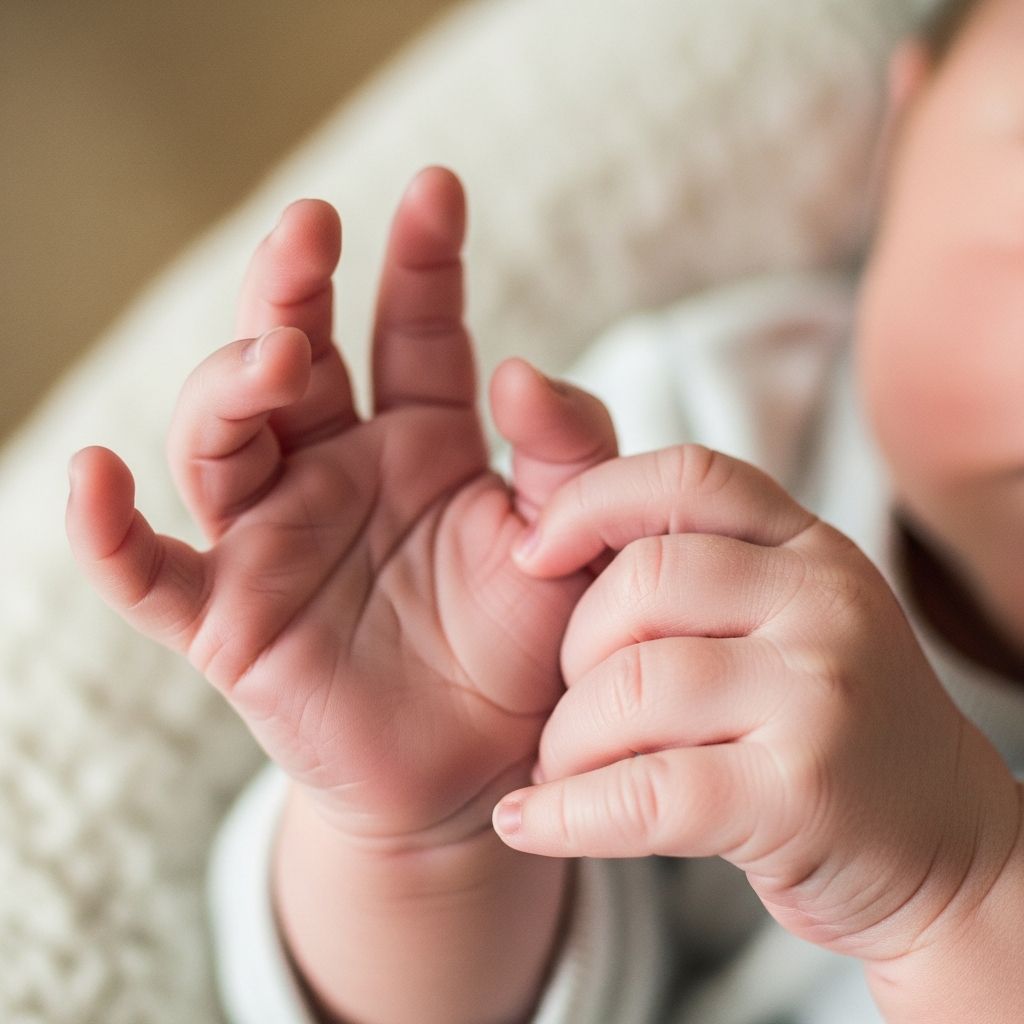
In the first three months of life, your baby’s hands transition from tightly clenched fists to more controlled opening and closing, marking the onset of fine motor skill development. This period lays the foundation for grasping, reaching, and eventual self-feeding, as babies begin exploring their world through touch.
Understanding Early Hand Development in Infants
During the newborn phase, infants instinctively keep their hands fisted, a reflex known as the palmar grasp. By around 1-3 months, these fists begin to unfurl voluntarily, allowing babies to discover their hands as extensions of themselves. This discovery is pivotal, as it integrates sensory input with motor control, helping the brain map body awareness.
Research from pediatric experts indicates that by the end of the third month, most babies can bring hands to mouth and swipe at nearby objects, transitioning jerky movements into purposeful actions. These changes reflect maturing neural pathways in the motor cortex and cerebellum, enabling smoother coordination.
Key Milestones for Hand Skills: Month by Month
Tracking progress month-to-month helps parents gauge typical development. Here’s a breakdown:
- Birth to 1 Month: Hands remain mostly fisted; reflexive grasping when palm is stroked. Limited voluntary opening.
- 1-2 Months: Hands open and shut more frequently; baby may stare at own hands, recognizing them as part of the body.
- 2-3 Months: Brings hands together at midline; reaches for faces or toys, often bringing objects to mouth.
| Age | Hand Milestone | Supporting Activity |
|---|---|---|
| 0-1 Month | Fists open briefly | Gently stroke palm |
| 1-2 Months | Hands to mouth | Tummy time daily |
| 2-3 Months | Grasps rattles | Offer soft toys |
These milestones align with guidelines from institutions like Mayo Clinic, where by three months, infants typically grab toys and explore them orally. Variations exist, but consistent progress is key.
The Role of Reflexes in Hand Maturation
Newborns exhibit primitive reflexes that evolve into voluntary movements. The grasp reflex, triggered by palm stimulation, fades as hands open more freely around 2 months. Simultaneously, the Moro reflex diminishes, reducing erratic arm flailing and allowing focused hand use.
This shift signifies central nervous system maturation. As reflexes integrate, babies gain control, swiping at mobiles or shaking rattles by 3 months. Parents often notice increased hand-to-mouth contact, aiding self-soothing and oral exploration.
Linking Hand Skills to Overall Motor Progress
Hand development interconnects with gross motor advances. Strengthening neck and shoulder muscles via tummy time enables propped-up positions, freeing hands for play. By 3 months, babies lift chest on elbows, coordinating with hand swipes.
Visual tracking also supports this: infants follow objects past midline, syncing eye-hand coordination. This holistic growth from head control downward—cephalocaudal principle—builds foundational stability for precise finger movements later.
Practical Activities to Boost Hand Coordination
Engaging activities stimulate these skills without overwhelming your baby. Focus on safe, age-appropriate play:
- Tummy Time Sessions: Start with 3-5 minutes several times daily, placing a mirror or high-contrast toy nearby to encourage reaching.
- Grasp Encouragement: Place lightweight rattles or soft rings in palms; shake gently to prompt voluntary holding.
- Sensory Play: Use black-and-white patterns or mobiles overhead, swaying to draw hand swipes.
- Skin-to-Skin Interaction: Let baby grasp your finger during cuddles, promoting security and motor practice.
- Voice and Face Games: Move your face side-to-side; baby tracks and reaches, enhancing focus.
Massage arms and hands with baby oil during diaper changes to heighten tactile awareness and relax muscles. Alternate positions like shoulder carries or lap tummy time for variety.
Importance of Tummy Time for Hand Strength
Tummy time is non-negotiable, building core and upper body strength essential for hand dexterity. It promotes prone propping, developing shoulder arches crucial for later pincer grasp. Aim for cumulative 15-30 minutes daily by 3 months, watching for fatigue cues.
Pediatric resources emphasize supervised tummy time prevents flat head spots (plagiocephaly) while fostering hand exploration. Combine with rolling encouragement from back to tummy around 3-4 months.
Sensory Integration: Hands, Vision, and Hearing
Hand movements integrate multisensory experiences. By 2 months, babies smile reciprocally and track faces, linking visual cues to reaches. Sounds from rattles draw attention, prompting shakes.
High-contrast toys (red, black, white) capture focus best in early vision, limited to 8-12 inches. Talking, singing, and peek-a-boo build associations, as babies quiet to familiar voices and reach toward sounds.
Variations and When to Consult a Professional
Most babies hit milestones within a window; prematurity or minor delays are common. Consult a pediatrician if by 3 months: hands remain persistently fisted, no reaching/swiping, or asymmetrical movements.
Early intervention via therapies can address concerns, ensuring optimal trajectories. Track via apps or charts from reliable sources like ASQ screenings.
Long-Term Benefits of Early Hand Mastery
Strong 1-3 month foundations predict success in self-feeding (6-9 months), stacking blocks (12-18 months), and writing (2+ years). Fine motor proficiency correlates with cognitive gains, as manipulation aids problem-solving.
Consistent stimulation fosters neural plasticity, the brain’s adaptability peak in infancy. Parents investing time now reap benefits in independent, confident toddlers.
Frequently Asked Questions (FAQs)
At what age do babies open and close their hands voluntarily?
Around 1-2 months, transitioning from reflex to intent, with full control by 3 months.
How much tummy time is recommended for a 1-3 month old?
Build to 15-30 minutes total daily, in short sessions, always supervised.
What toys help develop hand skills in newborns?
Soft rattles, high-contrast mobiles, and graspable rings; avoid small parts.
Is it normal if my 2-month-old doesn’t grasp toys yet?
Yes, if progressing; monitor and discuss at checkups if no improvement by 3 months.
Can I overstimulate my baby’s hand development?
Follow cues—short sessions prevent fatigue; rest is vital for consolidation.
This guide empowers parents with evidence-based insights, turning everyday moments into developmental boosters. Celebrate small victories as your baby’s hands unfold possibilities.
References
- Infant development: Birth to 3 months — Mayo Clinic. 2023-10-12. https://www.mayoclinic.org/healthy-lifestyle/infant-and-toddler-health/in-depth/infant-development/art-20048012
- Developmental Milestones: 0 to 6 Months — Nationwide Children’s Hospital. 2024-05-15. https://www.nationwidechildrens.org/family-resources-education/health-wellness-and-safety-resources/helping-hands/developmental-milestones-0-to-6-months
- Fine motor skills: birth to 2 years — Children’s Hospital of Richmond at VCU. 2023-08-20. https://www.chrichmond.org/services/therapy-services/developmental-milestones/fine-motor-skills-birth-to-2-years/
- Developmental Milestones: Birth to 5 years — Stanford Medicine. 2022-01-10. https://med.stanford.edu/content/dam/sm/pediatricsclerkship/documents/5-Developmental-Milestones-MedU.pdf
- Physical Developmental Milestones — Virtual Lab School. 2024-02-28. https://www.virtuallabschool.org/infant-toddler/physical-development/lesson-2
- Developmental milestones birth to 6 months — Children’s Minnesota. 2023-11-05. https://www.childrensmn.org/educationmaterials/childrensmn/article/15316/developmental-milestones-birth-to-6-months/