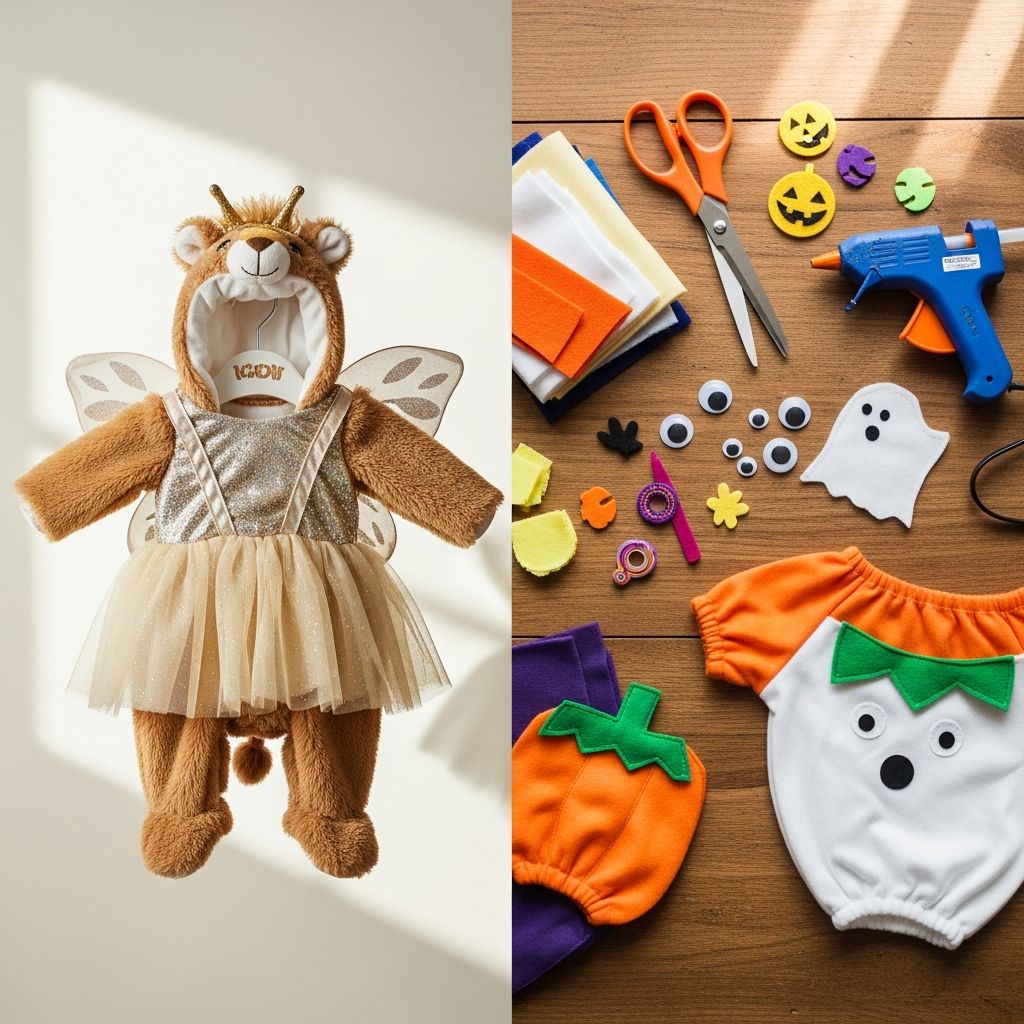
Baby’s first Halloween is a milestone filled with photos, giggles, and at least one costume change thanks to spit-up or a leaking diaper. Before the cuteness begins, there is one big decision to make: should you buy a costume or make one yourself? Both paths can be fun and meaningful—if you approach them with realistic expectations and a clear sense of what your family actually needs.
This guide walks through the real-world pros and cons of store-bought versus DIY costumes for babies, along with comfort and safety tips, planning strategies, and simple creative ideas that do not require advanced crafting skills.
What Really Matters for a Baby Costume
For older kids, Halloween often centers around candy and character choices. For babies, the priorities shift. Your baby will not remember this holiday, but you will be looking at the photos for years.
- Comfort: Soft fabrics, breathable layers, and easy diaper access matter more than elaborate designs.
- Safety: No loose strings, choking hazards, or masks that restrict breathing or vision.
- Time: Parents of babies are typically exhausted; costume choices should respect your bandwidth.
- Budget: It is easy to overspend on a costume worn once and spit up on twice.
- Memories: Whether you buy or DIY, aim for a costume that feels authentic to your family’s style and sense of humor.
Buying a Baby Halloween Costume
Store-bought costumes can be a lifesaver when you are short on time or energy. Many parents choose to buy for the first Halloween simply because there are bigger things to worry about—like sleep and feeding schedules.
Advantages of Buying
- Time-saving: Clicking “add to cart” is significantly faster than cutting felt, sewing seams, or tracking down supplies.
- Predictable results: What you see online or in the store is usually what you get, which helps if you are planning photos.
- Broad selection: You can find classic characters, animals, and seasonal themes in a wide range of sizes.
- Resale or hand-me-down value: A well-kept costume can be passed to a sibling, cousin, or resold in secondhand groups.
Drawbacks of Buying
- Higher upfront cost: Specialty infant costumes can be surprisingly expensive for something worn once or twice.
- Fit and comfort issues: Some suits are bulky, scratchy, or too warm for your climate.
- Limited uniqueness: If a costume is popular, expect to see several similar babies in your social feeds.
DIY Baby Halloween Costumes
Making your own costume ranges from simple (decorating a onesie) to complex (fully sewn animal suits). DIY does not have to mean perfection; it can be as easy as adding themed accessories to clothes your baby already owns.
Advantages of DIY
- Custom fit and comfort: You can choose soft, familiar clothing your baby already likes as the base.
- Budget flexibility: Many costumes can be made from items you already have, plus a few inexpensive craft supplies.
- Creative expression: You can match the costume to a family joke, favorite food, or seasonal theme.
- Sentimental value: A handmade costume can become a keepsake to remember this stage of your baby’s life.
Drawbacks of DIY
- Time and energy: Late-night crafting sessions can add stress to an already tiring season.
- Skill limitations: Not everyone enjoys sewing or has the patience for detailed projects.
- Unpredictable results: “Pinterest perfect” ideas may not turn out as expected, especially with a squirmy baby.
Buy vs. DIY at a Glance
| Factor | Buying a Costume | DIY Costume |
|---|---|---|
| Time | Fast, minimal effort | Can be quick or time-consuming depending on design |
| Cost | Higher upfront, but predictable | Can be low if using items on hand; materials can add up |
| Creativity | Limited to available styles | Fully customizable to your ideas |
| Comfort | Varies by brand and fabric | You choose soft, familiar layers |
| Stress level | Generally low once ordered | Depends on your enjoyment of crafting and available time |
How to Decide What’s Right for Your Family
There is no universal right answer—only the option that fits your current season of life. To simplify the decision, ask a few honest questions about your budget, time, and expectations.
- How busy are you? If naps are unpredictable and you are barely keeping up with laundry, store-bought may be the kindest choice.
- What is your budget? If money is tight, focus on repurposing baby clothes you already have and adding small DIY touches.
- Do you enjoy crafting? If making things relaxes you, a simple DIY could be a fun way to mark the holiday.
- How important are photos? If you care deeply about matching a theme or aesthetic, either option can work as long as you plan early.
Low-Effort DIY Ideas Using Everyday Baby Clothes
DIY does not have to mean sewing an entire costume from scratch. Many of the cutest baby looks start with a plain onesie, a sleeper, or a cozy romper. From there, small, safe additions transform regular clothes into festive outfits.
- Food-themed baby: Use a solid-color onesie and felt cutouts to create a “fruit,” “vegetable,” or “dessert” look.
- Animal-inspired: Add soft felt ears to a hat and a simple tail to leggings for a quick cat, puppy, or bunny.
- Storybook nod: Combine colors and simple accessories to quietly reference a favorite picture book character.
- Seasonal baby: Think pumpkin shades, autumn leaves, or starry night prints for a subtle Halloween nod.
Safety and Comfort Checklist
Whether you buy or DIY, safety needs to sit at the top of your priority list. Babies run warmer than adults and cannot verbalize discomfort, so subtle details matter.
- Avoid choking hazards: Skip small buttons, detachable beads, and anything that could come loose and fit in a tiny mouth.
- Skip face coverings: Masks, thick face paint, and anything near the nose or mouth can interfere with breathing.
- Check temperature: Heavy fleece suits may be too warm indoors; consider layering so you can adjust as needed.
- Protect the skin: Choose soft fabrics and wash the costume before wearing to remove any irritants.
- Leave room for diapers: Snaps or zippers along the legs make diaper changes less of a juggling act.
Planning the Costume Timeline
A little planning can turn Halloween from stressful to fun. Even if you are not a detailed planner by nature, setting a few simple checkpoints keeps you on track.
- 3–4 weeks before: Decide whether you will buy or DIY, and pick a theme or idea.
- 2–3 weeks before: Place online orders, gather craft supplies, or pull together clothing you plan to use.
- 1 week before: Do a test try-on to check fit, warmth, and comfort. Adjust anything that seems scratchy or tight.
- 1–2 days before: Have the costume clean, dry, and laid out with backup pajamas or onesies in case of accidents.
Budget-Friendly Tips for Baby Costumes
It is entirely possible to have an adorable costume without overspending. A realistic budget also takes into account that your baby may only tolerate the outfit for a short time.
- Shop secondhand: Look at local resale groups, consignment shops, and swap events for gently used costumes.
- Think multipurpose: Use pajamas or rompers that can double as regular sleepwear after Halloween.
- Share within your community: Ask friends or family if they have baby costumes they are willing to lend.
- Keep accessories simple: Headbands, hats, or a decorated bib often provide enough “costume” in photos.
Making Photos Easy (and Baby-Friendly)
Most parents care more about the picture memories than the trick-or-treating at this stage. Creating a baby-friendly photo session can be straightforward if you focus on your child’s routines and comfort.
- Choose the right time of day: Aim for a window when your baby is usually awake and content.
- Keep the set simple: A blanket, a pumpkin, or string lights can be enough to set the scene.
- Have backup clothes ready: Expect spills, drool, and diapers—two matching outfits can save the day.
- Capture the in-between moments: Smiles during a diaper change or cuddles in costume tell the real story.
When to Mix Buying and DIY
You do not have to choose strictly between buying and making. Many families find a happy middle ground: purchasing a comfortable base and then adding small handmade details for personality.
- Buy a soft, plain sleeper; DIY a themed hat or bib.
- Purchase a simple animal onesie; add your own tail, ears, or blanket “cape.”
- Use store-bought accessories (like wings or hats) and pair them with clothes your baby already wears.
Frequently Asked Questions
Is a Halloween costume necessary for a very young baby?
No costume is truly necessary, especially for newborns. A themed onesie or seasonal pajamas can still feel festive while keeping your baby comfortable and you less stressed.
How long will my baby realistically wear the costume?
Most babies tolerate a costume for a short window—often 20 to 60 minutes—before they need a change, a nap, or a feeding. Plan photos, visits, or events accordingly and keep expectations flexible.
What if my baby hates wearing hats or headbands?
If your baby consistently pulls off hats or headbands, design the costume around clothing instead of accessories. Printed onesies, themed pajamas, or simple appliqués on the chest work well for hat-averse little ones.
Are elaborate costumes safe for babies?
Elaborate costumes are not automatically unsafe, but they need extra scrutiny. Remove small detachable pieces, check for anything that could cover the face, and make sure your baby can move, breathe, and regulate temperature freely.
Can I use face paint on my baby?
Many parents prefer to avoid face paint on babies due to sensitive skin and the tendency to rub eyes or suck on hands. If you choose to use any product, look for gentle, baby-safe options and test a tiny patch of skin well in advance.
What is the best option for a tight budget?
The most budget-friendly choice is usually to repurpose items your baby already owns. A solid-colored onesie, a simple hat, and a few homemade felt accents can become a charming and comfortable costume with minimal expense.
Choosing Joy Over Perfection
Whether you buy a ready-made costume or piece one together at home, the goal is not to impress anyone on social media. The goal is to enjoy a sweet, brief season with your baby, capturing a few genuine smiles along the way. Make the decision that fits your energy, your budget, and your baby’s temperament, and allow yourself to keep it simple if that is what feels best.