Squeezable baby food pouches have become a staple in modern parenting. They promise less mess, quick snacks, and easy access to fruits and vegetables on the go. Yet behind the convenience are important questions about nutrition, development, and how children learn to eat. This guide explores the benefits and concerns around pouches and offers practical strategies for using them without letting them take over your child’s diet.
Why Squeezable Pouches Became So Popular
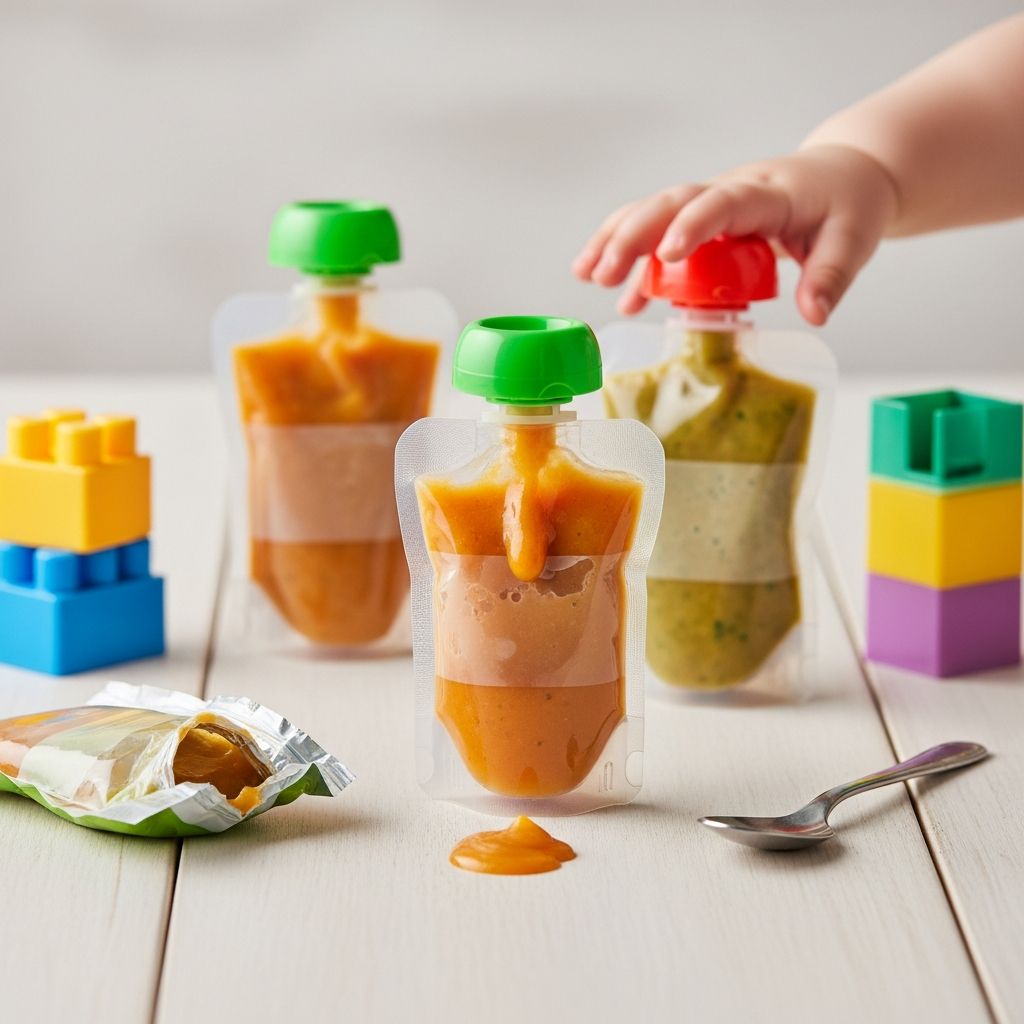
Food pouches are typically flexible containers of pureed foods with a plastic spout that children can suck or squeeze from directly. Their rise has been rapid: the United States now has the world’s largest market for these products, and sales continue to grow with strong demand from parents seeking portable, ready-to-eat options for infants and toddlers.
Parents often reach for pouches because they:
- Reduce cleanup compared with bowls and spoons
- Allow toddlers to self-feed in the car, stroller, or shopping cart
- Provide a sense of security that a child has eaten at least some fruits or vegetables
- Fit into busy schedules, travel days, and childcare routines
Used occasionally, pouches can be a helpful tool. The challenge arises when they become a default food rather than an occasional convenience.
Nutritional Profile: What’s Really Inside a Pouch?
Baby food pouches often feature marketing language like “no added sugar” or “all natural,” but their actual nutrient content can vary widely. A large 2019 analysis of infant and toddler squeeze pouches found that, depending on the category, pouches were more likely to contain added sugars than comparable foods sold in jars or other containers.
| Food Type | Pouches (on average) | Other Packaging (jars, tubs) |
|---|---|---|
| Fruit & veggie blends | More likely to contain added sugars; often larger portion sizes | Less likely to contain added sugars |
| Meat / fish / legume blends | Slightly fewer calories and fat; more fiber and micronutrients in some products | Generally similar nutrients with less fiber and vitamin C |
| Yogurt / milk-based | Fewer calories, fat, protein, and sodium; more fiber and vitamin C on average | More protein and calcium in some traditional products |
In the United States, health guidelines recommend no added sugar for children under age 2 because early exposure can shape taste preferences and overall diet quality. Many fruit-based pouches rely on concentrated fruit purees or juice concentrates, which, even without table sugar, can provide very sweet tastes and high sugar density.
In addition:
- Pureed fruits and vegetables generally contain less fiber than whole, intact foods.
- Sweet flavor combinations may make it harder for children to later accept bitter or less sweet vegetables in their natural form.
- Repeated exposure to intensely sweet purees can reinforce a preference for sweet tastes.
How Pouches Affect Oral-Motor and Speech Development
From a developmental perspective, the way children eat is as important as what they eat. Sucking from a pouch relies heavily on an early skill—sucking—that infants first use for nursing and bottle feeding.
Health professionals emphasize that typically developing children should gradually move from purees to more textured foods during the second half of the first year of life. By around 12–18 months, purees are expected to be a small part of the diet, with most nutrition coming from soft solid foods that require chewing.
Relying heavily on pouches can:
- Delay the practice of chewing, biting, and moving food around the mouth with the tongue
- Limit opportunities to strengthen jaw and facial muscles needed for both eating and speaking
- Encourage prolonged use of sucking patterns rather than more advanced oral skills
Experts warn that constantly replacing chewable foods with easy-to-suck purees may interfere with the natural progression of feeding skills, especially if pouches are used multiple times per day over many months.
Missing Out on the Sensory Experience of Real Food
Eating is a multisensory activity: children learn by seeing, smelling, touching, and manipulating their food. Occupational therapists and pediatric dietitians highlight that sensory exploration—yes, including mess—is an important part of building comfort with different textures and flavors.
When children mostly eat from pouches, they may:
- Rarely see what the food looks like before it goes into their mouths
- Miss chances to feel textures with their fingers or utensils
- Get limited exposure to varied colors, shapes, and smells
- Have a harder time accepting lumpy, crunchy, or mixed-texture foods later
Clinical and expert commentary from pediatric organizations has raised concerns that frequent use of pureed foods in plastic pouches may make transitions to family foods more difficult and could influence long-term food preferences.
Portion Size, Self-Regulation, and Obesity Concerns
Self-feeding with solids is slow, effortful, and interactive. Children pause, manipulate food, drop items, and naturally stop when full. By contrast, sucking down a pouch is quick, requires little effort, and can be done passively while distracted.
Dietitians and public health experts note that:
- It is easier for a child to consume more calories in less time when food is pureed and sipped
- Parents may encourage finishing a pouch without watching for fullness cues
- Frequent, energy-dense snacks between meals can undermine normal hunger and satiety patterns
These issues matter in the context of rising childhood obesity. In the United States, nearly 1 in 5 school-age children and adolescents have obesity, according to the Centers for Disease Control and Prevention (CDC). While pouches alone are not the cause, experts caution that ultra-convenient, easily consumed foods can contribute to a pattern of overconsumption if not used thoughtfully.
Safety and Quality Issues Parents Should Know About
Besides nutrition and development, there are other practical concerns:
- Heavy metals and contaminants: Several investigations have found concerning levels of lead in some fruit purees and baby food pouches, raising developmental and behavioral concerns because no level of lead exposure is considered safe in children.
- Dental health: Frequent sipping of sweet purees—especially outside normal meal times—can bathe teeth in sugars and increase the risk of dental caries.
- Label complexity: Ingredient lists may hide sweetness in the form of fruit concentrates or juice, even when “no sugar added” appears on the front.
Parents who choose to use pouches can mitigate some of these risks by checking independent test reports, varying brands and products, and avoiding pouches marketed as desserts or treats.
When Pouches Can Be Genuinely Helpful
Despite the concerns, pouches are not inherently harmful when used as one tool among many. They may be particularly useful:
- During travel, medical appointments, or long errands where refrigeration and utensils are impractical
- As a backup option when a child is too tired or overstimulated to manage a full sit-down meal
- For occasional snacks that complement, rather than replace, regular meals of table food
- As a transition tool when paired with a spoon or bowl, so children can practice more advanced feeding skills
The key is to treat pouches as an emergency kit or sometimes food, not as the backbone of everyday eating.
Practical Guidelines for Smarter Pouch Use
Parents do not have to abandon pouches entirely to support healthy eating habits. Instead, they can apply a few practical rules:
1. Make Whole Foods the Default
- Offer soft pieces of fruits and vegetables (banana, ripe pear, cooked carrot) at most meals.
- Use pouches mainly when fresh options are impossible or highly impractical.
- Encourage your child to eat what the rest of the family is eating, modified for safety and texture.
2. Check the Label Carefully
- Choose pouches with simple ingredient lists (e.g., individual vegetables or vegetable-forward blends).
- Avoid products with added sugars, sweeteners, or dessert-like flavors (e.g., “apple-berry crumble”).
- Pay attention to serving size; consider offering half a pouch and saving the rest safely if appropriate.
3. Support Oral and Sensory Development
- Whenever possible, squeeze pouch contents into a bowl and offer them with a spoon.
- Let your child touch, smell, and play (within reason) with their food to build comfort with textures.
- Gradually introduce lumpier foods, small soft pieces, and a variety of textures between 6–12 months, alongside purees.
4. Protect Teeth and Appetite
- Avoid letting children walk around continuously sipping on pouches between meals.
- Serve pouches at structured snack or mealtime, not as a constant graze food.
- Offer water between meals instead of sweetened foods or drinks.
5. Monitor Frequency Over Time
- Take note if pouches are becoming a daily or multiple-times-per-day habit.
- Set a personal guideline (for example, no more than a few pouches per week) and adjust as your child grows and eats more table food.
- If your child refuses all textured foods in favor of pouches, consider consulting a pediatrician or feeding specialist.
Frequently Asked Questions About Baby Food Pouches
At what age are baby food pouches appropriate?
Most pouches are marketed starting around 6 months, similar to other purees. However, experts emphasize that they should be part of a broader feeding plan that quickly introduces a range of textures and finger foods during the first year, rather than remaining a primary food source into the toddler years.
Are pouches bad for babies if used daily?
Occasional use is unlikely to cause harm, but daily or multiple daily use can crowd out opportunities to chew, explore textures, and share family meals. Heavy reliance on pouches is associated with concerns about sugar intake, limited sensory experience, and overconsumption, so many pediatric experts advise limiting routine use.
How can I choose a healthier pouch?
Look for vegetable-focused blends with no added sugars or sweeteners, short ingredient lists, and lower total sugar content. Aim for products that do not taste like dessert, and try to balance fruit-heavy pouches with plenty of whole vegetables, proteins, and grains at other meals.
Could pouches affect my child’s speech development?
Speech and feeding share many muscles and motor patterns. If a child consumes mostly purees and does very little chewing over an extended period, they may get fewer opportunities to strengthen those muscles. Professionals recommend providing a wide range of chewable textures during the second half of the first year to support both feeding and oral-motor development.
Are homemade purees in reusable pouches better?
Homemade blends allow you to control ingredients, avoid added sugars, and increase vegetable content. However, the developmental concerns are similar if your child always sucks directly from the pouch. It is still important to offer spoon-feeding, finger foods, and chances to see and touch the food.
Should I be worried about heavy metals in pouches?
Investigations have found that some fruit and baby food pouches contain concerning levels of lead, and any lead exposure is considered unsafe in young children. To reduce risk, vary brands and products, avoid relying on the same item every day, and follow guidance from pediatricians and public health agencies on safer feeding practices.
References
- Nutrient Content of Squeeze Pouch Foods for Infants and Toddlers Sold in the United States — M. Beauregard et al., Nutrients. 2019-05-31. https://pmc.ncbi.nlm.nih.gov/articles/PMC6682959/
- Potential Pitfalls of Squeezable Food Pouches — North Shore Pediatric Therapy. 2014-10-21. https://www.nspt4kids.com/parenting/squeeze-youre-under-arrest-potential-pitfalls-of-squeezable-food-pouches
- Pros and Cons of Puréed Food Pouches for Kids — Today’s Dietitian / University of Texas Health Science Center at Houston. 2019-02-01. https://www.todaysdietitian.com/pros-and-cons-of-pureed-food-pouches-for-kids/
- The Pros and Cons of Baby Food Pouches — St. Louis Children’s Hospital. 2021-06-08. https://www.stlouischildrens.org/health-resources/pulse/pros-and-cons-baby-food-pouches
- Some Kids’ Fruit Purée Pouches Have Concerning Lead Levels — Consumer Reports. 2023-11-16. https://www.consumerreports.org/babies-kids/baby-food/some-kids-fruit-puree-pouches-have-concerning-lead-levels-a1119762896/