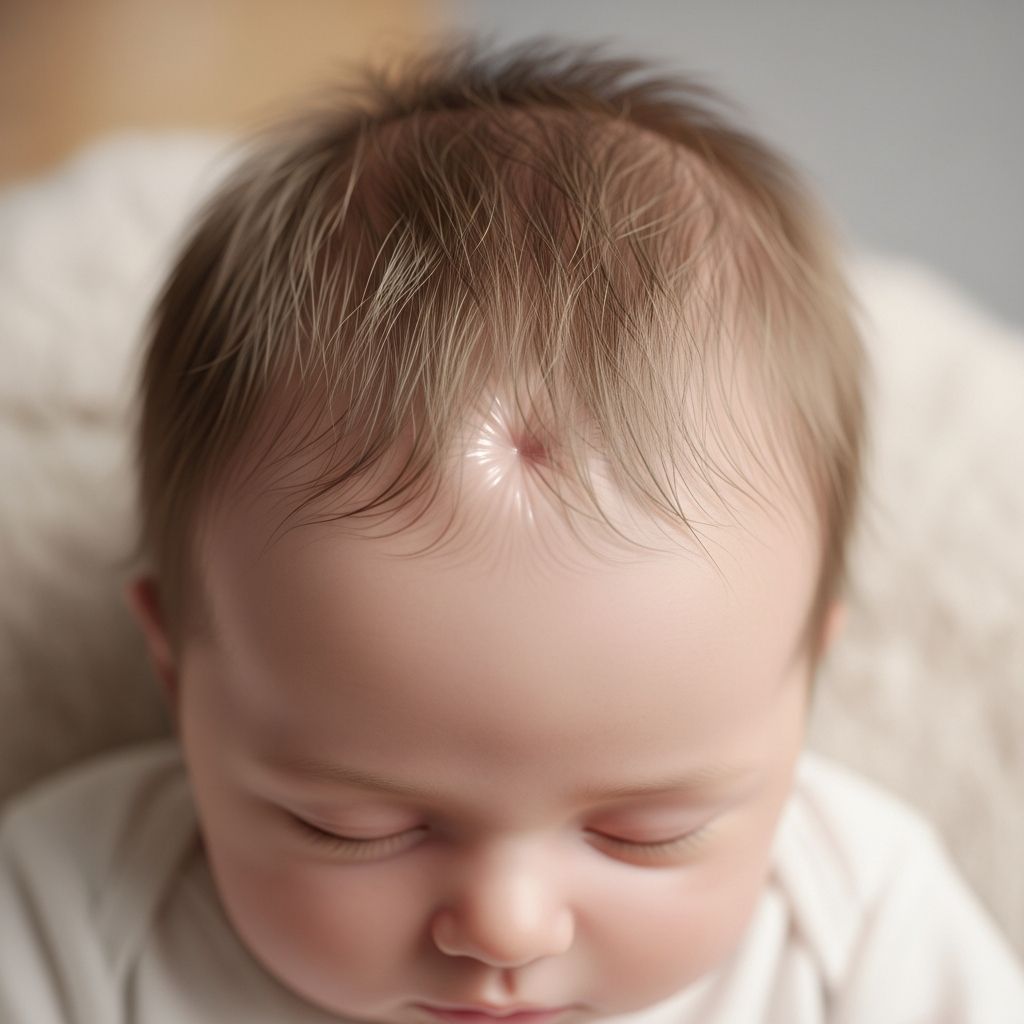
The soft areas on a newborn’s head, known as fontanelles, are a natural and crucial part of early development. These flexible spots allow the skull to accommodate rapid brain growth and ease passage through the birth canal. Understanding their function, appearance, and changes over time empowers parents to care confidently for their infants.
Why Newborns Have Soft Spots on Their Heads
Fontanelles form at the junctions where a baby’s skull bones have not yet fully fused. This design provides several vital benefits. During delivery, the skull bones can overlap slightly, known as molding, which helps the head navigate the narrow birth canal without injury. Post-birth, the open spaces permit the brain to expand threefold in the first year of life, as skull bones gradually knit together.
Without these soft spots, the rigid skull could restrict brain development or complicate labor. They also enable medical professionals to assess internal conditions non-invasively, such as hydration levels or pressure inside the skull. There are typically six fontanelles at birth, though parents usually notice only the two most prominent ones.
Identifying the Main Types of Fontanelles
Newborns possess multiple fontanelles, each varying in size, shape, and location. Familiarizing yourself with them helps in routine checks and early detection of issues.
- Frontal (Anterior) Fontanelle: The largest and most visible, this diamond-shaped spot sits at the top-front of the head, roughly the size of a quarter (about 2-3 cm across). It pulses gently with the heartbeat, which is normal.
- Occipital (Posterior) Fontanelle: Smaller and triangular, located at the back of the head where three bones meet. It’s about the size of a pencil eraser (0.5-0.7 cm).
- Sphenoid Fontanelles: Paired spots near the temples on each side, closing early in infancy.
- Mastoid Fontanelles: Smaller pairs behind the ears, also fusing relatively quickly.
These structures are covered by a tough, fibrous membrane that protects the brain, making gentle handling safe during daily care.
Timeline for Fontanelle Closure: What to Expect
Fontanelles close progressively as the skull bones ossify, with timelines varying by type, genetics, and health factors. The table below outlines average closure periods based on medical observations.
| Fontanelle Type | Average Closure Age | Notes |
|---|---|---|
| Anterior (Front) | 9-24 months | Largest; 50% closed by 18 months, 96% by 24 months |
| Posterior (Back) | 1-3 months | Closes first; often undetectable by 2 months |
| Sphenoid (Temples) | By 6 months | Paired; early closure |
| Mastoid (Behind Ears) | 6-18 months | Smaller; variable |
Factors like ethnicity influence size—infants of African descent may have larger anterior fontanelles (1.4-4.7 cm)—and males often close sooner than females. Premature babies follow adjusted gestational age timelines, with neonatal teams providing tailored monitoring.
Normal Variations in Closure and Development
Not all babies follow exact timelines, and wide variation is common. For instance, the anterior fontanelle may persist up to 36 months in healthy children without concern, especially if growth milestones are met. Real-world examples show closures from 9 to 24 months, with no impact on long-term health.
Track progress during well-child visits, where pediatricians measure head circumference alongside fontanelle status. Nutrition plays a role: ensure adequate vitamin D (400 IU daily per AAP) and calcium through breast milk or formula to support bone mineralization.
Safe Daily Care for Your Baby’s Soft Spots
Fontanelles require no special treatment beyond standard newborn hygiene. The protective membrane withstands gentle washing, brushing hair, and cuddling. Key practices include:
- Wash hair with mild shampoo, supporting the head as usual.
- Avoid pressing firmly; light touch is fine for cleaning or checking.
- Position baby tummy-down during awake time to promote even head shape and strength.
- Use soft-brimmed hats outdoors, but allow air circulation to prevent overheating.
For active babies, prioritize head protection during crawling (6-12 months) and toddling (12-24 months) with padded play areas and supervision.
Recognizing Healthy vs. Concerning Fontanelle Appearance
A healthy anterior fontanelle feels flat or slightly sunken when calm and upright. Temporary changes are normal:
- Slight bulging during crying, vomiting, or straining—resolves quickly.
- Pulsing with heartbeat.
- Softness after feeding or bathing due to circulation.
Monitor position: lying down may alter appearance due to blood flow shifts.
Warning Signs: When to Contact a Doctor Immediately
Certain changes signal potential issues like dehydration, infection, or intracranial pressure. Seek urgent care if you notice:
- Sunken fontanelle: Persistent when calm; indicates dehydration alongside dry mouth, few wet diapers.
- Bulging fontanelle: Remains raised when upright and calm; may suggest meningitis, hydrocephalus, or trauma.
- Early closure (<9 months): With slow head growth, ridged sutures, or delays.
- Late closure (>24 months): If accompanied by poor growth or other symptoms.
- Irregular shape or rapid changes: Could link to craniosynostosis or metabolic issues.
Always err on caution—pediatricians use fontanelles as a quick health gauge.
Addressing Common Head Shape Concerns in Infants
Prolonged back-lying can cause positional plagiocephaly (flat head). Early interventions work best:
- Repositioning (0-4 months): Alternate head position in crib, tummy time; 77% mild cases resolve.
- Physical therapy (2-6 months): For torticollis (neck tightness).
- Helmet therapy (4-12 months): 94% success in moderate cases if started early.
Consult providers promptly for assessments.
Frequently Asked Questions About Baby Fontanelles
Is it safe to touch my baby’s soft spot?
Yes, gentle touching during care like bathing is safe—the membrane is durable.
When should the front soft spot close?
Typically between 9-24 months, though up to 36 months is normal.
What if my baby’s soft spot is bulging?
If persistent when calm, contact a doctor immediately for evaluation.
Does fontanelle size differ by prematurity?
Yes, preemies have larger, later-closing spots; use adjusted age.
Can nutrition affect closure?
Vitamin D and calcium support healthy bone growth; follow pediatric guidelines.
Supporting Optimal Skull and Brain Growth
Beyond fontanelles, holistic care fosters development: tummy time builds neck muscles, responsive feeding ensures nutrition, and safe sleep prevents pressure points. Regular checkups track progress holistically. By 2-3 years, the skull is fully fused, forming a protective vault for the maturing brain.
Empowerment comes from knowledge—fontanelles are temporary marvels of adaptation, bridging fetal flexibility with childhood sturdiness.
References
- Anatomy, Head and Neck: Fontanelles — StatPearls, NCBI Bookshelf. 2023-08-08. https://www.ncbi.nlm.nih.gov/books/NBK542197/
- Fontanelles: What Are the Soft Spots on Baby’s Head? — The Bump. 2024. https://www.thebump.com/a/soft-spots-on-a-newborn
- When Do Fontanelles Close? Soft Spots on Babies’ Heads Explained — Flo Health. 2024. https://flo.health/being-a-mom/your-baby/growth-and-development/when-do-fontanelles-close
- Fontanelle: Caring for Your Baby’s Soft Spot — Cleveland Clinic. 2023-11-15. https://health.clevelandclinic.org/fontanelle-baby-soft-spot
- Your baby’s soft spot (fontanelle) — Summer Health. 2024. https://www.summerhealth.com/blog/soft-spot-baby
- About the fontanelle — Pregnancy Birth and Baby (Australian Government). 2023. https://www.pregnancybirthbaby.org.au/about-the-fontanelle