At 9-12 months, babies shift from primarily milk-based diets to incorporating a wider array of solid foods, fostering independence and nutritional diversity. This stage marks a pivotal transition where infants develop chewing skills and explore family meals, with solids gradually becoming the main nutrition source alongside 24 ounces of breast milk or formula daily.
Recognizing Developmental Readiness for Advanced Solids
By 9 months, most babies exhibit strong head control, sit steadily without support, and show interest in self-feeding, signaling readiness for finely chopped soft foods. Healthcare providers recommend confirming these milestones before expanding textures, ensuring safe progression. Babies leaning forward, opening mouths wide, or reaching for utensils demonstrate hunger cues, while turning away or closing mouths indicate fullness.
Building a Nutrient-Rich Daily Menu
Offer three meals and 2-3 snacks daily, prioritizing iron-rich foods like fortified cereals, meats, beans, and leafy greens to prevent deficiencies. Continue breast milk or formula up to 32 ounces, positioning solids before milk feeds to build appetite for table foods. Introduce whole pasteurized milk around 9-12 months only if consuming iron-rich solids regularly, limiting to 500 ml (2 cups) by age 1 to avoid displacing key nutrients.
| Meal Time | Suggested Portions (9-12 Months) | Food Group Examples |
|---|---|---|
| Breakfast | 45-120 ml grains + 30-60 ml fruit/veg | Iron-fortified oatmeal, mashed banana, yogurt |
| Morning Snack | 30-45 ml dairy + soft fruit pieces | Cheese cubes, ripe pear slices |
| Lunch | 30-60 ml veg + 30-60 ml protein + grains | Pureed carrots, tofu, quinoa |
| Afternoon Snack | Finger foods: 2-3 Tbsp | Puffs, cooked pasta, avocado |
| Dinner | Balanced plate: veg, protein, grains | Well-cooked chicken, sweet potato, rice |
This sample adapts to individual appetites, with variations day-to-day based on growth spurts or teething.
Safe Textures and Finger Food Progression
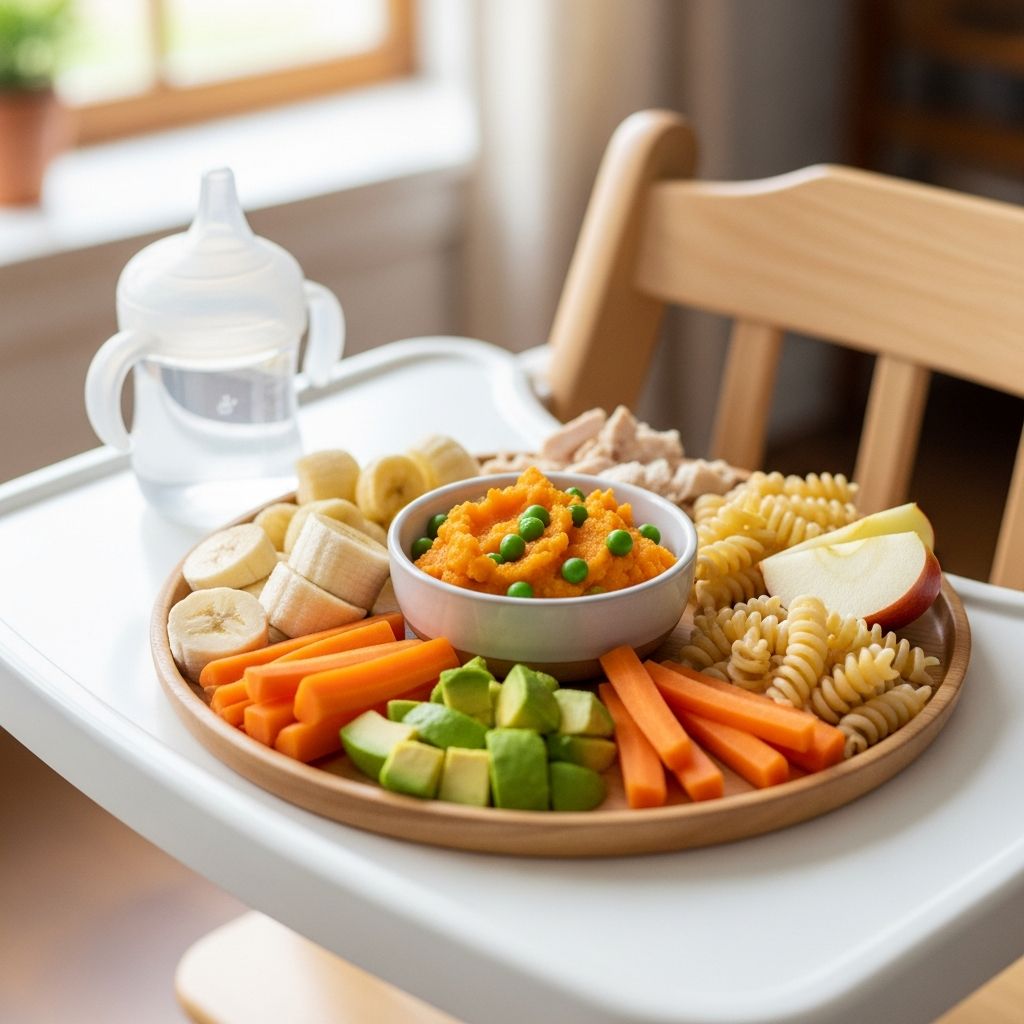
Transition from smooth purees to lumpy mashes by 9 months, then finely minced soft foods like ripe fruits, steamed veggies, and tender meats. Ideal finger foods dissolve easily or mash with gums: small pasta, toast strips, pea-sized cheese, or puffs. Always supervise, cutting items into pieces under 1/2 inch to minimize choking risks.
- Soft fruits: Banana slices, peeled peaches, kiwi bits
- Veggies: Steamed carrot sticks, broccoli florets
- Grains: Unsalted crackers, rice cakes, couscous
- Proteins: Shredded poultry, mashed beans, tofu cubes
- Dairy: Grated hard cheese, full-fat yogurt
Avoid honey, whole nuts, popcorn, grapes, and unpasteurized products due to botulism, allergy, or choking hazards.
Allergy Prevention Through Gradual Introduction
Introduce single-ingredient foods first, waiting 3-5 days to monitor for rashes, diarrhea, or vomiting. High-risk allergens like peanut products, eggs, fish, and wheat can start after 6 months if no eczema history; consult pediatricians for at-risk babies. Expose to diverse flavors early to reduce pickiness later.
Encouraging Self-Feeding and Mealtime Routines
Provide baby-safe utensils and allow mess—self-feeding builds motor skills and appetite regulation. Seat babies at the family table for 10-15 minute meals, modeling healthy eating without screens or distractions. Use straw or open cups for sips to transition from bottles. Responsive feeding respects cues: offer more if eager, stop at satiety signs.
Addressing Common Feeding Hurdles
Teething may reduce intake; offer cold teething toys or chilled fruits. Gagging is normal as babies learn textures—distinguish from choking (silent, blue lips vs. noisy cough). If refusing solids by 9 months, loosely time milk feeds to foster hunger for meals. Persistent issues warrant pediatric evaluation for reflux or oral motor delays.
Nutrition Priorities for Optimal Growth
Prioritize vitamin C-rich foods (broccoli, strawberries, peppers) to enhance iron absorption from plant sources like lentils and spinach. Whole grains (barley, quinoa) provide fiber; proteins from eggs, fish, and legumes support development. Limit juice to 4 oz daily, diluted if offered. Hydrate with water in sippy cups alongside milk.
Sample Weekly Meal Ideas
- Monday Breakfast: Fortified wheat cereal with pureed mango
- Tuesday Lunch: Minced turkey, mashed peas, barley
- Wednesday Snack: Cucumber sticks, hummus dip
- Thursday Dinner: Baked salmon flakes, sweet potato mash, couscous
- Friday: Yogurt parfait with soft blueberries
Rotate to ensure variety, incorporating family recipes adapted for soft textures.
Frequently Asked Questions
How much milk should a 9-12 month old drink daily?
Up to 24-32 oz of breast milk or formula; introduce whole cow’s milk at 9-12 months limited to 2 cups if eating solids well.
When can babies start finger foods?
Around 8-10 months when handling small soft pieces, progressing to table foods by 12 months.
What are signs of food allergies?
Hives, swelling, vomiting, or wheezing within hours; introduce allergens gradually under guidance.
How to prevent choking?
Cut foods small, avoid hard/raw items, supervise always, and learn infant CPR.
Is it okay if baby refuses solids some days?
Yes, appetites vary; offer consistently before milk and follow cues without forcing.
References
- Solid foods: How to get your baby started — Mayo Clinic. 2023-10-15. https://www.mayoclinic.org/healthy-lifestyle/infant-and-toddler-health/in-depth/healthy-baby/art-20046200
- Starting Solid Foods: 6–12 Months — Healthy Parents Healthy Children (Government of Alberta). 2024-05-20. https://www.healthyparentshealthychildren.ca/im-a-parent/older-babies-6-12-months/feeding-starting-solid-foods/
- Solid Feeding Guide — Boston Children’s Hospital. 2022-08-01. https://www.childrenshospital.org/sites/default/files/2022-08/Bardonia%20-%20Solid-Feeding-Guide.pdf
- Infant Food and Feeding — American Academy of Pediatrics (AAP). 2025-01-10. https://www.aap.org/en/patient-care/healthy-active-living-for-families/infant-food-and-feeding/
- Baby Feeding Schedules – 6 to 24 Months — Solid Starts. 2024-11-05. https://solidstarts.com/feeding-schedules/
- Feeding Guide for the First Year — Stanford Medicine Children’s Health. 2024-03-12. https://www.stanfordchildrens.org/en/topic/default?id=feeding-guide-for-the-first-year-90-P02209