Few things are more stressful than watching a baby itch, fuss, and struggle with uncomfortable skin. When dry patches turn red, rough, and angry-looking, many parents discover they are dealing with eczema. The good news is that while eczema is a chronic condition, daily habits, gentle products, and a calm approach can make a huge difference in your child’s comfort.
This guide walks through what baby eczema is, how it shows up, ways to soothe flare-ups, and how to build a simple, sustainable skincare routine that fits into real family life.
What Baby Eczema Really Is
Baby eczema is a term often used for atopic dermatitis in infants and toddlers. It usually appears as red, rough, or scaly patches that can be very itchy. Some babies have small, scattered patches, while others have larger areas of irritated skin.
Common signs of eczema in babies
- Red, pink, or darker patches depending on your child’s skin tone.
- Rough, bumpy, or thickened areas that feel different from surrounding skin.
- Persistent itching that makes your baby rub against clothing, bedding, or even you.
- Flare-ups that come and go, often getting worse in dry, cold weather or after contact with irritants.
In younger babies, eczema often appears on the cheeks, forehead, and scalp, then may move to arms, legs, and body creases as they grow. It is not an infection and it is not something you did wrong as a parent.
Why Some Babies Develop Eczema
Eczema usually comes from a combination of genetics and environment. Some children inherit skin that does not hold moisture as well, which makes the skin barrier weaker. That fragile barrier allows irritants, allergens, and dryness to cause inflammation more easily.
Typical eczema triggers in daily life
- Dry air from heating or cold weather.
- Fragrances or dyes in soaps, lotions, or detergents.
- Rough fabrics like wool or some synthetics.
- Heat and sweat from overdressing or very warm rooms.
- Saliva on the chin and cheeks from drooling.
Not every trigger affects every child. The goal is not perfection but pattern-spotting: understanding what tends to make your own baby’s skin better or worse over time.
Recognizing Flare-Ups Before They Explode
Learning your child’s early warning signs allows you to step in before a small rough patch turns into a full-blown flare. Think of it as listening to your baby’s skin whisper before it starts to shout.
Early warning signs to watch for
- Dryness that seems to come back quickly even after moisturizing.
- Subtle color changes: slightly pink, dull, or shadowy patches.
- Increased rubbing, scratching, or fussing during diaper changes or bedtime.
- A small, rough area that grows or spreads over a few days.
When you notice those early signs, it is a good moment to gently step up moisturizing, simplify products, and avoid extra irritants for a few days.
Building a Calm, Eczema-Friendly Daily Routine
An eczema routine does not need to be complicated or expensive. What matters most is consistency: using gentle products, adding moisture frequently, and protecting the skin barrier every single day.
Bath time basics
- Keep baths short, usually around 5–10 minutes.
- Use lukewarm water, not hot, because heat strips moisture and can worsen itching.
- Choose a mild, fragrance-free cleanser and use as little as you can get away with.
- Avoid bubble baths, strong soaps, and anything heavily perfumed.
Right after the bath, pat your baby’s skin gently with a soft towel instead of rubbing. While the skin is still slightly damp, apply a generous layer of moisturizer to lock in the water.
Moisturizing strategy that actually fits real life
Think of moisturizing as daily maintenance for your baby’s skin barrier. A thin coat once a day often is not enough for eczema-prone skin.
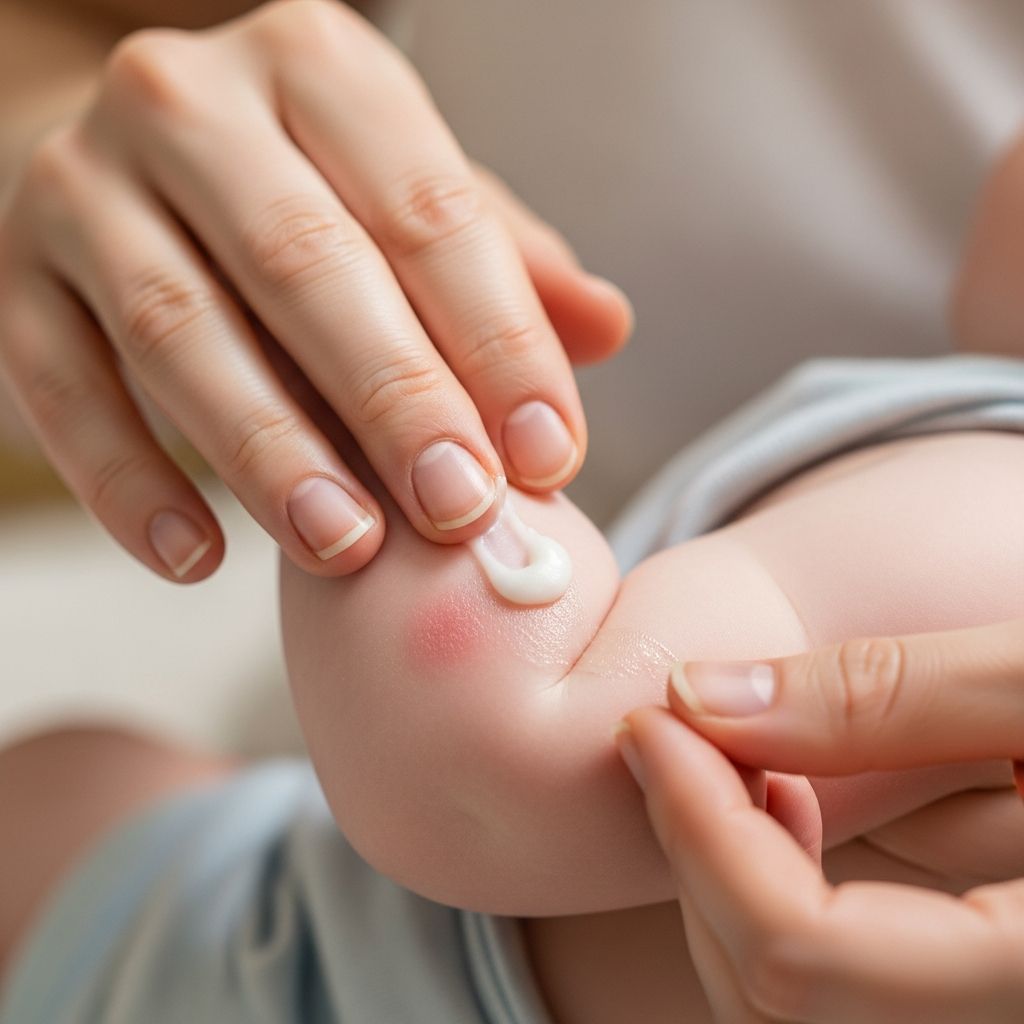
- Use a thick, fragrance-free cream or ointment rather than a light lotion.
- Apply at least twice a day on regular days; more often during flare-ups.
- Pay extra attention to known trouble spots: cheeks, wrists, ankles, behind the knees, or diaper edges.
- Keep a small tube near the changing table so you remember to apply a quick layer at diaper changes.
Choosing Products for Sensitive Baby Skin
The shelves of baby products can feel overwhelming, especially when you are reading labels through tired parent eyes. Eczema-friendly products share some common characteristics that make life easier.
Ingredients and features to look for
- Clearly labeled as fragrance-free (not just “unscented”).
- Formulated for sensitive or eczema-prone skin.
- Creams or ointments that contain hydrating ingredients like glycerin, ceramides, or plant-based oils.
- Short ingredient lists you can actually read and recognize.
Things to avoid when possible
- Strong fragrances, perfumes, or essential oil blends on inflamed areas.
- Harsh soaps, foaming washes, or astringent toners (even if they are “natural”).
- Fabric softeners and heavily scented laundry detergents.
- Rough scrubs, washcloths, or loofahs on tender skin.
Home Environment Tweaks That Help
Skin does not exist in isolation. Small changes in your baby’s environment can reduce irritation and help moisturizers do their job more effectively.
Clothing, bedding, and laundry tips
- Choose soft, breathable fabrics like cotton or bamboo for everyday wear.
- Remove scratchy tags or seams that rub against irritated areas.
- Wash new clothes before your baby wears them.
- Use a fragrance-free, dye-free detergent and skip fabric softener.
- Avoid tight sleeves or pants that trap sweat or rub on sensitive folds.
Managing temperature and humidity
- Aim for a comfortably cool room rather than very warm to reduce sweating.
- Use a humidifier in dry seasons if indoor air feels very dry.
- Dress your baby in light layers that can be added or removed easily.
Soothing Itching and Protecting the Skin
Itching is one of the most frustrating parts of eczema, especially when babies cannot stop scratching long enough to let the skin heal. While nothing can erase the itching instantly, a few strategies can make it more manageable.
Everyday itch-soothing ideas
- Keep your baby’s nails short and smooth to reduce skin damage from scratching.
- Use soft mittens or socks on the hands during naps and nighttime if scratching is intense.
- Offer distractions like toys or cuddles when you see your baby start rubbing or scratching.
- Apply a thick ointment to hot spots before sleep to create a healing barrier.
Some families also work with their pediatrician on additional interventions when itching interferes with sleep or daily function. Always talk to a healthcare professional before using any medicated creams or oral medications.
When to Talk to a Doctor
While many families manage mild eczema at home, medical guidance is important, especially early on. A healthcare provider can confirm the diagnosis, rule out infections, and recommend treatments tailored to your baby’s needs.
Signs it is time for medical help
- Eczema covers large areas of the body or worsens rapidly.
- Your baby’s sleep is regularly disrupted by itching or discomfort.
- You notice yellow crusts, oozing, or blisters that suggest infection.
- Home skincare and moisturizers are not making a noticeable difference.
A pediatrician or pediatric dermatologist may suggest prescription creams, short courses of medicated ointments, or other treatments. The goal is not to rely on strong medicines forever, but to use them wisely as part of a broader routine that protects the skin long-term.
Sample Simple Daily Eczema Routine
Every child is different, but it can be helpful to see what a basic, eczema-friendly day might look like. Use this as a starting point and adjust based on your baby’s age, skin, and schedule.
| Time of Day | What to Do | Key Goal |
|---|---|---|
| Morning |
| Start the day with hydrated skin and early flare control. |
| Midday |
| Prevent dryness from building up and irritants from sitting on the skin. |
| Evening Bath |
| Cleanse gently while locking in moisture at the best possible time. |
| Bedtime |
| Reduce overnight itch and support healing while your baby sleeps. |
Supporting Yourself as a Parent
Managing baby eczema is not only about creams and baths; it is also emotionally demanding. Constantly checking skin, managing products, and worrying about every new patch can be draining.
- Give yourself credit for the daily, invisible work of caring for your baby’s skin.
- Take photos of flare-ups and improvements so you can see progress over time.
- Bring notes or pictures to doctor appointments to get more targeted advice.
- Connect with other parents managing eczema so you feel less alone.
Remember that many children see their eczema improve as they grow, especially when they have steady care early on. Even if flare-ups still happen, you will become more confident and skilled at responding quickly.
Frequently Asked Questions About Baby Eczema
Is baby eczema contagious?
No. Eczema is an inflammatory skin condition, not an infection. Your baby did not catch it from someone, and it cannot be spread through touch or sharing toys.
Will my child always have eczema?
Many children improve significantly as they get older, especially with good skin care in early childhood. Some may continue to have sensitive skin or occasional flare-ups, but the intensity and frequency often lessen with age.
Does diet cause eczema in babies?
In most cases, diet is not the main cause of eczema, though food allergies can sometimes worsen symptoms in certain children. Any changes to your child’s diet should be discussed with a pediatrician so growth and nutrition are not compromised.
Can I still use scented products if my baby has eczema?
On your baby’s skin, it is safest to stick with fragrance-free products designed for sensitive skin. If you enjoy scented products yourself, try to rinse your hands before applying anything to your baby to reduce potential irritation.
How do I know if a new product is safe to try?
Introduce only one new skincare product at a time, and test it on a small patch of skin such as the outer arm or leg. Watch for redness, swelling, or itching over the next 24–48 hours before using it more widely.
What if we miss a moisturizing session?
Life with a baby is unpredictable, and skipped steps will happen. Rather than feeling guilty, simply resume your routine as soon as you can. Eczema care is about overall patterns, not perfection.
Bringing It All Together
Eczema can make early parenting feel more complicated, but you are not powerless. By focusing on gentle cleansing, frequent moisturizing, simple products, and early attention to flare-ups, you can dramatically improve your baby’s comfort. Over time, you will become an expert in your own child’s skin, and the routines that feel overwhelming now will turn into second nature.