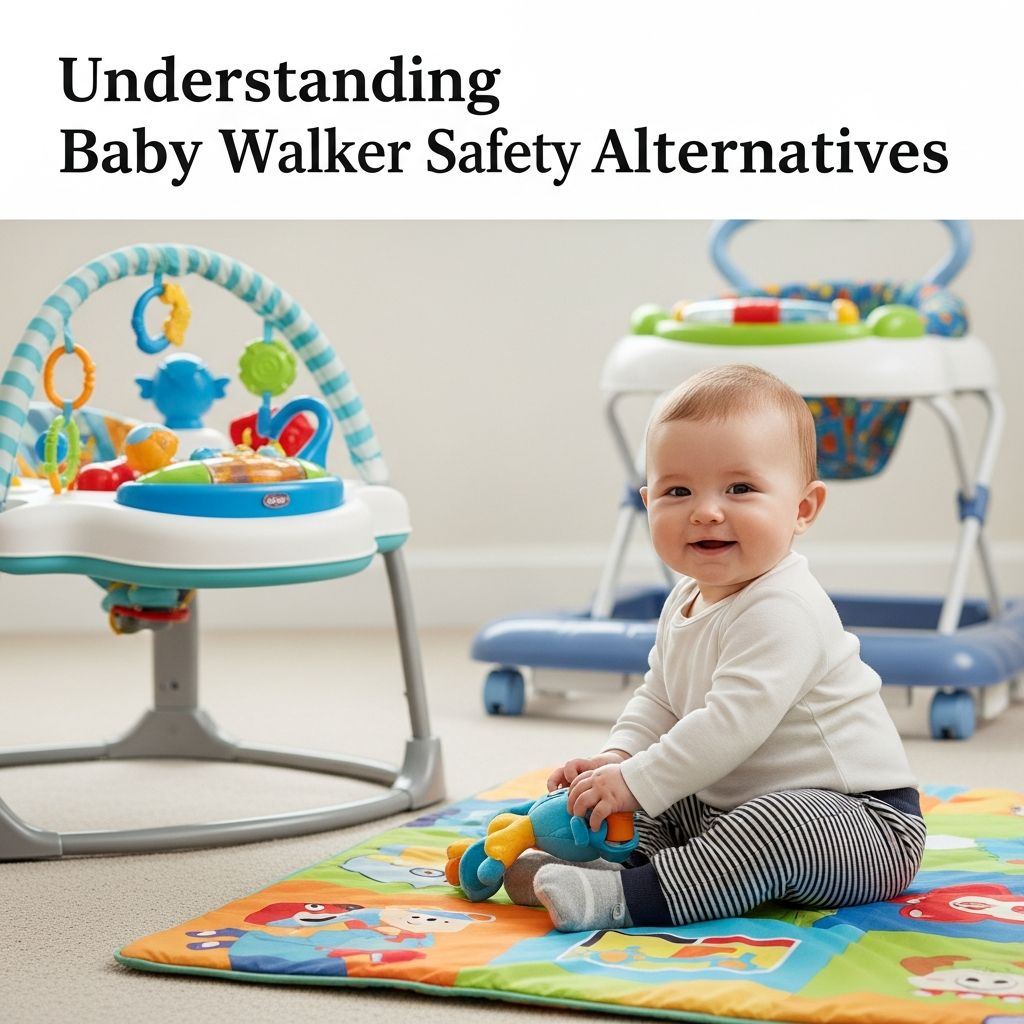
The Mysterious Journey of Early Childhood Development
Watching your baby grow during the first two years of life reveals a continuous stream of changes that can feel both magical and bewildering. While parents often anticipate major milestones like first steps or first words, many unexpected and peculiar developmental phases occur along the way. These unusual stages—sometimes confusing or even concerning to new parents—are actually normal parts of healthy development. Understanding what drives these phases and why they occur can help parents navigate them with confidence and patience.
Infant development unfolds in predictable patterns, yet each baby progresses at their own pace. The brain undergoes rapid growth and reorganization during infancy, with neural connections forming and strengthening based on experience and environmental interaction. This neurological foundation drives the behavioral shifts, motor skill changes, and social-emotional transformations that characterize the first twenty-four months.
The Newborn Reflex Stage: Beyond Simple Survival
During the first month of life, newborns appear primarily driven by instinct and reflexive responses. They grasp objects placed in their palms, root for feeding, and respond to sounds with startle reactions. What puzzles many new parents is how involuntary and mechanical these responses seem—as if their baby is operating on autopilot rather than truly connecting with the world.
This stage reflects the immature state of the infant brain, which is still establishing foundational neural pathways. The reflexive behaviors serve crucial survival purposes, yet parents often wonder when their baby will demonstrate more intentional, interactive responses. By the end of the first month, babies begin showing early signs of responsiveness: they may quiet when held and spoken to, gaze at faces intently, and focus on objects positioned eight to twelve inches away. This transition from pure reflex to emerging awareness marks the beginning of a more interactive relationship between infant and caregiver.
The Social Smile Paradox: When Babies Seem to Recognize You
Around two months of age, an interesting developmental phase emerges when babies begin displaying what appears to be genuine social smiling. Parents often interpret these early smiles as recognition or affection, yet research suggests the phenomenon is more complex. Babies at this stage are developing the neurological capacity to respond to facial expressions, beginning to associate human faces with comfort and food.
The seeming paradox is that babies may smile at nearly anyone during this phase—strangers receive the same gummy grin as parents. This occurs because the infant brain is still learning to differentiate between familiar and unfamiliar faces, categorizing all faces as positive stimuli associated with caregiving. By three months, babies develop more discriminating social awareness, increasingly smiling at familiar faces while showing neutral or wary responses to strangers. This phase confuses parents who initially feel special about their baby’s smiles, only to realize their infant grins at the grocery store cashier with equal enthusiasm.
The Motor Control Transition: From Flailing to Purposeful Movement
During the first three months, newborns display jerky, uncoordinated movements that parents might interpret as distress or discomfort. Tiny fists clench involuntarily, arms flail seemingly without purpose, and legs kick randomly. Gradually, these movements become more controlled and intentional. By three months, babies begin discovering their own hands—a developmental milestone that fascinates and occupies infants for extended periods.
This transition reflects the maturation of motor pathways in the developing brain. What appears chaotic actually represents the infant nervous system learning to coordinate muscle activation with sensory feedback. By six months, babies achieve significant motor control, rolling over in both directions and beginning to reach deliberately for objects. The apparent chaos of early newborn movement transforms into increasingly coordinated, intentional motor skills through this gradual developmental progression.
The Object Permanence Awakening: When Babies Search for Vanished Items
A striking cognitive shift occurs around eight to nine months when babies begin understanding that objects continue to exist even when hidden from view. Before this developmental milestone, babies operated under the assumption that out-of-sight truly meant gone. This cognitive limitation frustrates parents trying to play peekaboo with younger infants, who show little enthusiasm for the game.
The emergence of object permanence represents a fundamental cognitive reorganization. Babies at nine months will search for toys that roll out of sight, look for dropped objects, and pull covers off hidden items. This phase coincides with increased independence and curiosity—babies become determined explorers, investigating how the world works and where things go. Parents often find this stage simultaneously delightful and challenging, as their increasingly mobile babies persistently seek out previously hidden or discarded items.
The Stranger Anxiety Phase: When Familiar Faces Bring Comfort and New Ones Bring Tears
Around six months, many babies shift from their earlier indiscriminate friendliness to showing marked preference for familiar caregivers. Babies who previously smiled at anyone suddenly cry or cling anxiously when approached by relatives or friends. This behavioral change—stranger anxiety—confuses grandparents and puzzles new parents who had assumed their gregarious newborn would remain perpetually social.
Stranger anxiety actually reflects advancing cognitive development. Babies develop the mental capacity to recognize familiar faces and distinguish them from unfamiliar ones. The anxiety response is not pathological but rather demonstrates healthy cognitive development and attachment formation. Babies displaying stranger anxiety have developed secure bonds with primary caregivers and recognize these trusted figures as different from other adults. This phase typically peaks around nine to twelve months before gradually diminishing as babies develop greater autonomy and confidence.
The Language Explosion Mystery: From Silence to Sudden Speech Acceleration
For many months, babies produce mostly cooing and babbling sounds—repetitive vocalizations that parents find endearing but not particularly communicative. Then, sometime between nine and eighteen months (with significant individual variation), a dramatic shift occurs. Some babies seemingly suddenly understand words, respond to their names, and begin producing recognizable words themselves.
This language acceleration phase puzzles parents because it appears abrupt, yet it actually reflects months of listening and neural processing. Babies spend considerable time absorbing language patterns before they produce recognizable speech. By nine months, babies typically understand simple words and respond to their names, though they may not yet produce clear words. Around twelve months, first words emerge, often “mama” or “dada,” though pronunciation may be unclear. By fifteen to eighteen months, vocabulary expands more noticeably, and babies begin combining words into simple two-word phrases. This gradual emergence suddenly becomes apparent when babies begin actively communicating, creating the illusion of sudden language acquisition.
The Independence-Dependence Oscillation: Clingy One Moment, Adventurous the Next
As babies approach and enter toddlerhood, an interesting emotional pattern emerges where they alternate between demanding independence and seeking reassurance. An eighteen-month-old might insist on feeding themselves one moment, creating significant mess, then demand to be held and fed by a parent minutes later. This oscillation reflects the fundamental tension in toddler development between growing autonomy and remaining dependent on caregivers.
This phase reflects the developmental reality that toddlers are cognitively and emotionally advanced enough to desire independence but physically and emotionally immature enough to still require substantial support. They possess enough self-awareness to want control but insufficient impulse control and skill to manage many tasks independently. Secure attachment actually facilitates this oscillation—babies who trust their caregivers feel confident exploring independence, then return to the secure base for reassurance.
The Magical Thinking Emergence: When Babies Begin Assuming Intent
By the end of the first year and into the second year, babies begin developing theories about cause and effect. They start pulling strings attached to toys, banging objects together, and engaging in repetitive actions to produce outcomes. This appears to reflect the emergence of intentional thinking—babies begin assuming that actions produce results and that they can influence their environment.
Around eighteen months, babies begin engaging in pretend play and showing awareness that others have intentions and thoughts. They start imitating behaviors they observe and attempting to replicate outcomes. This cognitive shift, sometimes called developing a “theory of mind,” represents a profound change in how babies understand themselves and others. What appears as simple play actually reflects sophisticated cognitive development where babies test hypotheses about how the world operates.
Developmental Milestones Reference Table
| Age Range | Motor Development | Cognitive Development | Social-Emotional Development |
|---|---|---|---|
| 0-3 months | Jerky movements; neck strengthening; discovers hands | Focuses on faces; follows moving objects with eyes | Quiets when held and talked to; begins social smiling |
| 4-6 months | Sits with support; rolls over; reaches for objects | Grasps and shakes toys; transfers objects between hands | Smiles at familiar faces; shows preference for caregivers |
| 7-9 months | Crawls; pulls self to stand; improved fine motor control | Searches for hidden objects; understands simple words | Shows stranger anxiety; demonstrates attachment to caregivers |
| 10-12 months | Walks holding furniture; may take first unsupported steps | Points to objects; recognizes familiar people and objects | Uses gestures to communicate; waves goodbye; shows independence |
| 13-18 months | Walks independently; climbs; runs clumsily | Combines words; follows simple instructions; sort by shape/color | Shows affection; resists sharing; begins pretend play |
| 19-24 months | Climbs on furniture; feeds self with spoon; shows hand preference | Uses two- to four-word sentences; imitates behaviors | Shows growing independence; enjoys helping; expresses emotions more clearly |
Frequently Asked Questions
Q: Is it normal for babies to show stranger anxiety?
A: Yes, stranger anxiety is a normal developmental milestone beginning around six months. It reflects healthy cognitive development and secure attachment to primary caregivers. This phase typically peaks around nine to twelve months and gradually resolves as babies develop greater autonomy and confidence.
Q: When should babies begin showing intentional motor movements instead of reflexive ones?
A: Intentional motor control develops gradually throughout the first year. By two months, babies begin showing more controlled movement. By three to four months, reaching and grasping become increasingly intentional. The transition from reflexive to purposeful movement happens progressively rather than suddenly.
Q: Why do babies seem to regress in development sometimes?
A: Apparent regression often occurs during periods of significant brain reorganization or when babies are learning multiple new skills simultaneously. Illness, teething, or major life changes can temporarily affect behavior. These regressions are typically temporary, and development resumes forward progression once the stressor resolves.
Q: When does object permanence develop, and why does it matter?
A: Object permanence typically develops around eight to nine months. It represents significant cognitive advancement, allowing babies to understand that objects exist even when hidden. This milestone enables more complex play, problem-solving, and understanding of cause-and-effect relationships.
Q: Should I be concerned if my baby reaches milestones at different times than other babies?
A: Every baby develops at their own pace. Individual variation in milestone achievement is normal and expected. Concern should arise only when babies show significant delays across multiple developmental areas or regress in skills previously achieved. Premature babies may reach milestones later than term infants when adjusted for prematurity.
Q: How can I support my baby through these developmental phases?
A: Respond to your baby’s cues, provide a safe environment for exploration, talk and sing to your baby regularly, offer age-appropriate toys, and maintain consistent routines. Support secure attachment by responding to needs while gradually encouraging independence. Track milestones during well-check visits with your pediatrician.
References
- Baby Brain and Growth Development Timeline — Enfamil. 2025. https://www.enfamil.com/articles/brain-and-growth-development-timeline/
- Developmental milestones for baby — March of Dimes. 2025. https://www.marchofdimes.org/find-support/topics/parenthood/developmental-milestones-baby
- Infant development: Birth to 3 months — Mayo Clinic. 2025. https://www.mayoclinic.org/healthy-lifestyle/infant-and-toddler-health/in-depth/infant-development/art-20048012
- Baby Developmental Milestones By Month — Cleveland Clinic. 2025. https://my.clevelandclinic.org/health/articles/22063-baby-development-milestones-safety