Babies explore the world with boundless curiosity, often leading to minor skin injuries like cuts and scrapes. These incidents are common during playtime or crawling adventures. Proper care ensures quick recovery and minimizes scarring risks. This guide draws from pediatric expertise to outline safe home treatments, prevention tips, and critical warning signs.
Recognizing Minor vs. Serious Injuries
Distinguishing between injuries manageable at home and those needing urgent care is crucial for infant safety. Minor cuts affect only the outer skin layer, ooze lightly, and stop bleeding quickly with pressure. Serious ones penetrate deeper, gape open, or stem from dirty objects.
- Minor indicators: Superficial, under ½ inch, clean edges, minimal bleeding.
- Serious flags: Deep exposure of fat or muscle, animal bites, uncontrolled bleeding post-10 minutes pressure, embedded debris.
Always prioritize calmness; reassure your baby first to ease distress during assessment.
Immediate Response to Bleeding
When bleeding occurs, act swiftly to control it. Wash hands thoroughly for 20 seconds with soap and water to avoid introducing germs. Use a clean cloth or sterile gauze to apply firm, direct pressure for 5-10 minutes without peeking, as interruption prolongs bleeding. Elevate the limb if on an arm or leg to reduce blood flow.
If blood soaks through, layer another cloth atop without removing the first. Persistent bleeding beyond 10-15 minutes warrants immediate medical evaluation. For facial injuries or those from rusty nails, consult a doctor promptly due to infection risks.
Cleaning Baby Wounds Properly
Cleaning prevents infection, a leading cause of complications in infant skin injuries. After hemostasis, rinse under cool running faucet water for several minutes to flush debris. Use mild soap around the edges—avoid harsh antiseptics that irritate delicate skin. Gently pat dry; never rub.
| Step | Action | Purpose |
|---|---|---|
| 1. Rinse | Cool water flow, 3-5 minutes | Remove dirt, reduce bacteria |
| 2. Soap | Mild, fragrance-free around wound | Clean without stinging |
| 3. Dry | Pat with clean towel | Prevent moisture buildup |
Avoid vigorous scrubbing, which embeds particles deeper and heightens scarring. For resistant babies, a shallow bath soak works if the wound isn’t deep.
Treating Specific Types of Baby Skin Trauma
Surface Scrapes and Abrasions
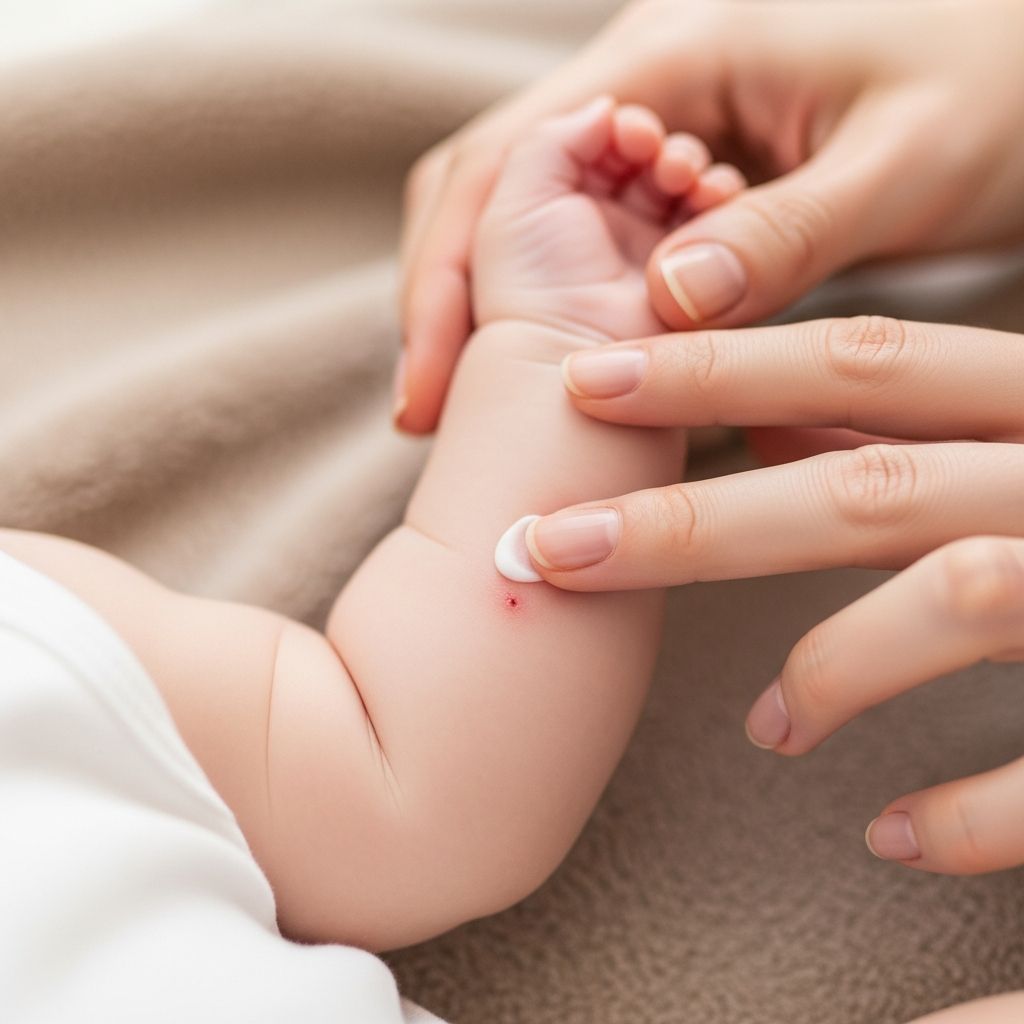
Scrapes from falls on knees or palms remove the top skin layer, creating raw, stinging areas. After pressure and cleaning, apply petroleum jelly or antibiotic ointment like Polysporin to maintain moisture and ward off bacteria. Cover with a breathable adhesive bandage, changing daily or if wet.
Monitor for scab formation—a natural barrier signaling healing. New skin pushes it off naturally; resist picking to avoid delays.
Shallow Cuts and Lacerations
Cuts slice through skin but stay superficial. Post-cleaning, options include Steri-Strips for clean edges under ½ inch—apply perpendicular to pull sides together. Deeper cuts exposing tissue need professional stitches or staples, especially on the scalp.
Absorbable stitches dissolve naturally; non-absorbable require removal. Never improvise closures at home for gaps wider than edges touch.
Bruises and Minor Blunt Trauma
Bruises from bumps cause discoloration without breaking skin. Apply cold packs wrapped in cloth for 10-20 minutes to curb swelling. Elevate and rest the area. Most fade in 1-2 weeks; persistent pain or rapid spread signals deeper issues.
Protecting and Moisturizing During Healing
Moist wounds heal faster with less scarring. Daily reapplication of ointment keeps the site hydrated. Use gauze for larger areas or hands/feet prone to dirt exposure. Change dressings frequently to monitor progress—redness shrinking indicates improvement.
Avoid blowing on wounds, as it spreads oral bacteria. For babies under 6 months, consult pediatricians before any topical products due to sensitive skin absorption.
Building a Baby-Safe First Aid Kit
A dedicated kit ensures readiness. Stock infant-formulated items to match fragile skin needs.
- Sterile gauze pads and adhesive bandages in various sizes.
- Mild soap, alcohol wipes, hand sanitizer.
- Petroleum jelly, antibiotic ointment.
- Scissors, tweezers for debris, gloves.
- Age-appropriate pain reliever (consult doctor).
Store in a cool, accessible spot; check expiration dates quarterly.
Spotting and Handling Infection Risks
Infections prolong healing and may scar. Daily checks reveal issues early.
| Normal Healing | Infection Signs | Action |
|---|---|---|
| Mild pink edges, drying | Increasing redness, swelling, warmth | Call doctor |
| Thin clear fluid | Pus, foul odor, oozing | Seek care urgently |
| Scab forming | Fever, child lethargic | Emergency visit |
Dirty wounds from outdoors heighten tetanus risk—verify vaccination status. Human/animal bites demand antibiotics due to bacteria.
Preventing Future Playground Mishaps
Proactive steps reduce incidents. Dress babies in long sleeves/pants during rough play. Supervise closely near hazards like sharp toys or uneven surfaces. Teach gentle handling in sibling interactions. Regular nail trims prevent self-scratching.
Maintain a safe home: corner guards on furniture, non-slip mats in tubs. Outdoor gear like knee pads for crawlers adds protection without restricting movement.
Common Myths in Baby Wound Care
Misconceptions delay proper treatment. Antibiotics aren’t always needed—cleaning suffices for most minors. Don’t use hydrogen peroxide; it harms healing cells. Butter or oils on burns worsen outcomes—stick to cool water.
Scabs protect; peeling invites bacteria. Home glue or tape substitutes fail against tension.
Frequently Asked Questions (FAQs)
Can I use regular bandages on my newborn?
Opt for hypoallergenic, flexible ones sized for tiny limbs to avoid irritation. Change frequently.
How long until a baby scrape heals?
Typically 7-10 days with proper care; deeper ones up to 2 weeks. Persistent openness needs review.
Is antibiotic ointment essential for every cut?
Not always; clean, covered wounds heal fine. Use if dirt exposure or doctor-recommended.
What if my baby pulls off the bandage?
Reapply after recleaning. Distraction with toys helps during changes.
When does a cut need stitches in infants?
If over ½ inch, gaping, facial, or won’t close naturally—err toward professional eval.
Long-Term Skin Health After Injuries
Post-healing, moisturize daily to fade scars. Natural remedies like vitamin E lack strong evidence; sun protection prevents darkening. Most baby scars improve by age 2 as skin grows.
Track patterns—if recurrent deep cuts, assess crawling environment or coordination. Pediatric dermatology consults aid stubborn marks.
Empowering parents with knowledge turns scary moments into manageable ones. Consistent care fosters resilience in your baby’s adventurous spirit.
References
- First Aid For Babies: Bruises, Scars, Cuts, Wounds, And Scrapes — Mustela USA. 2023. https://www.mustelausa.com/blogs/mustela-mag/first-aid-for-babies-bruises-scars-cuts-wounds-and-scrapes
- Small Cuts and Scrapes — Texas Children’s Hospital. 2024-01-15. https://www.texaschildrens.org/content/conditions/small-cuts-and-scrapes
- Small Cuts and Scrapes — Nationwide Children’s Hospital. 2025-06-10. https://www.nationwidechildrens.org/conditions/health-library/small-cuts-and-scrapes
- What to Do About Cuts — Nemours KidsHealth. 2024-11-20. https://kidshealth.org/en/parents/cuts-sheet.html
- Cuts, Grazes and Lacerations — Royal Children’s Hospital Melbourne. 2023-05-12. https://www.rch.org.au/kidsinfo/fact_sheets/Cuts_grazes_lacerations/
- Cuts and Scrapes — American Academy of Pediatrics (AAP). 2024-03-05. https://publications.aap.org/patiented/article/doi/10.1542/ppe_schmitt_066/82419/Cuts-and-Scrapes