Understanding Your Baby’s Journey to Independent Movement
The progression from immobility to independent walking represents one of the most visible transformations in early childhood development. Parents often wonder about the timeline for their baby’s movement milestones and what variations in these timelines might indicate about future development. The reality is that infant motor development follows a remarkably wide range of normal patterns, with significant individual variation that doesn’t necessarily predict later capabilities or challenges.
Babies develop the physical and neurological foundations for movement through a series of interconnected stages. These stages typically begin with basic head control and progress through rolling, sitting, crawling in various styles, pulling to stand, and eventually independent walking. However, not every baby follows this exact sequence, and the age at which each milestone occurs can vary considerably among typically developing infants.
The Foundation: Building Strength Through Early Movement
The journey toward crawling and walking begins long before a baby attempts either. The process starts during the first months of life when babies are placed on their stomachs for supervised tummy time. During these sessions, infants gradually strengthen their neck muscles, shoulder muscles, and upper back. This foundational strength is essential for all subsequent movement development.
As babies progress through their first few months, they begin experimenting with various body positions and movements. They learn to lift their heads higher off the floor, support themselves briefly on their elbows, and gradually shift more weight onto their arms. These seemingly simple actions require significant neuromuscular development and coordination between different muscle groups.
Key developmental actions during this early phase include:
- Holding the head steady and lifting it off the ground
- Supporting weight on elbows and forearms
- Rolling from back to stomach and vice versa
- Shifting weight side to side while lying down
- Pushing the upper body up with arm support
Pre-Crawling Movements and Preparation
Several months before babies achieve true crawling, they demonstrate movements that build the specific coordination and strength needed for hands-and-knees locomotion. Around 4 to 6 months, many babies begin pushing up on their hands while in a prone position. This action develops the upper body strength necessary for supporting their body weight on their arms.
Between 5 and 7 months, babies often begin pivoting and rocking movements. Pivoting involves rotating the body in circles while lying on the stomach, which develops spatial awareness and the ability to coordinate movements across the body’s midline. Rocking back and forth on hands and knees is particularly significant because it mimics the movement pattern required for actual crawling and indicates that a baby’s nervous system is preparing for this more complex skill.
Some babies progress through these pre-crawling stages in a linear fashion, while others demonstrate them in different orders or skip certain movements entirely. This variation doesn’t necessarily indicate any developmental concern; rather, it reflects the individual pathways babies take toward achieving independent mobility.
Crawling: Timing, Styles, and Developmental Significance
Crawling represents a significant developmental achievement, though its importance is sometimes overstated in popular discussion of child development. Research indicates that approximately 50% of babies begin crawling by 8 months of age, but this statistic masks considerable variation. Some babies start crawling as early as 6 months, while others don’t begin until after 11 months. Some babies never crawl on hands and knees at all, instead adopting alternative movement strategies to transition from sitting to walking.
The traditional hands-and-knees crawl involves coordinating opposite arms and legs in a rhythmic pattern. This movement requires significant neurological coordination, as the baby must move the right arm and left leg forward simultaneously, then switch to the left arm and right leg. This cross-body coordination develops the neural pathways that support various motor skills throughout childhood.
However, babies demonstrate remarkable creativity in how they achieve independent mobility. Common crawling variations include:
- Bear crawling, where babies move on hands and feet with hips raised high
- Crab crawling, where babies move sideways while supporting themselves on hands and feet
- Scooting or shuffling on the bottom, where babies propel themselves forward using their legs while remaining seated
- Creeping, where babies move on hands and knees with their chest near or touching the floor
- Commando crawling, where babies pull themselves forward on their bellies using their arms
The style of crawling a baby adopts doesn’t appear to have significant implications for later development. Research examining bottom-shufflers, who propel themselves along the floor in a seated position, shows that these babies typically walk at a slightly later age than traditional crawlers, but the difference is measured in weeks rather than months. By early childhood, there is no meaningful distinction in motor abilities between children who crawled traditionally and those who used alternative movement strategies.
The Duration and Endpoint of the Crawling Phase
The duration of the crawling stage varies remarkably among individual babies. Some babies crawl actively for several months, gradually becoming faster and more coordinated. Others maintain an active crawling phase for only a few weeks before transitioning to pulling up and walking. In exceptional cases, babies have been documented learning to crawl and walk on the same day.
Research examining the transition between crawling and walking found that the average time between the onset of crawling and the onset of walking was approximately 4 months. However, the range was enormous, with some babies remaining in the crawling stage for 8.5 months while others moved directly from crawling to walking almost immediately. This variation reflects differences in individual developmental tempo and the specific motor strategies each baby develops.
The endpoint of active crawling typically comes when babies develop sufficient strength and balance to pull themselves up to standing position using furniture or parental support. Once standing, babies enter a new phase of development characterized by practicing balance and learning to shift weight from one leg to the other.
The Progression Toward Independent Walking
Walking develops through a series of prerequisite skills and stages. The first critical milestone involves pulling up to stand, which typically occurs between 7 and 10 months of age. At this stage, babies rely heavily on furniture, railings, or parental support to maintain an upright position. They use their arms to pull their body weight upward, transferring the strain of supporting their body weight from their arms to their legs.
Once babies can pull up to stand, they begin cruising, which involves moving sideways while maintaining continuous contact with furniture or other support. Cruising typically begins between 9 and 13 months and represents an intermediate step between sitting mobility and independent walking. During cruising, babies learn to balance on their legs, shift weight from one foot to the other, and maintain an upright posture while moving.
Standing without support represents the next critical milestone. Babies typically achieve momentary independent standing between 10 and 16 months of age. Initially, these moments of unsupported standing last only seconds, but with practice and maturation of the nervous system, babies can maintain standing balance for increasingly longer periods. This skill provides the foundation for taking independent steps.
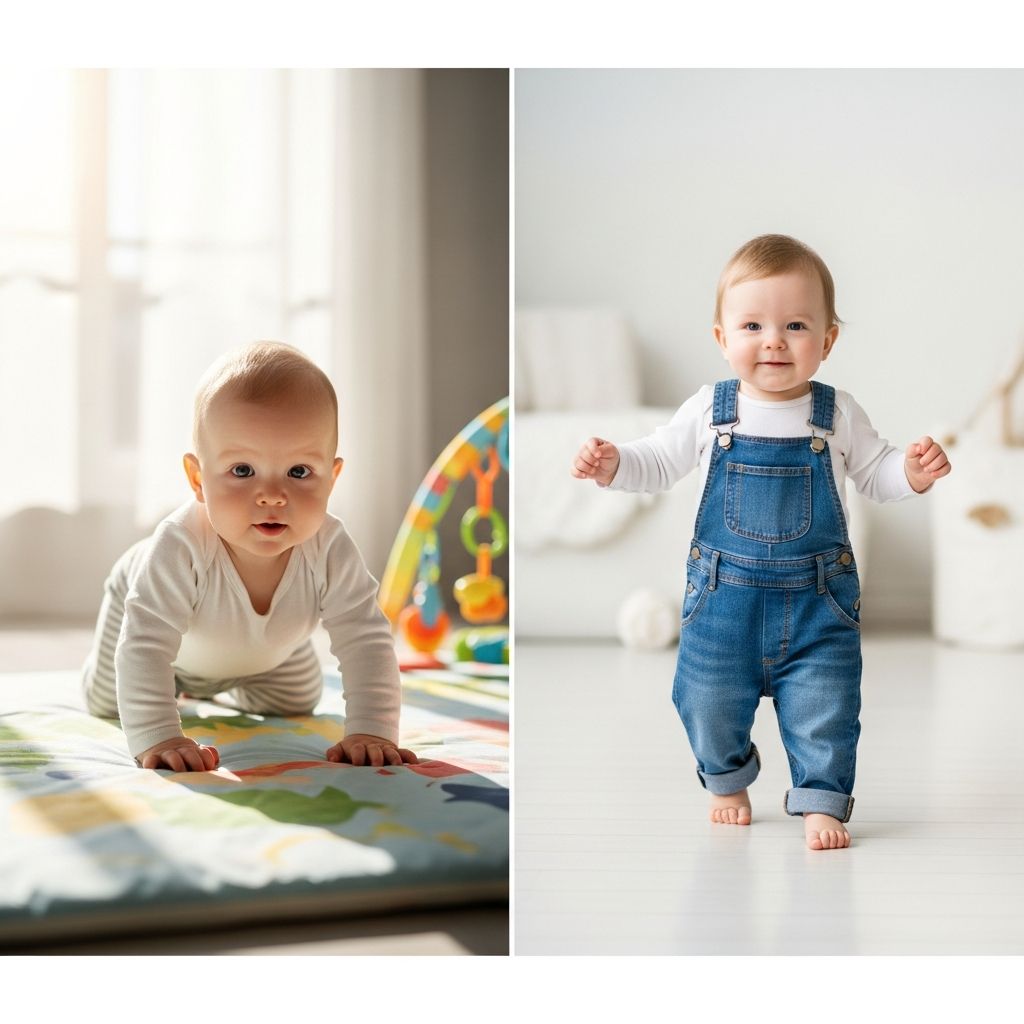
Independent walking generally emerges after a baby can stand unassisted and has practiced the weight-shifting movements involved in walking. On average, babies begin walking independently between 12 and 15 months of age, though the full range extends from 9 to 18 months in typically developing children. The wide range reflects normal variation in developmental tempo and individual differences in motor learning preferences.
What Early Movement Patterns Suggest About Future Development
Parents often wonder whether achieving crawling or walking early indicates advanced development or whether delayed achievement of these milestones suggests potential problems. The research evidence provides reassuring information: the timing of crawling and walking achievement has minimal relationship to later developmental outcomes in typically developing children.
Babies who crawl on hands and knees walk an average of less than one month earlier than babies who used alternative crawling strategies. This small difference disappears almost entirely by the early childhood years, with no meaningful distinction in walking ability or motor coordination between children who achieved different crawling styles or timelines.
Similarly, babies who skip the crawling phase entirely do not show later delays in walking. In fact, some research suggests that babies who never actively crawl may walk slightly sooner than their crawling peers. The nervous system appears capable of developing the necessary motor control through multiple different developmental pathways.
However, significant delays in achieving foundational skills—such as not sitting unsupported by 9 months or not attempting to pull up to stand by 15 months—may warrant consultation with a pediatrician. Such delays could potentially indicate slower overall motor development that might benefit from early intervention services. The key distinction is between normal individual variation and delays that deviate substantially from the typical range.
Factors Influencing Individual Variation in Motor Development
Multiple factors contribute to the wide range of normal timing for crawling and walking milestones. Constitutional factors, including a baby’s muscle tone, body composition, and temperament, influence the age at which certain milestones appear. Some babies naturally possess greater muscle tone and strength, while others develop these physical characteristics more gradually.
Environmental factors also play important roles. Babies who have frequent opportunities for supervised floor play and movement practice typically develop motor skills somewhat earlier than babies with more limited opportunities for active movement. However, even with significant differences in environmental opportunity, typically developing babies eventually achieve the major motor milestones.
Genetic factors contribute to individual differences in developmental timing. If parents walked early, their children are statistically more likely to walk early, though this relationship is not deterministic. Conversely, parents who walked later tend to have children who also walk later on average.
Supporting Healthy Motor Development
While individual variation is normal and expected, parents can support the development of crawling and walking through deliberate environmental design and interaction. Providing consistent opportunities for tummy time in a safe, supervised setting allows babies to practice the foundational strength and coordination required for later movement.
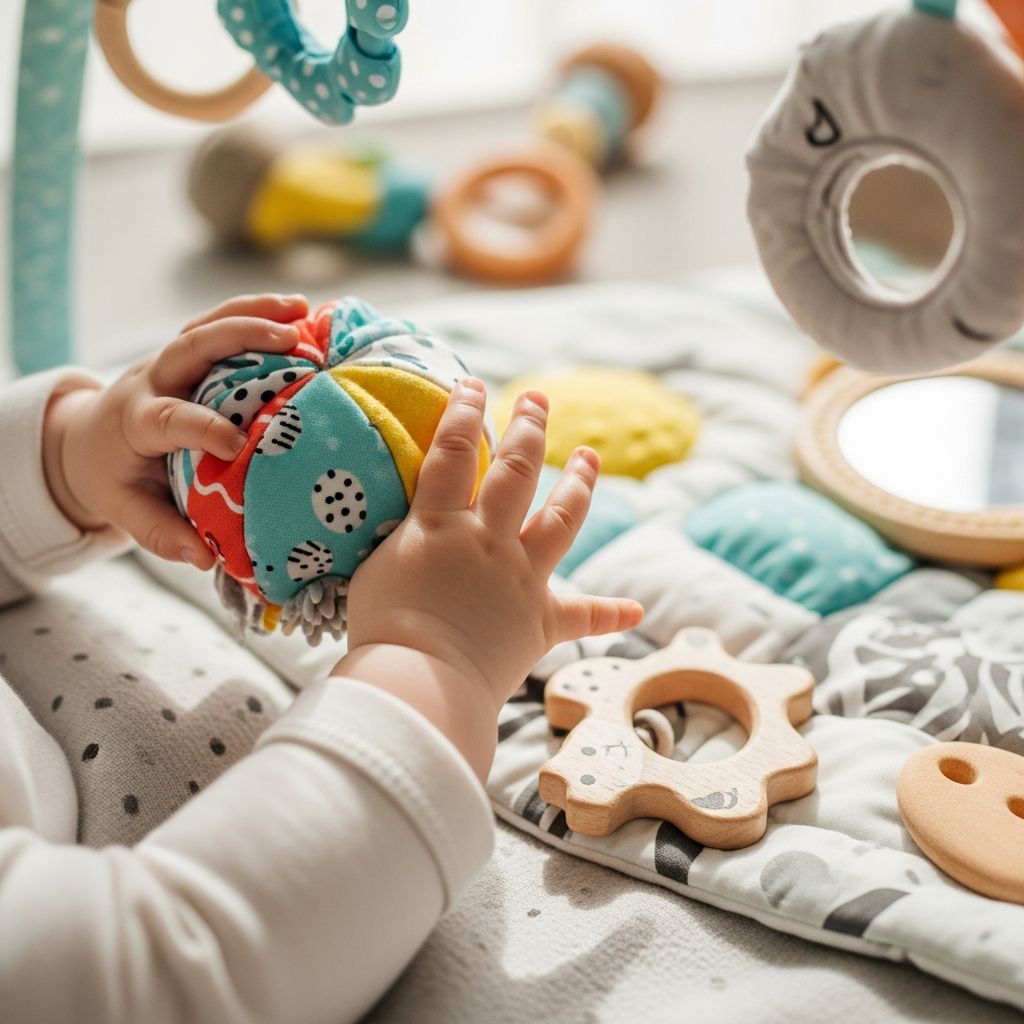
Creating open, safe floor spaces encourages babies to practice movement skills. Removing obstacles and hazards allows babies to focus on learning rather than navigating dangerous environments. Placing interesting toys just beyond a baby’s immediate reach encourages reaching and forward movement without overwhelming the baby.
Parental engagement enhances motivation and learning. Babies demonstrate greater enthusiasm for practicing movement skills when caregivers participate by crawling alongside them, offering encouragement, and celebrating small progress. However, forced or rushed progression toward milestones doesn’t accelerate development and may undermine a baby’s intrinsic motivation.
Frequently Asked Questions
If my baby doesn’t crawl, is something wrong?
No. Many typically developing babies skip the crawling phase entirely, moving from sitting directly to pulling up and walking. Research shows no developmental disadvantage for babies who don’t crawl on hands and knees. Some babies use alternative movement strategies like scooting or shuffling, and these variations are completely normal.
When should I be concerned about delayed walking?
Significant concern may be warranted if a baby hasn’t begun cruising or pulling to stand by 16 months, or hasn’t taken independent steps by 18 months. However, the range of normal is quite wide. Discussing concerns with your pediatrician is always appropriate, as they can evaluate your individual baby’s development in context.
Does early crawling predict intelligence or athletic ability?
No. The timing of crawling and walking has minimal correlation with later intelligence, athletic ability, or academic achievement. Individual variation in motor development timing reflects normal differences in developmental tempo but doesn’t indicate long-term capabilities in other domains.
How much floor time does a baby need?
While specific recommendations vary, most experts suggest multiple supervised sessions of tummy time and floor play daily. The total duration can gradually increase from just a few minutes in early infancy to extended periods as the baby grows stronger and more comfortable. Quality of engagement matters more than quantity of time.
Are walkers or other devices helpful for learning to walk?
Traditional wheeled walkers may actually delay walking development by providing artificial support that prevents babies from developing natural balance. Stationary activity centers that allow standing and movement are preferable if parents choose to use supportive devices. Most experts recommend open floor space and natural opportunities to practice movement.
References
- When do babies crawl, and how does it develop? — Parenting Science. Last accessed January 2026. https://parentingscience.com/when-do-babies-crawl/
- Walking: When do babies start and how to encourage it — Lovevery. Last accessed January 2026. https://blog.lovevery.com/skills-stages/walking/
- Stages of Baby Crawling and Walking — Enfamil. Last accessed January 2026. https://www.enfamil.com/articles/crawling-walking/
- When do babies start walking? The stages of learning to walk — Medical News Today. Last accessed January 2026. https://www.medicalnewstoday.com/articles/when-do-babies-start-walking
- CDC’s Developmental Milestones — Centers for Disease Control and Prevention. Last accessed January 2026. https://www.cdc.gov/act-early/milestones/index.html
- When do babies start crawling: 6 tips to encourage crawling — Huckleberry Care. Last accessed January 2026. https://huckleberrycare.com/blog/when-your-baby-starts-crawling