Bathing your baby is a cherished bonding ritual that promotes hygiene, relaxation, and skin health, but it demands unwavering attention to safety protocols. Drowning remains a leading cause of injury for infants, often occurring silently in mere inches of water during bathtime.Constant touch supervision—keeping a hand on your baby at all times—is non-negotiable, as even brief distractions can lead to tragedy.
Understanding Bathing Stages for Infants
Infants progress through distinct bathing phases, each with tailored techniques to ensure comfort and security. Newborns require minimal immersion to protect their delicate umbilical area, while older babies benefit from full tub experiences.
- Newborn Phase (Birth to Umbilical Cord Fall-Off): Opt for sponge baths to keep the cord dry and infection-free. The World Health Organization advises delaying the first full bath for at least 24 hours post-birth.
- Early Infancy (1-6 Months): Transition to supported tub or sink baths once sitting control emerges, always with head and neck support.
- Sitting Stage (6+ Months): Babies can recline in shallow tub water, but avoid seats that tip easily.
This staged approach minimizes risks like chilling or slipping while building positive associations with water.
Mastering the Perfect Water Temperature
Babies’ thin skin scalds easily, making temperature control paramount. Set your water heater to no higher than 120°F (49°C) to prevent burns, and target bath water at 95-100°F (35-38°C) for comfort.
| Method | Why It Works | Pro Tip |
|---|---|---|
| Elbow Test | Sensitive inner arm skin mimics baby’s | If it’s too warm for your elbow, it’s unsafe. |
| Thermometer | Precise reading | Use as backup; gauges can fail. |
| Hand Submersion | Quick check | Run water first, then fill; never bathe in running water. |
Room temperature should also be warm (around 75°F) to prevent post-bath chills. Fill the tub to 2-4 inches—below the baby’s waist when seated—for buoyancy without submersion risk.
Essential Gear for Secure Bathing
Select products designed for infant anatomy to enhance stability without fostering complacency.
- Baby Tubs: Choose sturdy, non-foldable models with sloped designs for natural positioning. Avoid those with pinch hazards.
- Non-Slip Mats: Place in sinks or tubs to prevent slides; clean towels work as alternatives.
- Support Cushions: Anti-slip pillows aid newborns but must be sanitizable.
- What to Skip: Infant bath seats or rings—they tip, giving false security and increasing submersion risks.
Always unplug appliances and secure sharp items like razors far from reach.
Step-by-Step Newborn Sponge Bath Technique
For the first weeks, sponge bathing suffices and builds confidence.
- Prepare a warm room, soft towel, mild soap, and basin of water (100°F).
- Undress baby partially, washing face first with a damp cloth—avoid eyes.
- Support head firmly; clean body folds gently, pating dry immediately.
- Keep baby wrapped except the washed area to maintain warmth.
Frequency: Every 2-3 days prevents skin dryness; daily spot-cleaning handles spit-up or diaper leaks.
Full Tub Bathing for Growing Babies
Once ready, introduce tub time feet-first for gradual acclimation.
- Positioning: Cradle head with one arm (football hold), lowering feet first. For sitting babies, support back.
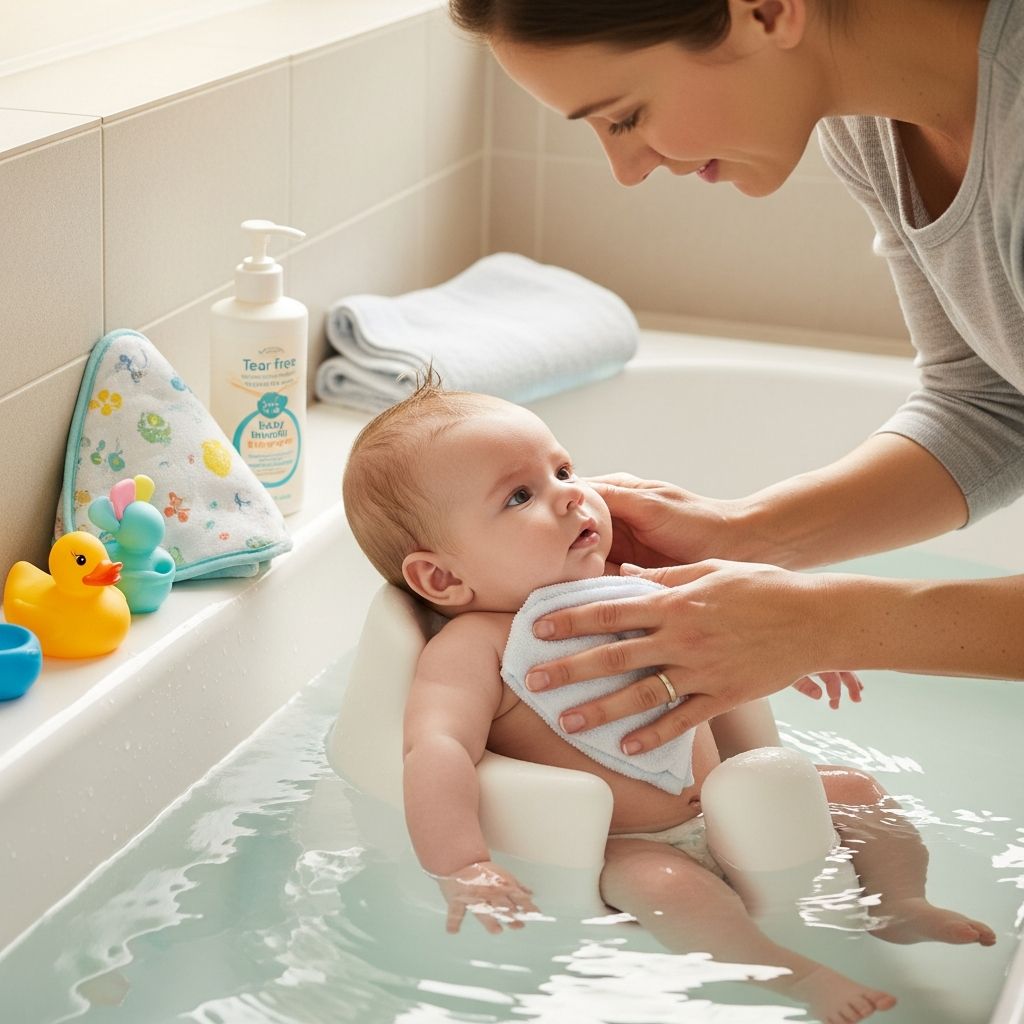
- Sequence: Wash face/hair last to avoid chills; use a wet washcloth on chest for warmth.
- Duration: 5-10 minutes max to prevent wrinkling or fatigue.
Post-bath, wrap swiftly in a hooded towel, drying folds thoroughly to avert rashes.
Top Bath Safety Rules Every Parent Must Follow
Adhere to these unbreakable guidelines to eliminate hazards.
- Never Turn Away: Even for a phone—take baby wrapped in towel if needed.
- Empty Tub Post-Bath: Standing water tempts curious crawlers.
- No Multitasking: Bathing demands full focus; prepare supplies beforehand.
- Supervise Siblings: Older kids near water need watching too.
- Teach from Early: No standing or running; use toys to encourage sitting.
Common Bath Time Hazards and Prevention
Beyond drowning, scalds, slips, and infections lurk—here’s how to counter them.
| Hazard | Risk Level | Prevention Strategy |
|---|---|---|
| Scalding | High | 120°F heater cap, elbow test |
| Slipping | Medium | Mats, hand support |
| Drowning | Critical | Touch supervision only |
| Chilling | Medium | Warm room, quick drying |
| Toxins | Low | Lock cabinets |
Statistics underscore urgency: Most infant tub drownings occur within arm’s reach due to distractions.
Caring for Baby’s Skin During Baths
Use fragrance-free, tear-free cleansers sparingly—2-3 times weekly—to preserve natural oils. Pat dry, moisturize immediately. For eczema-prone skin, consult pediatricians on oatmeal baths.
Building Confidence: Parental Preparation
New parents often feel anxious; practice with dolls or take infant CPR classes for empowerment. A knee pad eases prolonged kneeling.
Frequently Asked Questions (FAQs)
Can I leave the water running during the bath?
No—fluctuations can scald or overfill. Fill beforehand and turn off.
How often should I bathe my newborn?
Every 2-3 days; sponge baths until cord heals.
Is a bath seat safe for my 4-month-old?
Avoid them—they tip easily, lulling parents into false security.
What if my baby hates baths?
Try dim lights, gentle songs, or your presence in the tub later. Patience wins.
At what age can my baby bathe alone?
None under 5-6 years with supervision; full independence much later.
Bath time evolves into joyful play, but safety foundations endure lifelong. Consistent habits shield your little one through infancy and beyond.
References
- Baby Bath Safety: What Parents Should Know — Consumer Reports. 2023-10-12. https://www.consumerreports.org/babies-kids/child-safety/baby-bath-safety-a6772735280/
- Bath time with baby: What You need to know about bath safety — ThinkSun. 2024-05-15. https://thinksun.com/blogs/thinkblog/baby-bath-safety-tips
- Safety tips for bathing and changing your baby — IKEA. 2025-01-10. https://www.ikea.com/us/en/safety-at-home/child/bath-change/
- 7 Bath Safety Tips Parents Should Know — Happiest Baby. 2024-08-22. https://www.happiestbaby.com/blogs/baby/bath-safety-tips-babies
- Bathing an infant — MedlinePlus (U.S. National Library of Medicine). 2025-03-05. https://medlineplus.gov/ency/patientinstructions/000020.htm
- Baby bath basics: A parent’s guide — Mayo Clinic. 2024-11-18. https://www.mayoclinic.org/healthy-lifestyle/infant-and-toddler-health/in-depth/healthy-baby/art-20044438