Welcoming a new baby is one of the most memorable seasons of family life, and the way you share that news can become a keepsake your child one day holds in their hands. Thoughtfully designed announcements and invitations are more than pretty paper; they capture a moment in time and tell the story of your growing family.
This guide walks you through how to plan, design, and send baby announcements and related invitations with confidence, even if you are sleep deprived and short on time.
Why Printed Announcements Still Matter in a Digital World
It is easier than ever to share baby photos instantly by text and social media, yet printed cards continue to have a special role for many families.
- Tangible memories: A printed card can be tucked into a baby book or framed, creating a physical record of the moment your child arrived.
- Emotional impact: Receiving mail addressed by someone you love often feels more personal and thoughtful than seeing a post in a crowded feed.
- Inclusivity: Not all relatives and friends are active online; mailed announcements keep grandparents, older relatives, and offline friends in the loop.
- Ritual and celebration: Taking the time to design and send cards can become a meaningful family ritual around the arrival of each child.
Studies in communication research note that handwritten or physical messages are often perceived as more personal and warm than digital-only messages, which can strengthen social connection and perceived support.
Choosing the Right Type of Baby Card
New parents often discover there are several different stationery needs that arrive with a new baby. Before you begin designing, decide which types of cards matter most to you.
| Card Type | Main Purpose | Best Time to Send |
|---|---|---|
| Birth Announcement | Introduce baby and share key details (name, date, etc.). | Within the first 3 months after birth. |
| Baby Shower Invitation | Invite loved ones to celebrate before baby arrives. | 6–8 weeks before the event. |
| Meet-the-Baby or Sip & See Invite | Host a low-key gathering after baby is born. | Anytime in the first year, once you feel ready. |
| Thank-You Cards | Express gratitude for gifts, meals, and support. | Ideally within a few weeks of receiving gifts. |
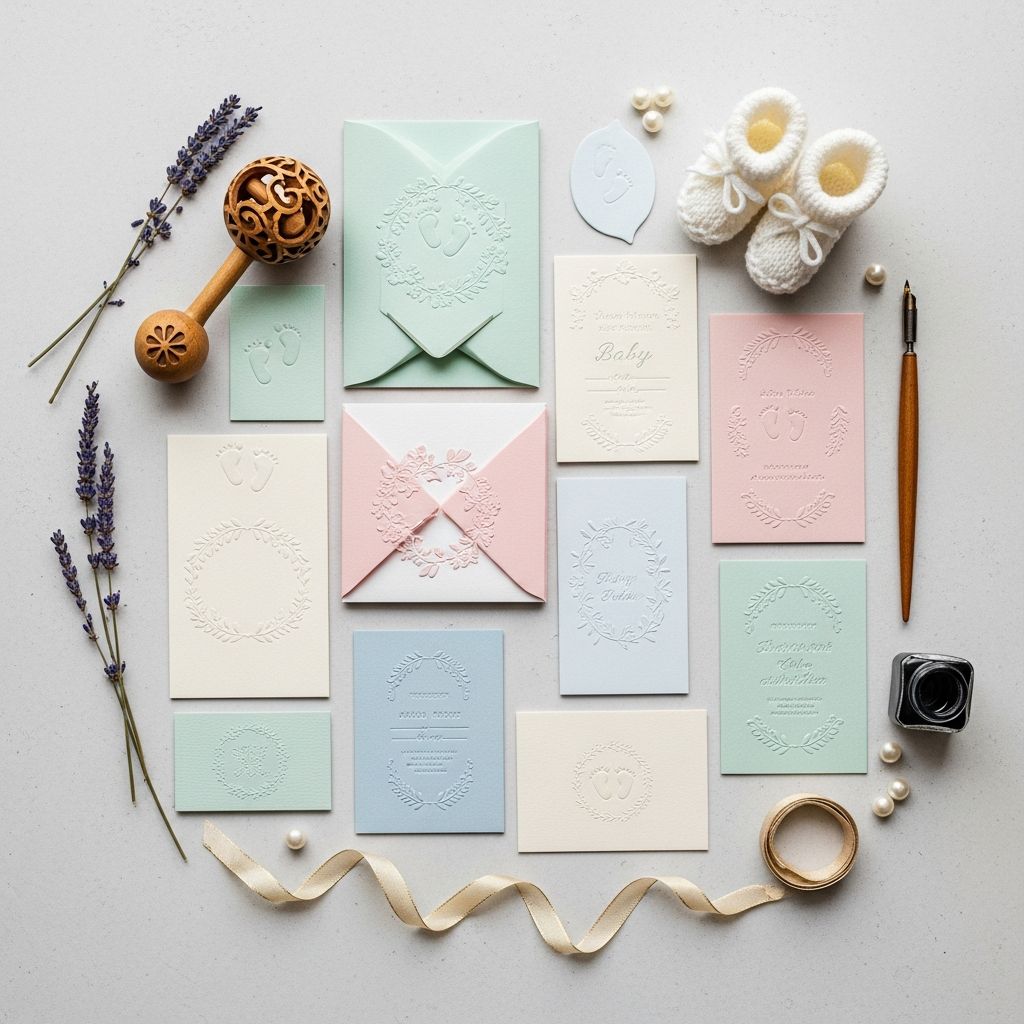
You can design each card separately or coordinate them with a recurring color palette, fonts, or motifs (such as stars, florals, or animals) to create a cohesive visual story.
Planning Before You Start Designing
Spending a few minutes planning can save you time and stress later, especially when you are caring for a newborn.
Clarify Your Priorities
- Budget: Decide how much you are comfortable spending on cards, envelopes, and postage before you fall in love with a luxurious option.
- Timing: Consider when you realistically will have the energy to work on cards and whether you prefer to prepare things before baby arrives.
- Guest list size: A short list might allow for premium printing, while a very long list might call for a simpler, budget-conscious design.
- Keepsake value: If you plan to frame or save the cards, you might prefer thicker paper, archival-safe inks, or special finishes.
Gather Essential Details
For birth announcements, you will typically include:
- Full name of the baby (and pronunciation if it is unique).
- Date and time of birth.
- Weight and length at birth (optional but traditional).
- Parents’ names and siblings’ names, if desired.
- City or region (optional, but nice for far-flung relatives).
Having this information in one place reduces errors and makes it easier to proofread.
Selecting Photos That Tell Your Story
Photos are often the centerpiece of baby announcements and invitations. You do not need a professional photographer, but you do want images that feel authentic and clear.
Tips for Newborn and Family Photos
- Natural light: Take pictures near a bright window during the day to avoid harsh shadows from overhead lights or camera flash.
- Simplicity: A plain blanket, neutral wall, or uncluttered bed can keep the focus on your baby’s face.
- Include connection: Shots of hands, cuddles, or siblings meeting the baby can communicate emotion even more than a posed portrait.
- Comfort first: Newborns cannot regulate temperature well; keep the room warm and avoid extended posing sessions.
- Backup options: Take several photos on different days so you have options if one set does not turn out as you hoped.
Balancing Privacy and Sharing
Many parents are thoughtful about how much of their child’s image and information they share, especially online. It can help to decide in advance:
- Whether you are comfortable including your baby’s full name and birth details.
- If you will post the same images on social media or reserve certain photos just for printed cards.
- How you will store digital copies of the photos for future use (such as first birthday invitations).
Some families opt for a close-up of tiny feet or a top-of-head photo if they prefer not to show a full face but still want something visually sweet.
Design Elements: Colors, Fonts, and Layout
Once you have photos and key information, you can begin designing the overall look of your card.
Choosing a Color Palette
- Traditional tones: Soft blues, pinks, creams, and pastels create a classic baby look.
- Modern neutrals: Grays, beige, sage, and muted earth tones feel contemporary and gender-neutral.
- Bold and bright: Rich jewel tones or primary colors can reflect a playful, energetic style.
- Photo coordination: Pull one or two colors from your photo (like a blanket or swaddle) to tie everything together.
Fonts That Match Your Message
Fonts strongly influence mood and readability. Consider combining two complementary font styles:
- Script or hand-lettered fonts for the baby’s name or a short phrase.
- Clean sans-serif or serif fonts for details like dates and weights so they remain easy to read.
Check that the text is legible at the final printed size, especially for older relatives who may appreciate larger type.
Balancing Images and Text
A well-designed layout gives each element room to breathe.
- Use white space — empty areas on the card — to prevent a crowded feeling.
- Limit yourself to one main photo and one or two smaller accents if needed.
- Group related information (all birth stats together, all hosting details together) so the eye can follow easily.
- Consider the back of the card for additional photos or a short note if you do not want to overcrowd the front.
Writing Heartfelt and Clear Wording
The words you choose will frame how people experience your card. You can be formal, playful, poetic, or simple; the key is clarity and authenticity.
Birth Announcement Wording Ideas
Most birth announcements include these core elements:
- A brief opening sentiment (for example, welcoming, celebrating, or introducing).
- The baby’s name, with any middle names.
- Birth date (and time, if you like).
- Weight and length (optional).
- Parents’ names and siblings’ names.
From there, you can personalize:
- Sentimental: Emphasize gratitude and joy.
- Humorous: Add a line about sleepless nights or a playful comment about the baby’s personality.
- Faith-based: Include a short verse or spiritual sentiment if this reflects your family’s values.
Baby Shower and Meet-the-Baby Invitations
Invitation wording should answer all practical questions at a glance:
- Who is hosting and in honor of whom.
- Date, time, and location (including city).
- RSVP deadline and contact details (phone or email).
- Any special notes, such as “no gifts,” registry information, or whether children are welcome.
Clear wording reduces back-and-forth messaging and helps guests plan easily.
Printing, Paper, and Envelopes
Once your design feels complete, you will need to decide how to bring it into the physical world. Research on printed materials shows that paper thickness, texture, and color can influence perceived quality and emotional response, with heavier paper often associated with higher quality and care.
Paper Options to Consider
- Matte: Soft, non-glossy, and easy to write on; excellent for a classic look and handwritten notes on the back.
- Glossy: Makes photos look vibrant and sharp but can show fingerprints more easily.
- Textured or cotton: Feels luxurious and can elevate a simple design into something special.
- Recycled or eco-friendly stocks: Lower environmental impact, which may be important for some families.
Envelopes and Addressing
- Choose envelope colors that complement your card without overwhelming it.
- Pre-print return addresses to save time, or consider an address-printing service if available.
- Use clear, legible addressing for postal accuracy; decorative calligraphy can be added where space allows.
- Factor in postage costs, especially if you choose square or oversized formats, which can require extra postage.
Timing and Etiquette for Sending Cards
Baby-related stationery does not require perfection or strict rules, but a few general guidelines can help.
Birth Announcements
- Commonly mailed within the first 2–3 months but can be sent later; loved ones understand that newborn life is unpredictable.
- If you are very delayed, you can reference baby’s upcoming milestone (such as a first birthday) in a playful way.
Baby Showers and Meet-the-Baby Events
- Send baby shower invitations around 6–8 weeks before the event so guests can plan, arrange travel, or ship gifts if they choose.
- For meet-the-baby gatherings, consider your baby’s health, your own recovery, and your pediatrician’s guidance before scheduling visits, especially in cold and flu season.
Thank-You Notes
Thank-you cards are appreciated whenever they arrive. Many etiquette experts suggest sending them within a few weeks, but loved ones usually understand delays from new parents. You can make the process easier by:
- Keeping a running list of gifts as they arrive.
- Writing a few notes each day rather than tackling all at once.
- Using a simple template and personalizing with one or two specific details per note.
Staying Organized When You’re Tired
Designing and mailing cards with a newborn can feel overwhelming. Simple systems can help you stay on top of things without adding stress.
- Create a master address list: Keep names and addresses in a digital document so you can reuse it for future birthdays and holidays.
- Batch your tasks: Design on one day, review the next, order prints on another, and address envelopes in short bursts.
- Ask for help: Let a partner, friend, or relative help stuff envelopes, apply stamps, or proofread details.
- Order extras: Print a few more cards than you think you need to allow for new addresses or keepsakes.
Making Your Cards Meaningful for the Future
Baby announcements and invitations are as much for your future self and your child as they are for your current circle of friends and family.
- Save one or two copies in a labeled keepsake box or a plastic sleeve in the baby book.
- Write a short note on the back to your child describing how you felt when they arrived.
- Consider photographing the card alongside a favorite toy or blanket to capture the full story of this season.
These small touches can transform a simple card into a cherished piece of family history.
Frequently Asked Questions (FAQs)
How many birth announcements should I order?
Start by listing immediate family, close friends, coworkers you are close to, and anyone who hosted or attended a baby shower. Most families find that 30–75 cards is enough, but it is wise to order at least 5–10 extra for mistakes, new addresses, and keepsakes.
Is it okay to send digital-only baby announcements?
Yes. Digital announcements can be more budget-friendly and faster, and they still allow you to share photos and details widely. Some parents send digital cards to acquaintances and printed cards to close family and friends, balancing cost and personal touch.
Do I need separate designs for baby shower, announcements, and thank-you notes?
Not necessarily. Coordinated designs using the same colors and fonts can simplify decisions and often reduce design time. However, you can also choose different styles for each card if you enjoy variety.
What if our baby arrives earlier or later than expected?
For baby showers, avoid including exact phrases such as “one month before due date” and simply share the event date. Birth announcements are typically designed after the baby arrives so that you can input accurate dates and details.
Can we mention our registry on invitations and announcements?
Many parents include registry information on baby shower invitations or on an enclosed insert. It is less common to include registries on birth announcements, but a subtle note or a link on a family website can work if you know friends and relatives are looking for guidance.
References
- Walther, J.B., & Parks, M.R. “Cues filtered out, cues filtered in” — In: Handbook of Interpersonal Communication. Sage Publications. 2002. https://doi.org/10.4135/9781412982803
- Baron, N.S. “Letters, phones, email, and the global village” — Communication Research. 1998-06-01. https://doi.org/10.1177/009365098025006002
- American Academy of Pediatrics. “Caring for Your Newborn” — American Academy of Pediatrics. 2022-08-01. https://www.healthychildren.org/English/ages-stages/baby/Pages/default.aspx
- Stamp, G.H., et al. “The Effect of Paper Quality and Color on Perception” — Journal of Business Communication. 1992-03-01. https://doi.org/10.1177/002194369202900104
- Centers for Disease Control and Prevention. “Protecting Newborns from Infections” — CDC. 2023-02-10. https://www.cdc.gov/features/infant-infections/index.html