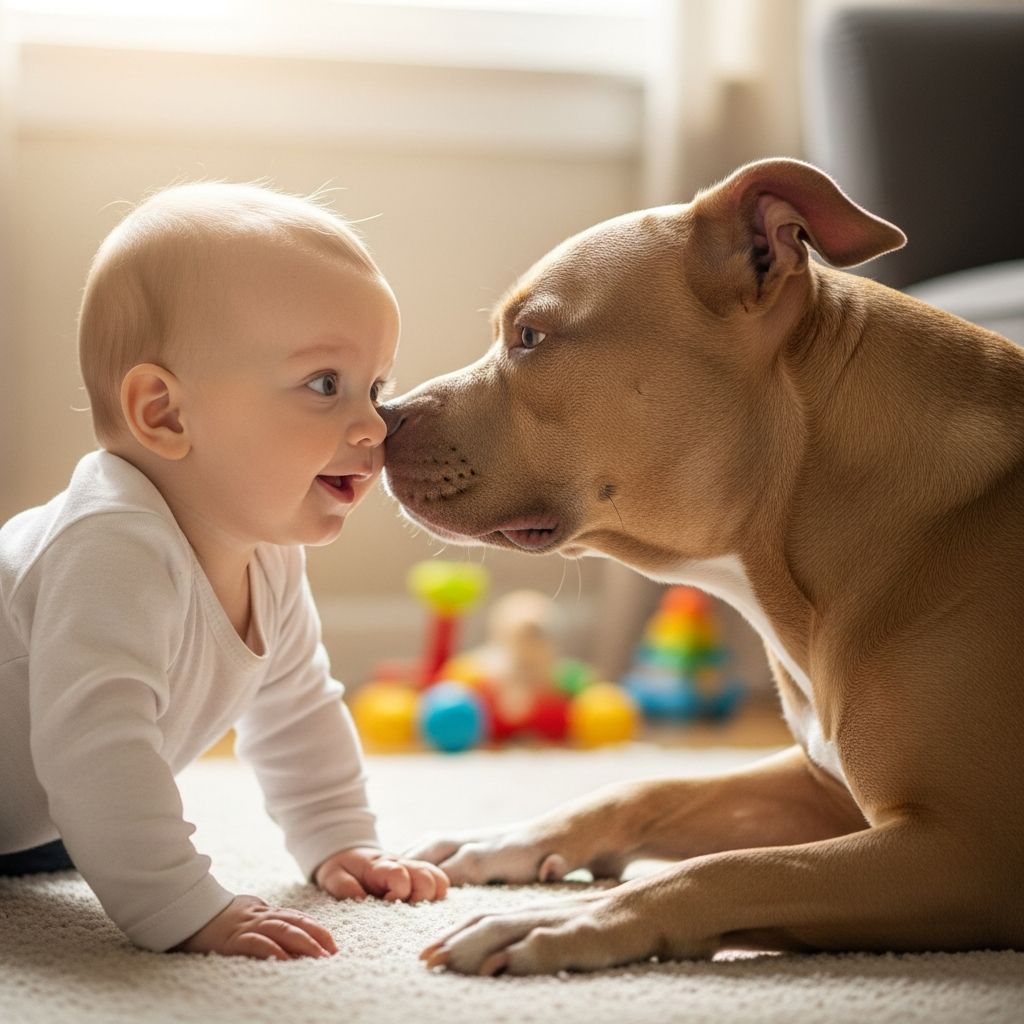
Moments when a baby and a family dog appear to share a private, ‘secret’ conversation have captured the internet’s heart, and for good reason. These clips highlight how a well-trained pit bull and a supervised baby can build a gentle, trusting bond that challenges the stereotypes often attached to this misunderstood breed.
Why This Kind of Moment Feels So Magical
When people see a baby babbling to a pit bull who ‘answers’ with soft grumbles, head tilts, or quiet tail wags, it feels almost like watching two friends invent their own language. The contrast between the baby’s tiny frame and the dog’s powerful body makes the gentleness of the interaction stand out even more.
- Babies are naturally drawn to faces, voices, and movement, so a responsive dog becomes an instant point of fascination.
- Well-socialized pit bulls often respond to this attention with patience and curiosity, creating a feedback loop of playful interaction.
- The appearance of a ‘secret’ conversation comes from both baby and dog taking turns making sounds and reacting to one another’s body language.
Understanding Baby and Dog ‘Conversations’
Although a baby and a dog are not talking in words, they do exchange signals. Each participant in the interaction sends cues and waits for a response, a process that lays the groundwork for real social skills as the child grows. In this sense, the cute moment is also a tiny communication lesson.
Nonverbal Cues From the Baby
- Babbling and squeals: These vocalizations are experiments with sound and rhythm, not actual words, but dogs often respond as if they are being spoken to.
- Facial expressions: Wide eyes, smiles, and focused stares tell the dog that the baby is engaged and interested.
- Reaching and leaning: A baby who leans forward or reaches out is showing curiosity and a desire to interact, though this must always be supervised to prevent rough grabbing.
Nonverbal Cues From the Pit Bull
- Soft eyes and slow blinks: These relaxed facial signals usually indicate calm interest rather than tension.
- Loose body posture: A relaxed spine, gently wagging tail, and slightly open mouth show that the dog is at ease.
- Gentle vocalizations: Quiet grumbles or soft whines may be a dog’s way of ‘answering’ the baby’s sounds in a low-intensity, friendly way.
Together, these signals create the impression that baby and dog are speaking their own language. To an observer, it feels like watching two best friends share a joke that only they understand.
Pit Bulls as Family Dogs: Challenging Old Myths
Seeing a pit bull interact tenderly with a baby contradicts long-standing myths that label these dogs as automatically dangerous. In reality, temperament is shaped by genetics, early socialization, consistent training, and how responsibly the adults in the home manage daily life.
| Common Myth | More Accurate Perspective |
|---|---|
| Pit bulls are naturally aggressive toward children. | Like any breed, well-bred, well-trained, and well-supervised pit bulls can be gentle, tolerant, and deeply bonded to kids. |
| Pit bulls always ‘snap’ without warning. | Most dogs give multiple stress signals before any escalation; the issue is that humans often miss or ignore these early cues. |
| No pit bull can safely live in a home with a baby. | Many families successfully and safely raise children alongside pit bulls by using training, boundaries, and supervision. |
| Love alone is enough to guarantee safety. | Affection is important, but clear rules, structure, and ongoing training are what truly support safe, respectful interactions. |
When a video shows a calm pit bull lying beside a baby who is happily babbling away, it is not an accident; it is usually the visible result of thoughtful training choices behind the scenes.
Setting the Stage Before Baby Meets Dog
That heart-melting ‘secret conversation’ only happens safely when parents plan ahead. Long before a baby is brought home, the dog should already understand basic manners and be used to structure and boundaries in the living space.
Pre-Baby Training Priorities
- Basic obedience: Commands like sit, stay, down, and leave it give parents tools to redirect excitement and maintain control.
- Crate or place training: Teaching the dog to relax in a designated spot allows everyone to take breaks when the environment becomes too busy.
- Impulse control: Learning to wait at doors, walk politely on leash, and take treats gently all build the self-control needed around small children.
Preparing the Environment
- Use baby gates or playpens to create zones where baby and dog can see each other without always sharing the same space.
- Set clear household rules about where the dog can rest, when children may interact, and which behaviors are never allowed.
- Introduce baby sounds and smells gradually, such as recorded crying and baby lotions, so that the dog is not overwhelmed all at once.
The cuteness seen in a short clip is built on many small, consistent decisions that prioritize safety and respect for both baby and dog.
First Introductions: From Curiosity to Comfort
The first in-person meeting between a baby and a pit bull should be intentionally calm and boring, not dramatic. The goal is to let the dog gather information through scent and sight while keeping excitement low and interactions brief.
- Allow the dog to sniff baby items like blankets or clothing before the face-to-face introduction.
- Have an adult hold the baby securely while another handles the dog on leash or at a distance.
- Reward the dog for relaxed behavior such as soft eyes, loose posture, and turning away calmly.
- Keep initial sessions short and positive, ending before either baby or dog becomes overstimulated.
Over time, as the dog consistently shows calm curiosity and the baby becomes more predictable, these meetings can lengthen and eventually evolve into shared floor time under close supervision.
Reading Your Dog’s Body Language Around Babies
Caregivers who want more moments like a ‘secret conversation’ need to pay close attention to early signs of stress or discomfort. Dogs rarely move from relaxed to dangerous behavior without multiple warning steps in between.
Positive Signals to Encourage
- Loose, wiggly body and gently wagging tail.
- Soft, blinking eyes and a slightly open mouth.
- Choosing to lie down nearby rather than crowding the baby.
Warning Signs That Call for a Break
- Stiff body, tense jaw, and hard stare.
- Yawning, lip licking, or turning the head away repeatedly while the baby is close.
- Low growls, tucked tail, or attempts to escape the situation.
When any stress signals appear, the best response is to calmly separate dog and baby, give the dog a chance to decompress, and try again another time with more space and structure.
Teaching Babies and Toddlers to Respect Dogs
The baby in a sweet viral clip may not yet understand boundaries, but as children grow, they must learn that dogs are living beings with feelings and limits. Respectful behavior helps prevent accidents, even when the dog is patient and tolerant.
- Show children how to use gentle hands, petting in one direction instead of grabbing fur or ears.
- Explain that dogs need private time and should not be disturbed when eating, sleeping, or resting in their bed or crate.
- Model asking permission before approaching any dog, even the family pet, to build lifelong safety habits.
When kids learn to honor these rules, the relationship between child and dog becomes a two-way street of trust and consideration, not just a source of entertainment.
Creating Everyday Moments of Connection
The charm of a single ‘secret conversation’ clip comes from how spontaneous it looks, but families can intentionally create rituals that encourage this kind of gentle interaction. Small, consistent routines “tell” the dog that calm behavior near the baby is rewarding.
- Offer treats or praise whenever the dog chooses to lie quietly near the baby’s play area without being asked.
- Include the dog in low-key family activities like story time or floor play, while keeping hands and movements controlled.
- Use soft voices and predictable patterns around the dog so that baby noises become part of the normal household soundtrack.
Over months and years, these rituals can turn the dog into a loyal, steady presence in the child’s life, rather than a source of tension or uncertainty.
Common Mistakes to Avoid With Babies and Pit Bulls
Even well-meaning caregivers sometimes make choices that undermine safety or increase stress. Recognizing these pitfalls makes it easier to build the warm, peaceful scenes people love to share online.
- Relying on breed stereotypes alone: Assuming a dog is safe or unsafe only because of its breed misses the real issues of training, socialization, and management.
- Leaving baby and dog unsupervised: No interaction between any child and any dog should be treated as completely risk-free.
- Ignoring early stress signs: Pushing a dog to ‘tolerate’ rough handling instead of stepping in to protect it can erode trust.
- Using punishment around the baby: Harsh corrections near the baby can make the dog associate the child with negative experiences.
Replacing these missteps with patience, structure, and empathy allows the baby–dog bond to grow in a healthy, sustainable way.
Frequently Asked Questions
Are pit bulls safe around babies?
Pit bulls can be safe, loving family companions when they are responsibly bred, thoroughly socialized, consistently trained, and carefully supervised. No breed is automatically safe or unsafe; what matters most is the dog’s individual temperament and how adults manage interactions.
How can I tell if my dog is comfortable with my baby?
Look for relaxed body language: loose posture, soft eyes, gentle tail movement, and a willingness to lie nearby without constant monitoring of the baby. If your dog chooses to move away when the baby is active, respect that choice and offer a quiet resting place.
Should my baby be allowed to climb on or hug the dog?
Hugs and climbing often feel restraining to dogs, even friendly ones, and can cause discomfort or fear. It is safer to teach children to sit beside the dog and use gentle strokes, keeping their faces away from the dog’s face.
What if my dog growls when the baby gets close?
A growl is a communication signal that the dog is uncomfortable and needs space; it should never be punished or ignored. Separate baby and dog immediately, review your management strategies, and consider working with a qualified trainer or behavior professional.
Can I encourage interactions like the ‘secret conversation’ I see online?
You can create safe opportunities by supervising closely, rewarding calm, gentle behavior from the dog, and keeping sessions brief. Focus less on recreating a viral moment and more on building a long-term foundation of trust and mutual respect between your child and your dog.
Moments when a baby seems to share a private, joyful conversation with a pit bull remind us that, with thoughtful preparation and responsible care, dogs and children can build extraordinary bonds. Behind every sweet clip is a family that chose training, structure, and empathy—choices that any household can make to nurture its own safe, loving connections between kids and pets.