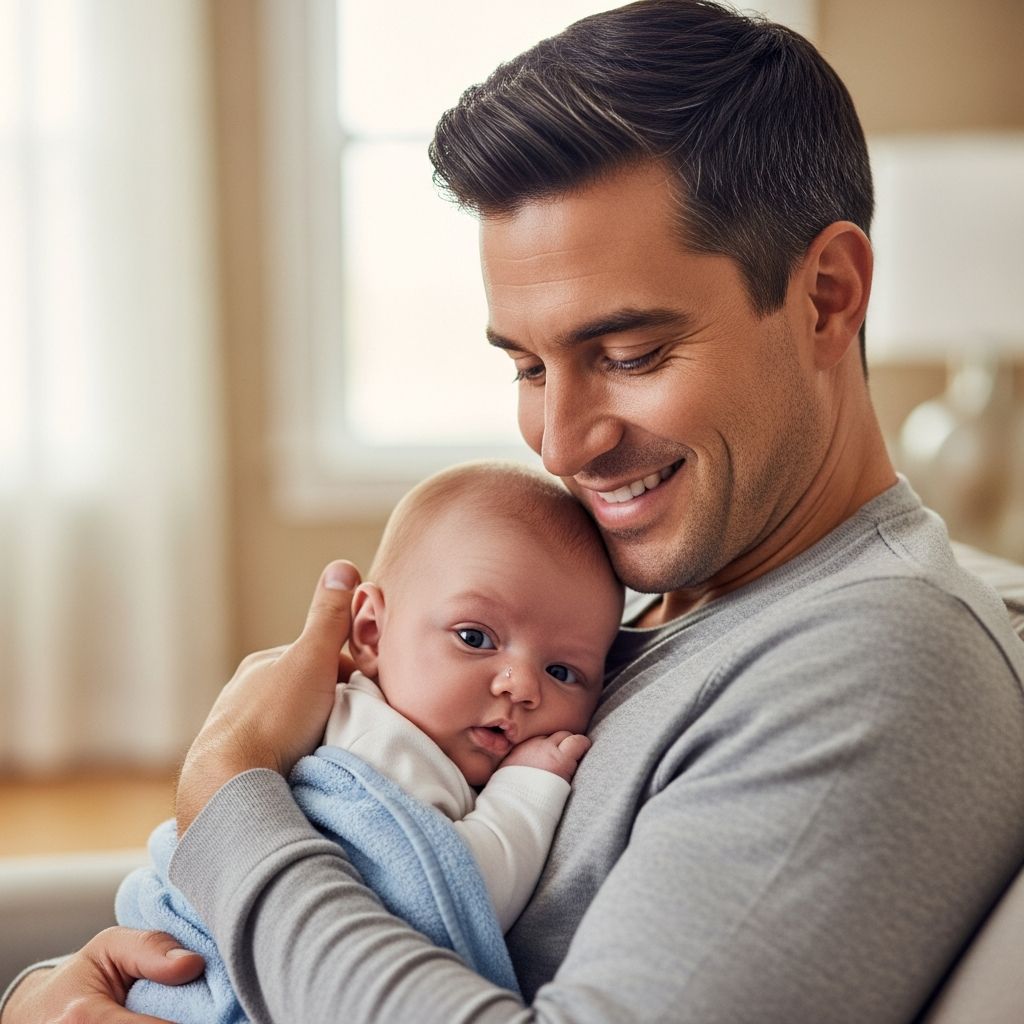
Scientific research highlights a fascinating link between a newborn’s facial features and their early health outcomes. Infants who bear a strong likeness to their fathers tend to experience measurable health improvements by their first birthday, particularly in households led by single mothers. This phenomenon stems from heightened paternal investment triggered by perceived genetic similarity.
Understanding the Science Behind Facial Similarity and Paternal Care
Human evolutionary biology plays a pivotal role in parental behaviors. Fathers, facing inherent uncertainties about biological paternity, often respond more robustly to visual cues of resemblance. When a baby mirrors the father’s facial traits, it boosts his confidence in kinship, prompting greater time commitment. This dynamic was rigorously examined in a study involving 715 single-mother families, where paternal resemblance correlated with enhanced infant vitality.
Key health metrics at one year included reduced hospital stays, fewer doctor visits, and lower asthma incidents. These gains arise not from genetics alone but from practical caregiving boosts: more supervision, prompt illness response, and shared parental load. Researchers from Binghamton University noted that fathers spent an average of 2.5 additional days monthly with look-alike infants, translating to tangible wellbeing uplifts.
Insights from the Fragile Families Study
The cornerstone data draws from the Fragile Families and Child Wellbeing (FFCW) study, tracking unwed parents and their children since 1998. Focusing on 456-715 cases (varied reports), it isolated non-cohabiting families to pinpoint resemblance effects. Mothers and fathers independently rated newborn likeness, ensuring objective input.
Statistical controls for socioeconomic factors, maternal health, and birth conditions confirmed the trend’s robustness. Health indices improved significantly for paternal-resembling babies, underscoring involvement over heredity. Lead researcher Solomon Polachek emphasized: “Fathers are important in raising a child, and it manifests itself in the health of the child”.
How Father Time Translates to Baby Health Wins
- Enhanced Monitoring: Extra visits enable early detection of issues like fevers or growth delays.
- Resource Allocation: Dads contribute financially and logistically, easing single-mom burdens.
- Emotional Buffering: Dual caregiving fosters secure attachments, reducing stress-related ailments.
- Health Education: Involved fathers learn infant cues, improving home care quality.
These mechanisms compound: two caregivers outperform one, halving oversight gaps. Even modest time increases—2.5 days monthly—yield “statistically significant” health edges.
Beyond Looks: Broader Father Involvement Benefits
Resemblance acts as an evolutionary catalyst, but active fatherhood yields universal gains. A 2021 analysis linked paternal prenatal support to healthier births and stronger maternal bonds. Engaged dads during pregnancy correlate with lower complication rates and better neonatal stats.
Post-birth, dual parenting slashes injury risks and accelerates milestones. Cognitive and emotional development surges with father play, distinct from maternal styles. In fragile families, where economic strains amplify vulnerabilities, dad involvement mitigates disadvantages.
| Health Metric | With Paternal Resemblance | Without |
|---|---|---|
| Hospital Days | Lower average | Higher average |
| Doctor Visits | Fewer | More frequent |
| Asthma Attacks | Reduced incidence | Higher incidence |
| Father Visit Days/Month | +2.5 days | Baseline |
This table summarizes core findings from the primary study, illustrating quantified impacts.
Evolutionary Roots of Paternal Investment
From an evolutionary lens, paternity doubt—absent in maternity—drives men to seek assurance cues. Facial resemblance serves as a reliable signal, more so than behavior in newborns. Cross-cultural patterns affirm this: dads invest more in perceived offspring.
A 2019 study on perceived parent-child facial resemblance (PCFR) found it positively affects fathers’ physical health via reduced anxiety, reinforcing investment cycles. Fathers rating high PCFR reported better vitality, mediated by lower trait anxiety. This bidirectional benefit sustains long-term engagement.
Challenges in Single-Parent Dynamics
Single-mother homes, comprising 40%+ of US births to unwed parents, face heightened health risks for kids. Income gaps exacerbate access to care; involved non-resident fathers bridge this. Yet barriers like distance, conflict, or economics limit contact.
The study cautions against overgeneralization to married or cohabiting families, where baseline involvement is higher. Still, resemblance principles may subtly operate universally.
Practical Ways to Boost Father Engagement
Policy and practice can amplify natural incentives:
- Parenting workshops teaching newborn care and bonding.
- Health seminars on infant milestones and red flags.
- Job training for economic stability, enabling consistent visits.
- Court incentives for positive co-parenting in custody plans.
Polachek advocates: “Greater efforts could be made to encourage these fathers through parenting classes, health education, and job training”. Community programs mirroring “it takes a village” with dad focus yield outsized returns.
Limitations and Future Research Directions
While compelling, the study isn’t causal: resemblance may proxy other unmeasured factors like relationship quality. Self-reported likeness introduces bias, though dual-parent ratings mitigate it. Health proxies (e.g., visits) imperfectly capture true status due to access variances.
Longitudinal FFCW extensions could track beyond year one, exploring developmental trajectories. Diverse samples beyond US urban fragile families would test generalizability.
Frequently Asked Questions
What if a baby looks more like mom?
Health benefits tie to dad involvement, not looks per se. Encouraging engagement regardless yields similar gains.
Does this apply to married couples?
The study targeted non-cohabiting families; effects may be subtler where dads live in-home, but involvement always matters.
How is resemblance assessed?
Both parents independently rated newborn photos or direct observation in separate interviews.
Can policies force more dad time?
Not force, but support via education and training proves effective for voluntary boosts.
Are there genetic health links?
No; improvements stem from behavioral investment, not inherited traits.
Conclusion: Empowering Dads for Stronger Starts
Resemblance sparks a virtuous cycle of investment and health, but proactive steps ensure all infants thrive. Prioritizing father roles in fragile families promises generational wellbeing lifts.
References
- Babies may benefit from looking like dad, study says — CBS News. 2018-03-05. https://www.cbsnews.com/news/babies-may-benefit-from-looking-like-dad/
- Newborns Who Look Like Their Dads Have a Surprising Health Advantage — ScienceAlert. 2018-03-06. https://www.sciencealert.com/babies-that-look-like-dad-are-healthier
- Babies Who Are Born Looking Like Their Dad Are Healthier, Says Science — YourTango. 2025-09-17. https://www.yourtango.com/family/babies-born-looking-their-dad-are-healthier-says-science
- The Effect of Perceived Parent-Child Facial Resemblance on Parents’ Physical Health — PMC (Peer-reviewed). 2019-01-15. https://pmc.ncbi.nlm.nih.gov/articles/PMC6338254/