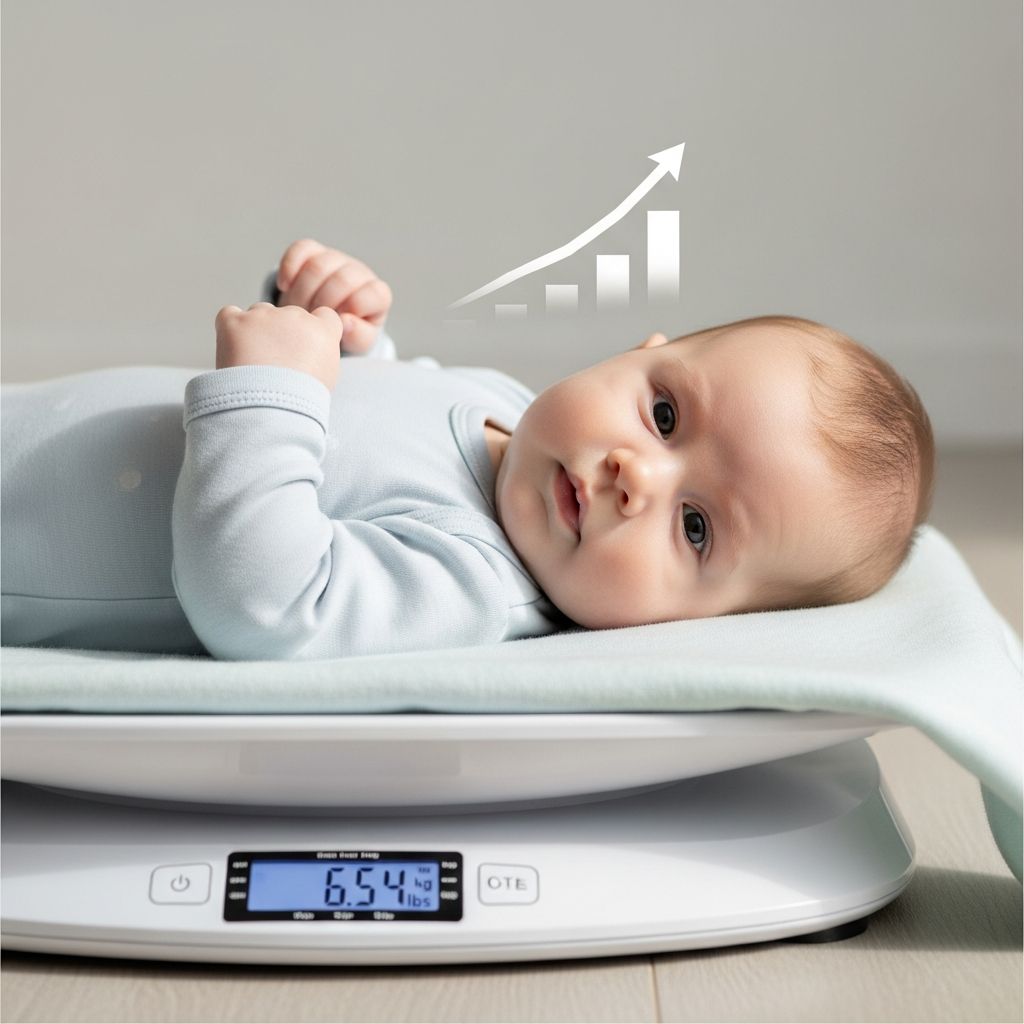
At four months, babies experience significant growth spurts, typically weighing between **14 and 15.5 pounds** on average, though individual variations are normal based on genetics, nutrition, and health. This stage marks a period of rapid physical changes, where tracking weight alongside length and head circumference provides a fuller picture of development.
Understanding Typical Weight Ranges at 4 Months
Babies at this age show diverse growth patterns, but standardized charts from authoritative bodies like the World Health Organization (WHO) and Centers for Disease Control and Prevention (CDC) offer reliable benchmarks. For boys, the average weight hovers around 15 lb 7 oz (7.0 kg), while girls average 14 lb 3 oz (6.4 kg), representing the 50th percentile. These figures reflect data from healthy, breastfed infants under optimal conditions.
Percentiles are key to interpretation: a baby in the 50th percentile weighs more than 50% of peers. Staying consistent within a percentile range over time indicates steady growth, even if below average. For context, here’s a table of early growth milestones:
| Age | Girls (50th %ile) | Boys (50th %ile) |
|---|---|---|
| Birth | 7 lb 6 oz (3.3 kg) | 7 lb 2 oz (3.2 kg) |
| 1 Month | 9 lb 4 oz (4.2 kg) | 9 lb 14 oz (4.5 kg) |
| 2 Months | 11 lb 5 oz (5.1 kg) | 12 lb 4 oz (5.6 kg) |
| 3 Months | 12 lb 14 oz (5.8 kg) | 14 lb 1 oz (6.4 kg) |
| 4 Months | 14 lb 3 oz (6.4 kg) | 15 lb 7 oz (7.0 kg) |
This data draws from WHO standards, emphasizing optimal growth for breastfed babies. By four months, many infants nearly double their birth weight, a hallmark of healthy early development.
How Growth Charts Help Track Progress
Growth charts plot weight, length, and head size against age and sex-specific curves. Separate charts exist for boys and girls due to inherent differences. To use one:
- Obtain measurements from well-child visits.
- Locate the age on the x-axis and weight on the y-axis.
- Mark the point and note the percentile curve it aligns with.
For example, a 4-month-old boy at 15 pounds falls near the 50th percentile, indicating average growth. Tools from RCPCH and CDC provide printable versions for home reference. Consistency matters more than hitting exact averages—sudden drops or jumps warrant attention.
Length-for-age and weight-for-length charts add depth. A proportional build ensures weight matches stature, preventing concerns like under- or overweight. Head circumference tracks brain growth, typically increasing steadily.
Factors Shaping Your Baby’s Weight Gain
Several elements influence weight at four months. **Sex** plays a role: boys often weigh more and gain faster. **Nutrition** is pivotal—breastfed babies may gain slightly slower initially but follow similar trajectories to formula-fed peers long-term.
Genetics contribute significantly; family height and build predict patterns. Prematurity or health issues like reflux can alter curves, but catch-up growth is common. Feeding frequency increases around now, supporting spurt-related demands—babies might nurse 8-12 times daily.
Environmental factors, including sleep and activity, indirectly affect gains. Active tummy time builds strength, correlating with overall health.
Signs of Healthy Development Beyond Weight
Weight alone doesn’t define thriving. Look for:
- Steady percentile tracking across visits.
- Milestones like rolling over, cooing, or grasping toys.
- Proportional measurements in length and head size.
- Alertness and responsiveness during interactions.
Holistic checks from the American Academy of Pediatrics endorse combining charts with behavioral observations. At four months, expect improved head control and social smiling as growth complements motor skills.
Nutrition Strategies for Optimal Growth
Exclusive breastfeeding or formula remains ideal until six months, per WHO guidelines. Signs of adequacy include 6-8 wet diapers daily and content post-feedings.
Introduce paced bottle-feeding for formula to mimic breastfeeding flow, reducing overfeeding risks. Track intake if concerned: a 4-month-old might take 24-32 oz daily, spread across feeds.
Solids aren’t recommended yet, but readiness cues around six months include sitting with support and interest in food. Consult pediatricians before changes.
When to Reach Out to Your Pediatrician
Most variations are normal, but alert your doctor if:
- Weight drops percentiles sharply.
- Baby seems lethargic or irritable.
- Feedings exceed 32 oz formula or constant nursing without satisfaction.
- Other symptoms like vomiting or poor stooling appear.
Routine checkups at 4 months include precise plotting—use these to discuss trends. Early intervention addresses issues like allergies promptly.
Practical Tips for Parents
Support growth by:
- Weighing monthly at home if desired, using consistent scales.
- Ensuring skin-to-skin for bonding and feeding cues.
- Promoting sleep routines, as rest fuels growth hormone.
- Staying hydrated yourself if breastfeeding.
Apps with WHO charts simplify tracking, but professional oversight is best. Celebrate uniqueness—your baby’s curve is their normal.
Frequently Asked Questions About 4-Month-Old Growth
What’s the average weight for a 4-month-old girl?
Around 14 lb 3 oz (6.4 kg) at the 50th percentile, per WHO data, but ranges from 12-16 lb are common.
Do boys and girls grow at different rates at 4 months?
Yes, boys average slightly heavier (15 lb 7 oz or 7.0 kg), reflecting sex-based differences in charts.
Is it normal if my baby is below average weight?
Yes, if consistent on their curve and meeting milestones; doctors prioritize trends over absolutes.
How often should a 4-month-old eat to gain weight?
Every 2-4 hours, totaling 8-12 feeds daily for breastfed infants.
Can I start solids at 4 months for weight gain?
No, WHO advises exclusive milk feeds until 6 months unless medically indicated.
Long-Term Growth Outlook
From four months, growth slows slightly, with boys reaching about 21 lb by one year. Regular monitoring ensures sustained health. Resources like CDC PDFs aid visualization. Empower yourself with knowledge—steady progress signals success.
References
- Average baby weight: Chart and development — Medical News Today. 2023-10-12. https://www.medicalnewstoday.com/articles/325630
- Baby Growth Chart: The First 24 Months — Pampers. 2024-01-15. https://www.pampers.com/en-us/baby/health/article/baby-growth-chart
- UK-WHO growth charts 0-4 years — Royal College of Paediatrics and Child Health (RCPCH). 2023-05-01. https://www.rcpch.ac.uk/resources/uk-who-growth-charts-0-4-years
- WHO Growth Chart: Birth to 24 months: Boys — Centers for Disease Control and Prevention (CDC). 2011-06-10. https://www.cdc.gov/growthcharts/data/who/grchrt_boys_24lw_100611.pdf
- Weight-for-age – World Health Organization (WHO) — WHO. 2022-11-20. https://www.who.int/tools/child-growth-standards/standards/weight-for-age
- Birth to 36 months: Boys Weight-for-age percentiles — CDC. 2000-05-30. https://www.cdc.gov/growthcharts/data/set1clinical/cj41c017.pdf