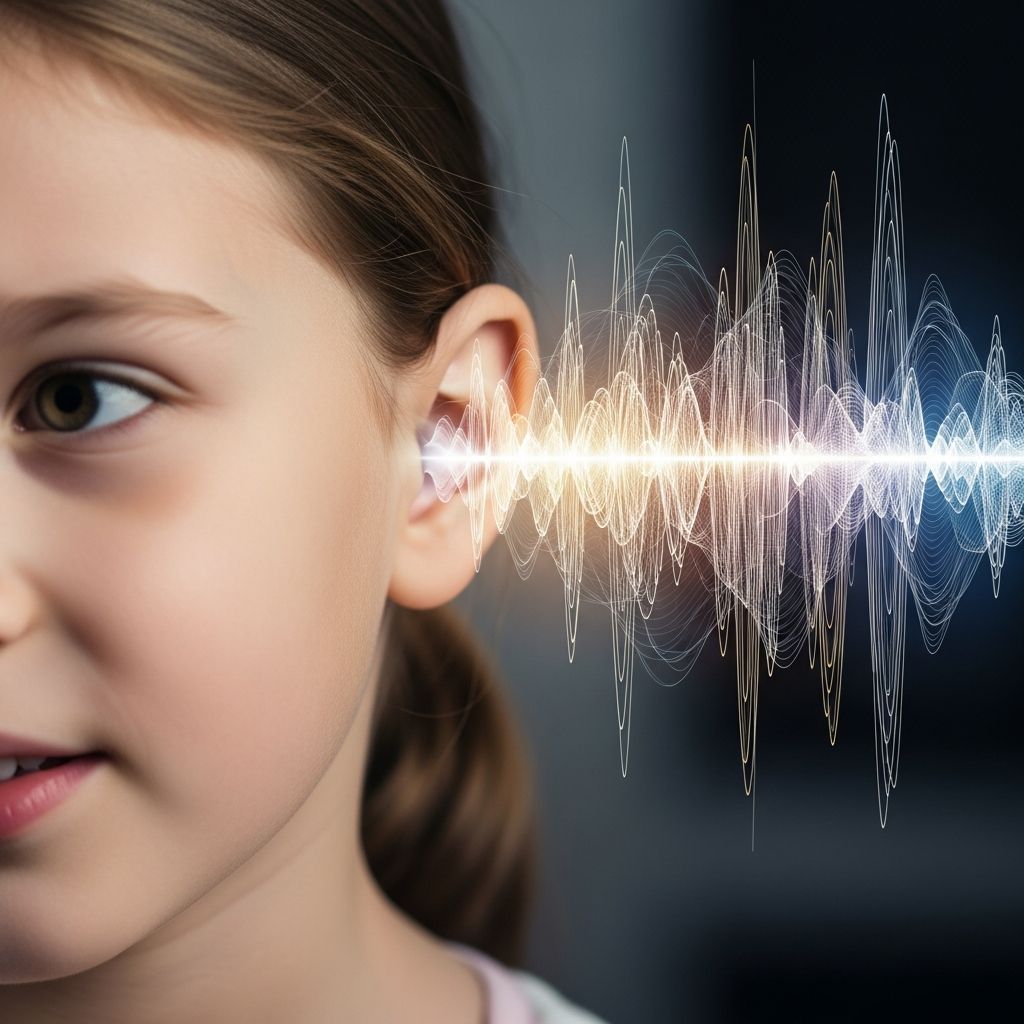
Auditory processing disorder (APD), sometimes called central auditory processing disorder, affects how the brain interprets sounds, particularly speech, even when hearing is normal. Children with APD can hear sounds but struggle to make sense of them, especially in noisy environments or with rapid speech. This guide explores recognition, evaluation, daily management, and support options for families.
Understanding the Basics of APD
APD occurs when the brain’s auditory pathways fail to process incoming sound signals efficiently. Unlike hearing loss, where sounds aren’t detected, APD involves normal hearing thresholds but impaired interpretation. It impacts about 5% of school-aged children, often emerging in preschool or early elementary years. The condition involves several core skills: discrimination (distinguishing similar sounds), figure-ground (filtering noise), memory (recalling spoken info), and sequencing (ordering sounds).
Early identification is crucial because untreated APD can mimic or exacerbate issues like ADHD, language delays, or learning disabilities. Parents may first notice challenges during playgroups, storytime, or classroom activities where noise levels rise.
Common Signs Across Age Groups
Symptoms vary by age but center on listening difficulties. In younger children, signs appear subtly; in older kids, they affect academics more visibly.
Indicators in Preschoolers (Ages 3-5)
- Confusion between similar-sounding words, like “bat” and “pat”
- Trouble following simple multi-step instructions without visual aids
- Over-sensitivity to everyday noises, leading to distraction or withdrawal
- Difficulty learning rhymes, songs, or phonetic games
- Preference for visual tasks like puzzles over listening activities
- Monotone speech or inconsistent pronunciation
These behaviors might be dismissed as immaturity, but persistence warrants attention.
Signs in School-Aged Children (Ages 6+)
- Struggles understanding speech amid background noise, like in cafeterias
- Frequent requests to repeat instructions or questions like “What?”
- Poor performance in reading, spelling, or verbal math problems
- Difficulty grasping jokes, sarcasm, or abstract language
- Easily distracted by sudden sounds during lessons
- Trouble summarizing stories or remembering spoken details
Academic gaps widen without intervention, affecting confidence and participation.
How APD Differs from Other Conditions
APD symptoms overlap with ADHD, dyslexia, or hearing loss, complicating self-diagnosis. For instance, both APD and ADHD involve inattention, but APD kids perform better in quiet settings. A table clarifies key distinctions:
| Condition | Key APD Overlap | Distinguishing Feature |
|---|---|---|
| ADHD | Distraction, poor focus | APD improves in quiet; ADHD persists |
| Hearing Loss | Missing speech sounds | APD passes pure-tone tests; hearing loss fails |
| Language Disorder | Direction-following issues | APD is sound-specific; language is broader |
| Dyslexia | Reading/spelling woes | APD auditory root; dyslexia visual/orthographic |
Professional evaluation separates these, ensuring targeted help.
Path to Diagnosis: What to Expect
Diagnosis requires an audiologist specializing in APD, typically after age 7 for reliable testing. Steps include:
- Hearing Screening: Rules out peripheral issues.
- APD Battery: Tasks like dichotic listening (sounds in both ears) or filtered speech.
- Speech-Language Assessment: Checks related skills.
- Multidisciplinary Review: Involves psychologists if comorbidities suspected.
No single test confirms APD; results interpret patterns across skills. Early screening in preschool can flag risks.
Practical Management Strategies at Home
While no cure exists, targeted strategies build skills. Focus on clear communication and environmental tweaks.
- Optimize Listening Conditions: Reduce background noise; face child when speaking; use visual cues.
- Break Down Instructions: One step at a time; pair with gestures.
- Enhance Auditory Training: Apps/games for sound discrimination (e.g., rhyming apps).
- Boost Language Exposure: Read aloud in quiet; repeat key phrases.
- Daily Routines: Consistent signals like lights for attention.
Parents report gains in confidence with consistent practice.
School-Based Interventions and Accommodations
Collaboration with educators is vital. Common supports include:
- Preferential seating away from noise
- Recorded lessons or visual aids
- Extended time for verbal tasks
- FM systems to amplify teacher voice
- IEP/504 plans tailoring to auditory needs
Audiologists provide reports guiding these. Progress monitoring ensures adjustments.
Therapy Options and Long-Term Outlook
Auditory training programs, like those from certified therapists, retrain pathways via computer-based exercises. Speech therapy addresses linked articulation/language issues. With intervention, most children improve significantly, though some skills may lag. Long-term, teens adapt using strategies, succeeding academically and socially. Monitor for emotional impacts like frustration or isolation.
Frequently Asked Questions (FAQs)
Can APD be outgrown?
No, but skills strengthen with therapy; many manage well into adulthood.
Is APD linked to autism or ADHD?
Overlaps exist, but distinct; comprehensive eval clarifies.
How do I find an APD specialist?
Seek ASHA-certified audiologists via directories.
Does APD affect music or singing?
Yes, rhythm/pitch processing can challenge.
Are there medications for APD?
No; it’s neurodevelopmental, treated with training.
Empowering Your Child: Next Steps for Families
Observe patterns, document examples, and consult professionals promptly. Support groups connect parents. Celebrate small wins to foster resilience. With awareness and action, children with APD thrive.
References
- Auditory Processing Disorder (APD) — Nationwide Children’s Hospital. Accessed 2026. https://www.nationwidechildrens.org/conditions/auditory-processing-disorder
- Signs Your Child May Have Auditory Processing Disorder — TherapyWorks. Accessed 2026. https://therapyworks.com/blog/language-development/speech-strategies/signs-your-child-may-have-apd/
- Symptoms of APD in Preschool Children — Auditory Processing Center. Accessed 2026. https://auditorycenter.com/symptoms-of-auditory-processing-disorder-apd/symptoms-of-apd-in-preschool-children/
- Auditory Processing Disorder — UR Medicine / University of Rochester Medical Center (.edu). 2023. https://www.urmc.rochester.edu/conditions-and-treatments/auditory-processing-disorder
- Auditory processing disorder (APD) – Symptoms and causes — Mayo Clinic. 2023-09-30. https://www.mayoclinic.org/diseases-conditions/auditory-processing-disorder/symptoms-causes/syc-20555261
- Understanding Auditory Processing Disorders in Children — American Speech-Language-Hearing Association (ASHA). Accessed 2026. https://www.asha.org/public/hearing/understanding-auditory-processing-disorders-in-children/