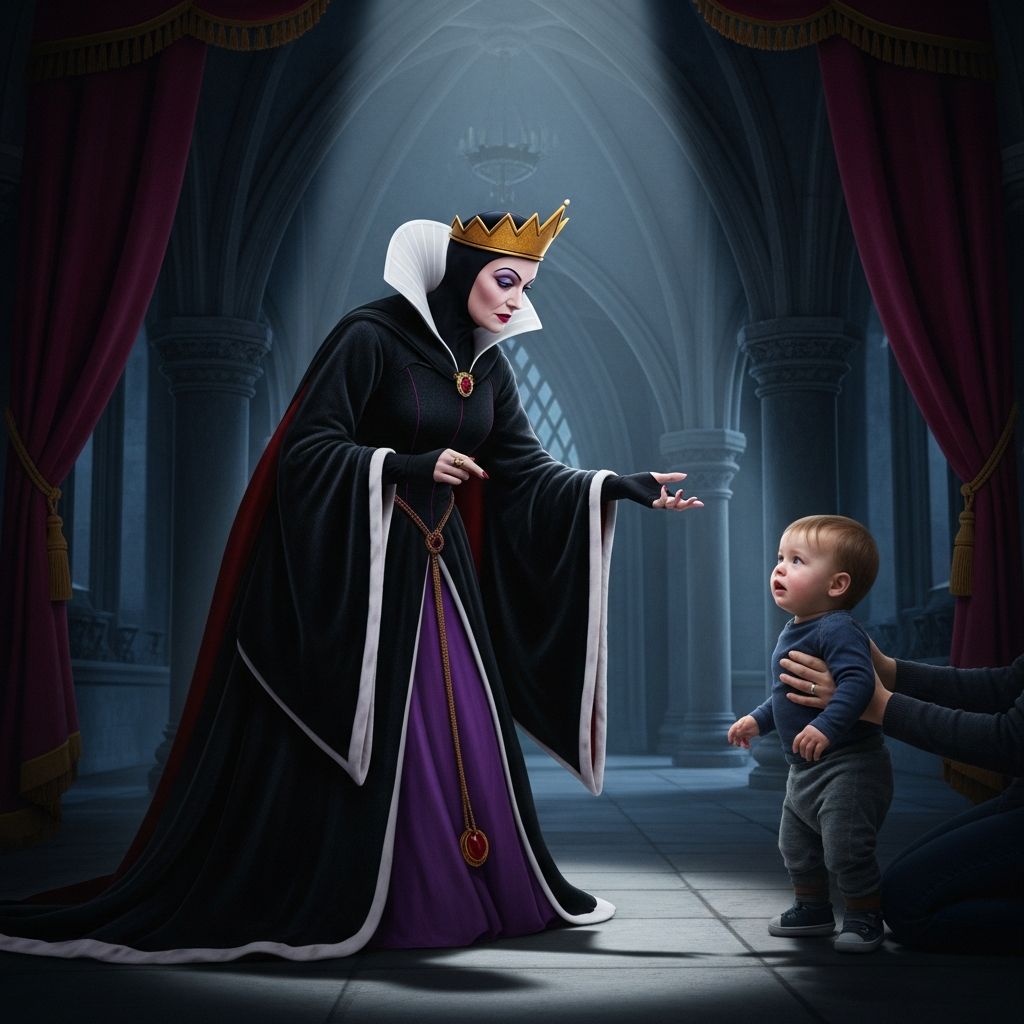
Videos of toddlers meeting Disney characters often look magical, but when the character is a villain like the Evil Queen from Snow White, the reaction can be very different. Instead of smiles, parents may see frozen stares, tears, or a child clinging tightly to a caregiver. This kind of moment can feel dramatic, but it is also a powerful window into how young children understand stories, danger, and safety.
Why Disney Villains Feel So Real to Toddlers
Toddlers live in a world where the line between fantasy and reality is still quite thin. A character they have seen on a screen can feel just as real, and just as threatening, as a stranger in the room. When that character is a classic villain like the Evil Queen, her dramatic makeup, intense expressions, and stern voice send very clear signals of danger to a young child who is wired to pay attention to anything that looks scary.
Unlike older kids, toddlers cannot easily remind themselves that “it is only a costume” or “this is just pretend.” Their emotional brain reacts first, often with fear or anxiety, and their thinking brain does not yet have the maturity to fully talk them down. This is why a brief encounter with a villain at a theme park can feel overwhelming, even if adults around them are laughing or taking pictures.
- Toddlers may interpret dramatic costumes as real threats.
- Facial expressions, tone of voice, and posture matter more than the story context.
- Younger children rely on caregivers’ reactions to decide whether a situation is safe.
How Young Children Process Fear and Surprise
Fear is a healthy, protective emotion for toddlers. It helps them pull back from situations that feel unpredictable or intense. However, fear can also flare up in safe settings, such as a Disney park, when the sensory input is overwhelming. Bright lights, loud music, unfamiliar faces, and costumed characters all stack together, and a villain encounter can be the final push that triggers tears or panic.
Surprise plays a big role as well. Even if a child has seen the Evil Queen in a movie, meeting her face-to-face is an entirely different experience. A sudden approach, a stern greeting, or a dramatic pose can feel like too much all at once. The child’s body shifts quickly into fight, flight, or freeze—and most toddlers choose to cling, cry, or hide behind a parent.
- Fear is not a sign of weakness; it is a normal developmental response.
- Overlapping sensations (crowds, noise, heat) can amplify a child’s emotional reaction.
- Surprise plus intensity often leads to bigger outbursts than fear alone.
Preparing Toddlers for Character Encounters at Disney
Parents cannot control everything that will happen at a theme park, but they can gently prepare children for the types of characters they might see. Talking about both princesses and villains before the trip helps set expectations and reduces the shock factor. Simple descriptions and playful practice at home can go a long way toward making the real-life encounter less overwhelming.
Instead of promising that everything will be fun, it is more realistic to explain that some characters might look a bit scary but that parents will always be right there. This approach respects the child’s emotions and avoids the pressure to feel only excitement.
Practical Preparation Tips
- Watch short clips or storybooks showing both heroes and villains in a calm setting.
- Use role-play with toys to act out meeting a character and saying hello or waving from a distance.
- Explain that the people in costumes are actors whose job is to play a role, similar to how they appear in movies.
- Give your toddler a simple safety phrase, such as “All done,” that signals they want to step back.
Respecting a Child’s Boundaries Around Villains
Even when parents hope for a magical photo, it is important to remember that the child’s sense of safety comes first. If a toddler pulls away, cries, or says no, forcing them to pose with a villain teaches them to ignore their own fear signals. Over time, this can make it harder for children to trust their instincts in situations that really are unsafe.
Respecting a child’s boundaries does not mean avoiding every challenging situation. Instead, it means staying attuned to their cues and giving them choices. A toddler who does not want to stand next to the Evil Queen might still feel comfortable waving from a distance or watching from a parent’s arms.
- Give children control over how close they get to a character.
- Avoid shaming language such as “Don’t be a baby” or “It is not that scary.”
- Celebrate small acts of bravery, like waving or making eye contact from afar.
Turning a Scary Moment Into a Growth Opportunity
When a toddler gets frightened by a villain, the most important part is what happens next. A compassionate, calm response from caregivers can transform the memory from “I was terrified and alone” into “I was scared, but my grown-ups helped me feel safe.” This shift is the heart of emotional resilience.
After the encounter, parents can help children tell the story of what happened using simple language. Naming the feelings and highlighting how the child coped—by hugging a parent, leaving the area, or taking deep breaths—teaches valuable emotional skills that go far beyond any single vacation.
Emotion-Coaching Strategies
- Validate the feeling with phrases like “That was really spooky for you” or “You felt scared when you saw that face.”
- Describe what the child did to stay safe, such as holding a hand or stepping away.
- Offer a comforting routine afterward, like a snack, a quiet break, or a favorite song.
- Later, retell the story in a gentle, reassuring way that ends with safety and connection.
Example: Possible Toddler Reactions and How Parents Can Respond
Every child reacts differently to intense situations. Some toddlers will burst into tears, others will freeze in place, and a few may laugh nervously or hide their faces. Looking at common patterns can help parents react with more confidence and less panic.
The following table shows a range of typical toddler responses to meeting a villain character and some parent responses that often help calm and support the child.
| Toddler Reaction | What the Child Might Be Feeling | Supportive Parent Response |
|---|---|---|
| Crying loudly and reaching for a caregiver | Overwhelmed, scared, needing immediate comfort | Pick the child up, move away from the character, speak slowly and soothingly. |
| Freezing with a blank or wide-eyed stare | Stuck in a freeze response, unsure how to react | Gently touch their arm or shoulder, invite them to turn away with you, reassure them softly. |
| Hiding behind a parent or stroller | Wanting distance and protection while watching from safety | Allow them to stay hidden, avoid pulling them out, offer the option to leave if they wish. |
| Nervous laughter or chatter | Feeling uneasy but trying to cope with humor or distraction | Acknowledge their mixed feelings, keep the interaction brief, and transition to a calmer activity. |
| Refusing to approach at all | Strong need to maintain control and distance | Respect the refusal, skip the photo, and praise them for listening to their body. |
Considering Age, Temperament, and Sensory Needs
Not every toddler will react the same way to the Evil Queen or other villains, even within the same family. Some children are naturally more cautious or sensitive, while others are thrill-seekers who enjoy a little scare as long as they can retreat quickly. Understanding a child’s unique temperament allows parents to make choices that fit that child, rather than following a one-size-fits-all approach.
Sensory factors also matter. Kids who are sensitive to loud sounds, bright lights, or crowded spaces may reach their limit faster in theme-park environments. For these children, it can help to plan quiet breaks, bring familiar comfort items, and avoid long lines for especially intense character experiences.
- Match experiences to the child’s personality and sensitivity level.
- Schedule rest periods and quiet spaces between high-energy attractions.
- Use noise-canceling headphones or a stroller cover if crowds feel too intense.
How to Talk About Villains After the Trip
The story does not end when the vacation is over. Toddlers often bring up intense experiences through play, questions, or sudden comments days or weeks later. These follow-up conversations are chances for parents to reinforce the idea that the child is safe and that strong feelings can be managed, not just endured.
Parents might notice their child pretending to be a villain or acting out the meeting with dolls or action figures. This kind of play is healthy processing. Joining in lightly—without making fun or retelling the event in a scary way—can help the child gain a sense of control over the memory.
- Encourage storytelling: “Remember when we saw that character? What happened next?”
- Offer simple explanations like “They were just pretending to be mean; that is their job in the story.”
- Normalize fear by sharing that even adults can feel nervous about big costumes or loud places.
Frequently Asked Questions
Is it harmful if my toddler cries when they see a Disney villain?
Crying in a moment of fear is not harmful by itself. What matters more is whether the child receives comfort and support afterward. When parents respond with patience, empathy, and reassurance, the experience can actually strengthen the child’s trust and coping skills.
Should I avoid all villain characters if my child is sensitive?
If a child has a strong history of fear, it is reasonable to skip villain encounters for a time. However, completely shielding them from anything scary is not always necessary. A balanced approach might involve watching from a distance, leaving early if needed, and gradually building up to closer interactions when the child shows interest.
How can I tell if my toddler is ready for a theme park?
Readiness depends on factors like age, temperament, and how the child handles crowds or loud environments. If they meltdown regularly in busy stores or noisy events, start with shorter outings and see how they cope before planning a full day at a large park.
What if family members pressure me to get a photo with a villain?
Parents are the best advocates for their children’s emotional safety. It is acceptable to decline, suggest a different character, or take a group photo without the anxious child. Overriding a child’s clear fear signal for the sake of a picture can lead to more anxiety later.
Can a single scary encounter cause long-term anxiety?
Most toddlers recover fully from a single frightening moment, especially when adults respond supportively. If a child seems unusually distressed for weeks, avoids many situations, or has sleep disturbances linked to the event, it may be helpful to consult a pediatrician or child therapist for guidance.
Key Takeaways for Parents
Villain encounters at Disney, including the infamous Evil Queen, will always be intense for some toddlers. By planning ahead, honoring children’s boundaries, and responding calmly to fear, parents can turn an unsettling moment into an experience that builds emotional understanding rather than lasting distress.
- Expect big feelings, especially around dramatic characters.
- Prepare children with conversation, play, and clear choices before the trip.
- Prioritize connection and safety over photo opportunities or social media moments.
- Use after-the-fact storytelling and play to help toddlers process what they experienced.