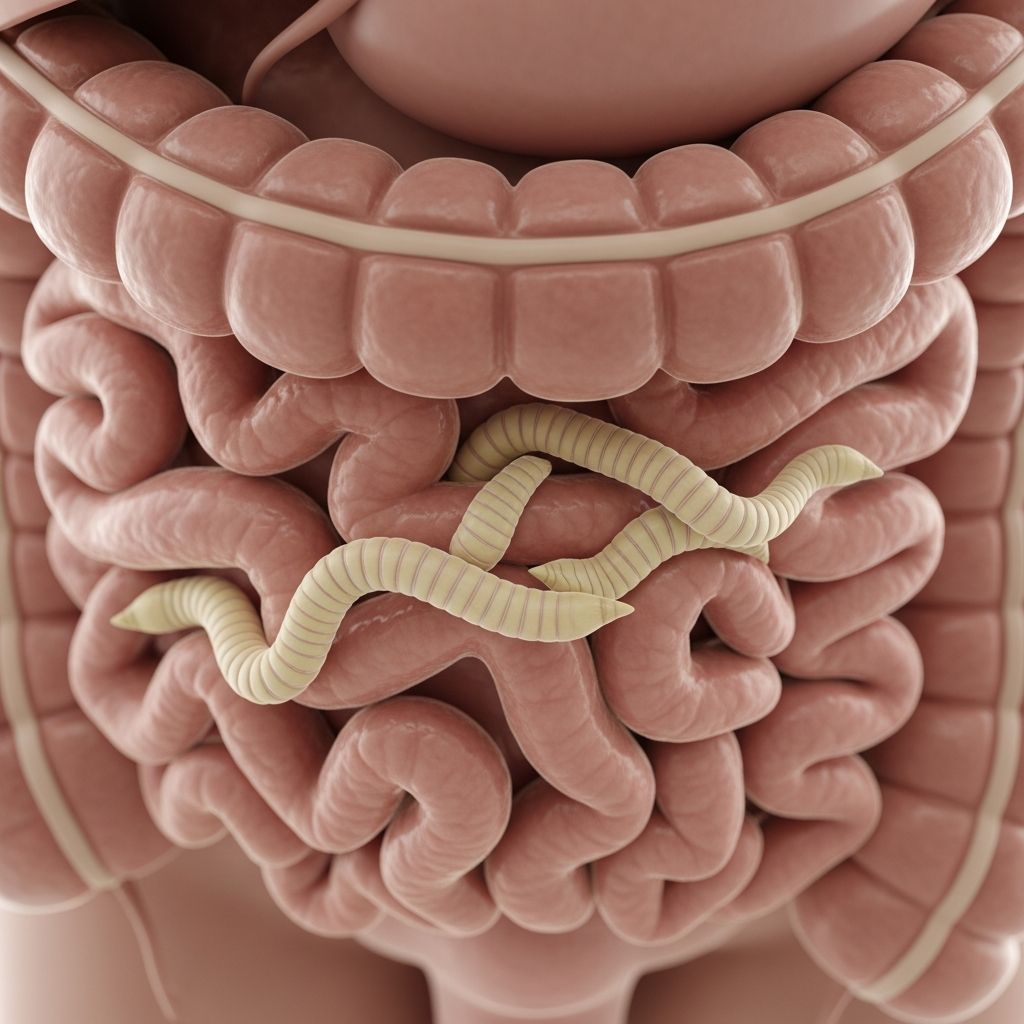
Ascariasis is an infection caused by a type of roundworm that lives in the intestines and is common in areas where sanitation and access to clean water are limited. It can affect people of any age, but young children are especially vulnerable because they often play in soil and put their hands or objects in their mouths. Understanding how this infection spreads, what it looks like, and how it is treated can help parents act quickly and protect their families.
What Is Ascariasis?
Ascariasis is an intestinal infection caused by a large roundworm called Ascaris lumbricoides. These worms can grow to several inches in length and live in the small intestine, where they feed on nutrients from the child’s food. Over time, a heavy infestation can interfere with normal growth and lead to more serious problems if not recognized and treated.
The infection spreads through eggs passed in human stool (poop), which then contaminate soil, food, or water. When another person accidentally swallows the eggs, they hatch into larvae that travel through the body before settling in the intestines and maturing into adult worms.
How Children Become Infected
Children usually get ascariasis by swallowing microscopic eggs from contaminated environments. This is more likely to happen in communities where human waste is not properly disposed of or where untreated sewage is used as fertilizer. Kids who play outdoors, especially in bare soil, are at particular risk.
- Playing in dirt or sand that has been contaminated with human stool.
- Putting unwashed hands, toys, or objects into the mouth after playing outside.
- Eating raw or unwashed fruits and vegetables grown in contaminated soil.
- Drinking water that has not been properly treated or comes from unsafe sources.
What Happens Inside the Body?
Once a child swallows Ascaris eggs, they hatch in the intestines and release larvae. These tiny larvae do not stay put. They move through the intestinal wall into the bloodstream and travel to the lungs, where they can cause temporary breathing symptoms. After that, they are coughed up and swallowed again, returning to the intestines to become adult worms.
This journey through the body is why some children may have both breathing problems and stomach complaints during the course of infection. In light infections, the child may have no obvious symptoms at all, which is one reason ascariasis can spread silently in communities.
Common Signs and Symptoms in Kids
Many children with ascariasis feel completely well and show no clear signs of illness. When symptoms do appear, they can vary from very mild to quite severe, depending on the number of worms and where they are located in the body. Parents may first notice vague complaints such as stomachaches or changes in appetite.
Digestive and General Symptoms
- Intermittent belly pain or cramping, often around the middle of the abdomen.
- Bloating or a feeling of fullness after eating small amounts.
- Nausea, vomiting, or changes in bowel habits such as diarrhea.
- Loss of appetite, picky eating, or poor weight gain over time.
- Visible worms in the child’s stool or occasionally around the anus.
Breathing and Chest Symptoms
During the stage when larvae pass through the lungs, some children may develop temporary respiratory symptoms. These usually appear a week or two after infection and then improve as the larvae move on.
- Dry cough or wheezing that starts without a clear cold or allergy trigger.
- Shortness of breath, faster breathing, or chest tightness.
- Low-grade fever or feeling generally unwell.
Warning Signs of Complications
In rare cases, a large tangle of worms can block parts of the intestine or move into other organs. These situations are emergencies and need prompt medical attention. Parents should seek urgent care if any of the following appear:
- Severe, constant abdominal pain or a very swollen, tender belly.
- Persistent vomiting, especially if the child cannot keep down liquids.
- Worms emerging from the mouth or nose.
- Yellowing of the skin or eyes, intense upper belly pain, or dark urine.
- Sudden breathing distress, blue lips, or extreme lethargy.
Who Is Most at Risk?
Ascariasis is most common in tropical and subtropical regions, especially where access to toilets, handwashing facilities, and clean water is limited. However, adopted children, recent immigrants, or travelers from these areas may carry the infection even after moving to places with better sanitation. Crowded living conditions and poverty also increase the risk.
- Children aged 2 to 10, who are more likely to play in soil and put their hands in their mouths.
- Families living in rural or peri-urban areas where human waste may contaminate the environment.
- Households that rely on untreated water or use raw sewage or manure as fertilizer.
How Doctors Diagnose Ascariasis
In many cases, a doctor will suspect ascariasis based on a child’s symptoms, medical history, and potential exposure. Children who have lived in or traveled to areas where intestinal worms are common are more likely to be tested, even if their symptoms are mild. Finding a worm in stool or vomit is an obvious clue, but laboratory tests are still needed.
Typical Diagnostic Steps
- Stool examination: A small sample of stool is checked under a microscope for Ascaris eggs, which confirms the infection.
- Blood tests: Sometimes used to check for signs of infection, anemia, or nutritional problems.
- Imaging tests: In complicated cases, ultrasound, X-ray, or other imaging can help detect worm clumps in the intestines or bile ducts.
Overview of Treatment Options
Treatment for ascariasis usually involves short courses of medicines that kill the worms in the intestines. These drugs are called anthelmintics and are widely used around the world in both individual care and large-scale deworming programs. Once the worms die, they are passed out of the body in the stool over several days.
In straightforward cases, children often need only one dose or a brief series of doses, and most start to feel better within about a week. Doctors may repeat treatment after a certain period in high-risk areas to prevent reinfection and clear any worms that were too young to be affected by the first dose.
Medicines Commonly Used
| Medication | Typical Use | Notes for Parents |
|---|---|---|
| Albendazole | Frequently given as a single oral dose for uncomplicated infections. | Usually well tolerated; may cause mild stomach upset or headache. |
| Mebendazole | May be given as a single dose or over several days, depending on local guidelines. | Often used in school-based deworming programs in some countries. |
| Pyrantel pamoate | Sometimes used as an alternative option, including in younger children or certain situations. | Can cause mild nausea; always follow dosing instructions closely. |
When Surgery or Procedures Are Needed
Most children never need surgery for ascariasis. However, if a large mass of worms blocks the intestines or moves into narrow tubes like the bile ducts, advanced procedures may be required. Doctors may first try to relieve the blockage using endoscopic tools, and surgery is reserved for severe or complicated cases.
After any surgical or endoscopic treatment, children still need antiparasitic medicine to kill remaining worms and prevent further complications. Close follow-up helps ensure that growth and nutrition return to normal.
Possible Complications to Watch For
While many children experience only mild illness, ascariasis can lead to serious problems if large numbers of worms are present or if treatment is delayed. Complications may involve the intestines, liver, or pancreas, and they can become life-threatening without prompt care.
- Intestinal blockage: A clump of worms may block part of the small intestine, causing severe pain, vomiting, and a swollen abdomen.
- Malnutrition and growth problems: Chronic infections can interfere with how the body absorbs nutrients, contributing to poor weight gain and stunted growth.
- Liver and pancreas involvement: Worms that migrate into the bile ducts or pancreatic duct can trigger inflammation, infections, or intense upper abdominal pain.
Preventing Ascariasis at Home and in the Community
Prevention focuses on breaking the cycle of contamination and reinfection. Good hygiene, safe water, and proper disposal of human waste are the foundations of control. While some of these factors depend on community infrastructure, families can still take important steps every day.
Hygiene Habits for Children
- Teach children to wash their hands thoroughly with soap and clean water after using the toilet and before eating or handling food.
- Keep fingernails short and clean to reduce dirt and eggs getting trapped under the nails.
- Discourage thumb-sucking, nail-biting, and putting nonfood objects in the mouth.
Food and Water Safety
- Wash fruits and vegetables well, especially if they are eaten raw; peel or cook them when possible.
- Use safe, treated water for drinking, cooking, and brushing teeth.
- Avoid using untreated human waste as fertilizer for gardens or crops.
Environmental and Community Measures
- Use toilets or latrines for defecation and ensure children do not play near open sewage or drainage channels.
- Support school and community deworming programs recommended by local health authorities.
- Work with local leaders and health workers to improve sanitation and waste management.
Living With and Recovering From Ascariasis
With timely diagnosis and proper treatment, most children make a full recovery from ascariasis and return quickly to their normal activities. Parents may notice a gradual improvement in appetite, energy levels, and growth once the worms are cleared. In some cases, doctors may recommend repeat stool tests to confirm that the infection has resolved.
Children who live in areas where intestinal worms are very common may need periodic deworming as part of a broader public health strategy. Maintaining good nutrition, including adequate protein and essential vitamins, helps build resilience against the effects of infection.
Frequently Asked Questions (FAQs)
1. Can my child have ascariasis without any symptoms?
Yes. Many children with ascariasis feel completely well and do not show obvious signs of illness. The infection may only be discovered when worms appear in the stool or when routine testing is done in high-risk settings. This is one reason community screening and preventive deworming can be important in regions where the parasite is widespread.
2. Is ascariasis contagious from child to child?
Ascariasis does not spread through casual contact such as hugging, sharing toys, or sitting in the same classroom. Instead, it spreads when someone swallows eggs from contaminated soil, food, or water. However, poor hygiene practices within a household can allow eggs from one person’s stool to contaminate the environment and eventually infect others.
3. How long does treatment take to work?
Most antiparasitic medicines start killing worms within hours, and children often feel better within several days. Dead worms may be seen in the stool for a short period after treatment, which can be alarming but is a sign that the medicine is working. Parents should complete the full prescribed course and attend any recommended follow-up visits.
4. Should the entire family be treated if one child has ascariasis?
In households where exposure risks are high, doctors may consider treating more than one family member, especially if others have symptoms or live in the same environment. Decisions depend on local guidelines, the family’s history of travel or residence, and how common ascariasis is in the community. Parents should discuss the situation with their healthcare provider rather than giving over-the-counter deworming medicines without guidance.
5. Can ascariasis come back after treatment?
Treatment removes existing worms, but it does not prevent a new infection if a child is exposed to contaminated soil, food, or water again. Reinfection is common in areas where sanitation is poor and deworming programs are not consistent. That is why handwashing, safe food handling, and improved sanitation are just as important as medicines in controlling ascariasis.
6. When should I seek urgent medical care?
Parents should seek emergency care if a child with suspected or known ascariasis develops intense abdominal pain, nonstop vomiting, a very swollen or rigid belly, or signs of severe breathing difficulty. These can be signs of intestinal blockage or other serious complications. Trust your instincts—if your child appears very unwell or different from their usual self, it is safer to have them evaluated promptly.
Key Takeaways for Parents
- Ascariasis is a common intestinal worm infection in many parts of the world and often affects children.
- Mild infections may cause few or no symptoms, while heavier infections can lead to stomach pain, nutritional problems, or more serious complications.
- Diagnosis is usually confirmed with a stool test, and treatment involves short courses of antiparasitic medicine.
- Good hygiene, safe food and water, and proper sanitation are essential to prevent infection and reinfection.
- With prompt medical care, most children recover fully and return to healthy growth and development.