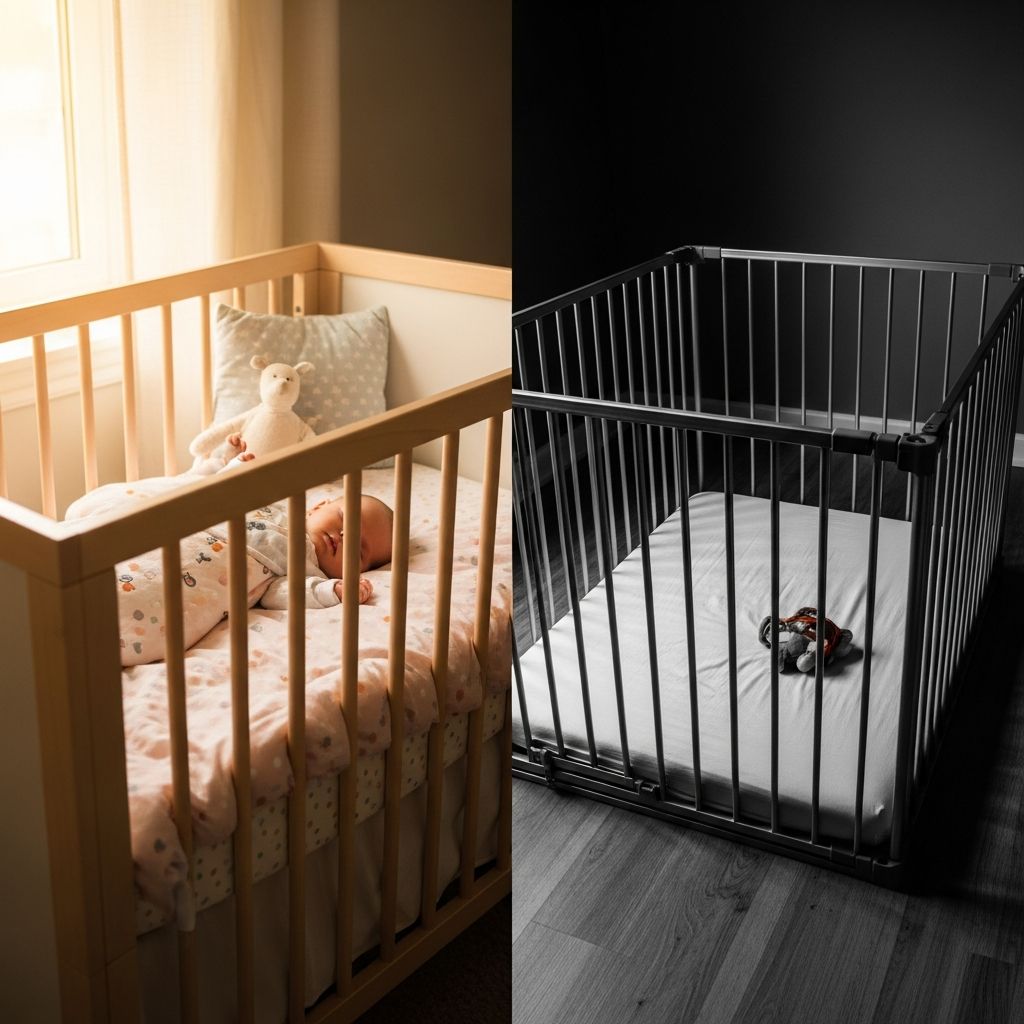
Recent social media trends have reignited debates about infant sleep environments, with a popular TikTok video labeling traditional cribs as ‘baby jails.’ This provocative term has divided parents, prompting questions about safety, autonomy, and modern parenting practices. While the video expresses one mother’s frustration with confinement, child safety experts emphasize that cribs are designed to protect infants from serious risks like Sudden Infant Death Syndrome (SIDS). This article examines the science behind crib use, addresses viral claims, and offers practical guidance for safe sleep.
Understanding the Viral ‘Baby Jail’ Phenomenon
The term ‘baby jail’ emerged from a TikTok clip where a parent critiques the restrictive nature of cribs, suggesting they limit a child’s natural movement and exploration. This resonates with attachment parenting advocates who prioritize co-sleeping or floor beds. However, such portrayals often overlook regulatory standards and decades of pediatric research supporting enclosed sleep spaces for newborns.
Social platforms amplify emotional narratives, but they rarely provide context on infant development stages. Newborns lack the motor skills and awareness to navigate open spaces safely, making structured environments essential in the first year.
Safe Sleep Fundamentals: What Experts Recommend
The American Academy of Pediatrics (AAP) outlines strict guidelines for reducing SIDS risk, recommending infants sleep on their backs in a bare crib or bassinet until at least 6 months, ideally one year. Key elements include a firm mattress, fitted sheet, and no pillows, blankets, or toys.
- Back sleeping: Lowers SIDS risk by 50-70% compared to stomach or side positions.
- Firm surface: Prevents suffocation from sinking into soft materials.
- Room-sharing without bed-sharing: Ideal for breastfeeding and monitoring without shared sleep surface risks.
These recommendations stem from extensive studies showing SIDS peaks between 1-4 months, underscoring the need for controlled environments.
Why Cribs Are Not ‘Jails’—The Safety Science
Cribs meet federal standards set by the Consumer Product Safety Commission (CPSC), ensuring slat spacing prevents entrapment (no more than 2 3/8 inches apart) and durable construction withstands use. Modern designs include adjustable mattress heights and breathable mesh sides for visibility.
| Feature | Purpose | Safety Benefit |
|---|---|---|
| Slat spacing | 2 3/8 inches max | Prevents head entrapment |
| Firm mattress | High-density foam/core | Reduces rebreathing CO2 |
| No drop-side rails (post-2011) | Fixed sides only | Eliminates collapse hazards |
| Greenguard certification | Low VOC materials | Minimizes chemical exposure |
Far from punitive, these features create a protective barrier against falls, rolling off edges, and overheating—common SIDS contributors.
Risks of Alternatives Promoted in Viral Videos
Many TikTok-inspired setups like floor beds, nests, or adult beds pose documented dangers. The AAP warns against bed-sharing due to overlay (adult rolling onto baby), entrapment in bedding, and increased SIDS odds by 2-5 times.
- Floor beds: Risk of rolling onto cold floors or away from parental view.
- Nest-like pods: Soft sides can cause suffocation; not AAP-approved.
- Co-sleeping: Hazardous with smokers, alcohol, or fatigue in the home.
A 2023 study in Pediatrics found room-sharing reduces SIDS by 50% without bed-sharing risks, validating crib-centric approaches.
Infant Development and the Need for Boundaries
During the first 12 months, babies achieve milestones like rolling (4-6 months), sitting (6-8 months), and standing (8-10 months). Cribs provide a secure space for practicing these without injury from falls or access to hazards. Pediatricians note that ‘free movement’ claims ignore developmental readiness—premature autonomy can lead to frustration or accidents.
By 12-18 months, transitioning to a toddler bed may be appropriate, but only after safety-proofing the room (gate doors, anchor furniture, remove cords).
Parenting Perspectives: Balancing Instinct and Evidence
Critics of cribs often cite intuitive parenting or cultural practices where families co-sleep safely. While valid in low-risk contexts, U.S. data shows higher SIDS rates in bed-sharing households. Parents can blend approaches: use a bedside bassinet for closeness, then crib for independent sleep training.
Surveys indicate 60% of parents face sleep battles; evidence-based routines (consistent bedtime, white noise) outperform improvised setups.
Choosing the Right Crib: Buyer’s Guide
Select CPSC-certified cribs convertible to toddler beds for longevity. Budget options start at $150; premium models with teething rails reach $500. Always check recalls via CPSC.gov.
- Verify JPMA seal for third-party testing.
- Test stability: Shake vigorously.
- Ensure mattress fit: Less than 2 fingers’ gap.
- Opt for non-toxic finishes.
Common Myths About Crib Sleeping Debunked
- Myth: Babies hate cribs innately. Fact: Association builds through soothing routines; most adapt by 3-4 months.
- Myth: Cribs cause flat head. Fact: Tummy time prevents plagiocephaly; alternate head position.
- Myth: Expensive cribs are safer. Fact: Compliance matters more than price.
Frequently Asked Questions (FAQs)
Is it safe to let my baby sleep in a crib with a sleep sack?
Yes, wearable blankets like sleep sacks are AAP-recommended as safe alternatives to loose blankets, maintaining warmth without suffocation risk.
When can I transition from crib to toddler bed?
Around 2-3 years or when your child climbs out repeatedly. Use a low floor mattress with bedrails initially.
What if my baby cries in the crib—should I always pick them up?
Ferber-style methods encourage self-soothing after brief checks; consult your pediatrician for personalized advice.
Are mesh cribs safe?
Breathable mesh sides are safe if standards-compliant, improving airflow and visibility, but ensure no zipper failures.
Does co-sleeping increase breastfeeding success?
It can facilitate night feeds, but use a separate sleep surface to mitigate risks.
Building Healthy Sleep Habits from Day One
Establish a calming routine: dim lights, feed, swaddle, white noise. Track sleep via apps, aiming for 14-17 hours newborn total, consolidating to 12-14 hours by 6 months. Consistency fosters security, countering ‘jail’ perceptions with positive associations.
For multicultural families, adapt safely—many global practices align with AAP when modified (e.g., firm co-sleeper attachments).
The Bigger Picture: Social Media’s Role in Parenting
Viral content drives engagement but often prioritizes views over verification. Parents should cross-reference influencers with AAP, CDC, or NIH resources. Trends like ‘baby jail’ highlight valid autonomy desires but risk downplaying evidence-based protections.
Empowerment comes from informed choices: cribs aren’t jails; they’re evidence-backed sanctuaries for growth.
References
- Safe Sleep Recommendations — American Academy of Pediatrics. 2022-10-24. https://publications.aap.org/pediatrics/article/150/1/e2022057990/188304/Sleep-Related-Infant-Deaths-Updated-2022
- Crib Safety Tips — Consumer Product Safety Commission. 2024-03-15. https://www.cpsc.gov/s3fs-public/CribInformationSheet.pdf
- Room-Sharing and SIDS Risk — Centers for Disease Control and Prevention. 2023-07-12. https://www.cdc.gov/sids/about.htm
- Infant Sleep Position and SIDS — National Institutes of Health (PubMed). 1992-04-09 (foundational, validated in recent meta-analyses). https://pubmed.ncbi.nlm.nih.gov/1373548/
- Bedsharing Risks Meta-Analysis — Pediatrics Journal (AAP). 2023-05-01. https://doi.org/10.1542/peds.2022-060277