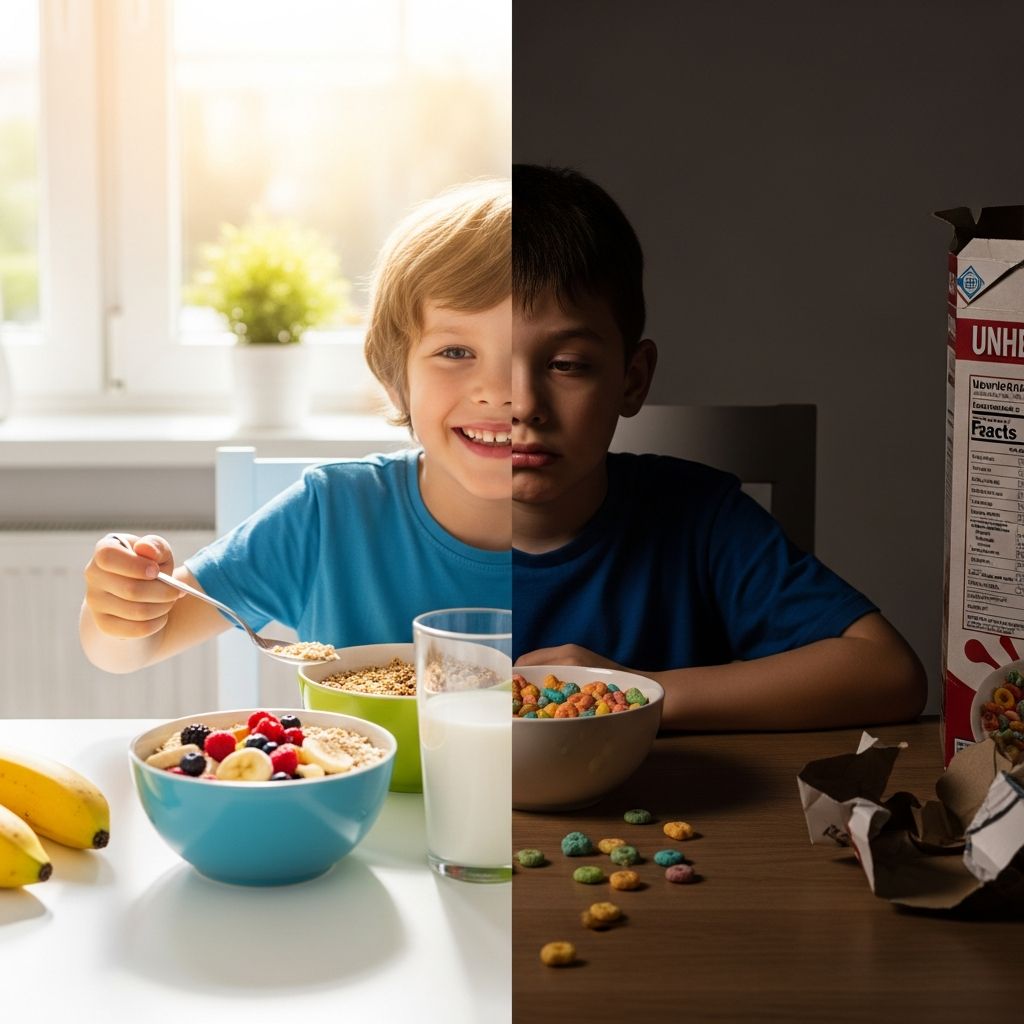
Breakfast sets the tone for a child’s day, fueling energy, focus, and growth. Among quick options, ready-to-eat cereals (RTEC) dominate grocery shelves, promising convenience and nutrition. But are they truly beneficial for young eaters, or do they mask health risks? This article dives deep into the science, separating hype from reality to empower parents with informed choices.
The Power of Breakfast in Child Development
Eating breakfast regularly links to key advantages for children. Studies show it enhances memory, boosts test scores, sharpens attention, curbs irritability, supports healthy weight, and improves overall nutrient intake. Kids who skip breakfast often face higher obesity risks and poorer academic performance.
Why does breakfast matter? It replenishes glucose stores after overnight fasting, stabilizing blood sugar for better cognitive function. For growing bodies, it delivers essential macros like carbs for energy and proteins for repair. RTEC fits busy mornings, comprising up to 50% of kids’ breakfasts under age 18.
- Academic gains: Better focus and grades from sustained energy.
- Weight management: Reduced overeating later in the day.
- Nutrient boost: Opportunity to include dairy, fruits, and grains.
However, quality trumps mere consumption. Not all breakfasts deliver these perks equally.
Unpacking Cereal’s Nutritional Profile
Many children’s cereals pack high sugar, refined grains, and sodium, raising red flags. A global analysis of RTEC found median sugar per serving highest in US products at 10g, versus 7.7–9.1g elsewhere. Fat and saturated fat levels vary, with US and Canadian options showing 60–120% more sodium than Australian or UK counterparts.
Refined grains spike blood sugar rapidly due to high glycemic index, potentially leading to crashes and hunger soon after. Added sugars contribute to excessive calorie intake without satiety, linking to obesity and metabolic issues over time.
| Nutrient | Typical High-Sugar Cereal (per serving) | Low-Sugar Whole Grain (per serving) |
|---|---|---|
| Sugar | 11–12g | 1–4g |
| Fiber | <2g | 5g+ |
| Sodium | 200mg+ | <150mg |
| Whole Grains | Minimal | Primary ingredient |
Kids often exceed serving sizes—61g for sugary vs. 35g for low-sugar—amplifying intake. In Australia, 38% of kids ate high-sugar cereals (≥15% sugar), accounting for 22% of daily energy.
Fortification: Boost or Overload?
Cereals boast fortification with iron, B vitamins, zinc, and more, aiding kids short on grains. Yet, adult-based labels mislead. A 2014 Environmental Working Group study revealed millions of children exceed vitamin A, zinc, and niacin limits from cereal alone.
One serving (¾–1 cup) can supply over 35% daily zinc needs, risky in balanced diets. Excess vitamins may accumulate, especially fat-soluble ones like A, potentially harming health. Parents should assess total diet with pediatricians before relying on fortified foods.
- Pros: Fills gaps in iron, folate for anemia prevention.
- Cons: Overconsumption risks nutrient imbalances.
- Tip: Variety prevents excess from any single source.
Sugar’s Lasting Impact on Young Bodies
Excess added sugar from cereal elevates cardiovascular disease and type 2 diabetes risks. Surpassing 13% daily calories from added sugar (65g on 2000kcal diet) hikes CVD mortality by 39%. One sugary bowl adds to the USDA’s 50g limit.
High-sugar RTEC targeted at kids score poorly on health metrics like UK’s Nutrient Profiling System, deeming many ‘less healthy’. Low-GI alternatives improve blood sugar, lipids, and weight control.
Long-term, habitual high sugar fosters poor eating patterns, under-nutrition, or obesity by displacing nutrient-dense foods.
How to Pick Winning Cereals for Your Kids
Navigate aisles wisely:
- Scan ingredients: Whole grains first (oats, bran); limit sugar to <5g/serving.
- Check labels: ≥3g fiber, <200mg sodium, minimal saturated fat.
- Avoid gimmicks: ‘Natural’ or ‘fun shapes’ often hide sugar.
- Test taste: Kids accept low-sugar with fruit toppings.
Opt for unsweetened oats, bran flakes, or shredded wheat. Pair with milk, nuts, berries for balance.
Building Superior Breakfast Alternatives
Cereal isn’t the only path. Whole foods shine:
- Oatmeal: High-fiber, customizable with fruits/nuts.
- Eggs: Protein-packed for satiety.
- Smoothies: Veggies, yogurt, fruits blended fast.
- Yogurt parfaits: Greek yogurt, granola, berries.
- Whole grain toast: Avocado, nut butter, banana.
These provide steady energy sans spikes. Prep overnight oats or muffins for chaos-proof mornings.
Age-Specific Breakfast Strategies
Toddlers (1–3 years)
Focus soft textures, iron-rich foods. Small servings prevent choking; mix cereal with purees if needed.
Preschoolers (4–6 years)
Involve in choices to build habits. Fun shapes from whole grains okay occasionally.
School-Agers (7–12 years)
Emphasize fuel for learning. Protein + fiber combos sustain till lunch.
Teens (13+ years)
Address growth spurts with calcium, protein. Low-GI curbs snack cravings.
Practical Tips for Busy Families
Mornings rush? Batch-prep muffins, hard-boil eggs. Set cereal rules: low-sugar only, topped healthily. Track intake weekly for balance.
Consult dietitians for personalized advice, especially if supplements are considered.
Frequently Asked Questions
Is any cereal healthy for kids?
Yes, whole grain, low-sugar (<5g/serving), high-fiber options paired with milk and fruit qualify as nutritious.
How much cereal is too much?
Stick to label servings (typically 30–40g dry). Kids often pour double, spiking sugar/vitamin intake.
Can fortified cereals replace multivitamins?
No—over-fortification risks exist in balanced diets. Check total intake with professionals.
What if my child refuses non-sugary cereal?
Gradually mix low-sugar with favorites, add sweet toppings like bananas. Exposure builds acceptance.
Does organic cereal mean healthier?
Not always—still check sugar and grains. Organic avoids pesticides but nutrition hinges on formulation.
Empowering Lasting Healthy Habits
Cereal can fit a nutritious breakfast if chosen astutely, but variety reigns supreme. Prioritize whole foods, read labels, and model balance. These steps nurture thriving kids amid modern hustle.
References
- Fortified Cereal Could Pose Risk to Kids — UMass Memorial Health. 2014. https://www.ummhealth.org/simply-well/fortified-cereal-could-pose-risk-to-kids
- The nutritional content of children’s breakfast cereals — NIH/PMC. 2023-05-15. https://pmc.ncbi.nlm.nih.gov/articles/PMC10200571/
- What’s the scoop: cereal for breakfast — Pediatric Associates Online. N/A. https://www.pediatricassociatesonline.com/whats-the-scoop-cereal-for-breakfastedf37508
- Breakfast Cereals: Healthy or Unhealthy? — Healthline. 2023. https://www.healthline.com/nutrition/are-breakfast-cereals-healthy
- The health effects of sugary breakfast cereals — UND Today. 2024-08. https://blogs.und.edu/und-today/2024/08/und-in-the-conversation-the-health-effects-of-sugary-breakfast-cereals/