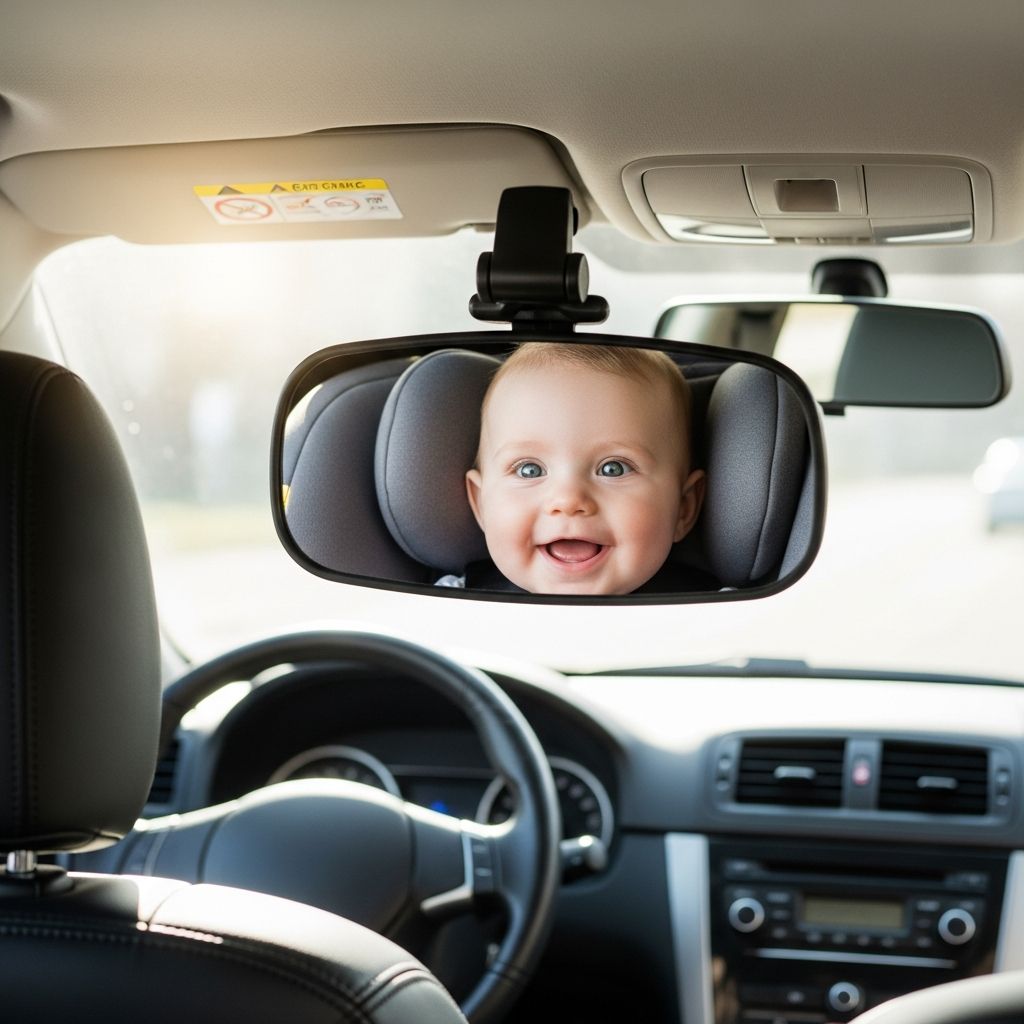
Baby car seat mirrors promise peace of mind: glance up, see your rear-facing baby’s face, and keep driving with confidence. Yet many child passenger safety experts worry that these mirrors may introduce new hazards, especially around driver distraction and loose objects in the car.
This guide explains how baby car seat mirrors work, what risks they might pose, and what to consider before buying or using one. It also offers practical safety tips and alternatives so you can make a thoughtful decision that fits your family’s needs.
Why Parents Love Baby Car Seat Mirrors
Rear-facing seats are the safest way for infants and toddlers to ride, but they make it hard for parents in the front to know what is going on in the back. A baby car seat mirror solves this by reflecting the baby’s image into the driver’s rearview mirror.
For many parents, the appeal is emotional as much as practical: seeing that a baby is breathing, comfortable, and not slumped forward can feel reassuring on long drives or solo trips. This sense of connection can reduce anxiety, especially during the newborn months when every whimper or silence feels urgent.
How Baby Car Seat Mirrors Are Designed
Most baby car seat mirrors are mounted on the rear-seat headrest, facing the child’s rear-facing seat, and are angled so the driver can see the reflection through the main rearview mirror. Many are convex to offer a wider viewing angle, and some can rotate 360 degrees on a ball-and-socket joint.
Common design features include shatter-resistant plastic instead of glass, soft or padded frames, and adjustable straps or buckles to secure the mirror tightly to the headrest. Some models emphasize light weight and flexible materials to reduce injury risk if they become loose in a crash.
Main Safety Concerns You Should Know
Critics of backseat baby mirrors focus on two primary concerns: they can turn into projectiles in a collision and they may tempt drivers to spend too much time looking at the baby instead of the road. Both issues involve low-probability events, but the consequences could be serious.
Complicating matters, there are no specific federal crash-safety standards for baby car mirrors, and published data documenting injuries directly attributed to mirrors are scarce. That leaves families and experts weighing theoretical risk against practical benefits without clear-cut research to settle the debate.
Projectile Risk: What Happens in a Crash?
Any loose item in a vehicle—a water bottle, toy, or phone—can become a projectile during a sudden stop or collision. A mirror that detaches from the headrest could travel forward and strike a child or other passenger, especially if it is heavy or has sharp edges.
The actual injury risk depends on factors such as crash speed, the mirror’s weight, how firmly it was attached, and where it hits. Lightweight mirrors with soft, padded frames are generally considered less worrisome than heavy, rigid ones, but they still add one more object that might move in a crash.
Driver Distraction: The Bigger Issue
Many safety experts argue that the most important risk from baby mirrors is not impact, but distraction. Looking at the mirror, especially for more than a quick glance, can take a driver’s eyes off the road at precisely the wrong moment.
Even a few seconds of diverted attention can be long enough to miss a braking car or a pedestrian, and the more anxious a parent feels, the more likely they may be to over-check the mirror. Some experts therefore advise skipping mirrors altogether to remove this temptation, particularly for drivers who already struggle with distraction.
Is There Research on Mirror-Related Injuries?
Despite the intensity of online debate, documented cases of injuries directly caused by baby car seat mirrors are difficult to find in public reports. Some child passenger safety professionals note a lack of recorded mirror-related fatalities and only theoretical scenarios for major injuries.
However, the absence of data does not prove that a risk is zero; it often reflects how injury databases are structured and what details are recorded. As a result, many safety recommendations focus on risk reduction—choosing better designs and using them cautiously—rather than declaring mirrors completely safe or unsafe.
Weighing Benefits and Risks as a Parent
Parents are left to balance different concerns: the comfort of visually checking on the baby versus the possibility of more distraction, and the peace of mind from monitoring positioning versus the small chance of a mirror-related impact in a crash. These tradeoffs feel different for each family.
For some caregivers, the stress of not being able to see the baby at all might itself lead to more risky behavior, such as turning around while driving. For others, simply knowing that a mirror is present might encourage unnecessary glances that gradually erode focus on the road.
Key Safety Principles for Any Decision
Regardless of whether you choose to use a mirror, core car seat safety rules always matter more: use the right seat for your child’s age and size, install it correctly, and follow the manufacturer’s directions for harness fit and recline angle. These basics reduce the most significant injury risks in crashes.
It is also important to keep the car interior as clutter-free as possible, securing loose items and storing heavier objects low and away from passengers. This habit protects your child from a wide range of potential projectiles, not just mirrors.
Features to Look For If You Buy a Mirror
If you decide that a baby car seat mirror is right for your family, focus on models designed with safety in mind. Manufacturers increasingly advertise shatter-resistant materials, soft edges, and stronger attachment systems to address common concerns.
- Lightweight construction to reduce potential impact force if the mirror comes loose.
- Soft, padded frame or fabric edging instead of hard, sharp plastic.
- Shatter-resistant or acrylic mirror surface rather than glass.
- Dual-strap or buckle systems that wrap securely around the headrest.
- Stable ball joint that resists drooping and holds the set angle.
Safe Installation and Use Tips
Proper installation is as important as product choice. A poorly attached mirror, even if well-designed, can defeat the purpose of its safety features by detaching under relatively minor forces.
- Only attach the mirror to a solid, adjustable headrest as directed by the manufacturer.
- Tighten straps so the mirror does not wobble or slide when pulled firmly.
- Position the mirror high enough to avoid interfering with the car seat or harness.
- After installation, give the mirror a strong tug to check that it stays put.
- Recheck tightness periodically, especially after adjusting the headrest or cleaning the car.
How to Limit Distraction If You Use a Mirror
Once a mirror is installed, the next challenge is using it without letting it steal attention from driving. Many experts suggest treating the mirror like any other glance at an instrument panel—brief, infrequent, and never during complex traffic situations.
- Set clear personal rules, such as only checking the mirror at red lights or on straight, low-traffic stretches.
- If the mirror tempts you to stare when the baby fusses, consider removing it for a while and reassessing later.
- Use audio cues first: listen for normal breathing and sounds before feeling the urge to look.
- Plan regular stops on longer drives to check the baby directly instead of relying on constant visual monitoring.
Safer Alternatives to Backseat Mirrors
If the risks of a mirror do not feel worth it to you, there are other strategies for keeping tabs on a rear-facing baby. Some avoid adding objects near the child while still giving caregivers information and reassurance.
- Have another adult or older child sit next to the baby on longer drives when possible.
- Schedule more frequent breaks so you can visually check the baby’s position and comfort while parked.
- Use well-fitted car seats and newborn inserts that maintain an appropriate head and neck position, reducing the need for constant monitoring.
- Rely on sound as your primary cue and resist the urge to turn around while the vehicle is moving.
Quick Comparison: Mirror vs No Mirror
The choice to use a baby mirror is rarely black and white. The table below outlines common perceived pros and cons to help clarify your own priorities. These points reflect typical expert commentary and parent experiences rather than formal risk calculations.
| Option | Potential Advantages | Potential Drawbacks |
|---|---|---|
| Use a baby mirror | May reassure anxious caregivers; allows quick visual checks of positioning, vomiting, or distress without turning fully around. | Adds a possible projectile; may encourage distracted driving if the driver checks too often or stares. |
| No mirror | Eliminates mirror projectile risk and one source of visual distraction; simplifies the backseat area. | Some parents feel more anxious and may be tempted to twist or turn around, which is also unsafe while driving. |
FAQs About Baby Car Seat Mirrors
Are baby car seat mirrors legal?
In most places, baby car seat mirrors are treated as aftermarket accessories rather than safety devices and are generally allowed, though they do not go through the same regulatory testing as car seats themselves.
Because they are not part of the certified restraint system, parents are responsible for installing and using them in a way that does not contradict car seat manuals or vehicle instructions.
Do car seat manufacturers approve mirrors?
Many car seat manuals do not specifically mention mirrors, and some caution against adding aftermarket products that were not tested with the seat, such as extra padding or accessories attached to the shell.
Some brands sell their own mirrors or related accessories, but this does not mean that every mirror is compatible with every seat, so it is important to read instructions for both products carefully.
Can a mirror prevent breathing problems or positional asphyxia?
Experts note that correctly sized, well-installed car seats and inserts are the main protection against positioning issues that might compromise breathing; mirrors do not prevent these problems but may help caregivers notice them.
Reports of serious breathing difficulties in properly used car seats are rare, so monitoring should focus on good fit and recline angle, plus sensible driving breaks, rather than assuming a mirror will serve as a safety device on its own.
What should I do if my baby cries and I want to look?
If your baby starts crying while you are driving, the safest response is usually to continue focusing on the road, then pull over in a safe location to check on them rather than turning around or staring into a mirror.
Planning ahead with soothing techniques—feeding before longer trips, using white noise, or offering safe softness like a blanket within car seat guidelines—can reduce distress and lessen the urge to check the mirror constantly.
Should I remove the mirror when someone else is driving?
If a driver is easily distracted, new to baby transport, or particularly anxious, removing the mirror for that trip may be a wise choice to keep the focus on the road, especially in busy traffic or bad weather.
Families can agree on house rules about mirror use so that every caregiver, including grandparents or babysitters, understands when and how the mirror should be used or taken down.
Practical Takeaways for Busy Parents
Baby car seat mirrors sit in a gray area of child passenger safety: they can be convenient and emotionally reassuring, yet they carry the potential for both projectile risk and distraction behind the wheel. Current information suggests that these risks are relatively small but not negligible.
The best approach is to treat a mirror as optional and to prioritize fundamentals: correct car seat use, a clutter-free vehicle, and focused, undistracted driving. With those in place, you can make a thoughtful, informed choice about whether a mirror fits your comfort level and your child’s needs.