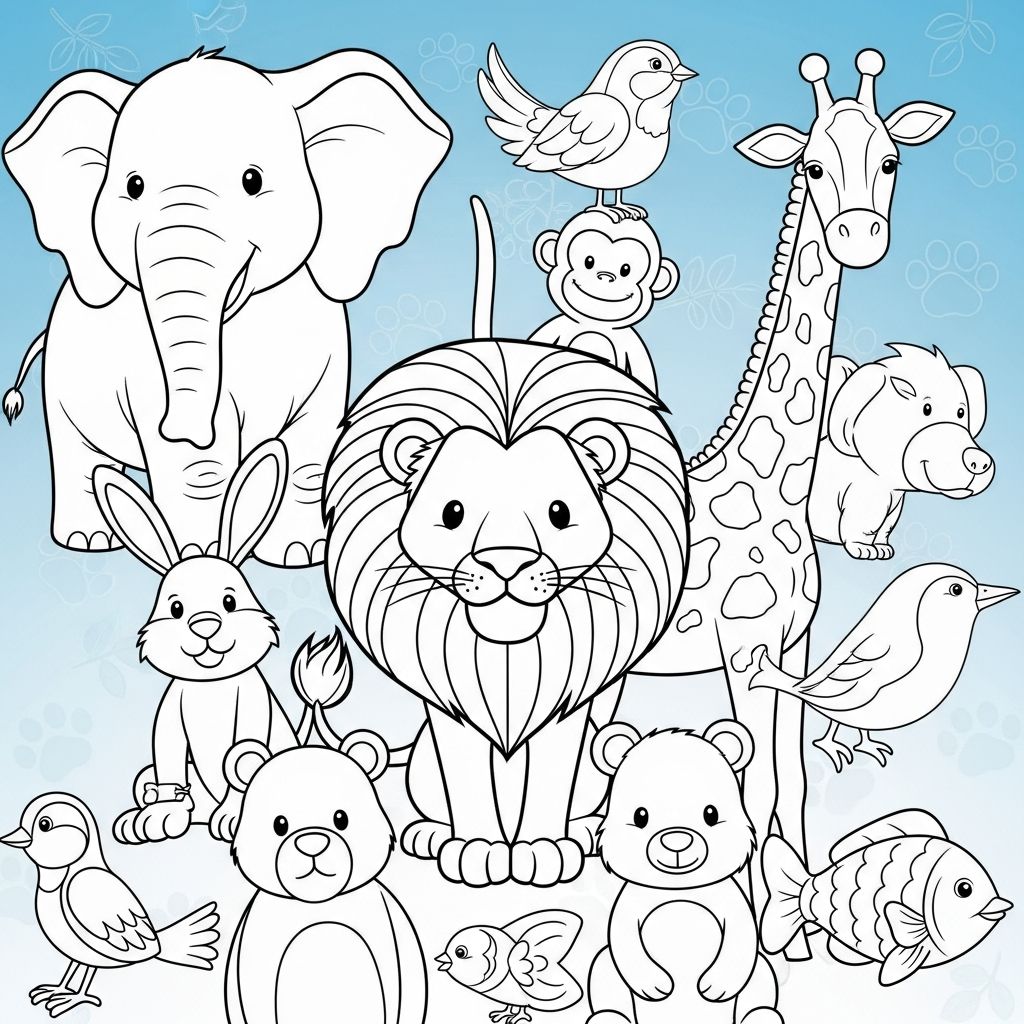
Printable animal coloring pages give kids a relaxing, screen-free way to play while quietly building creativity, focus, and early learning skills. They are easy for parents to set up, loved by most children, and can be reused in countless educational activities.
This guide walks you through the different kinds of animal coloring sheets you can offer, how to turn them into simple learning moments, and practical tips to organize and use them at home, in classrooms, or on the go.
Why Animal Coloring Pages Are So Powerful for Kids
Coloring may look simple, but research and expert guidance show clear benefits for children’s development.
- Fine motor practice: Gripping crayons and staying in the lines helps strengthen the small muscles in hands and fingers.
- Hand–eye coordination: Children learn to control where each mark goes as they color around shapes and details.
- Focus and patience: Staying with one page until it is finished builds concentration and persistence.
- Stress relief and calm: Repetitive coloring motions can help kids relax and process emotions, similar to how adult coloring reduces stress.
- Creativity and self-expression: Children choose colors, patterns, and details, making each picture uniquely theirs.
When the pictures feature animals, you also open the door to conversations about nature, habitats, and caring for living creatures.
Types of Animal Coloring Pages Kids Enjoy
Offering a mix of themes keeps coloring time fresh and supports different interests and age levels.
1. Friendly Farm Animals
Farm-themed sheets usually show familiar animals in simple settings, which is ideal for toddlers and preschoolers.
- Cows, pigs, chickens, horses, sheep, and goats
- Large shapes and fewer tiny details for little hands
- Great prompts for sounds and simple vocabulary (“moo,” “oink,” “barn,” “hay”)
2. Wild Jungle and Safari Creatures
Pages with wild animals invite questions and curiosity about the wider world.
- Lions, tigers, elephants, giraffes, zebras, monkeys
- Opportunity to talk about continents, climate, and habitats
- Fun to pair with maps, books, or short nature videos
3. Ocean and Water-Dwelling Animals
Under-the-sea scenes work well for imaginative color choices and discussion about water safety and conservation.
- Fish, dolphins, whales, sea turtles, seahorses, crabs, and octopus
- Backgrounds that invite blues, greens, and creative textures
- Simple way to introduce ideas like pollution and protecting oceans
4. Woodland and Forest Friends
Forest animal pages connect easily to local parks, hikes, or backyard wildlife.
- Deer, foxes, rabbits, squirrels, owls, bears
- Seasonal coloring with autumn leaves, snow, or spring flowers
- Great tie-in to conversations about winter, hibernation, or migration
5. Pets and Everyday Companions
Domestic animals are often children’s favorites because they feel familiar and comforting.
- Cats, dogs, hamsters, birds, fish, and reptiles
- Chance to talk about responsibility, feeding, and gentle handling
- Kids can color pages to resemble their own pets
6. Cute, Cartoon, and Fantasy Animals
Not every page has to be realistic. Cute or whimsical animals can spark storytelling and dramatic play.
- Baby animals with big eyes and soft lines
- Imaginary creatures, unicorn-like horses, or animals in costumes
- Perfect for making up names and short stories about each character
Learning Skills You Can Build While Kids Color
With a few thoughtful questions or added activities, animal coloring pages become simple teaching tools.
| Skill Area | How Coloring Helps | Simple Parent Tip |
|---|---|---|
| Language & Vocabulary | Kids learn animal names, body parts, colors, and descriptive words. | Ask, “What animal is this?”, “What sound does it make?”, “Can you find its tail?” |
| Cognitive Skills | They match colors, notice patterns, and compare sizes and shapes. | Invite them to sort finished pages by habitat, size, or number of legs. |
| Emotional Regulation | Coloring offers a calm, structured activity that can reduce stress and anxiety. | Use coloring as a quiet-time option after school or before bedtime. |
| Creativity | Children practice making choices and trying new ideas without pressure. | Encourage “rainbow animals” or imaginative patterns with no right or wrong answer. |
| Social Skills | Sharing supplies and talking about pictures supports cooperation and turn-taking. | Offer a shared bin of crayons and invite kids to compliment each other’s art. |
Age-Appropriate Ideas for Using Animal Coloring Pages
You can adapt the same printable sheets in different ways depending on your child’s age and stage.
For Toddlers (1–3 Years)
- Choose large, simple outlines with plenty of white space.
- Offer chunky crayons or washable markers for easier gripping.
- Name animals and colors out loud as your child scribbles.
- Focus on the experience, not on staying inside the lines.
For Preschoolers (3–5 Years)
- Introduce a wider variety of animals and habitats.
- Ask basic questions: “Where does this animal live?” “What does it eat?”
- Invite them to add simple backgrounds like grass, sun, or clouds.
- Practice early math by counting legs, spots, or stripes.
For Early Elementary (5–8 Years)
- Offer more detailed pages with patterns and backgrounds.
- Pair coloring with short nonfiction books about the same animals.
- Encourage shading, patterns, and creative color schemes.
- Use finished pages for simple writing prompts: “Write one fact about this animal.”
For Older Kids (8+ Years)
- Choose realistic or intricate designs to promote focus.
- Connect pages to science topics like food chains or ecosystems.
- Let them research the animal and color it accurately, then create a fact card.
- Invite them to design their own original animal coloring sheet for younger siblings.
Creative Ways to Use Finished Animal Coloring Pages
Instead of letting colored pages pile up, turn them into simple crafts and keepsakes.
- Mini books: Staple 4–6 related animals together to make a tiny “My Ocean Animals” or “My Farm Animals” book.
- Room decor: Frame a few favorite pages or string them on yarn as a gallery wall in a playroom.
- Learning cards: Cut out animals, glue them to cardstock, and write the names underneath for flashcards.
- Story starters: Ask your child to pick two finished animals and make up a story about how they met.
- Gifts for family: Have children color and sign a special page for grandparents or friends.
Practical Tips for Printing and Organizing Pages
With free printable animal coloring pages, a little planning goes a long way.
Printing Smart
- Print a small batch at a time to avoid wasting paper and ink.
- Use slightly thicker paper if your child presses hard or uses markers.
- Print backups of favorite designs so siblings can color the same animal.
Simple Storage Ideas
- Keep blank pages in a labeled folder or binder by theme (farm, ocean, jungle, pets).
- Place a few pages and crayons in a zipper pouch for travel or waiting rooms.
- Rotate which themes are available so the activity always feels fresh.
Making Coloring Time Peaceful and Screen-Free
Coloring can be a daily break from busy schedules and digital devices. Studies from health organizations suggest that calm, focused activities like coloring can help the brain relax and reduce stress responses, which benefits both kids and adults.
- Set aside a regular “quiet coloring” time, such as after school.
- Turn off TVs and tablets during this time to protect focus.
- Consider coloring alongside your child to model relaxation and creativity.
- Use soft background music or natural sounds if you like a little noise.
Frequently Asked Questions About Animal Coloring Pages
How often should my child color?
There is no strict rule, but many families find that 15–30 minutes a few times per week fits well into their routine. The goal is to keep coloring enjoyable rather than turning it into a chore.
Is coloring really educational, or just for fun?
Coloring is both. Experts note that coloring and drawing support fine motor development, attention, and creativity, all of which are important for school readiness and learning. When you add animal themes and simple questions, the activity also teaches vocabulary, science concepts, and social-emotional skills.
What if my child only scribbles or refuses to stay in the lines?
For young children, scribbling is a normal and valuable stage of development. Instead of focusing on neatness, celebrate effort and talk about the colors and animals on the page. Over time, control and precision will naturally improve with practice.
Are markers, crayons, or pencils best for animal coloring pages?
Each tool has strengths. Crayons are sturdy and great for younger kids learning grip. Colored pencils allow more detail for older children, while washable markers provide bold color but may bleed through thin paper. You can offer a mix and let children choose what feels comfortable.
How can I keep from running out of ideas?
Rotate themes, pair coloring with books or short documentaries about animals, and occasionally add new challenges such as “color using only warm colors” or “add a background showing where this animal lives.” Small twists keep the activity fresh without needing constant new supplies.
References
- The Benefits of Coloring and Drawing — Scholastic Parents. 2021-03-23. https://www.scholastic.com/parents/school-success/learning-toolkit-blog/benefits-coloring-and-drawing.html
- Benefits of Coloring — Handy Handouts, Super Duper Publications. 2019-01-01. https://www.handyhandouts.com/handout/554
- The Best Developmental Benefits of Coloring Books for Kids — Montessori Academy of Hollywood. 2022-05-10. https://www.montessorihollywood.org/blog/benefits-of-colouring-books-for-kids
- The Benefits of Coloring and Drawing for Kids — Scholastic. 2020-04-15. https://www.scholastic.com/parents/school-success/learning-toolkit-blog/benefits-coloring-and-drawing.html
- Mental Health Benefits of Coloring — Mayo Clinic Health System. 2021-09-07. https://www.mayoclinichealthsystem.org/hometown-health/speaking-of-health/coloring-is-good-for-your-health
- Educational Benefits of Animal Colouring Books for Kids — Coloring Books Direct. 2023-02-01. https://www.coloringbooksdirect.com/educational-benefits-of-animal-colouring-books-for-kids-more-than-just-fun/
- 15 Powerful Benefits of Coloring Pages for Kids Animals’ Learning — Little Avengers. 2023-04-10. https://littleavengers.in/15-powerful-benefits-of-coloring-pages-for-kids-animals-download-free-pdf/