Allergies affect millions of teenagers, causing symptoms like sneezing, itching, wheezing, or digestive issues that disrupt daily life. Identifying specific triggers through reliable testing is crucial for effective management. This article delves into the primary methods of allergy testing designed for adolescents, explaining how they work, their benefits, limitations, and what teens can expect during the process.
Why Teens Need Allergy Testing
During teenage years, hormonal changes, new environments like school, and increased exposure to potential allergens can intensify or introduce new sensitivities. Common culprits include pollen, dust mites, pet dander, certain foods, and insect stings. Testing helps confirm diagnoses for conditions such as allergic rhinitis, asthma, eczema, or food intolerances, enabling targeted avoidance strategies, medications, or immunotherapy.
Healthcare providers recommend testing when symptoms persist despite basic treatments or involve severe reactions like anaphylaxis. A thorough medical history and physical exam precede any test to ensure appropriateness.
Primary Types of Allergy Tests
Several validated testing methods exist, each targeting different allergic responses. Skin-based tests are often first-line due to speed and cost-effectiveness, while blood tests serve as alternatives for those unable to undergo skin procedures.
Skin Prick Testing: The Gold Standard for Immediate Reactions
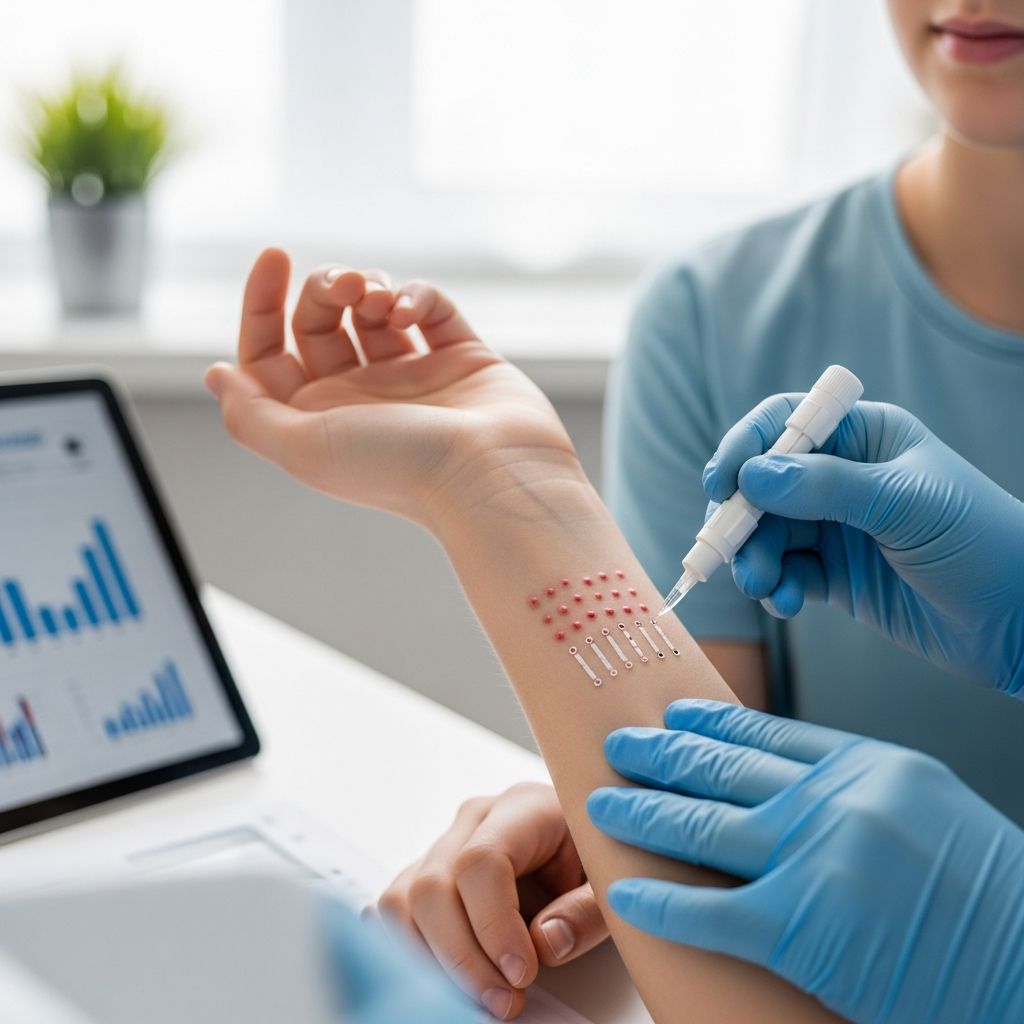
The skin prick test, also known as a puncture or scratch test, detects IgE-mediated (immediate) allergies to airborne substances, foods, or venoms. It involves placing diluted allergen extracts on the forearm (adults) or upper back (teens and children), then pricking the skin lightly with a lancet to introduce the substance into the dermis.
Results appear within 15-20 minutes as wheals—raised, red, itchy bumps—if positive. A positive control (histamine) confirms skin responsiveness, while a negative control (saline) rules out false positives. Up to 50 allergens can be tested simultaneously, making it efficient. Reliability is high, with sensitivity around 85-95% for inhalant allergies.
- Pros: Quick, inexpensive, highly accurate for type I hypersensitivity.
- Cons: Minor discomfort; affected by antihistamines or skin conditions.
Intradermal Skin Testing: For Enhanced Sensitivity
When prick tests are negative but suspicion remains high, intradermal testing injects a tiny allergen dose just under the skin’s surface. This amplifies sensitivity for detecting allergies to insect stings, molds, or medications but risks stronger reactions, so it’s performed cautiously.
Wheal size is measured after 15 minutes. Though more sensitive, it has higher false-positive rates, so allergists correlate results with history.
Patch Testing: Uncovering Delayed Allergies
For contact dermatitis from metals, fragrances, preservatives, or latex, patch testing evaluates type IV (delayed) hypersensitivity. Allergens in chambers are taped to the back for 48 hours, then read at 48-96 hours as T-cells trigger inflammation.
The European Standard Battery covers 34 common irritants, with sensitivity of 70-80%. Patients must avoid sweating or scratching during wear.
| Test Type | Allergens Tested | Timing | Accuracy |
|---|---|---|---|
| Skin Prick | Pollen, foods, pets | 15-20 min | High (85-95%) |
| Intradermal | Insects, molds | 15 min | Very sensitive |
| Patch | Metals, cosmetics | 48-96 hrs | 70-80% |
Blood Testing: ImmunoCAP and RAST
Serum IgE tests measure allergen-specific antibodies in blood, ideal for patients on antihistamines, with skin issues, or very young. Samples are sent to labs for analysis via ImmunoCAP (fluorescence enzyme immunoassay), quantifying IgE levels.
Though less sensitive than skin tests for inhalants, it’s quantitative and unaffected by medications. Results take days but provide precise values for immunotherapy dosing.
Specialized Challenges: Food and Drug Tests
Oral food challenges confirm true allergies or outgrown sensitivities. Under supervision, teens ingest increasing amounts of the suspect food over hours, monitored for reactions like hives or breathing issues. Double-blind challenges are gold standard but rare outside research.
Medication challenges test drug allergies similarly, starting with minuscule doses. These carry risks, so epinephrine and resuscitation equipment are ready.
Preparing for Your Allergy Test
Preparation ensures accuracy. Stop antihistamines (e.g., Benadryl, Zyrtec) 5-7 days prior for skin tests; oral steroids or tricyclics may interfere too. Apply numbing cream if anxious. On test day, wear loose clothing; avoid lotions or perfumes.
For patch tests, skip irritants and heavy exercise post-application. Blood draws require no special prep but fasting if combined with other labs.
Understanding Your Results
Positive results indicate sensitization but must align with symptoms—many have IgE to foods without reactions. Negative tests don’t fully rule out allergies if history suggests otherwise; repeat or challenges may follow.
Allergists grade wheals (e.g., 0-4+) or IgE levels (kU/L). Results guide avoidance, pharmacotherapy (antihistamines, inhalers), or sublingual immunotherapy.
Risks, Myths, and Unproven Tests
Tests are safe: skin pricks cause brief itching; systemic reactions are rare (<1%) with precautions. Myths include unproven methods like cytotoxicity, IgG food tests, or home kits, which lack validation and can mislead.
- Avoid: Supermarket screenings, muscle testing, provocation-neutralization.
- Stick to: Board-certified allergist-guided tests.
Living with Test Results: Management Strategies
Post-testing, create an action plan: Evade triggers (e.g., air purifiers for dust), carry epinephrine auto-injectors for severe allergies, or pursue desensitization. Track symptoms in a diary for refinements. Regular follow-ups monitor progress, especially as teens outgrow some allergies.
Immunotherapy builds tolerance via injections or tablets, effective for 80-90% with pollen or venom allergies long-term.
Frequently Asked Questions (FAQs)
Does allergy testing hurt?
Skin pricks feel like a quick pinch; numbing helps. Blood draws are standard venipuncture.
How accurate are these tests?
Skin prick: 85-95%; blood: slightly lower but reliable. Always interpret with clinical history.
Can I eat before testing?
Yes for most, but confirm with your doctor. Food challenges require fasting.
What if I’m on allergy meds?
Discontinue 5-7 days early for skin tests; blood tests unaffected.
Do teens outgrow allergies?
Many food allergies fade; inhalants persist. Challenges assess.
Empowering Teens in Allergy Care
Allergy testing demystifies symptoms, empowering teens to reclaim control. Consult allergists for personalized paths, combining tests with lifestyle tweaks for optimal health.
References
- Types of Allergy Tests for Kids — Brown University Health. 2023. https://www.brownhealth.org/centers-services/pediatric-respiratory-and-immunology-center/allergy-tests
- Prick, patch or blood test? A simple guide to allergy testing — PMC (NCBI). 2021-07-28. https://pmc.ncbi.nlm.nih.gov/articles/PMC8346756/
- Allergy Testing — American Academy of Allergy, Asthma & Immunology (AAAAI). 2024. https://www.aaaai.org/tools-for-the-public/conditions-library/allergies/allergy-testing
- Allergy Testing — MU Health Care. 2023. https://www.muhealth.org/conditions-treatments/ear-nose-and-throat/allergy/testing
- Allergy skin tests — Mayo Clinic. 2024-05-10. https://www.mayoclinic.org/tests-procedures/allergy-tests/about/pac-20392895
- Allergy Testing: Purpose, Types, Indications & Results — Cleveland Clinic. 2023. https://my.clevelandclinic.org/health/diagnostics/21495-allergy-testing