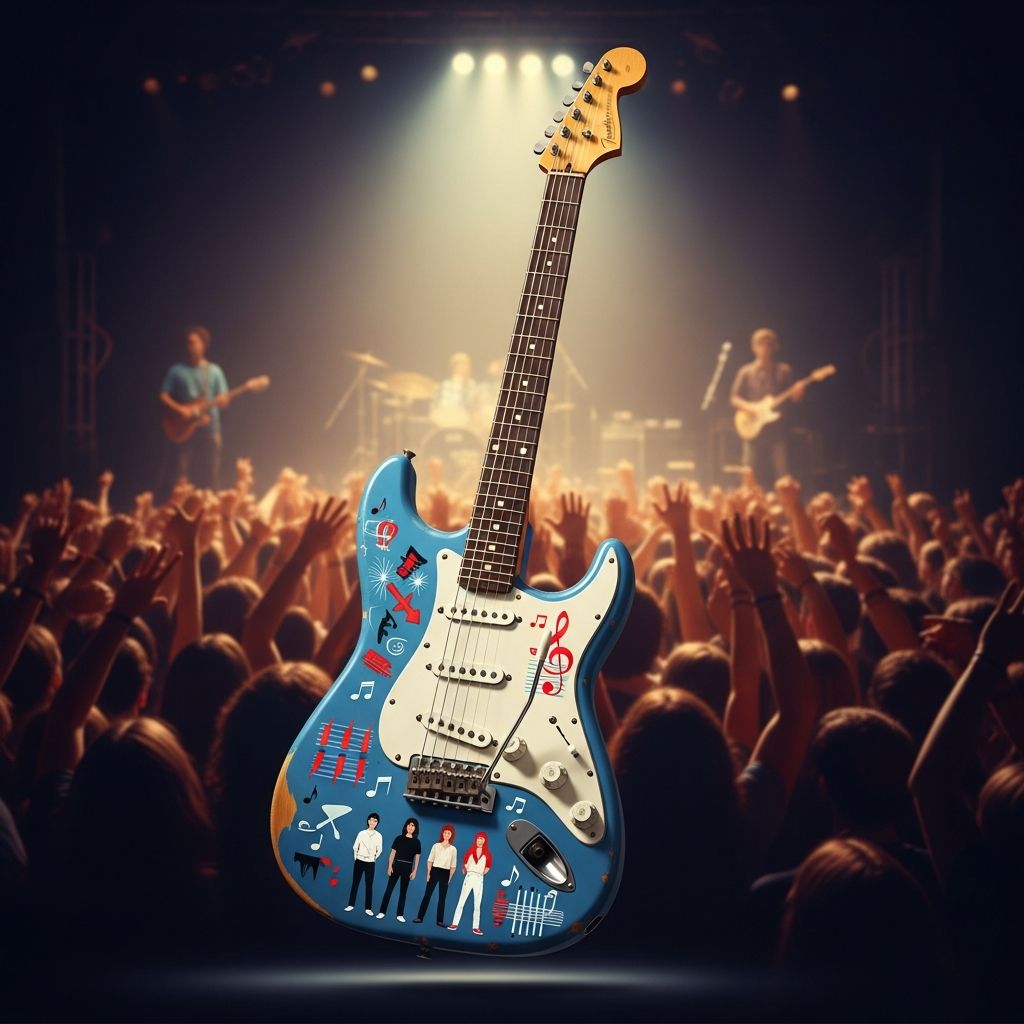
In 1994, a band of self-described misfits in cardigans and thick-rimmed glasses quietly released an album that would reshape how rock music could sound, look, and feel. Instead of leather jackets and brooding postures, Weezer brought awkward charm, huge hooks, and a surprising emotional punch, creating a record that bridged underground credibility and mainstream appeal.
The 1994 Rock Landscape Weezer Walked Into
The early 1990s rock world was dominated by grunge, with bands steeped in distortion, angst, and a distinctly heavy aesthetic. Audiences were used to hearing songs about alienation delivered with a scowl and a wall of noise. Into this space strolled Weezer, looking more like overachieving college students than rock stars, but armed with a very different blueprint for how guitar music could work.
Rather than chasing raw aggression, Weezer’s 1994 debut leaned into clean melodies, concise song structures, and lyrics that framed insecurity as something strangely heroic. The band’s look and sound sent a simple but radical message: you didn’t need to fit the archetype of a tortured rock icon to make music that mattered.
From Rehearsal Rooms to a Landmark Debut
Before their breakthrough, Weezer spent countless hours in rehearsal rooms refining their songs, balancing crunchy guitars with clear, singable vocal lines. These early efforts helped them build a sound that was both tight and deceptively simple, as if every chord change and harmony had been stripped of excess until only the most effective pieces remained.
The group’s evolution from local hopefuls to a signed band hinged on that combination of precision and personality. They were not the flashiest performers, but their dedication to structure—intros that grab attention, choruses that arrive on time, and bridges that actually go somewhere—gave their debut album the kind of cohesion many first efforts lack.
Why Those Songs Stick in Your Head
Weezer’s 1994 album is often remembered for its singles, but its real strength lies in how every track is built around a core melodic idea that refuses to leave your brain. Guitars, bass, and drums rarely compete for space; instead, they interlock to support a vocal line that carries the emotional weight of each song.
- Guitar parts toggle between arpeggiated intros and thick, down-stroked power chords that explode in the choruses.
- Bass lines shadow the guitar enough to feel powerful while slipping in small variations that keep the rhythm lively.
- Drums emphasize straightforward, driving beats, leaving room for the vocals to sit confidently on top of the mix.
This approach means that even listeners who barely pay attention to lyrics find themselves humming along after just a few plays. The songs are built for repetition without feeling disposable.
Hook-Driven Rock vs. Grunge Gloom
One of the reasons the album felt fresh in 1994 was its refusal to fully embrace the darkness that hung over much of the rock scene. Yes, the subject matter digs into anxiety, drinking, distancing from friends, and crumbling relationships, but the music wraps these themes in bright harmonies and almost sunny chord progressions.
That contrast helped the record stand apart from its peers. Where other bands leaned into minor-key dirges and murky production, Weezer crafted songs where a downbeat verse could slam into a chorus that felt oddly victorious. The result is a listening experience that acknowledges discomfort yet manages to be strangely uplifting.
Anthems for Awkward Kids and Quiet Outsiders
What truly made Weezer’s debut resonate with an entire generation was not just the riffs, but the point of view behind them. The songs frequently center on people who feel overlooked, misunderstood, or slightly out of step with everyone around them. Instead of glorifying rebellion, they capture the quiet frustration of not quite knowing where you belong.
- Characters worry about family fractures and the weight of secrets.
- Friendships feel fragile, as if one bad night could unravel years of connection.
- Romantic interests seem unreachable, more idealized than attainable.
These narratives made the album a lifeline for listeners who saw very little of themselves in the hyper-cool imagery of other rock acts. For kids who preferred video games to mosh pits, or engineering classes to cigarettes behind the gym, Weezer’s songs felt like a rare mirror.
Music Videos That Turned Misfits into Icons
The album’s legacy cannot be separated from its era-defining music videos, which played a crucial role in launching the band into the mainstream. Rather than masking their quirks, the visuals leaned into them, pairing hooky songs with playful, self-aware concepts.
On music television, Weezer stood out not through shock value, but through sheer charm. Vintage sitcom pastiches, surreal party scenes, and low-key awkward performances gave audiences a sense that these were real, if slightly strange, people—not untouchable idols. This relatability helped the songs cross from rock radio to broader cultural conversation.
Behind the Sound: Precision Disguised as Simplicity
To casual ears, the record might sound like straightforward guitar rock, but closer listening reveals how carefully its sonic details were chosen. Vocal harmonies are stacked in just the right places, offering a sense of lift when choruses hit. Guitar overdubs subtly thicken the mix without crowding out the lead melodies.
The production gives each instrument a clean, distinct space: drums punch through with clarity, bass occupies a warm central band, and guitars have enough crunch to feel powerful without dissolving into fuzz. This clarity made the album highly replayable and easy for new listeners to latch onto, even decades later.
Track Roles: How the Album Flows
Part of the album’s power comes from how its songs are sequenced. The opening tracks deliver immediate, riff-heavy energy, setting expectations that this is a guitar record first and foremost. As the record unfolds, it shifts in and out of more vulnerable and reflective territory without losing momentum.
| Song Type | Primary Function | Emotional Tone |
|---|---|---|
| Opening statement tracks | Introduce the band’s mix of heavy riffs and bright melodies. | Urgent, confident, slightly restless. |
| Radio-ready singles | Deliver instantly memorable hooks for radio and TV play. | Playful on the surface, tinged with unease underneath. |
| Emotional centerpieces | Expose deeper vulnerabilities and family or personal tension. | Reflective, bittersweet, sometimes quietly devastated. |
| High-energy deep cuts | Maintain momentum and showcase the rhythm section’s drive. | Exuberant, cathartic, slightly chaotic. |
| Closing tracks | Summarize themes and leave a lasting emotional echo. | Hopeful but unresolved, like a story still in progress. |
This internal balance between bangers, confessionals, and quieter moments prevents the album from becoming monotonous. Each new song adds a slight twist—different tempos, altered perspectives, or unexpected chord changes—while still fitting into a coherent whole.
Why the Album Still Hooks New Fans
Many albums from the mid-’90s are forever stapled to their era, but Weezer’s debut continues to attract listeners who were not even born when it came out. Part of the reason is structural: the songs are concise, rarely overstaying their welcome, and each track offers at least one memorable hook that makes repeat listens rewarding.
Another factor is how the record captures experiences that still feel relevant: worrying you are not cool enough, questioning where you fit in your family, or trying to balance irony with sincerity. These anxieties did not disappear with flannel shirts and dial-up internet; they simply changed platforms. The album’s unvarnished honesty helps it translate across generations.
Influence on Emo, Pop-Punk, and Indie
The legacy of Weezer’s 1994 debut can be heard in a wide swath of later bands. Early emo acts borrowed the blend of crunchy guitars with diaristic lyrics, using Weezer’s template to craft their own confession-driven anthems. Pop-punk groups adopted the idea that songs could be funny, self-aware, and still emotionally earnest.
Indie and alternative bands likewise drew inspiration from the album’s willingness to embrace melody without apology. Instead of treating catchy choruses as a betrayal of authenticity, Weezer demonstrated that accessibility and emotional depth could coexist within the same song.
Geek Culture, Before It Was Mainstream
Long before superhero universes ruled the box office and technology jobs became aspirational, Weezer’s debut treated nerdiness as something worth centering rather than hiding. The band’s visual identity—simple clothes, serious expressions, slightly stiff body language—communicated volumes to anyone who had ever felt uncomfortable in their own skin.
Instead of mocking their own awkwardness or disguising it behind bravado, the songs treat it as a simple fact of existence. This subtle, unpretentious approach helped normalize a different kind of masculinity in rock: one that allowed space for vulnerability, goofiness, and quiet obsession instead of constant swagger.
Listening Today: How the Record Feels Now
Hearing the album now, after decades of bands borrowing its tricks, is a little like rewatching a classic movie that introduced tropes now taken for granted. The choruses are instantly familiar, the guitar tones have become a genre staple, and the lyrical mix of detachment and sincerity can be found in countless playlists.
Yet there is still a particular charm in the original recording—a sense that the band did not fully realize how influential they would become. That modesty, baked into the performances and arrangements, keeps the album from feeling like a museum piece. It plays less like an artifact and more like a friend you have known so long you forgot how you first met.
How to Introduce the Album to Someone New
For listeners who have somehow missed the record, the best entry point depends on their existing tastes. Those who love straightforward rock might gravitate toward the heaviest, riff-forward tracks, while pop fans may prefer the most immediate hooks and singalong refrains.
- Start with one or two of the big singles to get a sense of the band’s knack for melody.
- Move into the deeper cuts to appreciate how the album balances humor and heartache.
- Finally, listen all the way through in order to feel the intentional rise and fall of energy.
Heard in sequence, the album reveals itself not just as a collection of hits, but as a carefully assembled statement about youth, uncertainty, and the strange comfort of loud guitars.
FAQs About Weezer’s 1994 Debut
Is the album actually called the “Blue Album”?
Officially, the record is self-titled and bears only the band’s name, but fans and critics quickly started calling it the “Blue Album” because of its monochromatic cover art and to distinguish it from later self-titled releases.
Why is this album considered so important?
It is widely regarded as a turning point because it merged punk-influenced guitars with immaculate pop songwriting and lyrics about social discomfort, paving the way for a wave of alternative, emo, and pop-punk bands that followed.
Do you need to be a ’90s kid to enjoy it?
Not at all. While the album is tied to its decade in terms of sound and production, the core themes—feeling out of place, struggling with family tension, and fumbling through young adulthood—remain intensely relatable for new listeners.
Is the whole album as catchy as the big singles?
The singles tend to be the most immediately accessible, but many fans find that the deeper cuts become favorites over time because they reveal more emotional nuance and musical detail with each listen.
Where should someone begin with Weezer’s catalog?
Starting with this 1994 debut offers the clearest picture of the band’s original identity—sharp, melodic, and unabashedly geeky. From there, listeners can explore how later albums either amplify, twist, or challenge that foundational sound.
Weezer’s first album remains a testament to the power of contradictions: heavy guitars paired with gentle insecurities, colossal hooks wrapped around small personal stories, and a band that looked like anything but rock stars reshaping what rock stardom could mean. Decades on, its greatest achievement may be that it still makes misfits feel seen—and makes everyone else want to sing along with them.