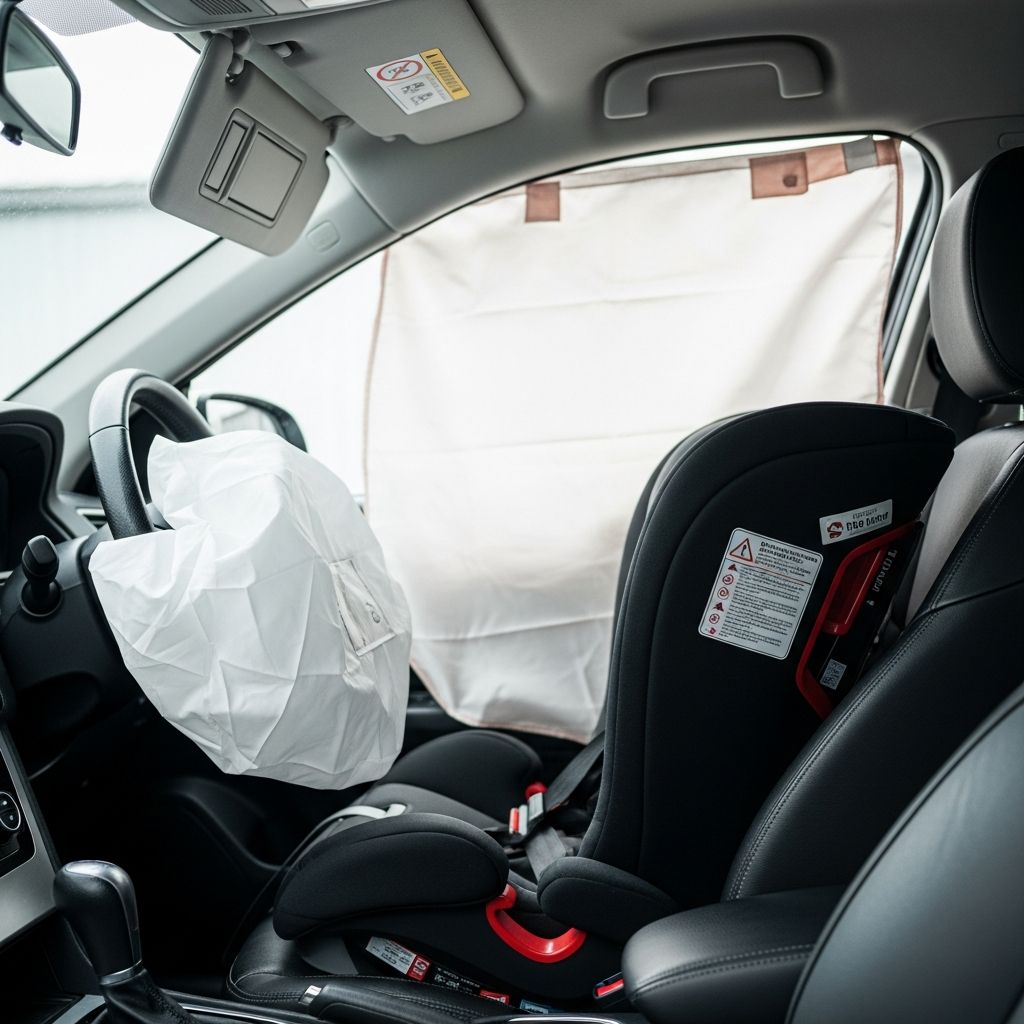
Vehicle airbags represent a cornerstone of modern automotive safety, dramatically reducing fatalities in frontal collisions by cushioning occupants against dashboards and steering wheels. However, their rapid deployment poses unique hazards for children due to differences in size, positioning, and physical development. Understanding these risks empowers parents to make informed choices that prioritize child protection during travel.
Understanding How Airbags Function and Their Dual Nature
Airbags deploy in milliseconds during crashes, inflating at speeds exceeding 200 mph with hot gas to create a protective barrier. This mechanism excels for adults but can overwhelm smaller bodies. Frontal airbags, in particular, fill the space between the occupant and dashboard, designed for average adult proportions. For children, especially infants in rear-facing seats, this forceful expansion can lead to catastrophic impacts.
Statistics from safety authorities highlight that airbags have saved thousands of lives since their mandate, yet improper child positioning accounts for preventable injuries. The key lies in matching restraint systems to age and size while adhering to seating recommendations.
Critical Risks for Infants and Toddlers in Front Seats
Infants under one year or weighing less than 20 pounds must always use rear-facing car seats to distribute crash forces evenly across the body, supporting delicate necks and maintaining airways. Placing such seats in front of an active passenger airbag is extremely dangerous: the inflating bag can crush the seatback, striking the child’s head with lethal force.
- Rear-facing seats position the infant’s head directly in the airbag’s path during deployment.
- Even low-speed crashes trigger inflation, amplifying risks.
- NHTSA mandates rear seating for all young children to avoid this scenario.
Toddlers transitioning to forward-facing seats face similar perils if positioned upfront. These seats elevate the child closer to the airbag zone, increasing exposure to the violent expansion. Pre-crash movements can propel unrestrained kids into harm’s way, turning them into projectiles.
Why Children Under 13 Belong Exclusively in Rear Seats
Children aged 12 and younger possess proportionally larger heads, weaker necks, and less developed musculature, making them prone to slouching or leaning forward—positions that place them perilously close to deploying airbags. NHTSA guidelines unequivocally state that kids under 13 should ride in the back, properly restrained in age-appropriate systems. Surveys reveal up to 35% of children travel unrestrained, heightening these dangers.
| Age Group | Recommended Restraint | Seating Position | Primary Risk if Front-Seated |
|---|---|---|---|
| Infants (<1 yr, <20 lbs) | Rear-facing car seat | Rear seat only | Airbag crushes seat, head trauma |
| Toddlers (1-3 yrs) | Forward-facing with harness | Rear seat | Direct impact to face/neck |
| 4-12 years | Booster seat + belt | Rear seat, center ideal | Forceful bag hits out-of-position body |
The center rear position offers optimal protection, equidistant from side impacts and frontal airbag zones.
Navigating Side and Curtain Airbags with Children
Modern vehicles feature side torso airbags, curtain airbags, and seat-mounted variants that enhance side-impact protection. While generally safer than frontal bags, precautions remain essential. Side airbags deploy from doors, pillars, or seats, and children leaning against doors risk direct hits.
- Position child restraints away from doors; avoid contact with windows or panels.
- Ensure no toys, pillows, or blankets obstruct deployment paths.
- Remind older kids to sit upright, not slouch against sides.
- Curtain airbags, which unroll from rooflines, pose minimal risk to properly restrained rear passengers—verify via owner’s manual.
Some car seats include side-impact padding to shield heads from interior strikes, complementing vehicle systems.
Special Circumstances: Vehicles Without Rear Seats
Pickups, sports cars, and two-seaters lack rear accommodations, complicating family travel. Authorities strongly advise against transporting infants in these, as no safe front-passenger option exists with active airbags. For older children:
- Push the front seat fully rearward.
- Secure in a forward-facing restraint or booster.
- Activate any manual airbag deactivation switch if equipped—consult the manual.
- Sit back against the seat bottom, upright, without leaning.
Owner’s manuals detail switch locations and usage; improper handling reactivates bags unexpectedly.
Best Practices for Optimal Child Restraint and Positioning
Layered safety begins with correct installation: rear-facing for infants until maximum limits, forward-facing harness seats next, then high-back boosters until adult belts fit properly (shoulder across chest, lap over hips). Always buckle up—unrestrained children become missiles in sudden stops or crashes.
Regular checks ensure fit: knees bend comfortably at seat edge, no slouching, clear space around restraints. Vehicle manuals list compatible seats; certified inspectors via NHTSA programs verify installations.
Vehicle Features That Enhance Child Safety
Advanced systems like automatic airbag suppression detect unoccupied or child-sized front seats, disabling deployment. Pre-crash sensors adjust for severity. Parents should familiarize themselves with these via manuals and test modes where available.
Frequently Asked Questions
Can children ever safely ride in the front seat?
Only in vehicles without rear seats, with the seat fully back, proper restraint, and airbag off if possible. Otherwise, rear seats are mandatory for under 13.
Do side airbags harm kids in boosters?
Risks are low if positioned correctly—away from doors, upright, no objects nearby. Check manufacturer guidelines.
What if my child outgrows rear-facing limits but is small?
Continue rear-facing as long as possible per seat specs for superior neck protection.
How fast do airbags deploy, and why is that risky for kids?
In 20-50 milliseconds at up to 200 mph, striking small, out-of-position bodies with adult-level force.
Are all vehicles required to have passenger airbag switches?
No, only specific models qualify; most rely on rear seating.
Empowering Parents: Inspection and Education Resources
Free car seat clinics, hosted by fire stations and safety orgs, teach proper use. Apps simulate fits, and online tools match seats to vehicles. Stay updated—regulations evolve with tech like advanced frontal airbags.
By internalizing these protocols, families minimize risks, harnessing airbags’ benefits without pitfalls. Safe travels start with informed vigilance.
References
- Are Airbags Dangerous for Children? — Sean Cleary, PA. Accessed 2026. https://www.seanclearypa.com/faqs/children-airbags-danger/
- Air Bag Warning for Children — Florida Department of Highway Safety and Motor Vehicles (FLHSMV). Accessed 2026. https://www.flhsmv.gov/safety-center/consumer-education/safety-warnings/air-bag-warning-for-children/
- Vehicle Air Bags and Injury Prevention — National Highway Traffic Safety Administration (NHTSA). 2025-01-15. https://www.nhtsa.gov/vehicle-safety/air-bags
- Air Bag Safety for Children — American Academy of Pediatrics (HealthyChildren.org). 2024-06-10. https://www.healthychildren.org/English/safety-prevention/on-the-go/Pages/Air-Bag-Safety.aspx
- How to Protect Children in Vehicles with Side Air Bags — Car Seats for the Littles (carseat.org). 2019-09. https://carseat.org/wp-content/uploads/2019/09/How-to-Protect-Children-in-Vehicles-with-Side-Air-Bags.pdf