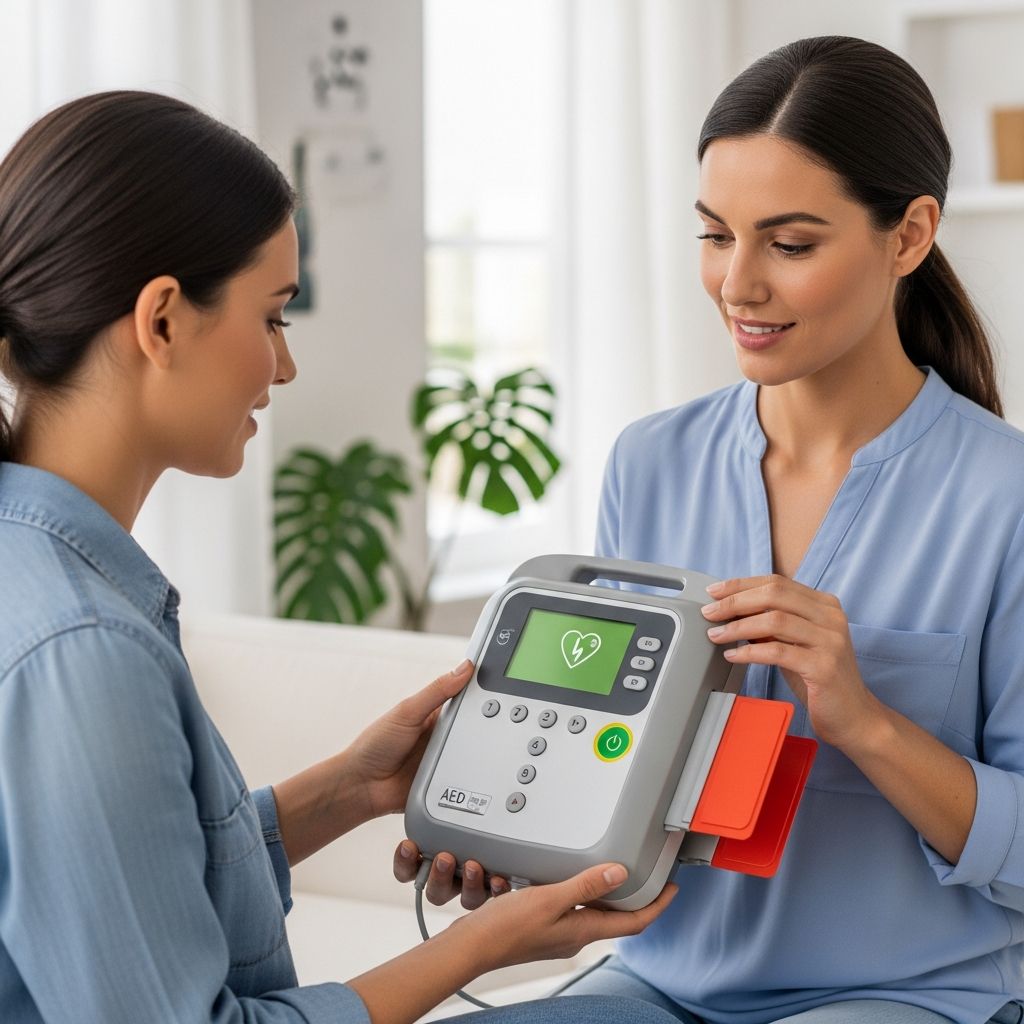
Automated external defibrillators, or AEDs, represent a critical advancement in emergency response, enabling even untrained individuals to intervene during sudden cardiac arrest. These portable devices analyze heart rhythms and deliver life-saving shocks when needed, dramatically improving survival rates when used promptly.
Understanding Sudden Cardiac Arrest in Families
Sudden cardiac arrest occurs when the heart’s electrical system malfunctions, causing it to quiver ineffectively instead of pumping blood. This differs from a heart attack, which involves blocked blood flow; arrest stops the heart abruptly, depriving the brain and organs of oxygen within minutes. In children and teens, it’s rare but can stem from undiagnosed conditions like hypertrophic cardiomyopathy or channelopathies.
Parents should recognize warning signs: sudden collapse, unresponsiveness, gasping breaths, or no pulse. Every minute without intervention reduces survival chances by 7-10%. Combining AED use with CPR doubles or triples outcomes.
How AED Technology Works: A Simple Breakdown
AEDs are user-friendly devices with built-in intelligence. Key components include:
- Electrode pads: Sticky sensors placed on the bare chest to read heart rhythms.
- Battery and capacitor: Power the shock delivery, with self-testing to ensure readiness.
- Processor: Analyzes rhythms for shockable issues like ventricular fibrillation (VF) or pulseless ventricular tachycardia (VT).
- Voice prompts and displays: Guide users step-by-step, minimizing errors.
Unlike manual defibrillators requiring ECG interpretation, AEDs automate diagnosis, advising shocks only for treatable rhythms. They won’t shock healthy hearts or non-shockable states, enhancing safety.
Step-by-Step: Using an AED in an Emergency
When someone collapses, act fast with these steps:
- Check responsiveness: Tap and shout; call emergency services immediately.
- Begin CPR: 30 chest compressions (2 inches deep) at 100-120/min, followed by 2 breaths.
- Grab AED: Turn on (often auto-activates); follow prompts.
- Apply pads: One below right collarbone, one below left armpit on bare, dry chest. Avoid pacemakers/implants.
- Analyze rhythm: Stand clear; device checks heart.
- Deliver shock if advised: Ensure no contact; press button (semi-auto) or wait (fully-auto).
- Resume CPR: Continue cycles until help arrives.
AEDs provide compression feedback in advanced models, aiding technique.
Special Considerations for Children and Infants
AEDs save pediatric lives too, but adjustments matter. For kids under 8 years or 55 lbs (25 kg), use pediatric pads/doses if available; they deliver lower-energy shocks (2-4 joules/kg vs. adult 150-360). If unavailable, adult pads are acceptable per guidelines—place one anterior-posterior on small chests.
| Group | Recommended Pads | Placement Notes |
|---|---|---|
| Adults (>8 years or >55 lbs) | Adult | Standard: right chest, left side |
| Children (1-8 years or <55 lbs) | Pediatric | Front-back if small; lower energy |
| Infants (<1 year) | Pediatric (if available) | Consult manual; CPR priority |
Training emphasizes gentle handling for young patients.
Where to Find AEDs: Schools, Homes, and Communities
Public AED placement has surged: schools, sports venues, malls, airports. Many states mandate them in schools; apps like PulsePoint or AED locators help find nearest units. For homes, especially with family heart history, consider purchasing—pros: immediate access; cons: cost ($1,000-$3,000), maintenance. FDA-approved models ensure reliability.
- Schools/gyms: Often wall-mounted, signed.
- Public spaces: Check venues kids frequent.
- Home/sports cabinets: Stock with first-aid kits.
Maintenance Essentials
AEDs self-test monthly, alerting via beeps/lights for battery/pad expiry (3-5 years). Store at 32-104°F, avoid moisture. Annual checks recommended.
Training: Empowering Parents and Kids
No medical background needed, but hands-on practice builds confidence. Red Cross/Heart Association courses (1-2 hours) cover AED/CPR integration. Involve teens for school events. Schools often train staff; advocate for family sessions. Benefits: faster response, higher survival (up to 70% if shocked <3 min).
Real-Life Impact: AEDs in Action
Stories abound: a coach saving a teen athlete, a parent reviving a sibling. Data shows bystander AED use boosts survival from <10% to 50-70% out-of-hospital. Public access programs have saved thousands since 1990s rollout.
Frequently Asked Questions (FAQs)
Can anyone use an AED?
Yes, designed for bystanders; voice prompts guide untrained users.
Is it safe to use on kids?
Absolutely, with pediatric pads; adult pads OK if none available.
What if the AED says no shock?
Continue CPR; it reassesses every 2 minutes.
Does water affect AED use?
Move from pools; dry chest first. AEDs are water-resistant.
How often replace AED parts?
Batteries/pads every 2-5 years; check status lights.
Building a Safer Tomorrow for Families
Advocate for AEDs in communities: petition schools, join registries. Combine with healthy habits—exercise, screenings—to prevent arrests. Knowledge equips parents as first responders, turning tragedies into triumphs.
References
- Automated external defibrillator — Wikipedia. 2023-10-01. https://en.wikipedia.org/wiki/Automated_external_defibrillator
- What is an Automated External Defibrillator (AED) and How to Use It — Avive. 2023-05-15. https://www.avive.life/blog/what-is-an-aed
- What is AED? | Learn What an AED Is — American Red Cross. 2024-02-20. https://www.redcross.org/take-a-class/aed/using-an-aed/what-is-aed
- Automated external defibrillators: Do you need an AED? — Mayo Clinic. 2023-11-10. https://www.mayoclinic.org/diseases-conditions/heart-arrhythmia/in-depth/automated-external-defibrillators/art-20043909
- Automated external defibrillators (AEDs) — Philips USA. 2024-01-05. https://www.usa.philips.com/healthcare/aeds-and-monitor-defibrillators/automated-external-defibrillators-aeds
- About AEDs — Montage Health. 2023-08-12. https://www.montagehealth.org/about/communityhealth/aed-program/about-aeds/
- Automated External Defibrillators (AEDs) — U.S. Food and Drug Administration (FDA). 2024-09-18. https://www.fda.gov/medical-devices/cardiovascular-devices/automated-external-defibrillators-aeds