For many families, Paw Patrol is more than a background cartoon; it is a daily fixture that shapes how young children think about bravery, teamwork, and community. Set in the seaside town of Adventure Bay, the series follows a group of rescue dogs and their young human leader as they respond to crises big and small, from runaway chickens to town-wide emergencies. While kids gravitate toward the bright colors and cute dogs, parents often watch with different questions in mind: What is this show really teaching? How can it help—rather than hinder—family life?
This guide explores the world of Adventure Bay from a parent’s perspective, unpacking the characters, values, and potential pitfalls, while offering practical ways to turn screen time into meaningful learning and connection.
What Is Adventure Bay, Really?
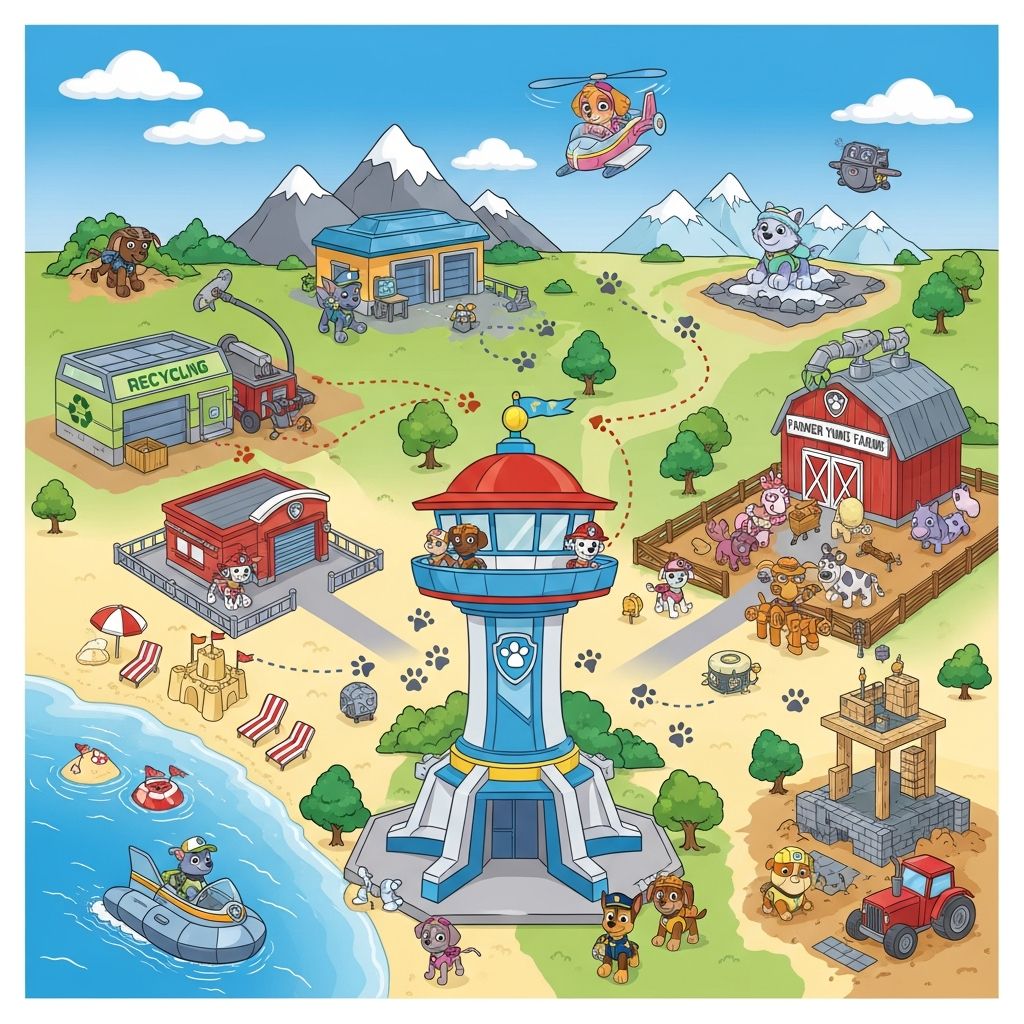
Adventure Bay is a fictional coastal town where nearly every problem, from minor mishaps to larger disasters, is solved by a volunteer rescue team made up of puppies and a tech-savvy child. The town contains familiar locations—harbor, beach, farms, city hall, mountains—which provide varied backdrops for the pups’ missions. Each episode centers on some sort of crisis that disrupts daily life, prompting a call to the Paw Patrol and a structured rescue mission.
From a child’s point of view, Adventure Bay is a safe playground where danger is present but always manageable, and problems are reliably resolved by the end of the story. For adults, it may raise eyebrow-raising questions about why a group of children and dogs are apparently more competent than any existing public services, which can be an interesting doorway into talking about responsibility, leadership, and community roles with older kids.
Meet the Pups and Their Roles
One of the show’s biggest hooks is how clearly each character is defined. Each pup represents a specific job, toolset, and personality, making it easy for kids to identify favorites and understand what each dog contributes. The show’s structure leans heavily on this clarity: the right pup and the right gadget for the right problem.
- Chase: A police and traffic-control pup who handles crowd management, safety, and investigations. He often takes a leadership role among the dogs, showing how calm communication and planning can organize chaos.
- Marshall: A firefighter and medic pup who manages fires, first aid, and emergency response. His clumsy but big-hearted nature can help children understand that you can be helpful and brave even if you make mistakes.
- Skye: An aviation specialist who flies helicopters and other aerial vehicles, introducing young viewers to the idea of observation from above, navigation, and courage in high-stakes situations.
- Rubble: A construction pup who uses diggers and heavy machinery. His character opens the door to conversations about building, fixing infrastructure, and physical labor as valuable work.
- Rocky: A recycling and repair pup who emphasizes reusing materials, reducing waste, and fixing broken items rather than discarding them, reinforcing early lessons about environmental responsibility.
- Zuma: A water-rescue pup focused on boats, diving, and water safety. His role is an accessible way to talk about keeping safe near pools, lakes, and oceans.
This ensemble approach allows kids to see that different strengths matter, and that no single character can solve everything alone. It also gives parents a ready-made vocabulary for praising diverse talents: a child who is careful and observant might be described as having “Chase skills,” while a creative problem-solver might be compared to Rocky.
The Human Leader: Ryder’s Place in the Story
Ryder, the boy who leads the team, functions as a dispatcher, strategist, and mentor for the pups. He fields calls from townspeople, assesses what is happening, and assigns roles based on each pup’s specialty. His calm voice and confident demeanor make him a reassuring presence for young viewers, reinforcing the idea that leadership can be kind, composed, and service-oriented.
At the same time, Ryder’s authority is nearly absolute within Adventure Bay, which can raise interesting questions about who makes decisions for a community. Parents can use this to discuss why real-world towns use councils, emergency services, and shared rules, emphasizing that in reality, safety is a team effort involving adults, trained professionals, and community members working together.
Core Themes: What the Show Emphasizes
Despite its action-packed style, Paw Patrol thrives on a predictable set of themes that are easy for preschoolers and early elementary kids to absorb. These underlying messages are repeated episode after episode, anchoring the chaos of Adventure Bay in simple moral lessons.
- Teamwork: Almost every mission requires multiple pups to combine their strengths. Even when a problem seems to match one pup’s specialty, the group still collaborates to plan and execute the rescue.
- Responsibility: The pups take their duties seriously, respond quickly when called, and show concern for their neighbors. The expectation that they will help—without needing to be bribed or scolded—normalizes prosocial behavior.
- Resilience: Obstacles, mistakes, and miscommunications appear regularly, but the tone remains optimistic. When something fails, the team adjusts, regroups, and tries again, modeling a growth mindset for young viewers.
- Community Care: Adventure Bay is depicted as a place where everyone knows each other and where residents rely on mutual help. The pups’ mission is not personal glory but keeping the town safe and happy.
By naming these themes out loud after an episode—“That was a great example of teamwork” or “They had to keep trying even when it was hard”—parents can strengthen the connection between screen stories and real-life behavior.
Adventure Bay as a Learning Playground
While the show is clearly designed as entertainment, it also functions as a soft introduction to basic social and practical concepts. Children see a world where problems have solutions, where adults (and pups) remain mostly calm under pressure, and where everyone has a clear role. This can be comforting to young viewers who are still making sense of how the world works.
Parents can transform episodes into teachable moments by asking open-ended questions afterward. For instance, after a rescue involving a storm, you might ask, “What would we do if there was a storm near our house?” or “Who in our town helps when there’s an emergency?” This helps link the fantastical aspects of Adventure Bay to realistic, age-appropriate safety awareness.
Values and Mixed Messages
Like many children’s shows, Paw Patrol offers a blend of positive values and more complicated messages. At its best, it celebrates cooperation, bravery, and helping others without expecting rewards. The pups model politeness, gratitude, and care for animals and neighbors, which can be particularly influential for very young children who tend to imitate favorite characters.
However, the show also leans heavily on gadgets, vehicles, and technology to solve problems, sometimes at the expense of highlighting quieter skills like negotiation, listening, or reflection. In addition, the absence of functioning public services beyond the pup team can subtly suggest that community safety is the responsibility of a single heroic group rather than a shared civic responsibility, something that older kids may notice and question.
Adventure Bay at a Glance
| Aspect | What Kids See | What Parents May Notice |
|---|---|---|
| Rescue Team | Cool dogs with unique vehicles saving the day. | A volunteer emergency system run by children and pets, with little visible adult oversight. |
| Town Life | Colorful shops, farms, beaches, and fun events. | Frequent, preventable accidents that create constant need for rescue. |
| Problem-Solving | Gadgets and teamwork fixing problems quickly. | Heavy reliance on tech and heroism, with limited focus on prevention or policy. |
| Authority | Ryder calmly giving instructions that everyone follows. | One child effectively exercising centralized control over town safety decisions. |
| Tone | Light, humorous, and reassuring; danger is never too scary. | Conflicts are resolved neatly and quickly, which can create unrealistic expectations about real emergencies. |
How Parents Can Use the Show Constructively
Instead of letting Paw Patrol run as pure background noise, parents can leverage children’s excitement about the show to support skills and values they care about. A few simple tweaks to how the show is used can make a significant difference in its impact.
- Co-watch when possible: Sitting with your child during an episode, even occasionally, allows you to label emotions, clarify confusing events, and reinforce positive behaviors. Short comments like “They helped their friend who was scared” or “That was kind of the mayor to ask for help” anchor what kids see.
- Ask reflection questions: After the episode, ask, “What was your favorite part?” and “How did the pups solve the problem?” Follow up with, “Have you ever helped someone like that?” to connect the story to daily life.
- Turn ideas into play: Encourage children to set up their own “rescue missions” with stuffed animals or building blocks. This kind of imaginative play strengthens problem-solving, narrative thinking, and emotional regulation.
- Balance with real-world helpers: Talk about firefighters, doctors, lifeguards, and other real helpers in your community. This keeps Adventure Bay fun while grounding children in real-world safety knowledge.
Screen Time, Merch, and Boundaries
With Paw Patrol’s popularity comes a flood of toys, clothing, and branded products. For many kids, episodes naturally feed into requests for costumes, vehicles, and playsets, which can add to clutter and strain family budgets if not thoughtfully managed. Parents can use clear guidelines and consistent language to keep expectations realistic.
- Set episode limits: Decide ahead of time how many episodes fit your family’s routine and stick to that boundary. Using a visual timer or calendar can make transitions easier for younger kids.
- Define shopping rules: Establish simple rules like “We look, we don’t buy” on regular errands and reserve Paw Patrol toys for specific occasions such as birthdays or holidays.
- Encourage creative substitutes: Instead of buying every branded item, invite your child to draw their own badges, design new pups on paper, or build vehicles out of cardboard boxes. This nurtures creativity and reduces pressure to accumulate more things.
Using Episodes to Talk About Feelings
Adventure Bay’s stories give kids a safe way to explore big feelings in small doses. Characters may be scared of heights, disappointed when plans change, or guilty after causing an accident. These emotional beats tend to be brief, but they are powerful conversation starters when parents take a moment to call them out.
Parents can pause an episode or talk afterward to ask, “How do you think Skye felt there?” or “What could Chase say to help a friend who is worried?” This not only builds emotional vocabulary but also promotes empathy, helping children recognize and respond to feelings in themselves and others.
Adventure Bay-Themed Activities at Home
For kids who are deeply invested in Paw Patrol, bringing aspects of Adventure Bay into offline activities can turn their enthusiasm into learning. These activities use familiar characters and settings as a bridge to broader skills and interests.
- Map-making: Invite your child to draw a map of Adventure Bay, marking the lookout tower, the beach, the farm, and other locations. Add simple labels to support early literacy.
- STEM mini-missions: Set up simple challenges like building a bridge from blocks or creating a “zipline” for a small toy, framing each as a mission the pups need help with.
- Storytelling circle: Ask your child to invent a new episode: What goes wrong? Which pups are needed? How do they fix it? Writing or dictating the story develops narrative skills and confidence.
- Community helper walk: Take a walk around your neighborhood looking for real-life equivalents to Adventure Bay’s landmarks—fire stations, post offices, parks—and talk about what each location contributes.
Frequently Asked Questions
Is Paw Patrol age-appropriate for preschoolers?
For most preschool-aged children, Paw Patrol is designed to be safe and accessible. The conflicts are mild, the tone is upbeat, and the rescues always end well. Parents of especially sensitive children may want to preview episodes that feature storms or dramatic crashes, but in general the show avoids graphic or lingering distress and keeps danger firmly in the realm of playful adventure.
Does the show encourage risky behavior?
Although the pups often drive vehicles and use equipment that would be dangerous in real life, the fantasy elements are clear enough that most children understand they cannot replicate these stunts. To reinforce this, parents can explicitly say, “Only the Paw Patrol can fly helicopters; in real life, grown-up pilots do that,” and then emphasize safe, age-appropriate ways your child can help at home, such as putting toys away or comforting a sibling.
What about gender representation in the show?
The main team features more male-coded characters than female-coded ones, but the series does include girls in prominent roles, particularly among the pups. Parents concerned about balance can use this as a springboard to highlight capable female characters, invent new characters together, or deliberately introduce other shows and books with robust female leads to keep representation varied.
How can I keep Paw Patrol from taking over my child’s interests?
It is common for young children to latch onto a single favorite show or character group for a period of time. Rather than fighting the interest directly, parents can gently broaden their child’s world by connecting Paw Patrol themes to other topics—real rescue workers, ocean animals, recycling, building—and by offering choice: “Do you want to play Paw Patrol, or do you want to build a city for your toy cars?” Over time, this variety helps prevent any one franchise from dominating play completely.
Is it okay if my child pretends to be in danger like in the show?
Pretend peril—like being stuck on a cliff or needing rescue from a tree—is a normal part of imaginative play and can actually help children process fears in a controlled way. The key is maintaining clear safety boundaries (no climbing unsafe furniture, no rough handling of siblings) and occasionally stepping into the game to model safe problem-solving: suggesting they call for help, use a pretend ladder, or check if everyone is okay afterward.
Bringing It All Together
Paw Patrol’s Adventure Bay offers children a bright, structured universe where problems are solvable, helpers are always nearby, and courage comes in many forms. Parents do not have to love every aspect of the show to recognize the opportunities it presents for teaching teamwork, empathy, and community awareness. By watching with a curious, critical eye and inviting kids into conversations about what they see, families can transform simple episodes into jumping-off points for richer play, learning, and connection.