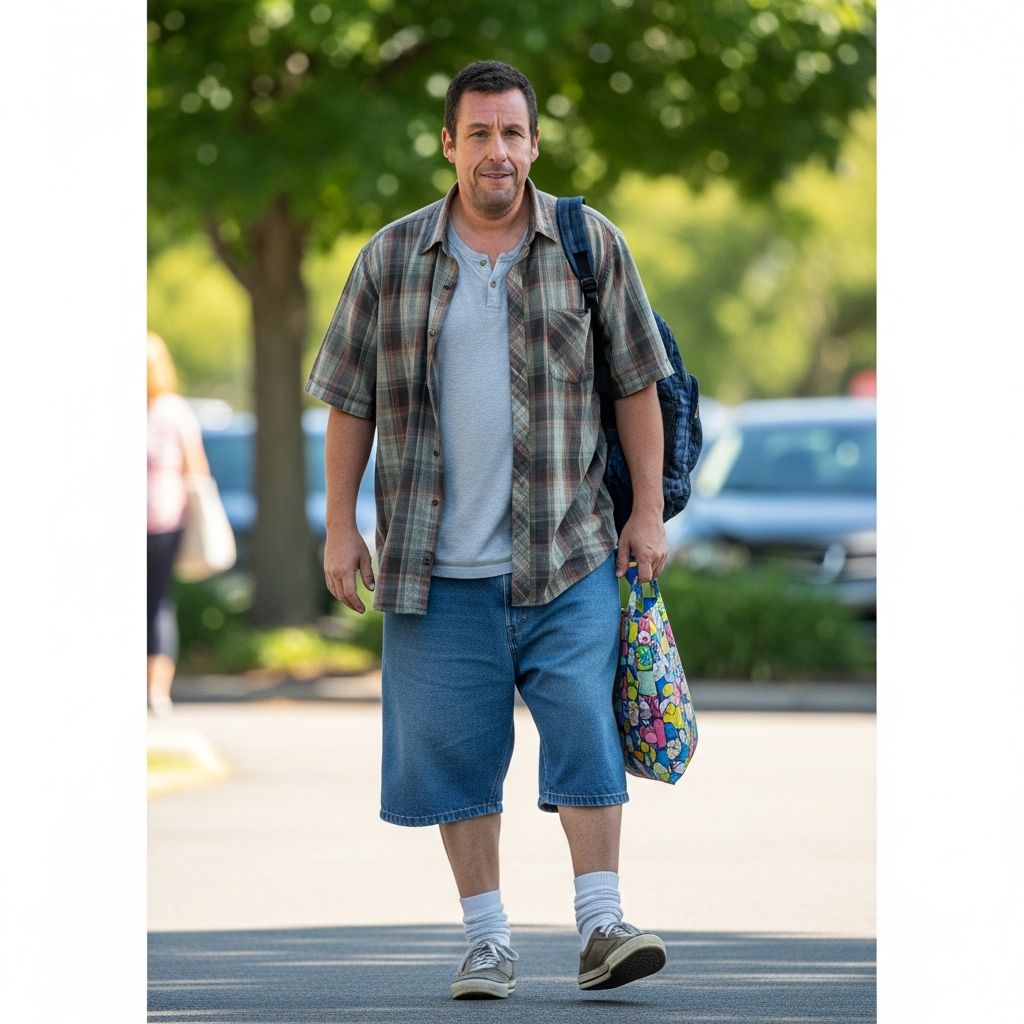
Adam Sandler’s oversized T-shirts, baggy basketball shorts, and beat-up sneakers have become a meme, but they also reveal a bigger shift in how modern dads think about clothes.
The Rise Of The Comfort-First Dad
For decades, “well-dressed father” meant tucked-in polo, crisp jeans, and maybe a stiff pair of oxfords pulled out for the weekend birthday party. Adam Sandler, photographed in giant mesh shorts and shirts that look two sizes too big, represents the opposite extreme: comfort at all costs. Instead of polishing an image, he dresses like a guy who rolled out of bed and chose the softest thing he owns.
This comfort-first approach resonates with a lot of dads because it reflects their real daily priorities: getting kids out the door, surviving errands, and maintaining some energy for work and home. Clothes become tools for moving through chaos, not props for a personal brand.
Why His Clothes Look So “Bad” Yet Feel So Right
On paper, Sandler’s outfits break most of the traditional style rules: silhouettes are huge, colors clash, and nothing looks tailored. To style purists, this reads as sloppy. To parents exhausted by early wake-ups, it looks like a realistic Tuesday morning.
What makes his wardrobe interesting is not that it’s glamorous, but that it is completely free of pretense. The clothes say, “I’m here to live my life, not perform it.” That attitude can feel liberating to dads who feel pressure from social media, work, and even other parents to look put together 24/7.
Practical Reasons Dads Dress Like This
When you zoom in on the typical dad day, comfort dressing starts to look less like laziness and more like logical planning. Parents juggle school drop-offs, commutes, sports practices, grocery runs, and late-night homework, often in the same clothes.
- Easy movement: Baggy shorts and loose tees make it simpler to kneel, carry kids, or play on the floor without worrying about ripped seams.
- Low maintenance: Clothes that can handle spills, playground dust, and car-seat crumbs reduce stress and laundry anxiety.
- Repeat wear: A small rotation of comfortable basics is easier to grab, wash, and wear again than a carefully curated, high-maintenance wardrobe.
Under these conditions, it makes sense that many dads start valuing softness, stretch, and familiarity over sharp collars and precise fits.
The Psychology Behind Effortless-Looking Style
There is a subtle psychological appeal to dressing like you don’t care. When a celebrity like Sandler repeatedly appears in public in near-identical, ultra-casual outfits, it signals comfort with who he is, regardless of fashion trends or public opinion.
For everyday dads, the draw is similar but more practical. Clothing that feels like pajamas can lower background stress, reduce self-consciousness, and increase the sense of focusing on what actually matters: relationships, work, and health. The less time spent agonizing over an outfit, the more attention is available for kids and partners.
From “Sloppy” To Intentional: Building A Better Comfort Wardrobe
Taking inspiration from this laid-back aesthetic does not mean giving up on looking presentable. The key difference is intention. Instead of pulling the oldest graphic tee from the drawer, dads can upgrade fabrics, fits, and colors while keeping the same relaxed vibe.
A smart comfort wardrobe uses soft, breathable materials, simple color palettes, and well-chosen pieces that mix easily. The goal is to feel like you’re in lounge clothes without looking like you forgot you have a life outside the couch.
Essential Pieces For An Easygoing Dad Uniform
- Soft, heavyweight T-shirts in solid or gently heathered colors.
- Casual shorts in cotton twill or structured jersey, cut just above the knee.
- Relaxed-fit joggers or sweatpants that taper slightly at the ankle.
- Clean, minimal sneakers that work with shorts or pants.
- One or two hoodies or sweatshirts in neutral shades for layering.
Style Lessons Dads Can Borrow (Without Copying Celebrities)
The point is not to replicate a specific person’s outfits but to translate the underlying priorities into something that fits your body, schedule, and personality. Sandler’s look emphasizes comfort, repetition, and low effort; those ideas can be refined into something that still feels socially appropriate.
- Repeat successful outfits: If a combo works and feels good, wear it often instead of reinventing the wheel every morning.
- Focus on feel: Prioritize fabrics that are soft, breathable, and not too tight in the shoulders, waist, or thighs.
- Keep colors simple: A small range of neutrals (navy, gray, olive, tan) makes everything easier to match.
Balancing Comfort With Respect For The Occasion
One criticism of ultra-casual dad dressing is that it can slide into disrespect if worn everywhere, no matter the context. While kids may not care what their parents wear to the playground, a partner or in-laws might feel differently at a formal dinner.
The more useful rule is not “always dress up” or “always dress down,” but “match your effort to the moment.” That might mean keeping a pair of dark jeans, a clean casual button-down, and upgraded sneakers ready for anything that requires a little more polish.
| Situation | Comfort-First Option | Slightly Upgraded Version |
|---|---|---|
| School drop-off | Soft tee, athletic shorts, running shoes | Heavyweight tee, chino shorts, clean sneakers |
| Weekend errands | Hoodie, sweatpants, trainers | Crewneck sweatshirt, joggers, leather or canvas sneakers |
| Casual dinner with friends | Graphic tee, baggy shorts, slides | Plain tee, dark jeans, low-profile sneakers |
| Family gathering | Pullover, old jeans, bulky sneakers | Oxford or polo, straight-leg chinos, simple sneakers |
How Celebrities Changed The Rules For Everyday Dads
High-profile figures dressing down in public have helped normalize extreme casualness for everyone else. When someone with global visibility appears in wrinkled tees and gym shorts, it sends a message that status no longer relies on a pressed collar or a suit.
At the same time, these public examples highlight a gap: celebrities can afford to ignore dress codes that regular employees cannot. That’s why it is helpful for parents to adapt the spirit of carefree dressing—comfort, repetition, confidence—without assuming they can ignore workplace or social expectations.
Small Upgrades That Make A Big Difference
Parents who want to keep the ease of a loose, athletic-heavy wardrobe while looking slightly more intentional can focus on details. Changes in fit, color, and condition often matter more than buying expensive labels.
- Fit the shoulders: Even relaxed tees look better when the shoulder seam lands close to your shoulder bone.
- Mind the length: Shorts ending a bit above the knee are more flattering and modern than extremely long, wide cuts.
- Retire destroyed pieces: Faded, stained, or stretched-out clothes are best kept for yard work or painting projects.
- Upgrade footwear: Swapping worn-out running shoes for clean sneakers instantly makes the same outfit look more deliberate.
Teaching Kids About Clothes Without Obsession
Parents’ clothing choices send quiet messages to their children about what matters. A relentlessly image-obsessed household can make kids anxious about how they look, while a completely indifferent approach may skip useful lessons about self-respect and context.
Dressing in a relaxed but presentable way can show kids that clothes are there to help them participate in life, not to define their worth. Explaining why certain occasions call for different outfits—without shaming them or yourself—helps kids understand social expectations in a healthy way.
FAQs About Dad Style And Comfort Dressing
Do I have to care about fashion at all?
No one is obligated to follow trends, but everyone sends signals through clothing. Choosing a small set of comfortable, decent-looking basics is usually enough to communicate respect for yourself and others without spending much time on fashion.
Can I wear athletic shorts everywhere like some celebrities?
Athletic shorts are fine for casual settings, but most workplaces, restaurants, and events still expect something more structured. Treat gym-style shorts as weekend wear, and lean on chinos or joggers when you need to look slightly more put together.
How do I stay comfortable at work without looking sloppy?
Look for stretch fabrics, elastic waists hidden inside regular-looking pants, and breathable shirts in simple colors. These pieces feel almost as good as loungewear while reading as normal office attire.
What if my partner hates my favorite “ugly” outfits?
Compromise by keeping a few beloved, worn-in items for home use and investing in slightly neater equivalents for going out. Showing that you are willing to meet in the middle demonstrates care, even if you never become a style enthusiast.
Is copying a celebrity’s exact look a good idea?
Building a wardrobe around your real body, job, and climate is more useful than copying anyone else head to toe. Celebrity style can spark ideas, but the best outfits are the ones you forget you are wearing because they fit your life so well.
>
Finding Your Own Version Of Effortless
Adam Sandler’s famously unpolished outfits work for him because they match his public persona, his lifestyle, and his clear disinterest in pleasing fashion critics. For most dads, the goal is not to replicate that exact look, but to capture a similar freedom within the boundaries of their own lives.
A small rotation of soft, well-fitting basics can make mornings easier, evenings more relaxed, and social situations less stressful. Comfort and care do not have to cancel each other out; the best dad style finds a way to honor both.