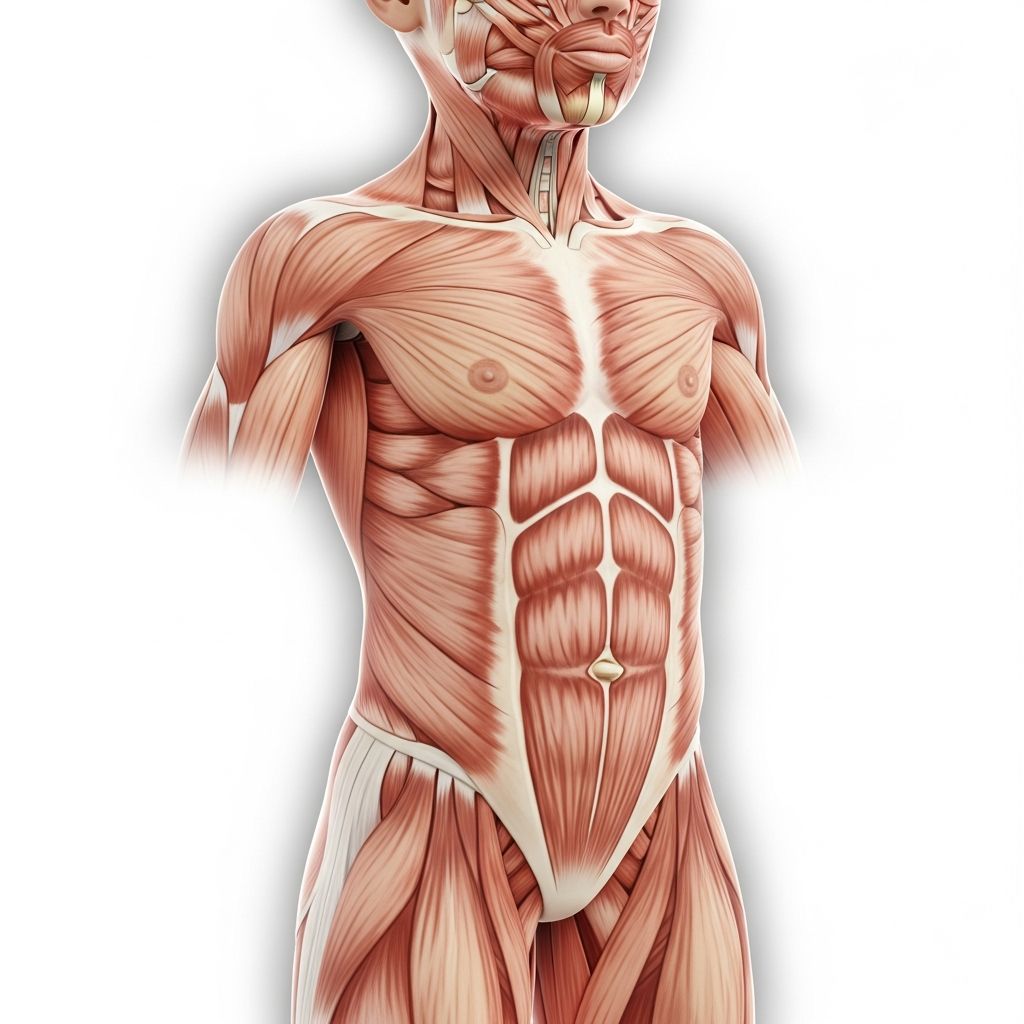
Your abdominal muscles, often called your abs, do much more than help you show off a six-pack. They help you bend, twist, breathe, stand tall, and even protect important organs inside your belly.
This kid-friendly guide will walk you through what your abdominal muscles are, where they live in your body, and why taking care of them matters for everything from sports to sitting at a desk in school.
Where Are Your Abdominal Muscles?
Your abdominal muscles sit on the front and sides of your body, between your ribs and your hips. They make up a big part of what people call your core — the center of your body that includes the abs and muscles of your back and hips.
When you touch your stomach and tighten it, you are feeling some of your abdominal muscles at work. But what you see or feel on the outside is only part of the story. There are several layers of muscles, some closer to the skin and some deeper inside.
Meet the Main Ab Muscles
Doctors and scientists usually describe five main abdominal muscles at the front and sides of your body. They include two vertical muscles and three flatter muscles on the sides.
| Muscle Name | Where It Sits | Main Job |
|---|---|---|
| Rectus abdominis | Front of your belly, running up and down between ribs and pelvis | Helps you bend forward and keeps your trunk steady |
| Pyramidalis | Small triangle-shaped muscle near the bottom of the rectus abdominis | Helps tighten a line of tissue called the linea alba |
| External obliques | On the outer sides of your trunk, just under the skin | Help you twist and bend to the side and compress your belly |
| Internal obliques | Under the external obliques on each side | Work with the external obliques for turning and bending |
| Transversus abdominis | Deepest layer, wrapping around your trunk like a belt | Acts like a natural corset, helping keep organs in place and stabilizing your spine |
Together with deep back muscles, these abdominal muscles form your core, which helps keep your body balanced, steady, and well supported.
The Rectus Abdominis: The Famous “Six-Pack” Muscle
When people talk about getting a “six-pack,” they are mainly talking about the rectus abdominis muscle.
- It runs vertically on the front of your torso, one on each side of the middle line of your belly.
- It is attached at the pubic bone at the bottom and to the lower ribs and the tip of the breastbone (xiphoid process) at the top.
- When it contracts, it helps you bend your trunk forward and also presses in your belly.
Thin bands of tissue divide this muscle into sections. When body fat in the area is low and the muscle is well developed, those sections can show up as the familiar “six-pack” look, especially in older teens and adults.
What Your Abdominal Muscles Do All Day
Your abdominal muscles are active many times a day, often without you even noticing. They work together for several key jobs.
1. Helping You Move
- Bending forward: The rectus abdominis helps you curl up in a sit-up or bend forward to tie your shoes.
- Twisting: The external and internal obliques help you rotate your trunk, like when you swing a bat or look over your shoulder.
- Bending sideways: Side bends use the oblique muscles on one or both sides.
- Staying steady: Deep muscles like the transversus abdominis help steady your spine so your arms and legs can move safely and powerfully.
2. Protecting Your Organs
The muscles of your abdominal wall form a protective layer around important organs, including the stomach, intestines, liver, and other parts of your digestive system. They are not as hard as bone, but they provide a flexible shield that adjusts as you breathe, move, or eat a big meal.
3. Supporting Breathing and Pressure
Your abdominal muscles help control pressure inside your belly, called intra-abdominal pressure. When they squeeze inward, they help with:
- Breathing out forcefully (like when you blow up a balloon or cough)
- Going to the bathroom (during bowel movements and urination)
- Helping with childbirth in adults by pushing during labor
The rectus abdominis and other abdominal muscles work together with your diaphragm (a breathing muscle under your lungs) and pelvic floor muscles to manage all these tasks.
4. Keeping Good Posture
Strong abdominal muscles help your spine stay in a healthy position when you sit, stand, and walk. They help prevent the lower back from arching too much by controlling the tilt of the pelvis. This makes it easier to sit up straight in class, carry a backpack safely, and avoid back discomfort as you grow.
How Abs Work Together With Other Core Muscles
Your abdominal muscles rarely work alone. They team up with muscles in your back, hips, and pelvis to create a strong, supportive center.
- Back muscles: Help extend and stabilize the spine while the abs control bending and flexing.
- Hip muscles: Work with your abs when you run, jump, or kick.
- Deep core muscles: Like the transversus abdominis, act like a built-in belt, tightening slightly before many movements to support the spine.
Because of how the muscles are connected, they often contract together rather than in total isolation, especially when you are standing or moving in sports.
Why Kids Need Healthy Abdominal Muscles
Even though you might not be trying to build a six-pack, having healthy abs is important in childhood and the teen years.
- Better balance: A strong core helps you stay steady while riding a bike, skating, or standing on one leg.
- Stronger sports performance: Many sports moves — like throwing, kicking, tumbling, and swimming — rely on core strength to transfer power from your legs to your arms.
- Less strain on the back: When your abs help support your spine, your back muscles do not have to work as hard all the time.
- Safer lifting: Even lifting a backpack or a heavy bag is easier and safer when your core muscles are working well.
Common Ab Issues in Kids and Teens
Most kids have healthy abdominal muscles, but some conditions can affect the way the abdominal wall forms or works.
Diastasis Recti
Diastasis recti happens when the two sides of the rectus abdominis muscle are separated by a wider-than-normal gap along the middle line (linea alba). This can sometimes be seen as a bulge or ridge down the center of the belly when a person sits up or strains.
- In babies and some children, this can be congenital, meaning present at birth.
- The gap can affect how well the abdominal muscles can tighten and support the trunk.
- In many cases it improves as a child grows; in others, a doctor or physical therapist may suggest special exercises.
Weak or Underused Core Muscles
Sitting for long periods, very little active play, or always slouching can lead to weaker abdominal muscles over time. This may make it harder to sit upright or stay comfortable during long school days.
Injuries and Strains
Sports that involve sudden twisting, heavy lifting, or hard coughing during illness can sometimes strain abdominal muscles. Rest, gentle stretching, and a doctor’s advice usually help with recovery.
Rare Problems with Abdominal Wall Formation
In rare cases, some babies are born with very weak or nearly missing abdominal muscles, a condition sometimes called prune belly syndrome. These children often need special medical care and sometimes surgery to help support their organs and improve breathing.
Keeping Your Abs Strong and Safe
You do not need fancy equipment or extreme workouts to care for your abdominal muscles. Simple habits can keep your core healthy.
Healthy Everyday Habits
- Move often: Play outside, run, jump, and climb. Many playground games naturally work your core.
- Switch positions: Try not to sit in the same position for hours. Stand, stretch, or walk around when you can.
- Lift smart: Bend at your hips and knees, keep things close to your body, and avoid twisting when carrying heavy items.
- Watch your backpack: Keep it light and use both shoulder straps to spread the weight.
Core-Friendly Activities
Many fun activities naturally strengthen your abdominal muscles and other core muscles at the same time.
- Swimming: Your core works hard to keep you stable in the water.
- Gymnastics and dance: These both require strong control of the trunk.
- Martial arts: Kicks and stances use core strength for balance and power.
- Ball games: Throwing and catching often involve turning your body, which works your obliques.
If you are starting a new sport or exercise routine, warm up carefully and talk to a coach, teacher, or parent about safe movements that match your age and ability.
Fun Facts About Abs
- Everyone has abdominal muscles, even if you cannot see a six-pack from the outside.
- Your abs and back muscles are always making small adjustments when you stand so you do not fall over.
- The small muscle called the pyramidalis is missing in some people and present in others — both are normal.
- Your deepest ab muscle, the transversus abdominis, is one of the first core muscles to turn on before many movements, acting like a built-in weight belt.
Frequently Asked Questions (FAQs)
What exactly are abdominal muscles?
Abdominal muscles are groups of muscles on the front and sides of your body between your ribs and hips. They include the rectus abdominis, pyramidalis, external obliques, internal obliques, and transversus abdominis, and they help you move, breathe, and protect your organs.
Are abs only important for sports and looking strong?
No. While strong abs can help in sports and may change how your stomach looks, their most important jobs are supporting your spine, helping you breathe and move, and protecting the organs inside your abdomen.
Can kids safely exercise their abdominal muscles?
Yes, when done in an age-appropriate and balanced way. Activities like swimming, running, basic body-weight exercises, and active play naturally work the core. If you have back pain, a medical condition, or diastasis recti, a doctor or physical therapist should guide you.
Why do some people have visible “six-pack” abs?
Visible “six-pack” abs come from a well-developed rectus abdominis muscle and a lower amount of body fat over the area, which lets the natural segments of the muscle show more clearly. Many healthy people never see a six-pack even though their abs work very well.
What should I do if I see a bulge in the middle of my stomach when I sit up?
A ridge or bulge along the center of your belly when you strain could be a sign of diastasis recti or another abdominal issue. It is important to tell a parent or caregiver and get checked by a health professional, who may suggest imaging or exercises to help.
References
- Rectus Abdominis Muscle — Healthline. 2020-06-28. https://www.healthline.com/health/rectus-abdominis-muscle
- Abdominal Muscles — Physiopedia. 2021-10-01. https://www.physio-pedia.com/Abdominal_Muscles
- Rectus Abdominis Muscle — Kenhub. 2019-05-15. https://www.kenhub.com/en/library/anatomy/rectus-abdominis-muscle
- Anatomy, Abdomen and Pelvis: Anterolateral Abdominal Wall — StatPearls (NCBI Bookshelf). 2023-03-05. https://www.ncbi.nlm.nih.gov/books/NBK459392/
- Abdominal Muscles: Anatomy & Function — Cleveland Clinic. 2021-08-23. https://my.clevelandclinic.org/health/body/21755-abdominal-muscles
- Functional Anatomy Series: The Abdominals — American Council on Exercise (ACE). 2016-04-01. https://www.acefitness.org/continuing-education/prosource/april-2016/5865/functional-anatomy-series-the-abdominals/
- Physical Therapy Guide to Diastasis Rectus Abdominis — American Physical Therapy Association (ChoosePT). 2021-04-22. https://www.choosept.com/guide/physical-therapy-guide-diastasis-rectus-abdominis