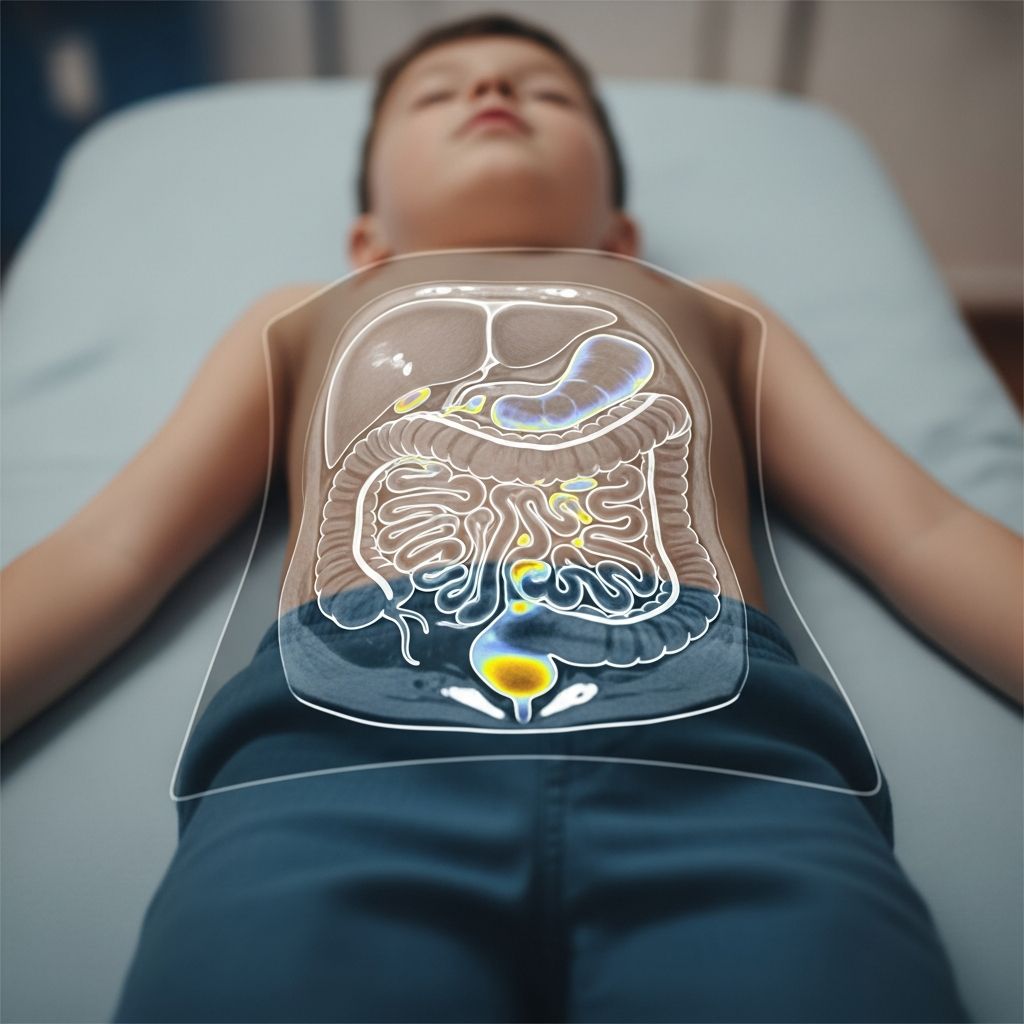
What an Abdominal CT Scan Can Reveal in Children
When a child has persistent stomach pain, unexplained fever, or other concerning symptoms, doctors often turn to imaging to look inside the body without surgery. One of the most powerful tools for this is the abdominal CT scan, also known as a CAT scan. This test uses X-rays and computer processing to create detailed cross-sectional images of the organs, blood vessels, bones, and soft tissues in the belly area.
Unlike a regular X-ray, which gives a flat, two-dimensional picture, a CT scan builds a layered view of the abdomen, like slicing through a loaf of bread. This allows radiologists and pediatricians to see small abnormalities that might otherwise be missed. In children, abdominal CT scans are commonly used to investigate:
- Appendicitis and other causes of severe abdominal pain
- Kidney stones or urinary tract problems
- Infections such as abscesses or pyelonephritis
- Inflammatory bowel diseases like Crohn’s disease or ulcerative colitis
- Pancreatitis or gallbladder issues
- Tumors or masses in the liver, kidneys, pancreas, or other organs
- Unexplained weight loss, vomiting, or blood in the stool or urine
- Internal injuries after trauma, such as falls or car accidents
Because the images are so detailed, a CT scan can often provide a clear diagnosis quickly, which is especially important in emergencies. It can also help guide treatment decisions, such as whether surgery is needed or how to plan cancer therapy.
How the CT Scanner Works
A CT scanner looks like a large ring or doughnut-shaped machine with a narrow table that slides in and out of the center. Inside the machine, an X-ray tube rotates rapidly around the patient, sending thin beams of radiation through the body from many different angles. Detectors on the opposite side measure how much radiation passes through different tissues.
Dense structures like bones absorb more X-rays and appear white on the images. Softer tissues like the liver, spleen, and intestines absorb less and show up in shades of gray. Air-filled spaces, such as the intestines, appear dark. A powerful computer uses all this data to reconstruct highly detailed cross-sectional “slices” of the abdomen, which can then be viewed individually or combined into 3D-like images.
Modern CT scanners are very fast, often completing an abdominal scan in just a few minutes. This speed is especially helpful for children, who may have trouble staying still for long periods. Faster scans also reduce the chance of motion blur, which can make images harder to interpret.
Why Contrast Is Sometimes Used
In many abdominal CT scans, a special substance called contrast material is used to make certain structures stand out more clearly. Contrast can be given in different ways:
- Oral contrast: A liquid that the child drinks before the scan. It coats the stomach and intestines, helping doctors see blockages, inflammation, or other bowel problems.
- Intravenous (IV) contrast: A dye injected into a vein, usually in the arm. This highlights blood vessels and organs like the liver, kidneys, and pancreas, making it easier to spot tumors, infections, or areas of poor blood flow.
- Rectal contrast: Less common, but sometimes used to better visualize the lower part of the colon.
When contrast is used, the images show not just the shape of organs, but also how well they are functioning and whether there are any abnormal areas. For example, a tumor might show up as a region that takes up contrast differently than healthy tissue, or an abscess might appear as a fluid-filled pocket with a thick wall.
What to Expect on Scan Day
Knowing what will happen during the CT scan can help both parents and children feel more at ease. Here’s a general outline of what to expect:
- Check-in and preparation: You’ll arrive at the imaging center or hospital and check in at the radiology department. A technologist or nurse will review your child’s medical history, ask about allergies (especially to iodine or shellfish, which can be related to IV contrast), and explain the procedure.
- Changing clothes: Your child will usually be asked to change into a hospital gown and remove metal objects like jewelry, belts, or clothing with zippers, which can interfere with the images.
- Contrast administration: If oral contrast is needed, your child will drink it over a period of time before the scan. If IV contrast is used, a small IV line will be placed in the arm or hand. Some children feel a warm sensation or metallic taste when the dye is injected, but this is normal and passes quickly.
- Positioning: The child will lie on the scanning table, usually on their back. Pillows or straps may be used to help them stay in the correct position and hold still.
- The scan itself: The table will slide into the CT machine. The scanner will rotate around the abdomen, and you may hear clicking or whirring sounds. The technologist will give instructions from another room, often through an intercom, such as “Take a deep breath and hold it” for a few seconds. Holding still and following breathing instructions is important for clear images.
- After the scan: Once the images are taken, the IV line is removed (if used), and your child can usually get dressed and go home unless further care is needed.
Helping Children Stay Calm and Still
Staying still during a CT scan is crucial for getting clear images. For many children, lying still in a strange machine can be scary or uncomfortable. Here are some practical ways parents can help:
- Explain in simple terms: Use age-appropriate language to describe the machine as a “camera” that takes pictures of the inside of the belly. Avoid scary words like “radiation” or “X-ray” with very young children.
- Practice lying still: At home, practice lying flat on the back and holding still for 30–60 seconds, like a statue. This can make the real thing feel more familiar.
- Bring comfort items: A favorite stuffed animal, blanket, or small toy can provide reassurance. (Check with the imaging center first, as some items may not be allowed in the scan room.)
- Use distraction: Many centers allow parents to stay in the room or nearby. Talking, singing, or using a tablet or book can help keep a child’s mind off the procedure.
- Consider sedation if needed: For very young children, children with developmental delays, or those who are extremely anxious, doctors may recommend light sedation to help them relax and remain still. This is carefully monitored by medical staff.
Safety and Radiation Concerns
Because CT scans use X-rays, they do involve exposure to ionizing radiation. Parents often worry about whether this is safe, especially for children, whose growing bodies are more sensitive to radiation.
It’s important to understand that:
- CT scans are only ordered when the benefits of getting a clear diagnosis outweigh the small potential risks of radiation.
- Modern CT machines use the lowest possible radiation dose needed to get high-quality images, especially in pediatric settings.
- The amount of radiation from a single abdominal CT scan is small compared to the natural background radiation we’re all exposed to over time.
- No radiation remains in the body after the scan is finished.
Doctors and radiologists follow strict guidelines to ensure that children receive the minimum necessary radiation. If your child needs multiple scans over time, the care team will keep track of cumulative exposure and consider alternative tests (like ultrasound or MRI) when appropriate.
When a CT Scan Isn’t the First Choice
While abdominal CT scans are very useful, they are not always the first imaging test for children. In many cases, doctors start with simpler, radiation-free options:
- Ultrasound: Often the first test for abdominal pain, especially in younger children. It’s excellent for looking at the appendix, gallbladder, kidneys, and ovaries, and it uses sound waves instead of radiation.
- Plain X-rays: Sometimes used to check for bowel blockages, gas patterns, or certain types of foreign objects.
- MRI: Used when very detailed soft tissue images are needed, such as for complex tumors or certain neurological conditions. MRI does not use radiation but often requires longer scan times and sometimes sedation.
A CT scan is typically recommended when these initial tests are inconclusive, when a more detailed view is needed, or in urgent situations where a quick, accurate diagnosis is critical.
After the Scan: What Happens Next
Once the CT scan is complete, a radiologist—a doctor specially trained in medical imaging—will review the images and prepare a detailed report. This report is sent to your child’s primary doctor or specialist, who will discuss the results with you.
Depending on what the scan shows, the next steps might include:
- Starting treatment, such as antibiotics for an infection or medications for inflammatory bowel disease.
- Referring to a surgeon if appendicitis, a tumor, or another condition requires surgery.
- Ordering additional tests, such as blood work, a follow-up scan, or a biopsy, to confirm a diagnosis.
- Reassuring you that the abdomen looks normal, which can be just as important as finding a problem.
It’s normal to feel anxious while waiting for results. If you have questions about the timing or what to expect, don’t hesitate to ask the care team for guidance.
Questions to Ask the Doctor
Before your child’s abdominal CT scan, it can be helpful to write down questions. Some important ones to consider include:
- Why is this CT scan needed? Are there other options?
- Will contrast be used? If so, how will it be given?
- What are the risks, including radiation and contrast side effects?
- How long will the scan take?
- Can I stay with my child during the scan?
- When and how will we get the results?
- What should we do to prepare at home (e.g., fasting, medications)?
Frequently Asked Questions
Is an abdominal CT scan painful?
No, the scan itself is not painful. Your child will lie on a table and may hear some noises from the machine, but there is no pain from the X-rays. If an IV is used for contrast, there may be a brief pinch when the needle goes in.
How long does an abdominal CT scan take?
The actual scanning time is usually only a few minutes, but the entire appointment—including preparation, contrast administration, and positioning—can take 30 to 60 minutes, depending on the situation.
Can my child eat or drink before the scan?
This depends on whether contrast is being used. Often, children are asked to avoid solid food for a few hours before the scan and may be allowed clear liquids. Always follow the specific instructions given by the imaging center or doctor.
Are there side effects from the contrast dye?
Most children tolerate contrast well. Some may feel warm or have a metallic taste when IV contrast is injected. Serious allergic reactions are rare but possible. Be sure to tell the team about any allergies or previous reactions to contrast.
Will my child need sedation?
Many children can hold still without sedation, especially older kids. Very young children, those with special needs, or those who are very anxious may need mild sedation to stay still during the scan. The care team will discuss this with you if it’s needed.
How soon will we know the results?
Results are usually available within a few days. In urgent cases, the radiologist may provide a preliminary report to the treating doctor much sooner. Your child’s doctor will explain what the images show and what the next steps are.
References
- Abdominal and Pelvic CT — RadiologyInfo.org, American College of Radiology and Radiological Society of North America. 2023-11-20. https://www.radiologyinfo.org/en/info/abdominct
- CT Scan (Computed Tomography) — Mayo Clinic. 2023-08-15. https://www.mayoclinic.org/tests-procedures/ct-scan/about/pac-20393675
- CT Scan of the Abdomen — University of Rochester Medical Center. 2023-08-01. https://www.urmc.rochester.edu/encyclopedia/content?contenttypeid=92&contentid=p07690