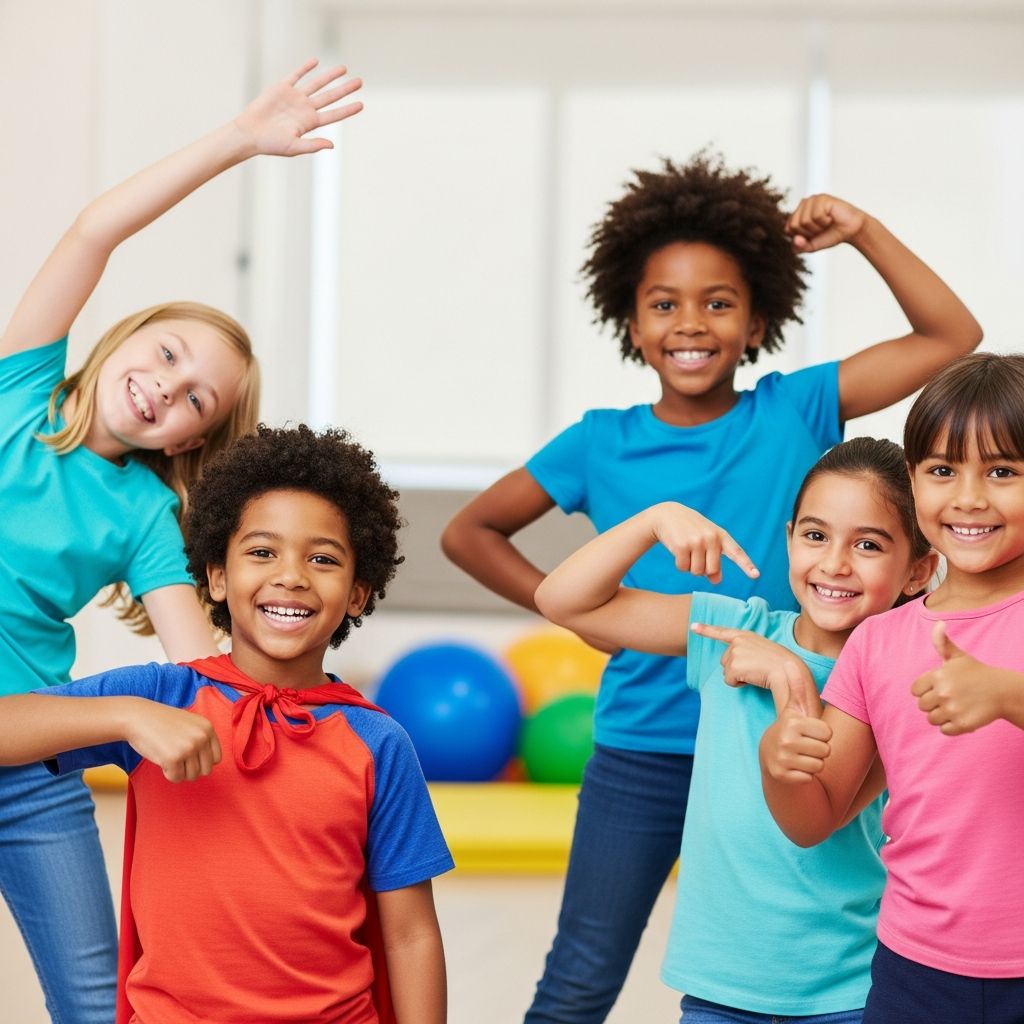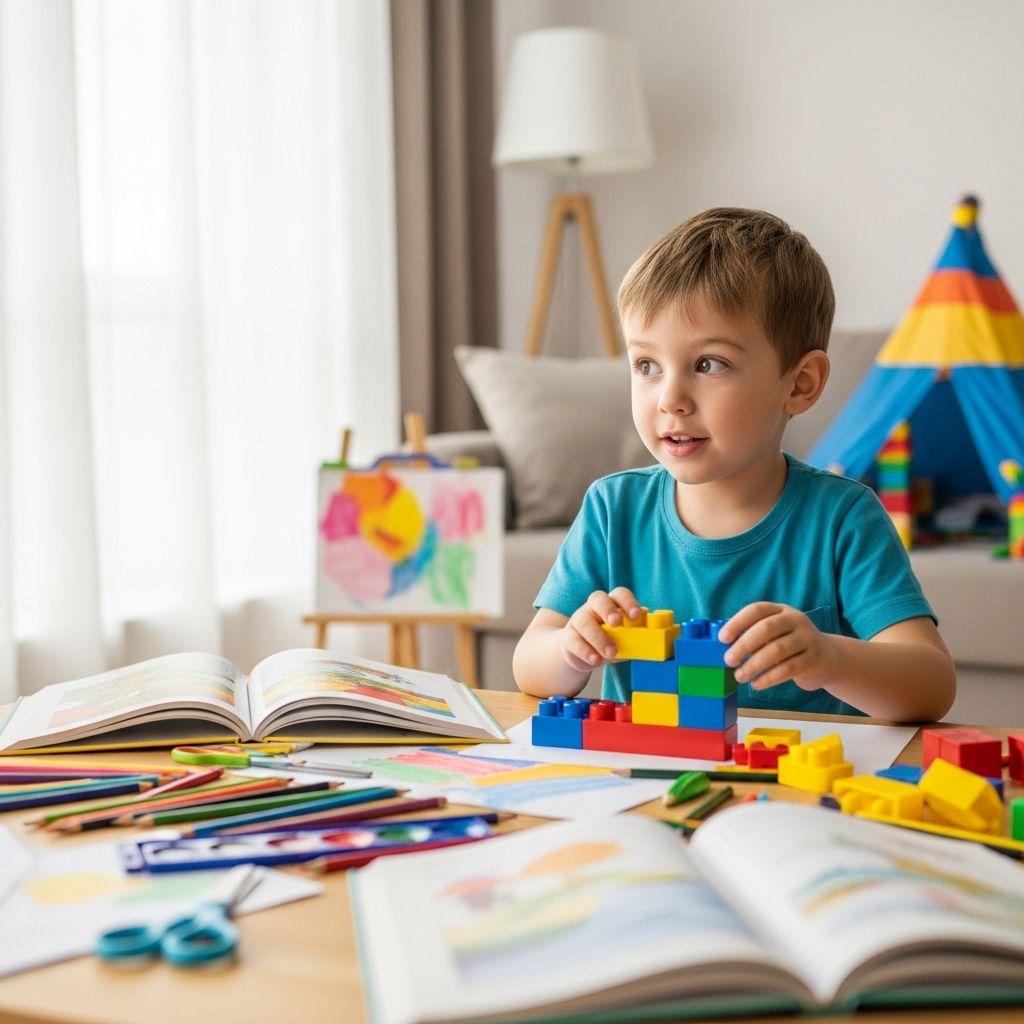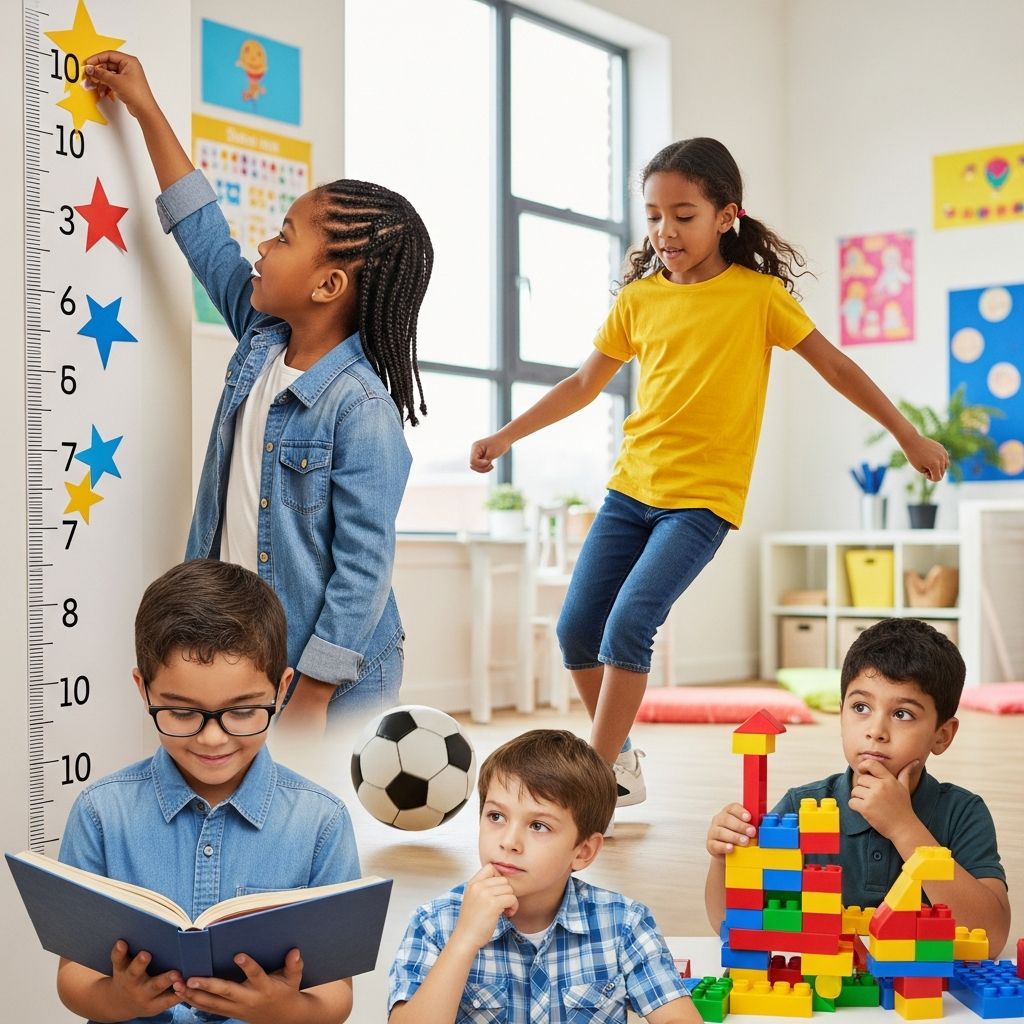
At age 9, children enter a dynamic phase of middle childhood where they refine skills across multiple domains, building toward adolescence. This period marks significant advances in coordination, reasoning, peer interactions, and self-awareness, helping kids navigate school and social worlds more confidently.
Physical Advancements and Motor Skills
Nine-year-olds exhibit notable improvements in both gross and fine motor abilities, enabling participation in structured activities. They display enhanced balance, allowing for activities like bike riding, swimming, and team sports such as soccer or basketball.
- Improved hand-eye coordination for catching and throwing balls accurately.
- Increased endurance for prolonged physical exertion, like running games.
- Fine motor progress supports drawing, painting, crafting jewelry, or using tools like hammers independently.
- Overall body coordination supports gymnastics basics, such as somersaults or skipping smoothly.
Growth spurts may begin, with early puberty signs appearing: girls might notice breast development, while boys experience testicular growth. Pubic and underarm hair can emerge, signaling hormonal shifts. Parents should encourage daily active play to foster these developments while monitoring for balanced nutrition and rest.
| Age Group | Gross Motor Skills | Fine Motor Skills |
|---|---|---|
| 8-9 Years | Bike riding, team sports, running | Drawing detailed figures, handwriting improvement |
| 9-10 Years | Endurance building, coordinated sports | Tool use, crafting, precise writing |
This table highlights progressive physical gains, drawing from observed patterns in school-aged children.
Cognitive and Learning Progress
Cognitively, 9-year-olds transition to more abstract thinking. They grasp cause-and-effect, categorize objects by function, and handle multi-step problems. Math skills include adding/subtracting two-digit numbers, understanding fractions, and basics of decimals or geometry.
Reading fluency surges; they comprehend sentences up to 12 words, enjoy chapter books, and read for pleasure or information. Writing becomes structured, with neater scripts, multi-paragraph stories, and logical outlines. Attention spans lengthen, supporting complex school tasks.
- Logical reasoning organizes thoughts sequentially.
- Grasps reversibility (e.g., addition and subtraction as inverses).
- Future-oriented planning and independent research on interests.
These milestones align with school demands in fourth grade, where kids connect ideas coherently and follow detailed instructions.
Language and Communication Mastery
Speech reaches near-adult sophistication at this age. Nine-year-olds converse fluidly across ages, use varied vocabulary including slang from peers, and express nuanced emotions.
They read complex paragraphs, write stories, and engage in back-and-forth discussions, responding thoughtfully to questions. Enjoyment of reading expands knowledge independently.
- Advanced reading comprehension for learning new topics.
- Clear articulation with minimal errors.
- Comfortable in group talks or planning with friends.
Emotional Regulation and Self-Awareness
Emotionally, children gain better control, managing anger and showing empathy. They understand social norms, distinguish right from wrong, and seek peer approval while articulating feelings.
Mood swings lessen, though peer dynamics introduce pressure. Self-perception solidifies, with labels like ‘athletic’ emerging from experiences. Independence grows in routines like dressing or hygiene.
- Strong empathy and perspective-taking.
- Reduced impatience, more stable moods.
- Awareness of private thoughts and body changes.
Parents can support by validating emotions and modeling coping strategies, especially amid budding puberty.
Social Dynamics and Friendship Building
Socially, peers become central. Boys gravitate to physical outdoor play, girls to mixed activities or games. They prefer same-gender groups but collaborate in teams.
Planning playdates, understanding mutuality in friendships, and navigating conflicts mark growth. Interests align friendships, countering bullying through shared activities.
- Prefers group games, board games, or sports teams.
- Develops negotiation skills for plans.
- Recognizes peer pressure and seeks understanding friends.
This shift prioritizes friends over family, fostering social competence.
Daily Independence and Routines
By 9, kids manage self-care: dressing, grooming, teeth brushing without prompts. Decision-making improves, from choosing outfits to hobby pursuits.
School responsibilities like homework organization emerge. They count backwards, name dates/months, and collect items, showing structured thinking.
Potential Concerns and When to Seek Help
While most hit milestones naturally, variations occur. Delays in coordination, persistent reading struggles, social withdrawal, or intense mood issues warrant professional input.
Consult pediatricians if motor skills lag (e.g., poor balance), cognitive gaps persist (e.g., basic math difficulty), or emotional challenges like frequent aggression appear. Early intervention supports optimal trajectories.
Parenting Strategies to Foster Development
Support growth through encouragement:
- Daily physical activity: 60 minutes of play or sports.
- Reading routines: Discuss books to build comprehension.
- Emotional check-ins: Teach feeling words.
- Social opportunities: Clubs or teams for peer bonds.
- Chores: Build responsibility and fine skills.
Balance screen time with hands-on learning. Nutrition with calcium, proteins aids physical changes.
Frequently Asked Questions (FAQs)
What sports are ideal for 9-year-olds?
Team sports like soccer, basketball, or swimming enhance coordination and social skills. Individual pursuits like biking build endurance.
Is early puberty normal at 9?
Yes, some girls show breast budding, boys genital growth. Monitor with a doctor if rapid or concerning.
How to boost reading at this age?
Provide diverse books, read aloud, discuss plots. Let them choose interests to spark joy.
What if my child struggles socially?
Encourage clubs matching interests. Teach empathy and role-play conflicts. Seek counseling if bullying or isolation persists.
Academic expectations for 9-year-olds?
Master fractions, multi-digit math, chapter books, structured writing. Individual pace varies; support without pressure.
References
- Developmental Milestones for Grade Schoolers (6–12-Years) — JoinCoralCare. 2024. https://www.joincoralcare.com/developmental-guides/milestones-grade-schoolers-6-12-years
- 9 Year Old Child Developmental Milestones — WebMD. 2024. https://www.webmd.com/parenting/child-9-milestones
- Milestones for 9-Year-Olds — MyHealth Alberta. 2024-10-24. https://myhealth.alberta.ca/Health/pages/conditions.aspx?hwid=ue5721
- Pre-Teens (Ages 9–11): Teenage Development Milestones — Newport Academy. 2024. https://www.newportacademy.com/resources/well-being/teenage-developmental-milestones-middle-childhood/
- Growth & Development: 6 to 12 Years (School Age) — CHOC. 2024. https://choc.org/ages-stages/6-to-12-years/
- CDC’s Developmental Milestones — Centers for Disease Control and Prevention (CDC). 2024. https://www.cdc.gov/act-early/milestones/index.html