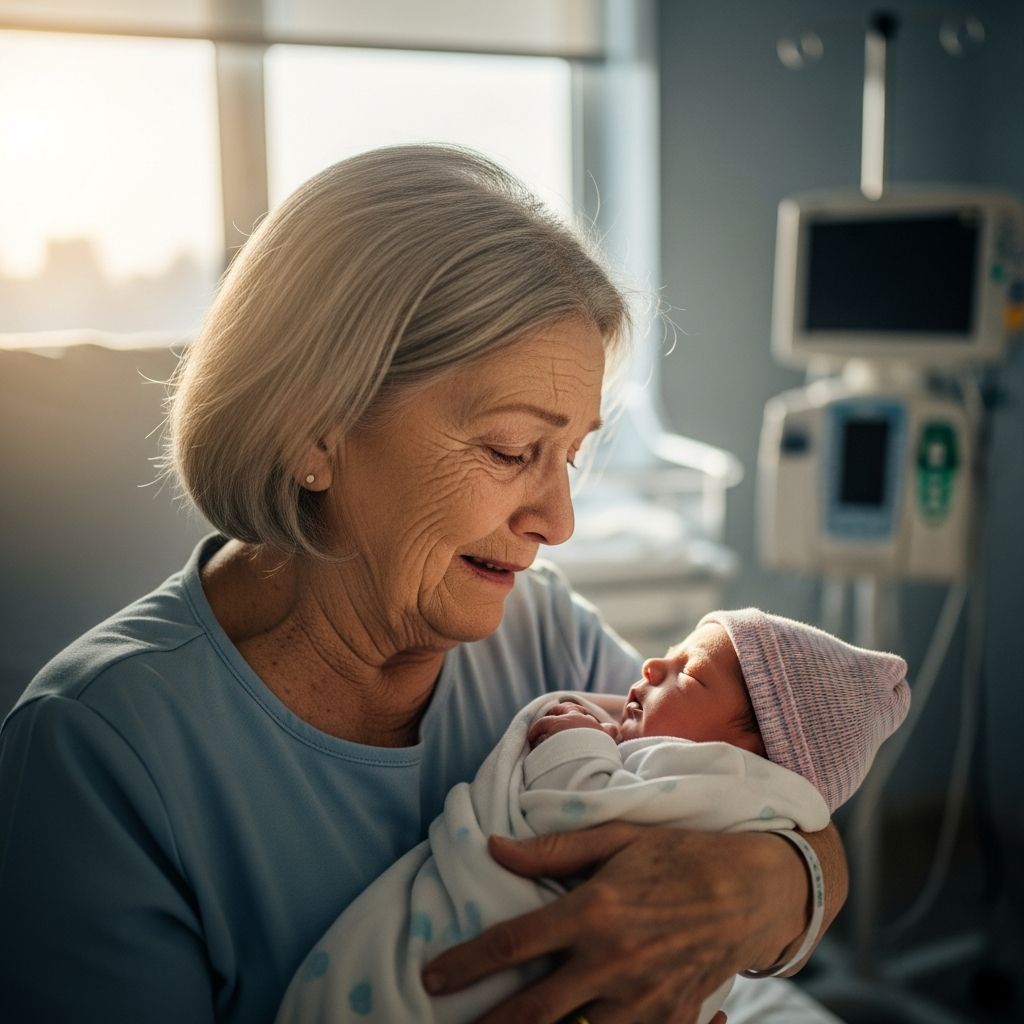
In a remarkable advancement of reproductive medicine, a 74-year-old woman has given birth, surpassing all previous records for maternal age. This event highlights the power of modern fertility technologies while igniting discussions on biological boundaries, ethical considerations, and societal norms around parenting.
The Dawn of Advanced Reproductive Technologies
Fertility treatments have evolved dramatically over the decades, enabling pregnancies well beyond natural reproductive years. In vitro fertilization (IVF), pioneered in the late 1970s, allows embryos created outside the body to be implanted into the uterus. For older women, donor eggs from younger donors are often used, combined with hormone therapies to prepare the uterine lining.
Historically, the record for oldest mother stood at 66 years and 358 days, held by Maria del Carmen Bousada Lara of Spain, who delivered twin boys via caesarean section in 2006 after IVF treatment in the United States. Earlier cases include a 62-year-old Italian woman in 1994 who used embryo donation techniques, and a 59-year-old British woman assisted by specialist Severino Antinori. These milestones paved the way for even more extreme cases, demonstrating that with medical intervention, age-related infertility can be overcome.
Breaking Barriers: The 74-Year-Old Mother’s Journey
The latest record-breaker, a 74-year-old from India named Daljinder Kaur, achieved this feat through persistent determination and access to cutting-edge fertility care. After years of trying, she underwent IVF using an anonymous donor egg and her husband’s sperm. The pregnancy was closely monitored due to her age, culminating in a successful delivery of a healthy baby boy.
Unlike natural conceptions, which become exceedingly rare after age 50—Dawn Brooke holds the record for natural birth at 59—this case relied entirely on assisted reproductive technology (ART). Kaur’s story echoes others, like a 64-year-old New Zealander who traveled abroad for treatment when local clinics refused her due to age restrictions. These women often face bureaucratic hurdles and travel to countries with fewer regulations, such as India, Ukraine, or Georgia.
Medical Realities of Late-Life Pregnancies
Pregnancies in women over 50, termed “geriatric pregnancies,” carry heightened risks. The female reproductive system undergoes significant changes post-menopause: ovarian function ceases, uterine blood flow diminishes, and hormonal balances shift. Despite this, successes like 57-year-old Barbara Higgins’ natural delivery in New Hampshire show that healthy outcomes are possible with rigorous preparation.
Key medical considerations include:
- Cardiovascular Strain: The heart must support increased blood volume; older women face higher preeclampsia and hypertension risks.
- Placental Issues: Reduced uterine elasticity can lead to placental abruption or insufficiency.
- Delivery Method: Cesarean sections are standard, as seen in most record cases, to minimize labor complications.
- Fetal Health: Frequent monitoring via ultrasounds and non-stress tests ensures viability, as in Higgins’ case with twice-weekly checks.
Experts like Dr. Vito Cardone emphasize evolving standards: “We need to change our views on what age is okay to get pregnant.” Physical fitness plays a crucial role—Higgins maintained CrossFit routines even during induction.
Health Risks and Statistical Insights
While inspiring, these pregnancies demand caution. Data from official sources indicate elevated maternal mortality rates for women over 50. In New Zealand, only about 30 women in their 50s delivered in hospitals over three years, with the prior record at 57.
| Age Group | Success Rate (IVF Live Births) | Common Complications |
|---|---|---|
| Under 35 | ~40-50% | Low |
| 40-44 | ~15-20% | Moderate (chromosomal issues) |
| 45+ | <5% | High (hypertension, diabetes) |
| 55+ | Rare | Very High (multi-organ strain) |
This table summarizes IVF outcomes based on age, drawn from peer-reviewed studies and clinic reports. Success plummets after 45 due to egg quality, but donor eggs boost rates to 50-60% regardless of maternal age, shifting risks to uterine factors.
Ethical Dilemmas in Post-Menopausal Motherhood
Advanced maternal age pregnancies provoke profound ethical questions. Should clinics impose age caps? Critics argue it commodifies children, prioritizing parental desire over child welfare. Dr. Mark V. Sauer, a USC fertility expert, declined cases in the 60s despite viable outcomes in 50s.
Proponents highlight autonomy: “To want to have a child is a personal choice,” as stated by Antinori. Yet, concerns linger about orphanhood—Bousada died of cancer just three years post-birth at age 69. A child’s right to two healthy parents conflicts with reproductive rights.
Regulatory variances exacerbate issues. Many nations cap IVF at 50-55 (e.g., UK, Canada), pushing women to “fertility tourism.” India, a hub for such treatments, lacks strict age limits, enabling cases like Kaur’s.
Societal Impacts and Parental Longevity
Beyond medicine, these births challenge family dynamics. Grandparent-aged mothers blur generational lines, potentially straining caregiving. Yet, stories like Higgins’ reveal joy: her fitness enabled a smooth delivery, viewing her son as a “lifesaver” after discovering and removing brain tumors during preconception testing.
Longevity trends support feasibility. Women in developed nations now live into their 80s-90s, potentially raising children to adulthood. However, quality of life matters—energy for parenting teens at 90 remains questionable.
Future Horizons in Fertility Innovation
Emerging tech promises further boundaries. Uterine transplants, artificial wombs, and gene editing could redefine motherhood. Ovarian tissue freezing and rejuvenation via stem cells are in trials, potentially enabling natural pregnancies into the 70s.
Global bodies like the World Health Organization monitor ART safety, advocating evidence-based guidelines. As records break—from 62 in 1994 to 74 today—the conversation evolves from shock to normalization.
Frequently Asked Questions (FAQs)
What is the verified record for oldest mother?
The Guinness World Records recognizes Maria del Carmen Bousada Lara at 66 years, 358 days, for twins born in 2006. Claims beyond, like a 74-year-old’s, often lack independent verification.
Can women over 70 safely give birth?
Possible with IVF and monitoring, but risks skyrocket. Success hinges on health, as in the 57-year-old’s natural birth case.
Why do older women pursue IVF abroad?
Many countries enforce age limits (e.g., 50-55), leading to travel for less regulated clinics.
What health tests are required for geriatric pregnancies?
Comprehensive physicals, cardiac evaluations, MRIs, and psychological assessments ensure viability.
Are donor eggs necessary for older mothers?
Yes, nearly always, as natural eggs post-50 carry high chromosomal abnormality rates.
Navigating Personal Choices in an Age of Miracles
These stories inspire awe at human ingenuity while urging balanced discourse. For aspiring late mothers, consult specialists, prioritize health, and weigh lifelong implications. Reproductive medicine marches on, but wisdom tempers its triumphs.
References
- Oldest person to give birth — Guinness World Records. 2023. https://www.guinnessworldrecords.com/world-records/oldest-person-to-give-birth
- Science Helps Italian Woman Give Birth at 62 — Los Angeles Times. 1994-07-19. https://www.latimes.com/archives/la-xpm-1994-07-19-mn-17518-story.html
- Oldest mother: Anatolia Vertadella broke Guinness World Records record — World Record Academy. 2016-03-23. https://www.worldrecordacademy.com/medical/oldest_mother_Anatolia_Vertadella_broke_Guinness_World_Records_record_216178.html
- A mum at 64: Woman makes NZ medical history — NZ Herald. 2023. https://www.nzherald.co.nz/nz/a-mum-at-64-woman-makes-nz-medical-history/TI6TW7E6KUYQIW533K4OTHDGGQ/
- A mum at 64: Woman makes NZ medical history — Newstalk ZB. 2023. https://www.newstalkzb.co.nz/news/national/a-mum-at-64-woman-makes-nz-medical-history/
- Doctors explain how a 57-year-old woman had a successful pregnancy, birth — ABC News. 2020-11-24. https://abcnews.go.com/GMA/Wellness/doctors-explain-57-year-woman-successful-pregnancy-birth/story?id=76754074