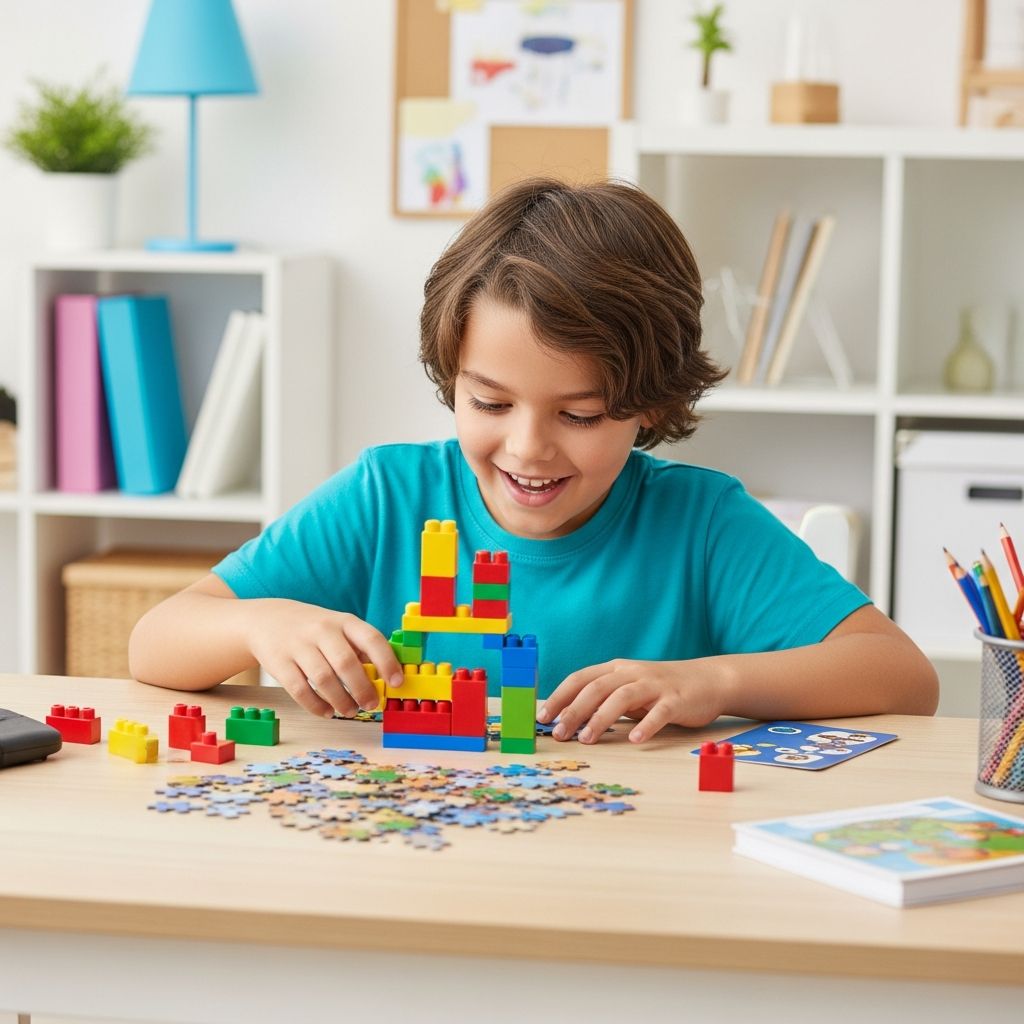
Children with Attention Deficit Hyperactivity Disorder (ADHD) often struggle with sustaining attention, which impacts learning, play, and daily interactions. Fortunately, parents and caregivers can implement simple, non-medication strategies to strengthen concentration skills. These approaches draw from behavioral science and expert recommendations, emphasizing structure, movement, and mental training to foster better self-control and engagement.
Understanding ADHD and Attention Challenges
ADHD affects approximately 5-7% of children worldwide, characterized by difficulties in paying attention, controlling impulses, and managing hyperactivity. According to the Centers for Disease Control and Prevention (CDC), these symptoms can make schoolwork and routines overwhelming, but targeted interventions help children build focus over time. Unlike medication, which addresses symptoms chemically, behavioral strategies promote long-term neural adaptations through consistent practice.
Key challenges include distractibility, poor time perception, and low frustration tolerance. By addressing these with tailored techniques, children can extend attention spans from minutes to longer periods, improving academic performance and emotional regulation.
Establishing Daily Routines for Predictability
Consistency forms the foundation for better focus. A structured daily schedule reduces anxiety and helps children anticipate transitions, minimizing resistance. Start with fixed times for meals, homework, play, and bedtime to create a predictable environment.
- Morning Rituals: Begin the day with a visual checklist—brush teeth, eat breakfast, pack bag—to build momentum.
- Evening Wind-Down: Dim lights, avoid screens two hours before bed, and incorporate calming activities like reading to signal rest time.
- Homework Blocks: Dedicate specific slots post-snack when energy peaks, using timers for short bursts.
The Royal Children’s Hospital notes that such routines enhance behavior management at home and school, with visual aids like charts reinforcing habits. Track progress weekly to adjust and celebrate small wins, boosting motivation.
Breaking Tasks into Manageable Chunks
Large assignments overwhelm children with ADHD, leading to avoidance. Dividing work into bite-sized steps makes success achievable and builds confidence. For instance, instead of “clean your room,” direct “sort toys into bins for 5 minutes.”
Wee Care Pediatrics emphasizes this chunking method prevents shutdowns, especially in classrooms where teachers assign one problem at a time. Use a simple table to plan sessions:
| Task | Step 1 | Step 2 | Time per Step |
|---|---|---|---|
| Math Homework | Problems 1-3 | Problems 4-6 | 4 minutes each |
| Room Cleaning | Pick up clothes | Make bed | 3 minutes each |
| Reading Assignment | Read page 1 | Summarize key points | 5 minutes each |
After each chunk, offer a 1-2 minute break to reset, gradually increasing intervals as endurance improves.
Incorporating Movement and Outdoor Time
Physical activity releases dopamine, a neurotransmitter often imbalanced in ADHD, enhancing alertness and mood. Short bursts of exercise—jumping jacks, yoga poses, or backyard runs—recharge focus before seated tasks.
Research from Applied Psychology: Health and Well-Being shows green outdoor spaces uniquely reduce ADHD symptoms compared to indoor activities. Aim for 30-60 minutes daily: park visits, bike rides, or nature walks. Indoors, use desk-friendly tools like fidget bands or standing desks to combat restlessness.
- Pre-homework: 10-minute dance break.
- Mid-morning: Stretching routine.
- After school: Team sports or free play.
UChicago Medicine AdventHealth confirms movement breaks improve mentality and productivity.
Harnessing Mindfulness and Breathing Exercises
Mindfulness trains the brain to stay present, countering wandering thoughts. Simple practices like deep breathing or body scans build self-awareness and impulse control. A feasibility study highlighted symptom improvements, including reduced anxiety, after eight weeks.
Introduce kid-friendly versions: “balloon breaths” (inhale to inflate belly, exhale to deflate) for 2 minutes before meals or tests. Apps with guided sessions adapted for children show promise in reducing hyperactivity. Practice daily at set times, like red lights in the car, to normalize it.
Dr. Caroline Buzanko recommends visual supports for engagement, turning mindfulness into a game. Over time, children report fewer interruptions, sustaining attention longer.
Building Focus with Timers and Baselines
ADHD impairs time awareness, so explicit tools like visual timers (sand or digital) make abstract concepts concrete. First, establish a baseline: note how long a child focuses on various activities—reading vs. math—to set realistic goals.
Start below baseline for success: if 5 minutes typical for writing, expect 2-3 initially. Use work-break cycles (e.g., 5 minutes work, 2 minutes play), repeating sets until tasks complete. Mantras like “I can do anything for 3 minutes!” reinforce resilience.
A prediction chart fosters time management:
| Activity | Predicted Output | Actual Output | Notes |
|---|---|---|---|
| Read pages | 2 pages | 3 pages | Felt good! |
| Math problems | 5 problems | 4 problems | Need practice |
Clear expectations—work ends, then play—prevent burnout. Increase intervals by 1-2 minutes every week with 80% success rate.
Minimizing Distractions and Active Engagement
Create a focus-friendly zone: clutter-free desk, noise-cancelling headphones, and posted rules. Brain Balance Centers advocates eliminating chatter and using organizational folders.
Shift passive tasks to active: highlight textbook answers, discuss notes aloud, or mind-map topics. Tally distracting thoughts on paper to park them without derailing. Mayo Clinic suggests praise for rule-following to reinforce habits.
Advanced Tools: Neurofeedback and Rewards
For deeper gains, neurofeedback uses EEG helmets during games to teach concentration, forming new neural pathways. Consult professionals for access.
Reward systems motivate: points for focus intervals redeemable for privileges. Pair with praise: “Great job staying on task!”.
Frequently Asked Questions
How long until I see improvements?
Consistency yields results in 2-4 weeks; track baselines monthly for progress.
Can these replace medication?
They complement treatment; consult pediatricians for holistic plans.
What if my child resists routines?
Start small, involve them in planning, and use visuals for buy-in.
Are outdoor activities essential?
Highly beneficial for symptom reduction; even balcony time helps.
How to handle school transitions?
Share strategies with teachers for consistent support.
References
- Helping Children with ADHD Focus Without Medication: 7 Tips for Parents — RTOR.org. 2021-05-03. https://www.rtor.org/2021/05/03/helping-children-with-adhd-focus-without-medication-tips-for-parents/
- 20 Essential Things to Help Kids with ADHD Build Focus — Dr. Caroline Buzanko. N/A. https://drcarolinebuzanko.com/20-essential-things-to-help-kids-with-adhd-build-focus/
- Classroom Modifications for Children with ADHD or Concentration Issues — Brain Balance Centers. N/A. https://www.brainbalancecenters.com/blog/classroom-modifications-children-adhd-concentration-issues
- ADHD in the Classroom: Helping Children Succeed in School — Centers for Disease Control and Prevention (CDC). N/A. https://www.cdc.gov/adhd/treatment/classroom.html
- 9 Effective Strategies for Managing ADHD in Kids — Wee Care Pediatrics. N/A. https://weecarepediatrics.com/9-effective-strategies-for-managing-adhd-in-kids/
- 7 Tips for Improving Focus With ADHD — UChicago Medicine AdventHealth. N/A. https://www.uchicagomedicineadventhealth.org/blog/7-tips-improving-focus-adhd
- 5 Tips to Manage ADHD in Children — Mayo Clinic Health System. N/A. https://www.mayoclinichealthsystem.org/hometown-health/speaking-of-health/5-tips-to-manage-adhd-in-children