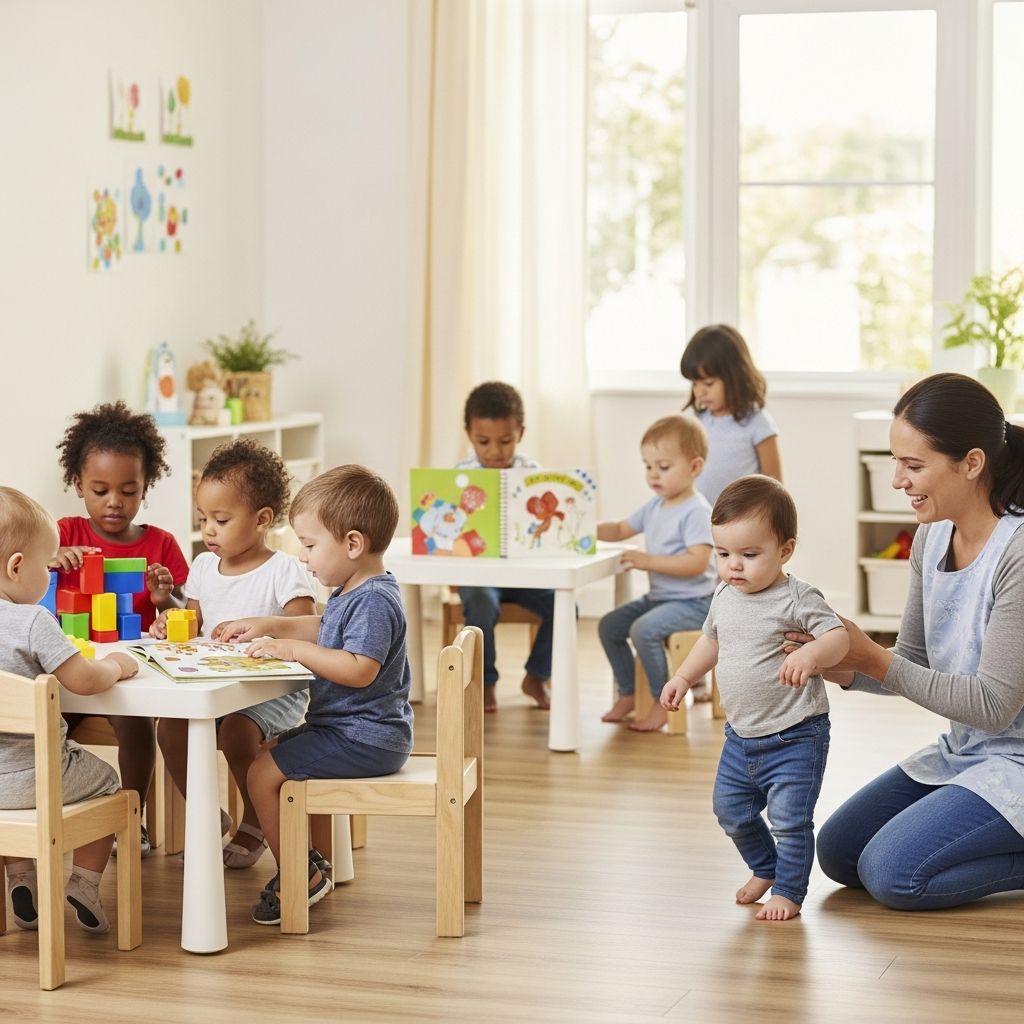
Play is the cornerstone of early childhood development, fostering essential skills across physical, cognitive, emotional, and social domains. Research shows that engaging in diverse play activities helps children build problem-solving abilities, enhance motor coordination, expand language skills, and form strong relationships. These seven original play ideas draw from evidence-based principles to make learning joyful and effective for kids aged 2-6.
Why Play Drives Holistic Development
Play isn’t just entertainment; it’s a natural mechanism for children to explore their world, experiment with ideas, and master new competencies. According to early childhood experts, playful exploration supports self-regulation, collaboration, and foundational knowledge in math, science, and literacy. Physical play strengthens gross and fine motor skills, while imaginative activities spark creativity and resilience. Integrating guided and free play maximizes benefits, as guided elements provide structure for deeper learning without stifling child-led initiative. Parents can facilitate this by providing safe materials and observing, allowing kids to lead while subtly introducing concepts.
Activity 1: Nature Treasure Scavenger Hunt
This outdoor adventure encourages exploration, observation, and early science skills. Children search for items like leaves, rocks, or twigs based on simple clues, promoting curiosity and sensory integration.
- Setup: Create a list of 5-10 natural objects with descriptions (e.g., “a smooth stone smaller than your hand”).
- How to Play: Hide items in a park or backyard; let kids hunt using the list. Discuss findings afterward—what textures, colors, or shapes did they notice?
- Benefits: Builds visual-spatial awareness, stimulates inquiry, and fosters healthy risk-taking in natural environments.
Extend by sorting treasures by size or color, introducing math concepts like classification. This activity also boosts stamina through walking and bending, supporting gross motor development.
Activity 2: Block Engineering Challenges
Using blocks or recyclables, kids tackle building tasks like a bridge that holds a toy car, honing engineering mindset and perseverance.
- Materials: Wooden blocks, cardboard tubes, toy vehicles.
- Play Steps: Set a goal (e.g., tallest tower without toppling). Time sessions for 20 minutes; celebrate attempts, not just success.
- Key Gains: Enhances problem-solving, spatial reasoning, and fine motor precision.
Children learn resilience when structures fail, adapting designs iteratively, which mirrors real-world innovation. Pair with questions like “How can we make it stronger?” to encourage mathematical thinking.
Activity 3: Sensory Kitchen Experiments
Transform a table into a mini lab with safe ingredients for mixing, pouring, and discovering cause-and-effect, ideal for sensory and scientific exploration.
- Ingredients: Flour, water, food coloring, cups, spoons.
- Instructions: Experiment with recipes like “color-changing ooze.” Predict outcomes and observe changes.
- Developmental Wins: Improves sensory processing, hypothesis testing, and hand-eye coordination.
| Skill Area | How It Helps |
|---|---|
| Cognitive | Teaches experimentation and prediction |
| Motor | Refines pouring and stirring motions |
| Language | Prompts descriptive talk (e.g., “It’s gooey!”) |
This play builds early chemistry understanding and vocabulary through narration.
Activity 4: Role-Play Neighborhood
Kids create a mini community with dolls or stuffed animals, acting out daily scenarios to process emotions and social dynamics.
- Props: Toy houses, figures, fabric scraps for roads.
- Guide: Start with a story prompt like “The shop needs helpers.” Rotate roles.
- Outcomes: Develops empathy, communication, and narrative skills.
Pretend play links to advanced interactions and emotional regulation, reducing deprivation effects on social growth.
Activity 5: Obstacle Course Odyssey
Design a home course with cushions, tunnels, and hoops to challenge balance and agility, blending fun with fitness.
- Build It: Use household items; add timers for excitement.
- Play: Navigate while carrying objects; team up for relays.
- Advantages: Boosts gross motor skills, confidence, and cooperation.
Regular sessions combat obesity risks and build stamina for complex activities.
Activity 6: Music and Movement Jam
Dance to rhythms with scarves or homemade shakers, syncing body to beat for coordination and expression.
- Tools: Pots as drums, scarves for waves.
- Session: Follow leader, then freestyle; echo sounds.
- Impacts: Enhances listening, memory, and leadership.
This rhythmic play strengthens neural pathways for recall and math patterns.
Activity 7: Story Creation Circle
In a group, build tales round-robin style, drawing pictures to illustrate, fueling literacy and creativity.
- Start: One sentence per child; pass a ball to speak.
- Enhance: Add props or record for playback.
- Growth Areas: Expands vocabulary, sequencing, and collaboration.
It instills a love of learning by tying stories to joy.
Comparing Play Types for Maximum Impact
| Play Type | Primary Skills | Example Activity | Source Benefit |
|---|---|---|---|
| Physical | Gross motor, balance | Obstacle Course | Coordination |
| Constructive | Problem-solving, spatial | Block Challenges | Spatial skills |
| Pretend | Imagination, empathy | Role-Play | Social bonds |
| Sensory | Exploration, fine motor | Kitchen Experiments | Inquiry |
This table highlights how varied play targets multiple domains. Rotate activities weekly for balanced growth.
Practical Tips for Parents
- Observe without over-directing to preserve child agency.
- Adapt for ages: Simplify for toddlers, complexify for 5+.
- Incorporate outdoors for vitamin D and nature connection.
- Track progress: Note improved focus or sharing.
Purposeful play lays foundations for school readiness and resilience.
Frequently Asked Questions
How much daily play do children need?
At least 60 minutes of unstructured play plus guided sessions, per early education guidelines, to optimize development.
Can indoor play match outdoor benefits?
Yes, with creative setups like obstacle courses; both build motor and cognitive skills equally.
What if my child prefers solo play?
Solo play builds independence and self-talk for language; gradually introduce peers.
Does screen time count as play?
Limited interactive apps can supplement, but hands-on trumps screens for motor and social gains.
How to handle playtime conflicts?
Model turn-taking and empathy; use it as teachable moments for resolution.
References
- The Power of Play: Unlock Developmental Benefits for Your Child — Start Early. 2023. https://www.startearly.org/post/the-power-of-play/
- 25 Educational Benefits Of Play In Early Childhood Development — KLA Schools. 2023. https://www.klaschools.com/insights/educational-benefits-of-play
- Top 3 Benefits of Learning Through Play — Center for Parenting Education. 2023. https://centerforparentingeducation.org/library-of-articles/baby-through-preschool-articles/top-3-benefits-of-learning-through-play/
- The Role of Play in Child Development: Benefits and Tips — Robeson Pediatrics. 2023. https://www.robesonpediatrics.com/my-blog/1203422-the-role-of-play-in-child-development-benefits-and-tips
- Purposeful Play in Early Childhood: Benefits, Activities & Examples — HIBA Academy. 2023. https://bayarea.hibaacademy.org/en/post/purposeful-play-kindergarten-activities
- The Power of Playful Learning in the Early Childhood Setting — NAEYC. 2022-06-01. https://www.naeyc.org/resources/pubs/yc/summer2022/power-playful-learning
- Importance of Play in Early Childhood — HeadStart.gov. 2023. https://headstart.gov/curriculum/article/importance-play-early-childhood