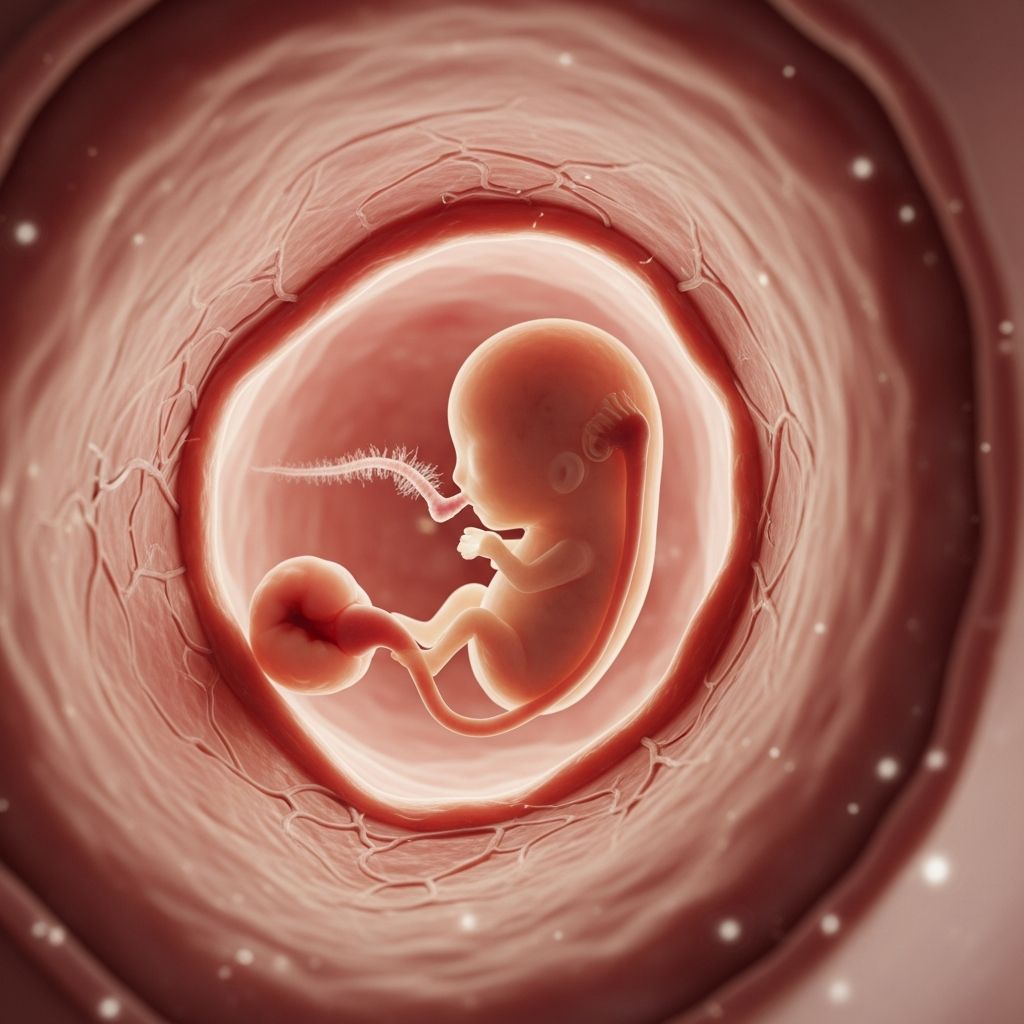
Your pregnancy at 6 weeks marks a thrilling phase where your embryo transforms rapidly, with key organs forming and the first heartbeat detectable. Meanwhile, hormonal surges trigger noticeable body changes, preparing you for motherhood. This guide details fetal progress, maternal adaptations, wellness strategies, and when to seek medical advice, empowering you through this foundational week.
Embryonic Milestones: What’s Developing Inside
By 6 weeks, your embryo measures about the size of a pea or lentil, roughly 0.25 inches long, curled in a C-shape with a small tail that will eventually recede. This tiny being undergoes explosive growth, laying the groundwork for all major systems.
- Heart and Circulation: The heart, now divided into four chambers, begins beating—often visible as flickering on transvaginal ultrasound around 100-150 beats per minute. Blood circulation starts, supporting nutrient delivery.
- Brain and Nervous System: The neural tube closes, forming the early brain and spinal cord. Optic vesicles emerge on the head’s sides, precursors to eyes, while inner ear passageways develop.
- Limbs and Features: Small buds sprout for arms and legs; paddle-like hands and feet may wiggle. Facial structures hint at eyes, nose, ears, and mouth.
- Internal Organs: Digestive and respiratory tracts take shape, alongside the liver and musculoskeletal foundations.
These changes happen swiftly; an ultrasound might reveal the gestational sac, yolk sac, and heartbeat, confirming viability.
Maternal Body Transformations at 6 Weeks
Hormones like hCG, progesterone, and estrogen surge, reshaping your body internally and externally. The uterus expands slightly, remaining pelvic-confined, so no visible bump yet—but bloating may mimic one.
| Symptom | Cause | Prevalence |
|---|---|---|
| Fatigue | Hormone fluctuations and increased metabolism | Very common |
| Nausea/Vomiting | hCG peaks and heightened smell sensitivity | Affects 70-80% |
| Breast Tenderness | Enhanced blood flow and glandular prep | Nearly universal |
| Frequent Urination | Expanded plasma volume and bladder pressure | Common early sign |
Additional shifts include mood variability from estrogen/progesterone interplay, gas/bloating from slowed digestion, and mild cramping from uterine stretching. Skin may darken (chloasma), hair thicken, and energy dip as your body prioritizes the embryo.
Navigating Common Symptoms: Practical Relief Strategies
Combating Exhaustion
Extreme tiredness stems from progesterone relaxing muscles and your body building the placenta. Prioritize 8-10 hours of sleep nightly, nap when possible, and incorporate light walks to boost endorphins without overexertion.
Easing Nausea and Digestive Woes
Morning sickness, despite its name, strikes anytime. Small, frequent meals of bland foods like crackers, ginger tea, or bananas help. Stay hydrated (aim for 10 glasses daily), eat fiber-rich produce to counter constipation, and avoid triggers like strong odors.
Breast and Bladder Discomfort
Supportive bras and warm compresses soothe aching breasts. For urination urges, limit caffeine, practice Kegels for pelvic strength, and empty fully each time to prevent UTIs—drink water copiously but pee promptly if burning occurs.
Emotional and Physical Fluctuations
Mood swings arise from hormones, low blood sugar, and fatigue. Balanced snacks, mindfulness apps, or partner chats stabilize emotions. Mild cramps/spotting are typical, but heavy bleeding or severe pain warrants immediate care.
Prenatal Care Essentials: Your First Checkup
Schedule your initial appointment now; many providers see you between 6-10 weeks. Expect bloodwork for hCG/rh factor, urine tests, and ultrasound to verify heartbeat/location (ruling out ectopic pregnancy).
- Discuss multivitamins (400mcg folic acid minimum)
- Review medical history and lifestyle
- Establish dating via ultrasound
Key screenings: blood type, anemia, infections. If high-risk (e.g., multiples, prior losses), earlier monitoring applies.
Lifestyle Adjustments for Optimal Health
Nutrition Focus
Caloric needs rise modestly (extra 300 daily later), but now emphasize quality: leafy greens, proteins, whole grains, dairy. Avoid raw fish, unpasteurized items, excess mercury. Hydration combats bloating.
Exercise and Rest Balance
30 minutes moderate activity daily (walking, yoga, swimming) enhances circulation, curbs nausea. Avoid high-impact; listen to fatigue cues.
Avoiding Risks
No alcohol, smoking, or drugs—critical now as organs form. Limit caffeine to 200mg. Steer clear of cat litter, hot tubs, certain cheeses.
Visualizing Your Baby: Ultrasound Expectations
At 6 weeks, transvaginal ultrasound shows a flickering heartbeat, limb buds, and sacs. It’s reassuring, though not all details are visible yet. Share this milestone with loved ones for emotional support.
Potential Concerns and Red Flags
Normal: Light spotting, period-like cramps. Alert your doctor for: heavy bleeding, intense pain, absent heartbeat, fever, or UTI signs. Ectopic risks peak early; prompt evaluation prevents complications.
Prior pregnancies or multiples may amplify symptoms/belly feel, but uterus stays pelvic.
Frequently Asked Questions About 6 Weeks Pregnant
Can I feel my baby move at 6 weeks?
No, movements start around 16-20 weeks; ultrasound may show early wiggling.
Is bloating normal at 6 weeks?
Yes, progesterone slows digestion; fiber and water alleviate it.
When does the heartbeat become audible?
Often by 6-7 weeks via ultrasound; Doppler around 10-12 weeks.
Should I be concerned about no symptoms?
Not always; some have mild experiences, especially multiples. Confirm via prenatal visit.
How big is my uterus at 6 weeks?
Size of a plum, expanding but not visible externally.
Emotional Well-Being: Embracing the Journey
Pregnancy hormones can intensify joy, anxiety, or doubt. Journaling, prenatal yoga, or support groups foster positivity. Partner involvement strengthens bonds—attend appointments together.
Looking ahead, week 7 brings more limb elongation and organ refinement. Track symptoms in a journal for doctor discussions.
This week solidifies your commitment to nurturing life. With informed choices, you’re setting a strong foundation.
References
- 6 Weeks Pregnant: Your Body & Baby — Nemours KidsHealth. 2023. https://kidshealth.org/en/parents/week6.html
- 6 Weeks Pregnant: Baby Development, Symptoms and Tips — The Bump. 2024. https://www.thebump.com/pregnancy-week-by-week/6-weeks-pregnant
- Weeks 5 & 6 of Pregnancy: Key Developments in Early Growth — Amnion Pregnancy Center. 2023. https://amnionpregnancycenter.com/weeks-5-6-of-pregnancy-key-developments-in-early-growth/
- Your Body Throughout Pregnancy — National Partnership for Women & Families. 2022. https://nationalpartnership.org/childbirthconnection/healthy-pregnancy/your-body-throughout-pregnancy/
- 6 Weeks Pregnant — Tommy’s. 2024. https://www.tommys.org/pregnancy-information/im-pregnant/pregnancy-week-by-week/6-weeks-pregnant