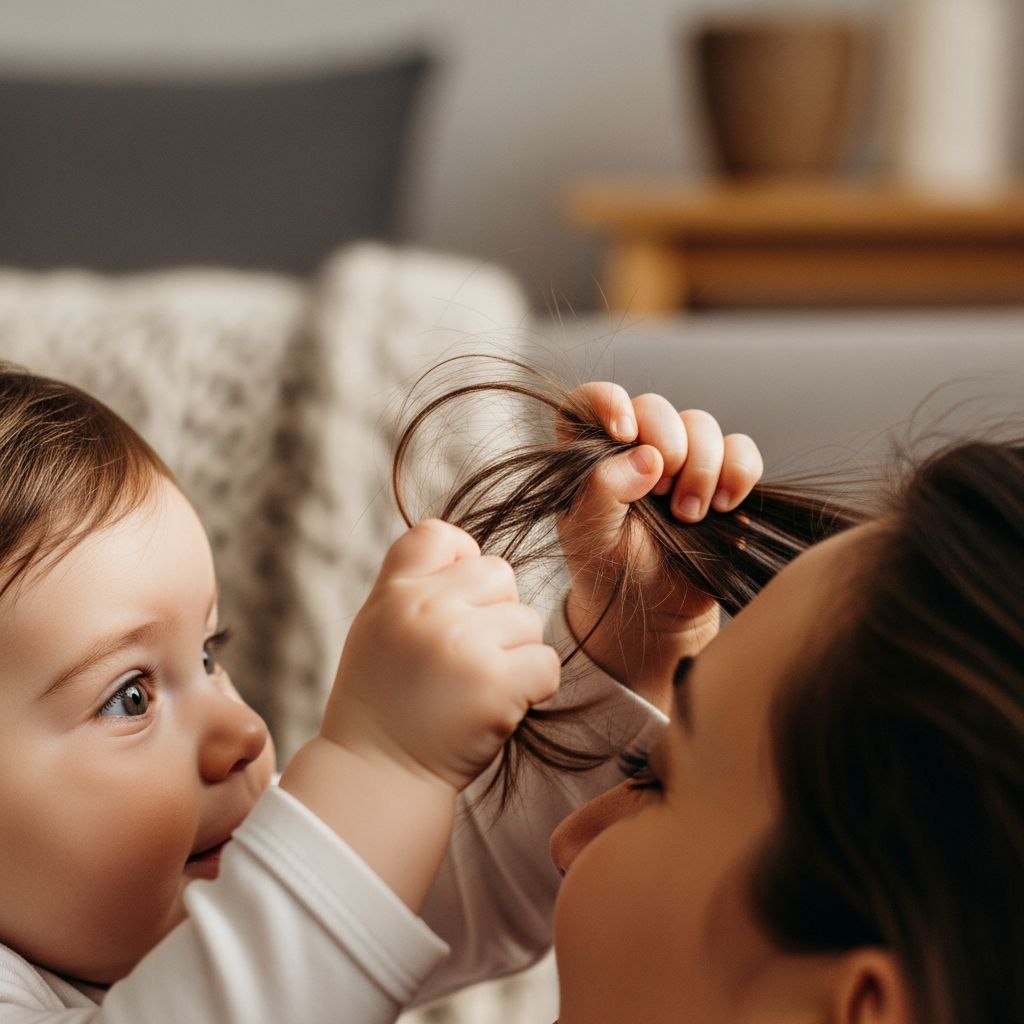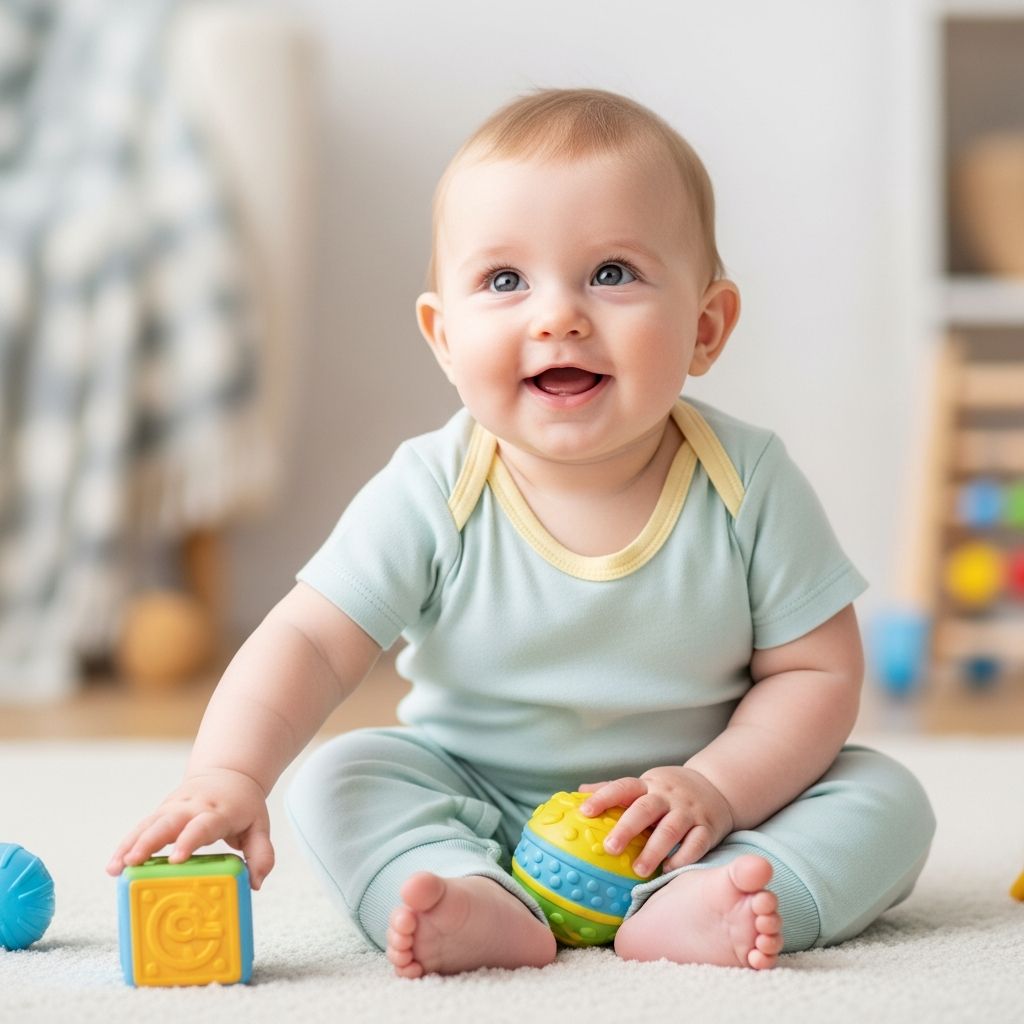
At six months, babies enter a vibrant phase of development where their world expands dramatically. They gain strength, curiosity, and interaction skills that lay the foundation for future learning. This period marks significant advances in physical control, sensory awareness, communication attempts, and emotional bonds, transforming passive observers into active explorers.
Physical Strength and Motor Achievements
By this age, infants demonstrate remarkable improvements in muscle tone and coordination. They often roll over in both directions, from tummy to back and vice versa, showcasing core strength developed through tummy time. When placed on their stomach, many push up using straight arms, lifting their chest and head confidently. Sitting without support becomes possible for brief periods, with babies leaning on their hands for balance. Rocking on hands and knees hints at impending crawling, as legs and arms work in tandem.
Hand-eye coordination sharpens too. Babies reach for desired toys, pass objects between hands, and grasp items firmly. They may grab their feet while lying down or make swimming-like motions on their belly. These movements not only build physical prowess but also enhance spatial understanding.
- Rolls tummy to back and back to tummy
- Pushes up on straight arms during tummy time
- Sits independently for short durations
- Rocks back and forth on hands and knees
- Passes toys hand-to-hand
Cognitive Exploration and Problem-Solving
Six-month-olds are little scientists, using senses to investigate their environment. They put nearly everything in their mouth to ‘test’ textures, sizes, and tastes—a primary way to learn cause and effect. Reaching for out-of-reach objects shows growing awareness of space. Concepts like object permanence emerge; a toy partially hidden under a blanket still exists in their mind, prompting searches.
Visual acuity matures, with full color vision allowing distinction of reds, blues, and yellows. Babies track moving objects like rolling balls or siblings, focusing intently on patterns and shapes. Mirror play fascinates them, as they study their reflection and attempt interactions.
| Milestone | Description | Why It Matters |
|---|---|---|
| Reaches for toys | Extends arms toward desired items | Develops hand-eye coordination and intention |
| Mouth exploration | Places objects in mouth | Enhances sensory processing and texture learning |
| Object tracking | Follows moving items with eyes | Improves visual focus and depth perception |
Language and Vocal Expression
Communication blossoms with a repertoire of sounds. Babies laugh heartily, squeal with delight, and blow raspberries—sticking out tongues and vibrating them. Babbling includes single syllables like ‘da,’ ‘ma,’ ‘ba,’ mimicking adult speech rhythms. They take turns in ‘conversations,’ responding to your sounds with their own, and express joy or frustration vocally.
Recognition of their name prompts head turns, and they react to emotional tones in voices. Imitation of sounds and facial expressions strengthens social connections. Encourage this by talking, singing, and reading daily.
- Babbles with varied syllables
- Laughs and squeals expressively
- Responds to name and familiar voices
- Blows bubbles and raspberries
- Imitates speech patterns
Social and Emotional Bonds
Emotional awareness deepens. Babies distinguish familiar faces from strangers, showing preference for parents. They hold out arms to be picked up, signaling trust and attachment. Smiles, coos, and cries convey needs effectively. Play becomes interactive; they enjoy mirror time, people-watching, and toy manipulation.
Responding to others’ emotions—calming when comforted or mirroring joy—builds empathy foundations. Group play with safe peers introduces social dynamics.
Feeding and Self-Regulation Skills
Nutrition evolves as interest in solids grows, though breast milk or formula remains primary. Babies open mouths for spoons, move food back for swallowing, and close lips to refuse more—signs of self-regulation. Self-feeding finger foods emerges if interested. Feeding routines stabilize, with longer night sleeps (6-8 hours) and 2-3 naps daily.
Drooling increases, often unrelated to teething, as mouths explore. Reflexes like grasping and rooting fade, indicating neurological maturity.
How Parents Can Foster Development
Active involvement accelerates progress. Dedicate floor time daily for tummy play, strengthening muscles. Talk descriptively during routines—feeding, diapering, bathing—to boost language. Read colorful books, pointing to images; sing rhythmic songs and dance together. Provide safe toys for reaching and grasping. Introduce mirrors and new sights outdoors. Supervise closely to prevent falls or choking.
Respond promptly to cues: cuddle when fussy, praise achievements. Limit screen time; prioritize human interaction. Track naps and feeds for consistency.
Variations in Development: What’s Normal?
Each baby progresses uniquely, influenced by genetics, prematurity, or environment. Most hit milestones by six months, but some roll later or babble variably. Cultural practices, like carrying styles, affect motor skills. If concerns arise, consult pediatricians early.
| Category | Typical Range | Monitor For |
|---|---|---|
| Motor | 4-7 months rolling | No rolling by 7 months |
| Language | 4-6 months babbling | No sounds by 7 months |
| Social | 5-7 months stranger awareness | No smiling response |
When to Seek Professional Advice
Act early if your baby doesn’t roll, sit with support, babble, reach, or respond to name by six months. Poor head control, stiffness, or lack of interest in surroundings warrant evaluation. The CDC recommends screening at well-visits. Early intervention improves outcomes.
Frequently Asked Questions (FAQs)
Does my 6-month-old need solid foods?
Interest may start, but milk is primary. Introduce purees gradually under pediatric guidance to avoid allergies.
How much tummy time is enough?
Aim for 15-30 minutes daily, in short sessions, to build strength safely.
Why is my baby drooling so much?
Increased saliva production aids future speech; not always teething. Wipe gently and offer teething toys.
Should I worry if rolling is one-sided?
Some prefer one direction initially. Encourage both; consult if persistent beyond a month.
How can I encourage sitting up?
Prop with pillows initially, then practice unsupported on safe surfaces. Never leave unattended.
Safety Essentials for Active Babies
As mobility surges, baby-proof: secure furniture, gate stairs, remove small objects. Use rear-facing car seats. Supervise water, sleep in cribs without pillows/blankets. Soft floors prevent injury during rolls.
References
- Developmental Milestones for Infants (0-6 months) — Coral Care. 2023. https://www.joincoralcare.com/developmental-guides/milestones-0-6-months-infants
- Baby Development at 4-6 Months — CHOC. 2024. https://choc.org/ages-stages/4-to-6-months/
- Infant development: Milestones from 4 to 6 months — Mayo Clinic Staff. 2024-01-15. https://www.mayoclinic.org/healthy-lifestyle/infant-and-toddler-health/in-depth/infant-development/art-20048178
- Milestones by 6 Months | Learn the Signs. Act Early. — CDC. 2025-04-28. https://www.cdc.gov/act-early/milestones/6-months.html
- Baby Developmental Milestones By Month — Cleveland Clinic. 2023. https://my.clevelandclinic.org/health/articles/22063-baby-development-milestones-safety